Binance recorded $272 million in net USDT inflows over a 24-hour period, marking a significant wave of stablecoin deposits onto the world’s largest centralized exchange by trading volume. The reading highlights fresh capital movement that traders are watching for signs of near-term market positioning.

Binance logs $272 million in net USDT inflows over 24 hours
Net inflows measure the difference between stablecoin deposits into an exchange and withdrawals out of it over a set window. A positive net inflow of $272 million means that, over the tracked 24-hour stretch, substantially more USDT entered Binance wallets than left them.
USDT, the dollar-pegged stablecoin issued by Tether, serves as the dominant quote currency on Binance spot and derivatives markets. When large volumes of USDT move onto an exchange, it typically reflects capital being staged for deployment into trading positions.
The data comes from Coinglass, one of the most widely referenced platforms for monitoring real-time USDT spot flow breakdowns across centralized exchanges. The platform aggregates on-chain deposit and withdrawal activity to produce net flow readings.
What net USDT inflows to Binance can signal for market activity
Stablecoin balances on exchanges are commonly watched as a proxy for “dry powder,” the pool of readily deployable liquidity that could be used to purchase crypto assets. A rising USDT balance on Binance suggests that participants are positioning capital on the platform rather than moving it to self-custody or DeFi protocols.
That said, net inflows do not guarantee immediate buying pressure. USDT entering Binance could reflect traders preparing for spot purchases, but it could also indicate hedging activity, derivatives margin top-ups, or simple internal treasury movements between wallets controlled by the same entity.
Previous instances of large USDT transfers to Binance have sometimes preceded sustained buying, but have also coincided with periods of sideways price action when deposited stablecoins sat idle. The direction of subsequent trading activity matters more than the inflow itself.
Why traders track Binance stablecoin flows closely
Binance consistently handles the largest share of centralized exchange volume across both spot and futures markets. Because of its size, flow data from Binance often carries outsized weight in market sentiment analysis compared to smaller venues.
Traders and analysts monitor USDT flow distributions across exchanges to gauge where liquidity is concentrating. A disproportionate inflow to a single exchange can signal that a specific venue is becoming the focal point for near-term trading activity.
Stablecoin flow monitoring has become a standard component of crypto market analysis alongside funding rates, open interest, and order book depth. Firms tracking large digital asset holdings and institutional-scale positions routinely use exchange flow data as one input in their liquidity assessments.
Limits of the data behind the 24-hour inflow reading
A single day’s net inflow figure is a short-term snapshot, not a trend. The reading could reverse within hours if an equivalent or larger volume of USDT is withdrawn from Binance in the following period.
Internal wallet transfers can also distort the picture. Exchanges routinely move funds between hot wallets, cold storage, and omnibus accounts for operational reasons. Some of these movements may register as inflows in third-party tracking systems even though they represent no new external capital entering the exchange.
No confirmed price, volume, or broader sentiment metrics were available alongside the inflow figure. Drawing connections between this single reading and specific asset price movements would be speculative without supporting data from adjacent market indicators such as comparable flows on other exchanges or shifts in Binance’s overall trading pair activity.
FAQ: Binance USDT inflows and what they mean
What does “net USDT inflow” mean?
Net USDT inflow is the total USDT deposited into an exchange minus the total USDT withdrawn over a given period. A positive number means more USDT entered than left.
Are USDT inflows to Binance bullish?
Not necessarily. While stablecoin inflows can signal capital preparing to buy crypto assets, they can also reflect margin deposits for derivatives trading, hedging strategies, or routine treasury operations. The inflow alone does not confirm directional intent.
Why does 24-hour exchange flow data matter?
Short-term exchange flow data helps traders gauge shifts in liquidity positioning. Large inflows to a major venue like Binance can indicate that market participants are preparing for increased trading activity, though the direction and timing remain uncertain until confirmed by actual order flow.
Disclaimer: This article is for informational purposes only and does not constitute financial or investment advice. Cryptocurrency and digital asset markets carry significant risk. Always do your own research before making decisions.
No tags available.


Other Posts








- China, US Conclude Trade Talks with Focus on Cooperation
- Court Upholds Fed’s Rejection of Custodia Bank’s Request
- Former CFO Convicted for $35M Fraudulent Crypto Investment
- Crypto Weekly: NYSE Backs OKX, Kraken Gets Fed Access, BTC Sells
- DeriW Launches Edge Hour Trading Competition Platform for Derivatives Traders
- Michael Saylor Denies Bitcoin Sell-Off Amid Large BTC Transfer
- Buy Dogecoin on eToro: Step-by-Step Guide for Beginners (2024)
- Kazakhstan Explores Crypto Reserves Backed by National Funds
- JPMorgan Increases Holdings in BlackRock’s Bitcoin ETF
- Nordea Bank Introduces Bitcoin ETP Trading for Nordic Customers
- XRP Spot ETF Launches on Nasdaq Amid Market Fluctuations
- Peter Schiff Challenges Michael Saylor on MSTR’s Business Model
- Thailand Orders Worldcoin to Delete 1.2 Million Biometric Records
- UK Proposes New DeFi Tax Framework to Ease User Burden
- WLFI Under Fire: Analyst Warns Hyperliquid Could Be Next
- Ancient Ethereum Whale Moves $1.19 Billion After Decade
- BlackRock Receives Large Crypto Transfers from Coinbase
- SEC Scrutiny on ALT5 Sigma’s Leadership Disclosure Timing
- Yala Injects $5.5 Million Amid Recovery Efforts
- Radiant Capital Faces $50M Loss in Major Security Breach
- China, US Conclude Trade Talks with Focus on Cooperation
- Court Upholds Fed’s Rejection of Custodia Bank’s Request
- Former CFO Convicted for $35M Fraudulent Crypto Investment
- Crypto Weekly: NYSE Backs OKX, Kraken Gets Fed Access, BTC Sells
- DeriW Launches Edge Hour Trading Competition Platform for Derivatives Traders
- Michael Saylor Denies Bitcoin Sell-Off Amid Large BTC Transfer
- Buy Dogecoin on eToro: Step-by-Step Guide for Beginners (2024)
- Kazakhstan Explores Crypto Reserves Backed by National Funds
- JPMorgan Increases Holdings in BlackRock’s Bitcoin ETF
- Nordea Bank Introduces Bitcoin ETP Trading for Nordic Customers
- XRP Spot ETF Launches on Nasdaq Amid Market Fluctuations
- Peter Schiff Challenges Michael Saylor on MSTR’s Business Model
- Thailand Orders Worldcoin to Delete 1.2 Million Biometric Records
- UK Proposes New DeFi Tax Framework to Ease User Burden
- WLFI Under Fire: Analyst Warns Hyperliquid Could Be Next
- Ancient Ethereum Whale Moves $1.19 Billion After Decade
- BlackRock Receives Large Crypto Transfers from Coinbase
- SEC Scrutiny on ALT5 Sigma’s Leadership Disclosure Timing
- Yala Injects $5.5 Million Amid Recovery Efforts
- Radiant Capital Faces $50M Loss in Major Security Breach
- China, US Conclude Trade Talks with Focus on Cooperation
- Court Upholds Fed’s Rejection of Custodia Bank’s Request
- Former CFO Convicted for $35M Fraudulent Crypto Investment
- Crypto Weekly: NYSE Backs OKX, Kraken Gets Fed Access, BTC Sells
- DeriW Launches Edge Hour Trading Competition Platform for Derivatives Traders
- Michael Saylor Denies Bitcoin Sell-Off Amid Large BTC Transfer
- Buy Dogecoin on eToro: Step-by-Step Guide for Beginners (2024)
- Kazakhstan Explores Crypto Reserves Backed by National Funds
- JPMorgan Increases Holdings in BlackRock’s Bitcoin ETF
- Nordea Bank Introduces Bitcoin ETP Trading for Nordic Customers
- XRP Spot ETF Launches on Nasdaq Amid Market Fluctuations
- Peter Schiff Challenges Michael Saylor on MSTR’s Business Model
- Thailand Orders Worldcoin to Delete 1.2 Million Biometric Records
- UK Proposes New DeFi Tax Framework to Ease User Burden
- WLFI Under Fire: Analyst Warns Hyperliquid Could Be Next
- Ancient Ethereum Whale Moves $1.19 Billion After Decade
- BlackRock Receives Large Crypto Transfers from Coinbase
- SEC Scrutiny on ALT5 Sigma’s Leadership Disclosure Timing
- Yala Injects $5.5 Million Amid Recovery Efforts
- Radiant Capital Faces $50M Loss in Major Security Breach

Kraken Parent Payward Joins Anthropic Project Glasswing for AI Security


IREN Delivers First AI Cloud Deployment to Microsoft Under $9.7B Deal
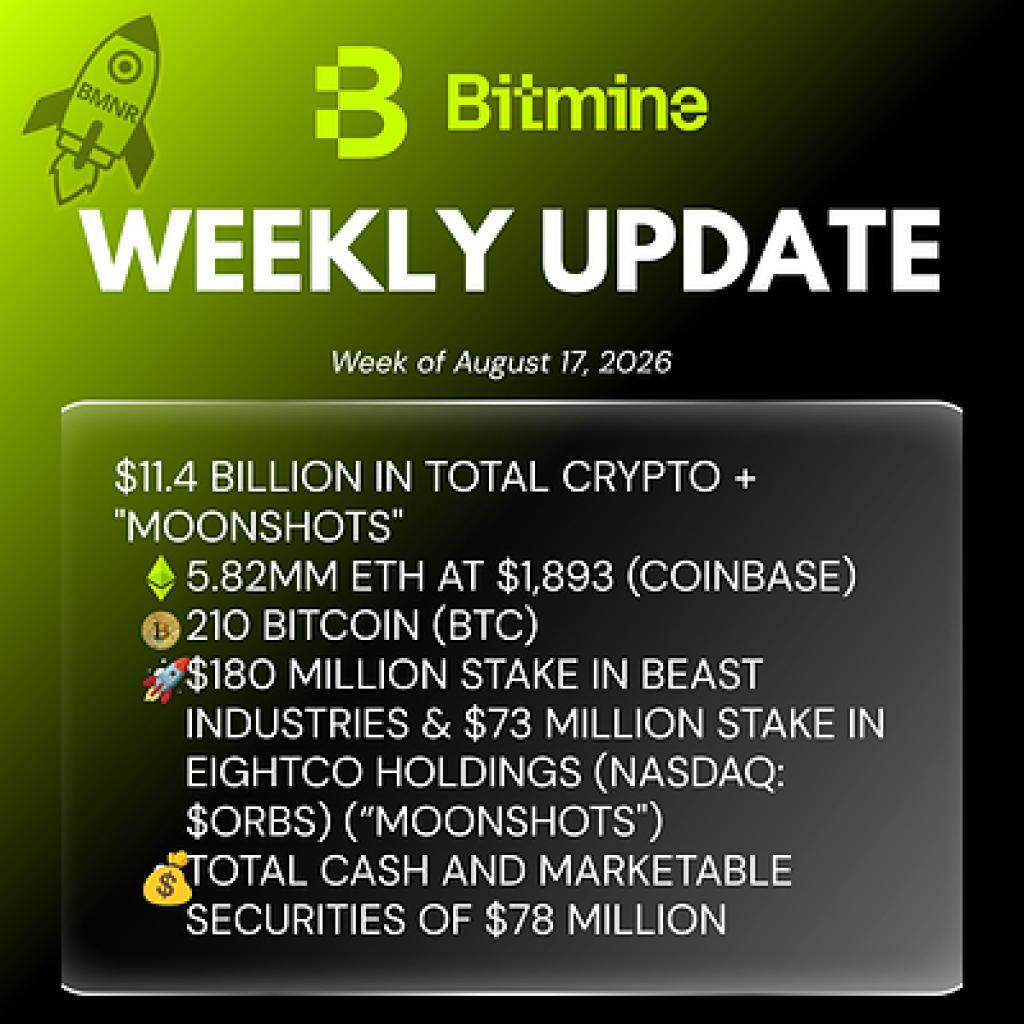
Bitmine Immersion Technologies (BMNR) Announces ETH Holdings Reach 5.82 Million Tokens, and Total Crypto and Total Cash Holdings of $11.4 Billion

BiggerZ: Building a Fairness-First Crypto Casino, Sportsbook and Prediction Markets Platform