Brazil House Approves Crypto Freezing Bill, Raises Max Prison Term to 10 Years
Brazil’s House of Representatives has approved a bill that would allow authorities to freeze suspects’ cryptocurrency balances and raises the maximum prison term to 10 years, marking a significant escalation in the country’s approach to crypto-related enforcement.
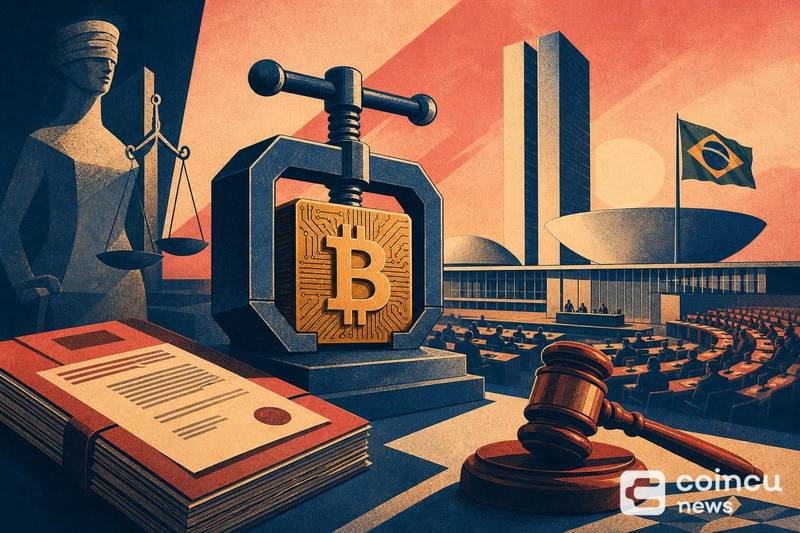
The legislation passed as part of a broader anti-organized crime package known as the “anti-faction” bill. According to Brazil’s Chamber of Deputies, the House concluded voting on the measure, which now moves forward for presidential sanction.
The bill introduces two distinct enforcement mechanisms targeting digital assets: the power to freeze crypto balances held by suspects and a tougher sentencing framework with a ceiling of 10 years in prison.
Crypto balance freezing as a new enforcement tool
The most notable crypto-specific element of the legislation is the provision granting authorities the ability to freeze suspects’ cryptocurrency holdings. In practical terms, freezing means that wallets or exchange-held balances linked to suspects could be locked, preventing transfers or liquidation during an investigation.
This represents a shift from purely punitive measures toward active asset control. Rather than relying solely on prison sentences, Brazilian lawmakers have opted to give enforcement bodies direct power over digital asset holdings, a move that Brazilian lawmakers have argued courts need to effectively combat financial crime involving crypto.
The freezing provision is separate from the sentencing changes, functioning as a parallel enforcement lever. While prison terms punish convicted individuals after the fact, asset freezing targets the financial infrastructure suspects use during ongoing proceedings.
For exchanges and custody providers operating in Brazil, the legislation signals that compliance with judicial freeze orders involving crypto balances could become a legal obligation. Countries that have pursued similar legislative clarity, such as those following frameworks like the Clarity Act in the United States, have found that clear legal authority over digital assets tends to shape how platforms structure their compliance operations.
What the 10-year maximum prison term signals
The bill raises the maximum prison term to 10 years for offenses covered under the legislation. This increase reflects a tougher punitive stance from Brazilian lawmakers toward crimes involving organized groups and, by extension, the financial tools those groups use.
The higher ceiling does not mean that all crypto-related offenses would carry a 10-year sentence. Rather, it sets the upper bound for the most serious cases under the bill’s scope, giving judges greater discretion in sentencing.
The penalty increase and the crypto-freezing provision together form a two-pronged approach: one targeting individuals through incarceration, the other targeting their assets through judicial seizure. This dual strategy aligns with how several jurisdictions have been approaching crypto enforcement, recognizing that traditional penalties alone may be insufficient when suspects can move digital assets across borders in minutes.
The broader legislative context
The bill was part of a larger anti-faction legislative package that addressed multiple aspects of organized crime enforcement. According to reporting from Brazil’s Chamber of Deputies, the package also covered topics such as videoconference use in legal proceedings and changes to appellate procedures.
The crypto-specific provisions were embedded within this wider framework rather than introduced as standalone digital asset legislation. This suggests that Brazilian lawmakers view crypto enforcement as part of the broader fight against organized crime rather than as a purely financial regulatory matter.
Brazil has been steadily building its crypto regulatory infrastructure. The country enacted a dedicated crypto regulatory law in 2023, and the central bank has been working on implementation rules. The new bill adds an enforcement dimension to this evolving framework, giving authorities tools to act against suspects’ holdings during investigations.
The move comes at a time when regulatory approaches to digital assets vary significantly across Latin America. Brazil’s decision to embed crypto-freezing powers within criminal enforcement legislation, rather than through financial regulatory channels alone, reflects the country’s particular concern with organized crime’s use of digital assets. Developments like large stablecoin outflows from major exchanges have highlighted how quickly digital assets can be moved, underscoring why lawmakers see freezing powers as necessary.
What happens next
With the House vote concluded, the bill now awaits presidential action. The published text of the law indicates the legislation was signed in March 2026, suggesting the measure has already moved through the final stages of enactment.
Implementation details, including which agencies will execute freeze orders and how exchanges will be required to comply, will likely be determined through subsequent regulatory guidance. The bill establishes the legal authority, but operational procedures typically follow through executive decrees or central bank directives.
For crypto market participants operating in or serving Brazilian users, the legislation creates a new legal reality. Exchange operators may need to build or adapt systems capable of responding to judicial freeze orders, similar to how traditional financial institutions handle asset seizure requests. The broader crypto market has generally shown resilience to individual country regulatory actions, but Brazil’s position as Latin America’s largest economy gives its legislative moves outsized significance in the region.
FAQ
What does Brazil’s newly approved crypto bill do?
The bill grants Brazilian authorities the power to freeze cryptocurrency balances belonging to suspects under investigation. It also raises the maximum prison term for covered offenses to 10 years.
What does freezing crypto balances mean for suspects?
Freezing means that crypto holdings linked to a suspect, whether held in exchange accounts or identified wallets, could be locked by judicial order. This prevents the suspect from transferring, selling, or otherwise accessing those assets during an investigation.
What is the new maximum prison term under the bill?
The maximum prison term under the bill is 10 years. This represents the upper sentencing limit for the most serious offenses covered by the legislation, not a mandatory sentence for all cases.
Has the bill been signed into law?
The bill passed Brazil’s House of Representatives and, based on published legislative records, was signed into law in March 2026.
Disclaimer: This article is for informational purposes only and does not constitute financial or investment advice. Cryptocurrency and digital asset markets carry significant risk. Always do your own research before making decisions.
No tags available.


Other Posts








- China, US Conclude Trade Talks with Focus on Cooperation
- Crypto Weekly: NYSE Backs OKX, Kraken Gets Fed Access, BTC Sells
- DeriW Launches Edge Hour Trading Competition Platform for Derivatives Traders
- Court Upholds Fed’s Rejection of Custodia Bank’s Request
- Former CFO Convicted for $35M Fraudulent Crypto Investment
- Michael Saylor Denies Bitcoin Sell-Off Amid Large BTC Transfer
- Kazakhstan Explores Crypto Reserves Backed by National Funds
- JPMorgan Increases Holdings in BlackRock’s Bitcoin ETF
- Nordea Bank Introduces Bitcoin ETP Trading for Nordic Customers
- XRP Spot ETF Launches on Nasdaq Amid Market Fluctuations
- Buy Dogecoin on eToro: Step-by-Step Guide for Beginners (2024)
- Crypto Leaders Address Macro Volatility Amid Market Shifts
- Peter Schiff Challenges Michael Saylor on MSTR’s Business Model
- Thailand Orders Worldcoin to Delete 1.2 Million Biometric Records
- UK Proposes New DeFi Tax Framework to Ease User Burden
- WLFI Under Fire: Analyst Warns Hyperliquid Could Be Next
- Ancient Ethereum Whale Moves $1.19 Billion After Decade
- BlackRock Receives Large Crypto Transfers from Coinbase
- SEC Scrutiny on ALT5 Sigma’s Leadership Disclosure Timing
- MoonPay Gains Trust License for Crypto Operations in New York
- China, US Conclude Trade Talks with Focus on Cooperation
- Crypto Weekly: NYSE Backs OKX, Kraken Gets Fed Access, BTC Sells
- DeriW Launches Edge Hour Trading Competition Platform for Derivatives Traders
- Court Upholds Fed’s Rejection of Custodia Bank’s Request
- Former CFO Convicted for $35M Fraudulent Crypto Investment
- Michael Saylor Denies Bitcoin Sell-Off Amid Large BTC Transfer
- Kazakhstan Explores Crypto Reserves Backed by National Funds
- JPMorgan Increases Holdings in BlackRock’s Bitcoin ETF
- Nordea Bank Introduces Bitcoin ETP Trading for Nordic Customers
- XRP Spot ETF Launches on Nasdaq Amid Market Fluctuations
- Buy Dogecoin on eToro: Step-by-Step Guide for Beginners (2024)
- Crypto Leaders Address Macro Volatility Amid Market Shifts
- Peter Schiff Challenges Michael Saylor on MSTR’s Business Model
- Thailand Orders Worldcoin to Delete 1.2 Million Biometric Records
- UK Proposes New DeFi Tax Framework to Ease User Burden
- WLFI Under Fire: Analyst Warns Hyperliquid Could Be Next
- Ancient Ethereum Whale Moves $1.19 Billion After Decade
- BlackRock Receives Large Crypto Transfers from Coinbase
- SEC Scrutiny on ALT5 Sigma’s Leadership Disclosure Timing
- MoonPay Gains Trust License for Crypto Operations in New York
- China, US Conclude Trade Talks with Focus on Cooperation
- Crypto Weekly: NYSE Backs OKX, Kraken Gets Fed Access, BTC Sells
- DeriW Launches Edge Hour Trading Competition Platform for Derivatives Traders
- Court Upholds Fed’s Rejection of Custodia Bank’s Request
- Former CFO Convicted for $35M Fraudulent Crypto Investment
- Michael Saylor Denies Bitcoin Sell-Off Amid Large BTC Transfer
- Kazakhstan Explores Crypto Reserves Backed by National Funds
- JPMorgan Increases Holdings in BlackRock’s Bitcoin ETF
- Nordea Bank Introduces Bitcoin ETP Trading for Nordic Customers
- XRP Spot ETF Launches on Nasdaq Amid Market Fluctuations
- Buy Dogecoin on eToro: Step-by-Step Guide for Beginners (2024)
- Crypto Leaders Address Macro Volatility Amid Market Shifts
- Peter Schiff Challenges Michael Saylor on MSTR’s Business Model
- Thailand Orders Worldcoin to Delete 1.2 Million Biometric Records
- UK Proposes New DeFi Tax Framework to Ease User Burden
- WLFI Under Fire: Analyst Warns Hyperliquid Could Be Next
- Ancient Ethereum Whale Moves $1.19 Billion After Decade
- BlackRock Receives Large Crypto Transfers from Coinbase
- SEC Scrutiny on ALT5 Sigma’s Leadership Disclosure Timing
- MoonPay Gains Trust License for Crypto Operations in New York

Brazil House Approves Crypto Freezing Bill, Raises Max Prison Term to 10 Years



AFX Accelerates Global Expansion with Industry Veteran Ken C Leading Growth