Binance recorded a net inflow of 34.26 million USDT in the past hour, signaling a fresh wave of stablecoin liquidity arriving at the world’s largest cryptocurrency exchange by trading volume.
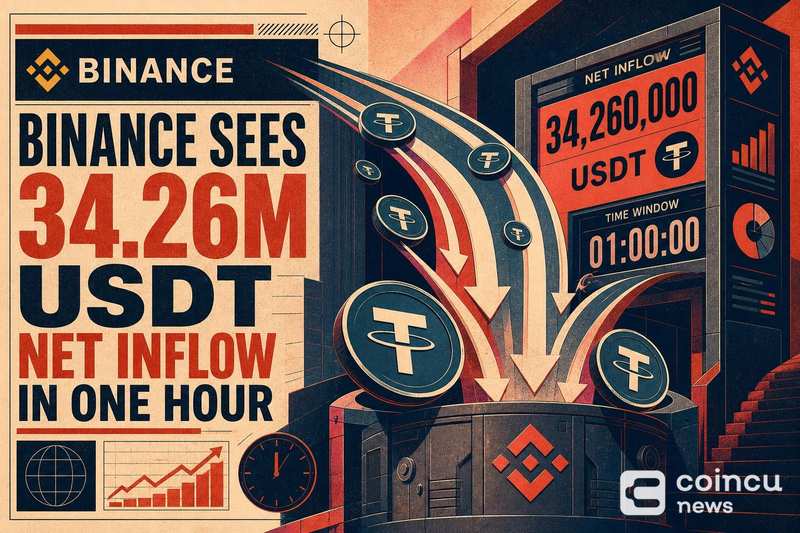
The figure represents the difference between USDT deposits and withdrawals on Binance during a single one-hour window. A positive net inflow means more USDT entered the exchange than left it during that period, according to spot inflow and outflow data tracked by Coinglass.
How Traders Read Stablecoin Net Inflows
Net inflow measures the balance between tokens moving onto an exchange versus tokens moving off. When inflows exceed outflows, the result is a positive net inflow. The reverse produces a net outflow.
USDT is the most widely used stablecoin for trading on centralized exchanges. Deposits of USDT to an exchange typically indicate that holders are positioning capital for potential trades, since USDT on an exchange wallet serves little purpose outside of active trading or lending.
Inflows Are Directional Context, Not a Trading Signal
A stablecoin inflow suggests fresh buying power is available, but it does not confirm that purchases will follow. Depositors may hold USDT on the exchange for days without executing trades, or they may be repositioning between spot and derivatives accounts.
Traders who monitor USDT exchange flow breakdowns typically treat inflow data as one input among several rather than an isolated buy signal. Price action, order book depth, and volume confirmation all carry weight alongside flow data.
Why Binance Stablecoin Flows Draw Attention
Binance consistently ranks as one of the highest-volume spot and derivatives trading venues in crypto. Stablecoin movements on Binance therefore reflect a meaningful share of overall market positioning activity.
Large inflows to a dominant venue can shift short-term sentiment because they suggest that capital is being staged for deployment. Participants in the broader ecosystem, including those active on platforms building on BNB Chain such as Aster, which recently added bStock collateral for perpetuals, often watch Binance flow data as a leading indicator of market direction.
Sentiment Impact Versus Executed Buying
It is important to separate the narrative effect of an inflow headline from actual executed volume. The 34.26 million USDT figure describes capital that arrived on Binance, not capital that was spent. Until spot or derivatives volume confirms buying activity, the inflow remains potential energy rather than kinetic.
Automated trading systems and AI-driven agents, similar to those being benchmarked publicly on platforms like Hyperliquid, may react to flow signals faster than manual traders, compressing the window between inflow detection and market impact.
What to Watch After the Inflow
A single one-hour snapshot can fade quickly if subsequent data does not reinforce it. Traders typically look for confirmation across several dimensions before treating an inflow as meaningful.
The first check is whether additional USDT continues to flow into Binance in the hours that follow. A sustained multi-hour inflow carries more weight than an isolated spike. One-hour readings can reflect routine treasury operations, market-maker rebalancing, or a single large depositor.
Spot trading volume on major pairs is the second signal. If the inflow converts into actual purchases, BTC/USDT and ETH/USDT volume on Binance should rise in tandem. Flat volume after a large inflow suggests the capital is sitting idle.
Derivatives activity provides a third lens. Open interest changes and funding rate shifts on Binance futures can indicate whether the stablecoin inflow is being used for leveraged positioning rather than spot accumulation.
Finally, cross-exchange flow data matters. The growing overlap between centralized exchange flows and decentralized trading platforms, highlighted by developments like industry reports on dual pressures facing regulated digital asset platforms, underscores why isolated venue data should be weighed carefully against broader market signals.
FAQ About Binance’s Latest USDT Net Inflow
What does net inflow mean in the context of exchange flows?
Net inflow is the total amount of a token deposited to an exchange minus the total amount withdrawn during a given timeframe. A positive net inflow means more entered than left.
Is a 34.26 million USDT inflow considered large?
The significance depends on the broader flow context. Tens of millions in stablecoin movement can be notable during low-activity periods but routine during high-volume sessions. Comparing the figure against the exchange’s average hourly flow provides better perspective.
Does a USDT inflow to Binance mean the market will go up?
Not necessarily. A stablecoin inflow indicates that capital is available for trading, but it does not guarantee that buying will occur. The capital could remain idle, be used for short positions, or be withdrawn later without trading.
Why is USDT the stablecoin most tracked for exchange flows?
USDT is the largest stablecoin by market capitalization and the most commonly used quote currency on centralized exchanges. Its movements therefore represent the broadest proxy for trading capital entering or exiting exchange venues.
Should one hour of data influence trading decisions?
One hour of data is a starting point, not a conclusion. Flow data is most useful when confirmed by subsequent hours of similar activity, supported by rising volume, and aligned with price and derivatives signals. Isolated snapshots should be treated as early indicators rather than actionable intelligence.
Disclaimer: This article is for informational purposes only and does not constitute financial or investment advice. Cryptocurrency and digital asset markets carry significant risk. Always do your own research before making decisions.
No tags available.


Other Posts








- China, US Conclude Trade Talks with Focus on Cooperation
- Crypto Weekly: NYSE Backs OKX, Kraken Gets Fed Access, BTC Sells
- DeriW Launches Edge Hour Trading Competition Platform for Derivatives Traders
- Court Upholds Fed’s Rejection of Custodia Bank’s Request
- Former CFO Convicted for $35M Fraudulent Crypto Investment
- Michael Saylor Denies Bitcoin Sell-Off Amid Large BTC Transfer
- Kazakhstan Explores Crypto Reserves Backed by National Funds
- JPMorgan Increases Holdings in BlackRock’s Bitcoin ETF
- Nordea Bank Introduces Bitcoin ETP Trading for Nordic Customers
- Buy Dogecoin on eToro: Step-by-Step Guide for Beginners (2024)
- XRP Spot ETF Launches on Nasdaq Amid Market Fluctuations
- Crypto Leaders Address Macro Volatility Amid Market Shifts
- Peter Schiff Challenges Michael Saylor on MSTR’s Business Model
- Thailand Orders Worldcoin to Delete 1.2 Million Biometric Records
- UK Proposes New DeFi Tax Framework to Ease User Burden
- WLFI Under Fire: Analyst Warns Hyperliquid Could Be Next
- Ancient Ethereum Whale Moves $1.19 Billion After Decade
- BlackRock Receives Large Crypto Transfers from Coinbase
- SEC Scrutiny on ALT5 Sigma’s Leadership Disclosure Timing
- MoonPay Gains Trust License for Crypto Operations in New York
- China, US Conclude Trade Talks with Focus on Cooperation
- Crypto Weekly: NYSE Backs OKX, Kraken Gets Fed Access, BTC Sells
- DeriW Launches Edge Hour Trading Competition Platform for Derivatives Traders
- Court Upholds Fed’s Rejection of Custodia Bank’s Request
- Former CFO Convicted for $35M Fraudulent Crypto Investment
- Michael Saylor Denies Bitcoin Sell-Off Amid Large BTC Transfer
- Kazakhstan Explores Crypto Reserves Backed by National Funds
- JPMorgan Increases Holdings in BlackRock’s Bitcoin ETF
- Nordea Bank Introduces Bitcoin ETP Trading for Nordic Customers
- Buy Dogecoin on eToro: Step-by-Step Guide for Beginners (2024)
- XRP Spot ETF Launches on Nasdaq Amid Market Fluctuations
- Crypto Leaders Address Macro Volatility Amid Market Shifts
- Peter Schiff Challenges Michael Saylor on MSTR’s Business Model
- Thailand Orders Worldcoin to Delete 1.2 Million Biometric Records
- UK Proposes New DeFi Tax Framework to Ease User Burden
- WLFI Under Fire: Analyst Warns Hyperliquid Could Be Next
- Ancient Ethereum Whale Moves $1.19 Billion After Decade
- BlackRock Receives Large Crypto Transfers from Coinbase
- SEC Scrutiny on ALT5 Sigma’s Leadership Disclosure Timing
- MoonPay Gains Trust License for Crypto Operations in New York
- China, US Conclude Trade Talks with Focus on Cooperation
- Crypto Weekly: NYSE Backs OKX, Kraken Gets Fed Access, BTC Sells
- DeriW Launches Edge Hour Trading Competition Platform for Derivatives Traders
- Court Upholds Fed’s Rejection of Custodia Bank’s Request
- Former CFO Convicted for $35M Fraudulent Crypto Investment
- Michael Saylor Denies Bitcoin Sell-Off Amid Large BTC Transfer
- Kazakhstan Explores Crypto Reserves Backed by National Funds
- JPMorgan Increases Holdings in BlackRock’s Bitcoin ETF
- Nordea Bank Introduces Bitcoin ETP Trading for Nordic Customers
- Buy Dogecoin on eToro: Step-by-Step Guide for Beginners (2024)
- XRP Spot ETF Launches on Nasdaq Amid Market Fluctuations
- Crypto Leaders Address Macro Volatility Amid Market Shifts
- Peter Schiff Challenges Michael Saylor on MSTR’s Business Model
- Thailand Orders Worldcoin to Delete 1.2 Million Biometric Records
- UK Proposes New DeFi Tax Framework to Ease User Burden
- WLFI Under Fire: Analyst Warns Hyperliquid Could Be Next
- Ancient Ethereum Whale Moves $1.19 Billion After Decade
- BlackRock Receives Large Crypto Transfers from Coinbase
- SEC Scrutiny on ALT5 Sigma’s Leadership Disclosure Timing
- MoonPay Gains Trust License for Crypto Operations in New York




Wallet V Launches Public Performance Benchmark for AI Trading Agents on Hyperliquid and Aster

NyesteCasino.com Reports: iGaming Industry Navigates Dual Pressures of Regulation and Growth