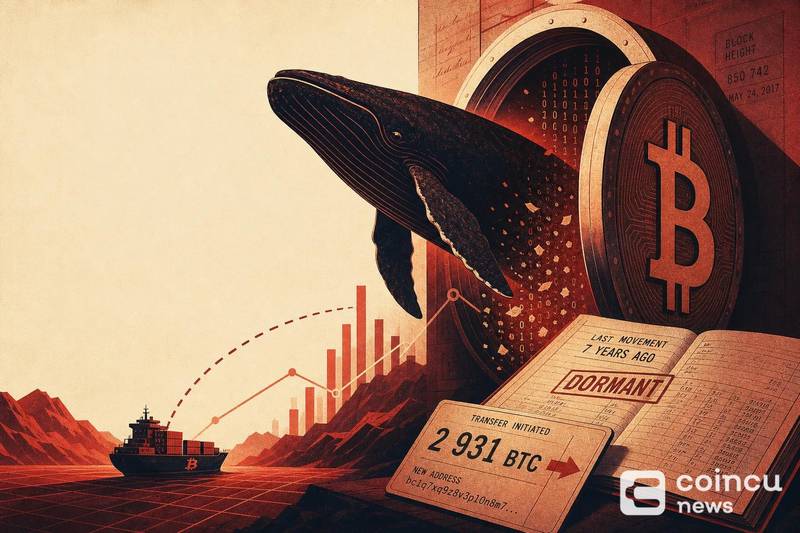
A Bitcoin whale wallet that had been dormant for seven years has moved 2,931 BTC, drawing attention from on-chain analysts and traders who track large, long-inactive holdings for signs of shifting sentiment among early holders.
The transfer was flagged by on-chain monitoring account OnchainLens on X, which identified the movement from a wallet that had shown no activity for approximately seven years. Whale Alert, another widely followed tracking service, also reported the transaction through its Telegram channel.
ON-CHAIN DATA
- Transaction hash: 1659fecf…9b2b02
- Amount: 2,931 BTC
- Dormancy period: ~7 years
No public information is available about the destination address, whether the coins were sent to an exchange, or the identity of the wallet owner. The transaction confirms only that the BTC moved, not why. For related coverage, see Dormant Whale Deposits 300 BTC to Binance After 2 Years.
Why Long-Dormant Bitcoin Wallet Activity Draws Attention
A “Bitcoin whale” refers to any entity holding a large amount of BTC, typically enough to move market prices if liquidated. At 2,931 BTC, this wallet comfortably qualifies. For related coverage, see Bitcoin Wallet Dormant for Over 12 Years Activates.
What makes this transfer notable is not just its size but the seven-year dormancy. Wallets that remain inactive for years are generally assumed to belong to lost keys, long-term conviction holders, or entities with no near-term intent to sell. When such a wallet suddenly moves, it breaks that assumption. For related coverage, see Bitcoin holds as 13.7-year whale move faces on-chain checks.
Similar events have drawn significant market attention in the past. A 14-year dormant Bitcoin wallet reactivated and moved 4,000 BTC in a previous incident, while another dormant whale moved $35 million in BTC with $30 million in pure profit. Each time, the community debated whether the movement signaled selling intent or routine custody management.
However, a transfer does not automatically mean selling pressure. BTC can move between wallets owned by the same entity for security upgrades, custody provider changes, or inheritance planning, none of which involve market sales. For related coverage, see 14-Year Dormant Bitcoin Wallet Reactivated Moving 4,000 BTC.
What This Transfer May Signal and What It Does Not Confirm
Several scenarios could explain the movement. The owner may be consolidating wallets, migrating to a newer address format, or transferring custody to a third-party provider. Institutional holders frequently rotate cold storage addresses as part of security protocols.
It is also possible that the holder moved the BTC to an exchange in preparation for a sale. But without confirmation that the receiving address belongs to an exchange, that remains speculation. As seen in a case where a dormant whale deposited 300 BTC to Binance after two years, exchange deposits are typically identifiable through on-chain analysis, and no such identification has been reported here.
The only confirmed fact is the movement itself. The motive, destination type, and any market impact remain unknown.
Dormant Supply and Long-Term Holder Behavior
Dormant supply returning to active circulation is a recurring theme in Bitcoin’s history. When coins that have been stationary for years begin moving, analysts interpret it as a potential shift in long-term holder conviction, though the direction of that shift is rarely clear from a single transaction.
A 13.7-year whale move previously tested the market’s ability to absorb old-coin activity without a significant price reaction. In that case, Bitcoin held its price level despite initial concerns.
Whether this 2,931 BTC transfer follows a similar pattern or represents something different will depend on where the coins ultimately settle, information that on-chain analysts will continue tracking in the coming days.
FAQ About the 2,931 BTC Dormant Whale Move
Does moving BTC mean the whale is selling?
No. Moving Bitcoin to a new address does not confirm a sale. The transfer could reflect wallet maintenance, a custody change, or an internal reorganization. Selling would require sending the BTC to an exchange and executing a trade, neither of which has been confirmed in this case.
Why is seven years of inactivity significant?
Seven years of dormancy suggests the holder either forgot about the wallet, lost access, or deliberately chose not to move the coins through multiple market cycles. When such a wallet becomes active again, it implies a deliberate decision by someone with deep conviction or a major change in circumstances.
Why do traders monitor dormant whale wallets?
Large dormant wallets represent concentrated supply that is effectively out of circulation. If that supply suddenly enters the market, it could create selling pressure. Traders watch these movements as an early warning signal, though not every whale transfer leads to a market event.
Disclaimer: This article is for informational purposes only and does not constitute financial or investment advice. Cryptocurrency and digital asset markets carry significant risk. Always do your own research before making decisions.
No tags available.


Other Posts








- China, US Conclude Trade Talks with Focus on Cooperation
- Crypto Weekly: NYSE Backs OKX, Kraken Gets Fed Access, BTC Sells
- Court Upholds Fed’s Rejection of Custodia Bank’s Request
- Former CFO Convicted for $35M Fraudulent Crypto Investment
- DeriW Launches Edge Hour Trading Competition Platform for Derivatives Traders
- Michael Saylor Denies Bitcoin Sell-Off Amid Large BTC Transfer
- Buy Dogecoin on eToro: Step-by-Step Guide for Beginners (2024)
- Kazakhstan Explores Crypto Reserves Backed by National Funds
- JPMorgan Increases Holdings in BlackRock’s Bitcoin ETF
- Nordea Bank Introduces Bitcoin ETP Trading for Nordic Customers
- XRP Spot ETF Launches on Nasdaq Amid Market Fluctuations
- Peter Schiff Challenges Michael Saylor on MSTR’s Business Model
- Thailand Orders Worldcoin to Delete 1.2 Million Biometric Records
- UK Proposes New DeFi Tax Framework to Ease User Burden
- WLFI Under Fire: Analyst Warns Hyperliquid Could Be Next
- Ancient Ethereum Whale Moves $1.19 Billion After Decade
- BlackRock Receives Large Crypto Transfers from Coinbase
- SEC Scrutiny on ALT5 Sigma’s Leadership Disclosure Timing
- Yala Injects $5.5 Million Amid Recovery Efforts
- Radiant Capital Faces $50M Loss in Major Security Breach
- China, US Conclude Trade Talks with Focus on Cooperation
- Crypto Weekly: NYSE Backs OKX, Kraken Gets Fed Access, BTC Sells
- Court Upholds Fed’s Rejection of Custodia Bank’s Request
- Former CFO Convicted for $35M Fraudulent Crypto Investment
- DeriW Launches Edge Hour Trading Competition Platform for Derivatives Traders
- Michael Saylor Denies Bitcoin Sell-Off Amid Large BTC Transfer
- Buy Dogecoin on eToro: Step-by-Step Guide for Beginners (2024)
- Kazakhstan Explores Crypto Reserves Backed by National Funds
- JPMorgan Increases Holdings in BlackRock’s Bitcoin ETF
- Nordea Bank Introduces Bitcoin ETP Trading for Nordic Customers
- XRP Spot ETF Launches on Nasdaq Amid Market Fluctuations
- Peter Schiff Challenges Michael Saylor on MSTR’s Business Model
- Thailand Orders Worldcoin to Delete 1.2 Million Biometric Records
- UK Proposes New DeFi Tax Framework to Ease User Burden
- WLFI Under Fire: Analyst Warns Hyperliquid Could Be Next
- Ancient Ethereum Whale Moves $1.19 Billion After Decade
- BlackRock Receives Large Crypto Transfers from Coinbase
- SEC Scrutiny on ALT5 Sigma’s Leadership Disclosure Timing
- Yala Injects $5.5 Million Amid Recovery Efforts
- Radiant Capital Faces $50M Loss in Major Security Breach
- China, US Conclude Trade Talks with Focus on Cooperation
- Crypto Weekly: NYSE Backs OKX, Kraken Gets Fed Access, BTC Sells
- Court Upholds Fed’s Rejection of Custodia Bank’s Request
- Former CFO Convicted for $35M Fraudulent Crypto Investment
- DeriW Launches Edge Hour Trading Competition Platform for Derivatives Traders
- Michael Saylor Denies Bitcoin Sell-Off Amid Large BTC Transfer
- Buy Dogecoin on eToro: Step-by-Step Guide for Beginners (2024)
- Kazakhstan Explores Crypto Reserves Backed by National Funds
- JPMorgan Increases Holdings in BlackRock’s Bitcoin ETF
- Nordea Bank Introduces Bitcoin ETP Trading for Nordic Customers
- XRP Spot ETF Launches on Nasdaq Amid Market Fluctuations
- Peter Schiff Challenges Michael Saylor on MSTR’s Business Model
- Thailand Orders Worldcoin to Delete 1.2 Million Biometric Records
- UK Proposes New DeFi Tax Framework to Ease User Burden
- WLFI Under Fire: Analyst Warns Hyperliquid Could Be Next
- Ancient Ethereum Whale Moves $1.19 Billion After Decade
- BlackRock Receives Large Crypto Transfers from Coinbase
- SEC Scrutiny on ALT5 Sigma’s Leadership Disclosure Timing
- Yala Injects $5.5 Million Amid Recovery Efforts
- Radiant Capital Faces $50M Loss in Major Security Breach




AFX Surpasses $1.1 Billion in Total Trading Volume, Highlighting Capital Efficiency in On-Chain Derivatives