SEC Charges Mining Automatic Over Alleged $22M Crypto Scam
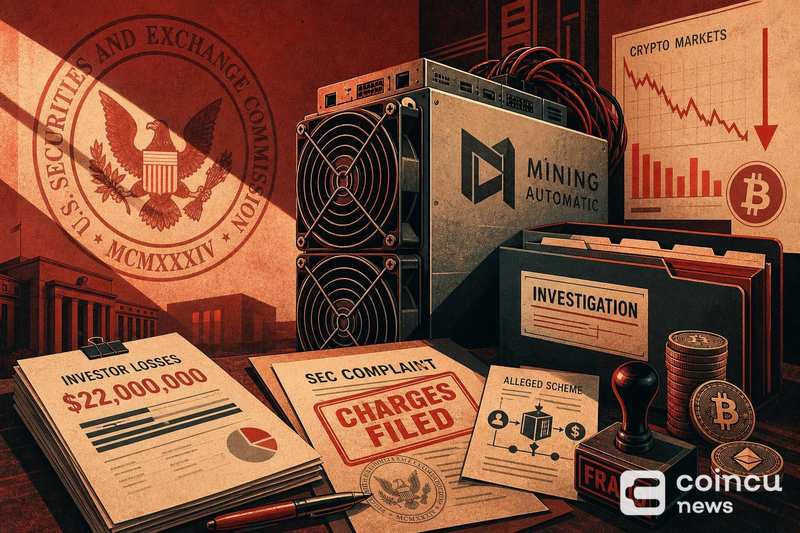
The U.S. Securities and Exchange Commission has charged Mining Automatic in connection with an alleged $22 million crypto mining investment scam, according to the enforcement framing at the center of this case. The action targets a purported cryptocurrency mining program that regulators allege raised money from investors under false pretenses.
What The SEC Alleges Against Mining Automatic
These are allegations, not proven findings. Under U.S. law, defendants named in an SEC enforcement action are presumed not liable until the matter is resolved through settlement or the courts. For related coverage, see Mining Platform Selection Guide: Comprehensive Review and Trust Analysis of MasHash, Binance, and ECOS.
The Core Allegation
The case centers on a crypto mining investment offering marketed under the Mining Automatic name. Regulators allege the program was operated as a scheme rather than a legitimate mining business. For related coverage, see Top 5 Crypto Staking Platforms for 2025: Best Ways to Earn Passive Income.
The Claimed Amount
The figure attached to the matter is roughly $22 million, the amount investors allegedly committed to the offering. That scale places the case among material investor-harm actions rather than a minor dispute. For related coverage, see Curve Finance Review: The Pros and Cons Every Crypto Investor Must Know.
The Claimed Harm To Investors
Investment-fraud investigations of this type typically involve efforts to identify and contact affected participants. The FBI maintains a dedicated process for seeking victim information in fraud cases, which is where individuals who believe they were harmed are directed to submit details.
How The Alleged Crypto Mining Investment Scheme Was Presented
Crypto mining investment offers are commonly framed as a way to earn passive income from hardware that generates cryptocurrency, without the investor operating any equipment. The alleged deception in cases like this usually lies in the gap between what investors are told they are funding and what actually happens to the money.
Legitimate mining exposure requires verifiable hardware, real hash power, and transparent custody of funds. Investors evaluating such programs can compare them against established options covered in a mining platform selection and trust analysis guide before committing capital.
Because the specific marketing claims made by the defendants have not been independently verified in the available record, they should be treated as allegations rather than established fact until the case produces documented findings.
Why The SEC Case Matters For Crypto Investors
An SEC charge elevates a matter from a private grievance to a federal enforcement action, giving regulators subpoena power and the ability to seek disgorgement and penalties. For retail readers, that shift signals the government views the alleged conduct as a securities-law violation, not just a bad investment.
The case sits alongside other recent U.S. actions against alleged crypto fraud, including a South Dakota investor indicted in an alleged $20 million fraud and a CFTC action over a $14 million crypto and futures scheme. The pattern shows sustained regulatory attention on yield-style and mining-linked pitches.
Red Flags In Crypto Mining Investment Offers
The alleged mechanics of this case map onto warning signs investors can apply to any mining-linked offer:
- Guaranteed or fixed returns: Real mining output fluctuates with network difficulty, energy costs, and coin prices. A promise of steady payouts is a signal to verify before funding.
- Unverifiable mining output: If an operator cannot show real hardware, hash power, or on-chain proof of production, there is no way to confirm the mining is genuine.
- Vague custody of funds: Investors should know exactly where their money goes and who controls it. Opaque custody is a recurring feature of alleged schemes.
- Pressure to reinvest passive income: Programs marketed purely as hands-off passive income deserve scrutiny; compare claims against transparent passive-income platform reviews before acting.
Each of these ties back to a single principle: verify the underlying operation independently before sending money, because marketing complexity can obscure the absence of a real business.
FAQ About The Mining Automatic SEC Case
What is Mining Automatic?
Mining Automatic is the entity named in the alleged crypto mining investment offering at the center of the SEC action. The available record does not confirm further operational details beyond the mining-investment framing.
Why did the SEC act?
The SEC alleges the offering functioned as an investment scam rather than a legitimate mining business. The specific legal findings will depend on how the case proceeds.
How much money is involved?
The action references roughly $22 million allegedly raised from investors.
What should affected investors do?
Individuals who believe they invested can review federal victim-services processes, such as the FBI’s published guidance on submitting victim information in active fraud investigations, which outlines how affected parties provide details to authorities.
Disclaimer: This article is for informational purposes only and does not constitute financial or investment advice. Cryptocurrency and digital asset markets carry significant risk. Always do your own research before making decisions.
No tags available.


Other Posts








- China, US Conclude Trade Talks with Focus on Cooperation
- Crypto Weekly: NYSE Backs OKX, Kraken Gets Fed Access, BTC Sells
- Court Upholds Fed’s Rejection of Custodia Bank’s Request
- Former CFO Convicted for $35M Fraudulent Crypto Investment
- DeriW Launches Edge Hour Trading Competition Platform for Derivatives Traders
- Michael Saylor Denies Bitcoin Sell-Off Amid Large BTC Transfer
- Buy Dogecoin on eToro: Step-by-Step Guide for Beginners (2024)
- Kazakhstan Explores Crypto Reserves Backed by National Funds
- JPMorgan Increases Holdings in BlackRock’s Bitcoin ETF
- Nordea Bank Introduces Bitcoin ETP Trading for Nordic Customers
- XRP Spot ETF Launches on Nasdaq Amid Market Fluctuations
- Peter Schiff Challenges Michael Saylor on MSTR’s Business Model
- Thailand Orders Worldcoin to Delete 1.2 Million Biometric Records
- UK Proposes New DeFi Tax Framework to Ease User Burden
- WLFI Under Fire: Analyst Warns Hyperliquid Could Be Next
- Ancient Ethereum Whale Moves $1.19 Billion After Decade
- BlackRock Receives Large Crypto Transfers from Coinbase
- SEC Scrutiny on ALT5 Sigma’s Leadership Disclosure Timing
- Yala Injects $5.5 Million Amid Recovery Efforts
- Radiant Capital Faces $50M Loss in Major Security Breach
- China, US Conclude Trade Talks with Focus on Cooperation
- Crypto Weekly: NYSE Backs OKX, Kraken Gets Fed Access, BTC Sells
- Court Upholds Fed’s Rejection of Custodia Bank’s Request
- Former CFO Convicted for $35M Fraudulent Crypto Investment
- DeriW Launches Edge Hour Trading Competition Platform for Derivatives Traders
- Michael Saylor Denies Bitcoin Sell-Off Amid Large BTC Transfer
- Buy Dogecoin on eToro: Step-by-Step Guide for Beginners (2024)
- Kazakhstan Explores Crypto Reserves Backed by National Funds
- JPMorgan Increases Holdings in BlackRock’s Bitcoin ETF
- Nordea Bank Introduces Bitcoin ETP Trading for Nordic Customers
- XRP Spot ETF Launches on Nasdaq Amid Market Fluctuations
- Peter Schiff Challenges Michael Saylor on MSTR’s Business Model
- Thailand Orders Worldcoin to Delete 1.2 Million Biometric Records
- UK Proposes New DeFi Tax Framework to Ease User Burden
- WLFI Under Fire: Analyst Warns Hyperliquid Could Be Next
- Ancient Ethereum Whale Moves $1.19 Billion After Decade
- BlackRock Receives Large Crypto Transfers from Coinbase
- SEC Scrutiny on ALT5 Sigma’s Leadership Disclosure Timing
- Yala Injects $5.5 Million Amid Recovery Efforts
- Radiant Capital Faces $50M Loss in Major Security Breach
- China, US Conclude Trade Talks with Focus on Cooperation
- Crypto Weekly: NYSE Backs OKX, Kraken Gets Fed Access, BTC Sells
- Court Upholds Fed’s Rejection of Custodia Bank’s Request
- Former CFO Convicted for $35M Fraudulent Crypto Investment
- DeriW Launches Edge Hour Trading Competition Platform for Derivatives Traders
- Michael Saylor Denies Bitcoin Sell-Off Amid Large BTC Transfer
- Buy Dogecoin on eToro: Step-by-Step Guide for Beginners (2024)
- Kazakhstan Explores Crypto Reserves Backed by National Funds
- JPMorgan Increases Holdings in BlackRock’s Bitcoin ETF
- Nordea Bank Introduces Bitcoin ETP Trading for Nordic Customers
- XRP Spot ETF Launches on Nasdaq Amid Market Fluctuations
- Peter Schiff Challenges Michael Saylor on MSTR’s Business Model
- Thailand Orders Worldcoin to Delete 1.2 Million Biometric Records
- UK Proposes New DeFi Tax Framework to Ease User Burden
- WLFI Under Fire: Analyst Warns Hyperliquid Could Be Next
- Ancient Ethereum Whale Moves $1.19 Billion After Decade
- BlackRock Receives Large Crypto Transfers from Coinbase
- SEC Scrutiny on ALT5 Sigma’s Leadership Disclosure Timing
- Yala Injects $5.5 Million Amid Recovery Efforts
- Radiant Capital Faces $50M Loss in Major Security Breach

HashKey Middle East Launches BTC and ETH Perpetual Derivatives After Dubai VARA Approval


Binance Launches U-Margined Perpetual Contracts for SHAZ, SOFI, PANW and PENG

Bitmine Immersion Technologies (BMNR) Announces ETH Holdings Reach 5.78 Million Tokens, and Total Crypto and Total Cash Holdings of $11.5 Billion

GLOBAL MEDIA PROCUREMENT: THE 500-YEAR YIXING ZISHA TEAPOTS PARADIGM