Binance Routes Foreign Law Enforcement Requests Through UAE MLAT Process
Binance is reportedly routing most foreign law enforcement requests through the United Arab Emirates mutual legal assistance treaty process, a procedural shift that would require overseas investigators to work through formal government-to-government channels rather than approach the exchange directly.
What Binance reportedly changed in handling foreign requests
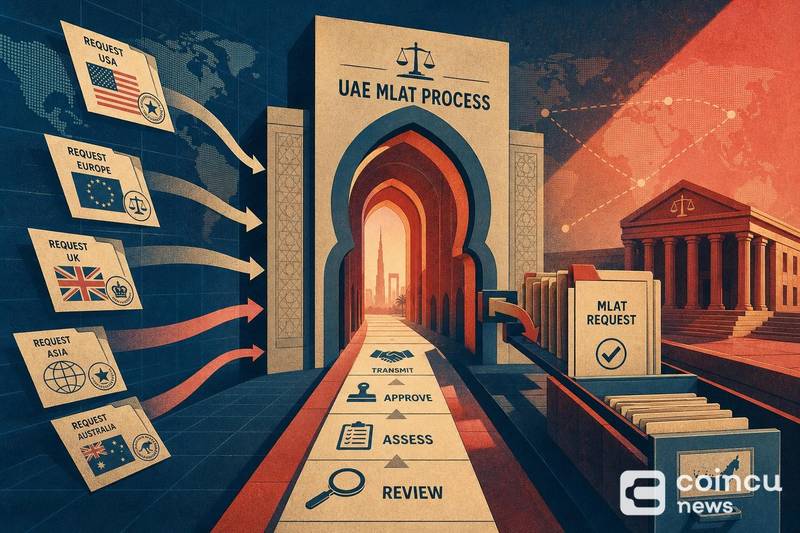
The reported change concerns how Binance responds to data requests from law enforcement agencies outside its home jurisdiction. Rather than fielding those requests directly, the exchange is said to be directing them toward the UAE’s mutual legal assistance treaty, or MLAT, framework. For related coverage, see Binance Wallet Adds Changxin Technology Perpetuals With 20x Leverage.
An MLAT is a formal agreement between two governments that sets out how they exchange evidence and legal cooperation for criminal investigations. In plain terms, it adds an official diplomatic layer between a foreign investigator and the data they are seeking. For related coverage, see Binance Launches TMFUSDT, TBTUSDT, and BITOUSDT Perpetual Contracts.
This reporting has not been independently verified in full. Coverage referencing an internal staff memo was published by The Information, and readers should treat the specifics as reported rather than confirmed. The described policy applies to foreign law enforcement requests, not to every user-data request the exchange receives globally. For related coverage, see CoinGlass Says TradFi Perpetual Volume Is Concentrated on Binance, OKX, Bitget.
How an MLAT route changes the path for cross-border requests
Binance publishes guidance for authorities through its law enforcement support portal, which outlines how agencies can submit requests to the exchange. A treaty-based route changes the entry point for that process.
Under a direct model, an agency contacts the platform and submits a request through its established channels. Under an MLAT model, that same request generally must pass through the requesting country’s government and then the treaty partner, in this case the UAE, before reaching the company.
The exchange’s handling of personal data is also governed by its privacy documentation, which frames the legal basis on which user information can be disclosed. The distinction here is procedural: the treaty channel adds formal steps, and this article does not assert any intent to obstruct investigations.
Why the move draws attention after the DOJ settlement
The reported shift lands against a specific compliance backdrop. In 2023, Binance and its founder pleaded guilty to federal charges in a resolution valued at more than $4 billion, according to the U.S. Department of Justice.
Because that settlement carried extensive commitments around cooperation and monitoring, any reported change to how the exchange handles enforcement workflows tends to draw scrutiny. The available evidence does not establish that the reported request-routing policy conflicts with the settlement, and no such finding should be inferred from this reporting alone.
Binance remains the subject of steady market attention on the operational side as well, including recent activity such as a large multi-day ETH withdrawal from the platform and new listings like an upcoming U/USD spot trading pair.
What is confirmed, what is reported, and what remains unclear
The verification status of this story is partial, and the confidence attached to it is low. The material drawn from Binance’s own published privacy notice and support pages describes how the company documents its processes; the core claim about redirecting requests to the UAE MLAT process comes from memo-based reporting.
No meaningful price or trading-volume reaction was verified in connection with this reporting, and this article makes no claim of market impact. Research on the story was also cut short before a full competitor and source scan could be completed.
Accordingly, no claims are made here about specific effects on end users or about any deliberate frustration of investigations. Those questions are not supported by the current evidence.
FAQ
What is an MLAT?
A mutual legal assistance treaty is a formal agreement between two governments for sharing evidence and cooperation in criminal cases. It creates an official channel that requests must travel through.
Why would Binance route requests through the UAE?
The exchange is reported to be directing foreign law enforcement requests through the UAE treaty process. The underlying rationale is not confirmed in the available research.
Does this affect all law enforcement requests?
The reporting concerns foreign law enforcement requests specifically, not every user-data request the exchange receives worldwide.
Is Binance accused of refusing cooperation?
No such finding is established in the evidence reviewed. The reported change is a procedural routing shift, and this article does not allege obstruction.
What evidence is still missing?
Independent verification of the memo-based claim, any confirmed market reaction, and a complete competitor scan are absent. The research was terminated early before those gaps could be closed.
Disclaimer: This article is for informational purposes only and does not constitute financial or investment advice. Cryptocurrency and digital asset markets carry significant risk. Always do your own research before making decisions.
No tags available.


Other Posts








- China, US Conclude Trade Talks with Focus on Cooperation
- Crypto Weekly: NYSE Backs OKX, Kraken Gets Fed Access, BTC Sells
- Court Upholds Fed’s Rejection of Custodia Bank’s Request
- Former CFO Convicted for $35M Fraudulent Crypto Investment
- DeriW Launches Edge Hour Trading Competition Platform for Derivatives Traders
- Michael Saylor Denies Bitcoin Sell-Off Amid Large BTC Transfer
- Buy Dogecoin on eToro: Step-by-Step Guide for Beginners (2024)
- Kazakhstan Explores Crypto Reserves Backed by National Funds
- JPMorgan Increases Holdings in BlackRock’s Bitcoin ETF
- Nordea Bank Introduces Bitcoin ETP Trading for Nordic Customers
- XRP Spot ETF Launches on Nasdaq Amid Market Fluctuations
- Peter Schiff Challenges Michael Saylor on MSTR’s Business Model
- Thailand Orders Worldcoin to Delete 1.2 Million Biometric Records
- UK Proposes New DeFi Tax Framework to Ease User Burden
- WLFI Under Fire: Analyst Warns Hyperliquid Could Be Next
- Ancient Ethereum Whale Moves $1.19 Billion After Decade
- BlackRock Receives Large Crypto Transfers from Coinbase
- SEC Scrutiny on ALT5 Sigma’s Leadership Disclosure Timing
- Yala Injects $5.5 Million Amid Recovery Efforts
- Radiant Capital Faces $50M Loss in Major Security Breach
- China, US Conclude Trade Talks with Focus on Cooperation
- Crypto Weekly: NYSE Backs OKX, Kraken Gets Fed Access, BTC Sells
- Court Upholds Fed’s Rejection of Custodia Bank’s Request
- Former CFO Convicted for $35M Fraudulent Crypto Investment
- DeriW Launches Edge Hour Trading Competition Platform for Derivatives Traders
- Michael Saylor Denies Bitcoin Sell-Off Amid Large BTC Transfer
- Buy Dogecoin on eToro: Step-by-Step Guide for Beginners (2024)
- Kazakhstan Explores Crypto Reserves Backed by National Funds
- JPMorgan Increases Holdings in BlackRock’s Bitcoin ETF
- Nordea Bank Introduces Bitcoin ETP Trading for Nordic Customers
- XRP Spot ETF Launches on Nasdaq Amid Market Fluctuations
- Peter Schiff Challenges Michael Saylor on MSTR’s Business Model
- Thailand Orders Worldcoin to Delete 1.2 Million Biometric Records
- UK Proposes New DeFi Tax Framework to Ease User Burden
- WLFI Under Fire: Analyst Warns Hyperliquid Could Be Next
- Ancient Ethereum Whale Moves $1.19 Billion After Decade
- BlackRock Receives Large Crypto Transfers from Coinbase
- SEC Scrutiny on ALT5 Sigma’s Leadership Disclosure Timing
- Yala Injects $5.5 Million Amid Recovery Efforts
- Radiant Capital Faces $50M Loss in Major Security Breach
- China, US Conclude Trade Talks with Focus on Cooperation
- Crypto Weekly: NYSE Backs OKX, Kraken Gets Fed Access, BTC Sells
- Court Upholds Fed’s Rejection of Custodia Bank’s Request
- Former CFO Convicted for $35M Fraudulent Crypto Investment
- DeriW Launches Edge Hour Trading Competition Platform for Derivatives Traders
- Michael Saylor Denies Bitcoin Sell-Off Amid Large BTC Transfer
- Buy Dogecoin on eToro: Step-by-Step Guide for Beginners (2024)
- Kazakhstan Explores Crypto Reserves Backed by National Funds
- JPMorgan Increases Holdings in BlackRock’s Bitcoin ETF
- Nordea Bank Introduces Bitcoin ETP Trading for Nordic Customers
- XRP Spot ETF Launches on Nasdaq Amid Market Fluctuations
- Peter Schiff Challenges Michael Saylor on MSTR’s Business Model
- Thailand Orders Worldcoin to Delete 1.2 Million Biometric Records
- UK Proposes New DeFi Tax Framework to Ease User Burden
- WLFI Under Fire: Analyst Warns Hyperliquid Could Be Next
- Ancient Ethereum Whale Moves $1.19 Billion After Decade
- BlackRock Receives Large Crypto Transfers from Coinbase
- SEC Scrutiny on ALT5 Sigma’s Leadership Disclosure Timing
- Yala Injects $5.5 Million Amid Recovery Efforts
- Radiant Capital Faces $50M Loss in Major Security Breach


1inch Launches Aqua Shared Liquidity Protocol for Multi-Position DeFi Trading

Across Protocol Attacker-Linked Address Returns 331.8 ETH After Exploit

1inch launches Aqua to the public, introducing the first shared liquidity layer for DeFi
Canton’s Decentralized App Layer Launches, Backed by $1M+ Foundation Grant