ABcripto Says Brazil’s 24-Hour Stablecoin Lock Proposal Is Disproportionate
ABcripto, Brazil’s leading digital-asset trade association, has called the Central Bank of Brazil’s proposed 24-hour stablecoin transfer lock disproportionate, arguing the restriction would impose excessive burdens on market participants without matching regulatory benefits.
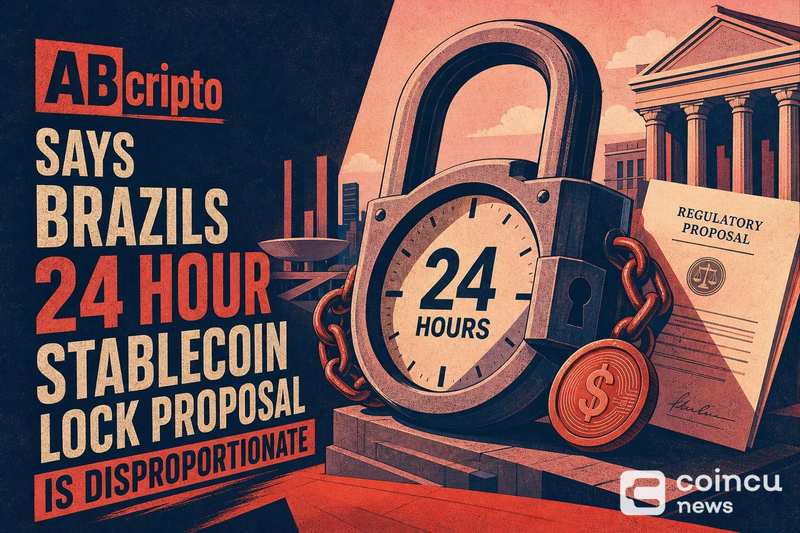
The proposal emerged through a public consultation process managed by the Central Bank. According to consultation materials published on the Brazilian government’s public participation portal, the measure would require stablecoin transfers to be held for 24 hours before settlement, effectively introducing a mandatory delay into what are currently near-instant digital-asset transactions. For related coverage, see BM Wallet Launches Prediction Market With First World Cup Sector Market.
The rule remains a proposal, not a finalized regulation. It is part of the Central Bank’s broader effort to build a supervisory framework for digital assets circulating within the Brazilian financial system. For related coverage, see TRUMP Meme Coin Investors Lost $3.81B by End of June: Data.
ABcripto’s Case Against the 24-Hour Lock
ABcripto submitted a formal response to the Central Bank challenging the proposal. The trade group’s response document laid out the association’s objections, centering on the argument that a blanket 24-hour hold creates a mismatch between the stated policy goal and the operational cost imposed on exchanges and users. For related coverage, see Ethereum Net Supply Rises 83,550 ETH in 30 Days.
The core of ABcripto’s position is that the restriction is disproportionate to the risk it aims to address. A mandatory transfer delay would introduce settlement friction across all stablecoin transactions, not just those flagged for compliance concerns. For related coverage, see Ether Nears $1,800 as ETH Gains 0.76% in 24 Hours.
Brazilian reporting from Exame noted that ABcripto has asked the Central Bank to suspend the proposal entirely. The trade group appears to view the mechanism as one that would reduce liquidity and increase operational burden for compliant firms without proportionally improving regulatory oversight.
For exchanges and payment providers that handle stablecoin-denominated flows, a 24-hour hold would affect treasury management, user experience, and cross-border settlement timelines. Stablecoins, particularly those pegged to the US dollar, have become a significant part of Brazil’s crypto market, and restrictions on their movement would ripple through multiple business lines.
What This Signals for Brazil’s Digital-Asset Rulebook
The proposal matters beyond the immediate dispute between ABcripto and the Central Bank. It represents a specific design choice in how Brazil may regulate stablecoin movement, one that prioritizes transfer-level controls over alternative compliance mechanisms.
The Central Bank’s 2025 regulatory agenda indicates that digital-asset supervision is an active priority. The stablecoin lock proposal fits within that broader effort, but the approach of mandating holding periods on transfers is distinct from frameworks adopted in other jurisdictions.
This debate is fundamentally about regulatory design and compliance costs, not token price action. The question is whether a time-based transfer restriction is the most effective tool for achieving the Central Bank’s supervisory objectives, or whether it introduces unnecessary friction. Similar questions about stablecoin infrastructure design are being tested across multiple markets.
For institutional participants and exchanges operating in Brazil, the outcome will shape compliance architecture. A 24-hour hold requirement would need to be built into custody, settlement, and payment systems, representing a material implementation cost.
What Remains Unclear
Several important details about the proposal have not been independently verified through available primary documents. The exact scope of which stablecoin transactions would be subject to the hold, whether exemptions exist for certain transaction types or regulated entities, and the proposed enforcement mechanism all remain open questions.
The timeline for any final rule is also uncertain. Public consultation processes in Brazil involve review periods and potential revisions, and the Central Bank has not publicly committed to a specific implementation date based on available evidence.
Whether the proposal will be modified in response to industry feedback, including ABcripto’s formal objection, or whether it will proceed in its current form is the central unresolved question. The consultation process is designed to collect exactly this kind of stakeholder input.
FAQ: Key Questions in Brazil’s Stablecoin Debate
Is the 24-hour stablecoin lock already in effect?
No. The measure is a proposal under public consultation. It has not been finalized or implemented. The Central Bank is still in the process of collecting feedback from market participants and other stakeholders.
What does ABcripto want changed?
ABcripto has asked the Central Bank to suspend the proposal. The trade association argues that the 24-hour hold is disproportionate to its regulatory objective and would impose excessive operational costs on compliant market participants. Their formal response was submitted as part of the public consultation process.
What is the next regulatory milestone?
The next step is the conclusion of the public consultation period and the Central Bank’s review of submitted responses. No specific date for a final decision has been confirmed in available primary documents. Market participants should monitor the Central Bank’s regulatory agenda for updates on digital-asset supervision timelines.
Disclaimer: This article is for informational purposes only and does not constitute financial or investment advice. Cryptocurrency and digital asset markets carry significant risk. Always do your own research before making decisions.
No tags available.


Other Posts








- China, US Conclude Trade Talks with Focus on Cooperation
- Court Upholds Fed’s Rejection of Custodia Bank’s Request
- Crypto Weekly: NYSE Backs OKX, Kraken Gets Fed Access, BTC Sells
- Former CFO Convicted for $35M Fraudulent Crypto Investment
- DeriW Launches Edge Hour Trading Competition Platform for Derivatives Traders
- Michael Saylor Denies Bitcoin Sell-Off Amid Large BTC Transfer
- Buy Dogecoin on eToro: Step-by-Step Guide for Beginners (2024)
- Kazakhstan Explores Crypto Reserves Backed by National Funds
- JPMorgan Increases Holdings in BlackRock’s Bitcoin ETF
- Nordea Bank Introduces Bitcoin ETP Trading for Nordic Customers
- XRP Spot ETF Launches on Nasdaq Amid Market Fluctuations
- Peter Schiff Challenges Michael Saylor on MSTR’s Business Model
- Thailand Orders Worldcoin to Delete 1.2 Million Biometric Records
- UK Proposes New DeFi Tax Framework to Ease User Burden
- WLFI Under Fire: Analyst Warns Hyperliquid Could Be Next
- Ancient Ethereum Whale Moves $1.19 Billion After Decade
- BlackRock Receives Large Crypto Transfers from Coinbase
- SEC Scrutiny on ALT5 Sigma’s Leadership Disclosure Timing
- Yala Injects $5.5 Million Amid Recovery Efforts
- Radiant Capital Faces $50M Loss in Major Security Breach
- China, US Conclude Trade Talks with Focus on Cooperation
- Court Upholds Fed’s Rejection of Custodia Bank’s Request
- Crypto Weekly: NYSE Backs OKX, Kraken Gets Fed Access, BTC Sells
- Former CFO Convicted for $35M Fraudulent Crypto Investment
- DeriW Launches Edge Hour Trading Competition Platform for Derivatives Traders
- Michael Saylor Denies Bitcoin Sell-Off Amid Large BTC Transfer
- Buy Dogecoin on eToro: Step-by-Step Guide for Beginners (2024)
- Kazakhstan Explores Crypto Reserves Backed by National Funds
- JPMorgan Increases Holdings in BlackRock’s Bitcoin ETF
- Nordea Bank Introduces Bitcoin ETP Trading for Nordic Customers
- XRP Spot ETF Launches on Nasdaq Amid Market Fluctuations
- Peter Schiff Challenges Michael Saylor on MSTR’s Business Model
- Thailand Orders Worldcoin to Delete 1.2 Million Biometric Records
- UK Proposes New DeFi Tax Framework to Ease User Burden
- WLFI Under Fire: Analyst Warns Hyperliquid Could Be Next
- Ancient Ethereum Whale Moves $1.19 Billion After Decade
- BlackRock Receives Large Crypto Transfers from Coinbase
- SEC Scrutiny on ALT5 Sigma’s Leadership Disclosure Timing
- Yala Injects $5.5 Million Amid Recovery Efforts
- Radiant Capital Faces $50M Loss in Major Security Breach
- China, US Conclude Trade Talks with Focus on Cooperation
- Court Upholds Fed’s Rejection of Custodia Bank’s Request
- Crypto Weekly: NYSE Backs OKX, Kraken Gets Fed Access, BTC Sells
- Former CFO Convicted for $35M Fraudulent Crypto Investment
- DeriW Launches Edge Hour Trading Competition Platform for Derivatives Traders
- Michael Saylor Denies Bitcoin Sell-Off Amid Large BTC Transfer
- Buy Dogecoin on eToro: Step-by-Step Guide for Beginners (2024)
- Kazakhstan Explores Crypto Reserves Backed by National Funds
- JPMorgan Increases Holdings in BlackRock’s Bitcoin ETF
- Nordea Bank Introduces Bitcoin ETP Trading for Nordic Customers
- XRP Spot ETF Launches on Nasdaq Amid Market Fluctuations
- Peter Schiff Challenges Michael Saylor on MSTR’s Business Model
- Thailand Orders Worldcoin to Delete 1.2 Million Biometric Records
- UK Proposes New DeFi Tax Framework to Ease User Burden
- WLFI Under Fire: Analyst Warns Hyperliquid Could Be Next
- Ancient Ethereum Whale Moves $1.19 Billion After Decade
- BlackRock Receives Large Crypto Transfers from Coinbase
- SEC Scrutiny on ALT5 Sigma’s Leadership Disclosure Timing
- Yala Injects $5.5 Million Amid Recovery Efforts
- Radiant Capital Faces $50M Loss in Major Security Breach

Israel’s Bank Leumi to Revisit Bitcoin Trading: Key Implications


Norway Wealth Fund’s Indirect Bitcoin Exposure Reaches Record High as Strategy Makes Up 86%
Bitmine Immersion Technologies Announces Record and Payment Dates for Cash Dividends on 9.50% Series A Perpetual Preferred Stock

Crypto Player Takes Home $1.749M After a Million PSG Bet on 1win