Busan Bank Completes Korean Won Stablecoin Infrastructure Pilot on Kaia Chain
South Korea’s Busan Bank has completed a Korean won stablecoin infrastructure pilot on Kaia Chain, marking a step forward in the country’s exploration of bank-backed digital currency payments built on public blockchain rails.
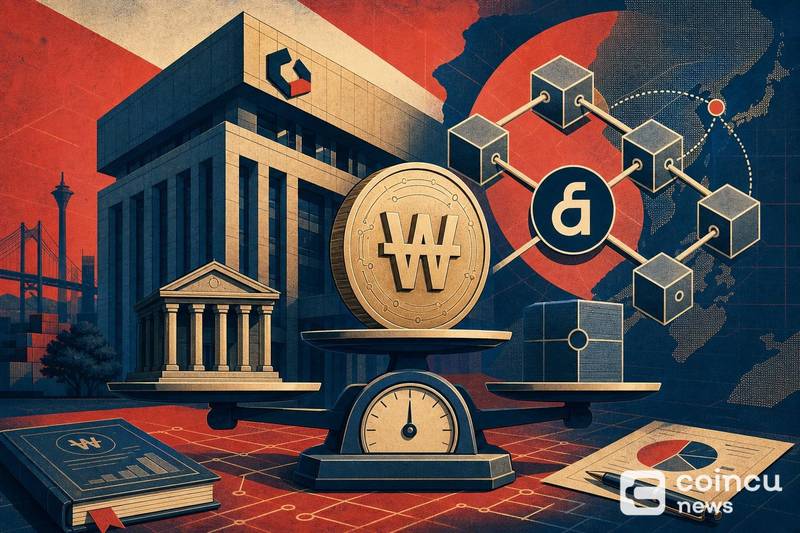
The pilot, described as a proof-of-concept for won-denominated stablecoin payments, was completed in partnership with fintech firm Danal Fintech. The initiative tested infrastructure for processing stablecoin-based transactions rather than launching a consumer-facing product, according to a report from Digital Today. For related coverage, see Xi Jinping and Trump Discuss Cooperation in Busan.
Busan Bank, part of the BNK Financial Group, is a regional bank headquartered in the port city of Busan. Its involvement signals that institutional interest in tokenized fiat infrastructure extends beyond South Korea’s largest financial groups. For related coverage, see Xi Jinping and Trump to Discuss Trade in Busan.
Kaia Chain as the Infrastructure Layer
The pilot was conducted on Kaia Chain, a blockchain platform that positions itself as an enterprise-grade network for institutional use cases. Kaia Chain provided the underlying blockchain environment for testing the stablecoin payment flow.
The choice of Kaia Chain as the settlement layer is notable because it places a traditional South Korean bank’s pilot on a public blockchain network rather than a fully private or permissioned ledger. This approach aligns with a broader pattern among South Korean financial institutions exploring hybrid models that combine regulated banking with blockchain-based settlement.
The city of Busan itself has pursued blockchain adoption as a strategic priority, with initiatives including efforts to launch a decentralized digital commodity exchange and broader moves to position itself as a fintech hub. The Korea Exchange has also backed Busan’s role as a virtual-asset hub, providing additional institutional context for the bank’s pilot.
South Korea’s Growing Bank-Led Stablecoin Activity
Busan Bank is not the only South Korean financial institution testing stablecoin infrastructure. KB Financial Group, one of the country’s largest banking conglomerates, separately completed a stablecoin pilot focused on offline payments, as reported via CoinTelegraph.
These parallel efforts suggest that multiple tiers of South Korea’s banking sector are independently evaluating how won-denominated stablecoins could fit into existing payment systems. The pilots differ in scope and chain selection but share a common thread: traditional banks testing blockchain-based fiat settlement.
South Korea’s regulatory environment for digital assets has evolved significantly in recent years. The country enacted the Virtual Asset User Protection Act in 2024, establishing clearer rules for crypto exchanges and digital asset service providers. However, specific regulatory frameworks for bank-issued or bank-backed stablecoins remain under development.
What Has Not Been Confirmed Beyond the Pilot
The completion of the infrastructure pilot does not confirm that Busan Bank will issue a Korean won stablecoin for public use. No launch date, transaction volume, or issuance scale has been disclosed in available reporting.
Key details remain absent from the public record: the compliance pathway for a potential commercial stablecoin, the role of South Korea’s Financial Services Commission in approving any future issuance, and whether the pilot’s results met internal benchmarks for moving to a production phase.
Infrastructure completion is a technical milestone, not a regulatory or commercial one. The gap between a successful proof-of-concept and a live, consumer-facing stablecoin product involves regulatory approval, AML/KYC integration, liquidity management, and merchant adoption, none of which have been publicly addressed in connection with this pilot.
Busan’s broader ambitions as a blockchain and fintech hub, including its virtual-asset derivatives push, provide a favorable local policy environment. But city-level enthusiasm does not substitute for national-level regulatory clearance on stablecoin issuance.
FAQ
What did Busan Bank complete?
Busan Bank completed a proof-of-concept pilot testing the infrastructure for Korean won stablecoin payments on Kaia Chain. This was a technical test, not a public product launch.
Is the Korean won stablecoin publicly available?
No. The pilot tested internal infrastructure only. No consumer-facing stablecoin product has been announced or made available to the public.
What is Kaia Chain’s role in the pilot?
Kaia Chain provided the blockchain network on which the stablecoin payment infrastructure was tested. It served as the settlement and transaction layer for the proof-of-concept.
How does this compare to other South Korean bank stablecoin efforts?
KB Financial Group has also completed a separate stablecoin pilot focused on offline payments. Multiple South Korean banks appear to be independently exploring won-denominated stablecoin infrastructure.
Disclaimer: This article is for informational purposes only and does not constitute financial or investment advice. Cryptocurrency and digital asset markets carry significant risk. Always do your own research before making decisions.
No tags available.


Other Posts








- China, US Conclude Trade Talks with Focus on Cooperation
- Court Upholds Fed’s Rejection of Custodia Bank’s Request
- Crypto Weekly: NYSE Backs OKX, Kraken Gets Fed Access, BTC Sells
- Former CFO Convicted for $35M Fraudulent Crypto Investment
- DeriW Launches Edge Hour Trading Competition Platform for Derivatives Traders
- Michael Saylor Denies Bitcoin Sell-Off Amid Large BTC Transfer
- Buy Dogecoin on eToro: Step-by-Step Guide for Beginners (2024)
- Kazakhstan Explores Crypto Reserves Backed by National Funds
- JPMorgan Increases Holdings in BlackRock’s Bitcoin ETF
- Nordea Bank Introduces Bitcoin ETP Trading for Nordic Customers
- XRP Spot ETF Launches on Nasdaq Amid Market Fluctuations
- Peter Schiff Challenges Michael Saylor on MSTR’s Business Model
- Thailand Orders Worldcoin to Delete 1.2 Million Biometric Records
- UK Proposes New DeFi Tax Framework to Ease User Burden
- WLFI Under Fire: Analyst Warns Hyperliquid Could Be Next
- Ancient Ethereum Whale Moves $1.19 Billion After Decade
- BlackRock Receives Large Crypto Transfers from Coinbase
- SEC Scrutiny on ALT5 Sigma’s Leadership Disclosure Timing
- Yala Injects $5.5 Million Amid Recovery Efforts
- Radiant Capital Faces $50M Loss in Major Security Breach
- China, US Conclude Trade Talks with Focus on Cooperation
- Court Upholds Fed’s Rejection of Custodia Bank’s Request
- Crypto Weekly: NYSE Backs OKX, Kraken Gets Fed Access, BTC Sells
- Former CFO Convicted for $35M Fraudulent Crypto Investment
- DeriW Launches Edge Hour Trading Competition Platform for Derivatives Traders
- Michael Saylor Denies Bitcoin Sell-Off Amid Large BTC Transfer
- Buy Dogecoin on eToro: Step-by-Step Guide for Beginners (2024)
- Kazakhstan Explores Crypto Reserves Backed by National Funds
- JPMorgan Increases Holdings in BlackRock’s Bitcoin ETF
- Nordea Bank Introduces Bitcoin ETP Trading for Nordic Customers
- XRP Spot ETF Launches on Nasdaq Amid Market Fluctuations
- Peter Schiff Challenges Michael Saylor on MSTR’s Business Model
- Thailand Orders Worldcoin to Delete 1.2 Million Biometric Records
- UK Proposes New DeFi Tax Framework to Ease User Burden
- WLFI Under Fire: Analyst Warns Hyperliquid Could Be Next
- Ancient Ethereum Whale Moves $1.19 Billion After Decade
- BlackRock Receives Large Crypto Transfers from Coinbase
- SEC Scrutiny on ALT5 Sigma’s Leadership Disclosure Timing
- Yala Injects $5.5 Million Amid Recovery Efforts
- Radiant Capital Faces $50M Loss in Major Security Breach
- China, US Conclude Trade Talks with Focus on Cooperation
- Court Upholds Fed’s Rejection of Custodia Bank’s Request
- Crypto Weekly: NYSE Backs OKX, Kraken Gets Fed Access, BTC Sells
- Former CFO Convicted for $35M Fraudulent Crypto Investment
- DeriW Launches Edge Hour Trading Competition Platform for Derivatives Traders
- Michael Saylor Denies Bitcoin Sell-Off Amid Large BTC Transfer
- Buy Dogecoin on eToro: Step-by-Step Guide for Beginners (2024)
- Kazakhstan Explores Crypto Reserves Backed by National Funds
- JPMorgan Increases Holdings in BlackRock’s Bitcoin ETF
- Nordea Bank Introduces Bitcoin ETP Trading for Nordic Customers
- XRP Spot ETF Launches on Nasdaq Amid Market Fluctuations
- Peter Schiff Challenges Michael Saylor on MSTR’s Business Model
- Thailand Orders Worldcoin to Delete 1.2 Million Biometric Records
- UK Proposes New DeFi Tax Framework to Ease User Burden
- WLFI Under Fire: Analyst Warns Hyperliquid Could Be Next
- Ancient Ethereum Whale Moves $1.19 Billion After Decade
- BlackRock Receives Large Crypto Transfers from Coinbase
- SEC Scrutiny on ALT5 Sigma’s Leadership Disclosure Timing
- Yala Injects $5.5 Million Amid Recovery Efforts
- Radiant Capital Faces $50M Loss in Major Security Breach

Israel’s Bank Leumi to Revisit Bitcoin Trading: Key Implications

Norway Wealth Fund’s Indirect Bitcoin Exposure Reaches Record High as Strategy Makes Up 86%
Bitmine Immersion Technologies Announces Record and Payment Dates for Cash Dividends on 9.50% Series A Perpetual Preferred Stock

Crypto Player Takes Home $1.749M After a Million PSG Bet on 1win