Franklin Templeton funds have been cleared to use the onchain BENJI system for cash management, according to a U.S. Securities and Exchange Commission staff letter, a step that puts a regulated fund complex on record using blockchain-based infrastructure for core cash operations.
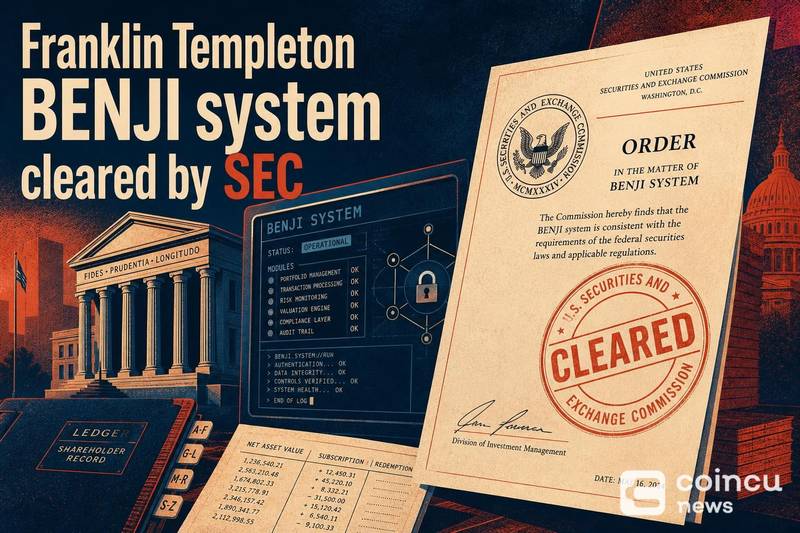
What the SEC cleared for Franklin Templeton funds
The action is anchored to an SEC staff letter from the Division of Investment Management, not to third-party rewrites of the story. That letter is the primary reference underpinning this report. For related coverage, see Franklin Templeton Launches Blockchain Money Market Fund in Hong Kong.
Confirmed versus assumed
What the available evidence supports is a clearance or use-permission for Franklin Templeton funds to run the BENJI system for cash management. That is the confirmed core of the story. For related coverage, see Cambrian Raises $6 Million in Seed Round Led by Franklin Templeton and Polychain.
What the evidence does not spell out are the deeper operational mechanics: the exact conditions attached, the specific fund entities covered, and the technical workflow. Those details require direct attribution to the letter itself and should be treated as caveated until read in full. For related coverage, see Bitcoin Falls Below $64,000 After CPI Report as Analysts Say Fed Gets More Time.
Why BENJI-based cash management matters for tokenized fund operations
Cash management sits at the center of a fund’s day-to-day plumbing. Moving that function onto an onchain system such as BENJI touches settlement, recordkeeping and treasury workflows that traditionally run on legacy rails.
Why institutional readers should care now
The relevance here is institutional rather than speculative. A regulated fund complex operating cash management on blockchain infrastructure is a concrete test of whether tokenized fund plumbing can coexist with existing compliance obligations. Franklin Templeton has already pushed in this direction with a blockchain-based money market fund launched in Hong Kong and a tie-up to use its tokenized fund as exchange collateral.
How this SEC action fits the regulatory path for onchain finance
The reference document comes from the SEC’s no-action, interpretive and exemptive letter process, a staff-level channel rather than a formal rulemaking.
What policy watchers should monitor next
Staff-level relief is meaningful, but it is not the same as a broad rule change. It applies to the requesting party under the facts presented, which limits how far it automatically extends to other managers.
Still, the precedent value is real. Other asset managers exploring tokenized fund infrastructure, including firms moving toward tokenized securities trading, will read the letter closely for the conditions the staff was willing to accept. Whether that signaling turns into wider adoption depends on future filings.
What remains unclear after the initial SEC filing reference
This article is deliberately narrow because the underlying research is only partially verified. Several specifics cannot be asserted from the evidence at hand.
- The precise scope and named fund entities covered by the clearance.
- Any conditions or ongoing obligations the staff attached.
- Whether the clearance is a no-action position, an interpretive view, or an exemption.
No market reaction, expert commentary, or onchain proof tied to this specific action was independently verified for this report. Those elements are absent by design, not omission.
FAQ: What readers will ask about the SEC and BENJI move
What is BENJI in this story? BENJI is the onchain system Franklin Templeton funds have been cleared to use for cash management, per the SEC staff letter reference.
What did the SEC actually clear? The available evidence supports clearance for Franklin Templeton funds to use the BENJI system for cash management. The full conditions require reading the staff letter directly.
Why does this matter for institutional crypto infrastructure? It places a regulated fund complex on record using blockchain-based cash management, offering a reference point other asset managers can weigh, without guaranteeing automatic spillover.
Disclaimer: This article is for informational purposes only and does not constitute financial or investment advice. Cryptocurrency and digital asset markets carry significant risk. Always do your own research before making decisions.
No tags available.


Other Posts








- China, US Conclude Trade Talks with Focus on Cooperation
- Crypto Weekly: NYSE Backs OKX, Kraken Gets Fed Access, BTC Sells
- Court Upholds Fed’s Rejection of Custodia Bank’s Request
- Former CFO Convicted for $35M Fraudulent Crypto Investment
- DeriW Launches Edge Hour Trading Competition Platform for Derivatives Traders
- Michael Saylor Denies Bitcoin Sell-Off Amid Large BTC Transfer
- Buy Dogecoin on eToro: Step-by-Step Guide for Beginners (2024)
- Kazakhstan Explores Crypto Reserves Backed by National Funds
- JPMorgan Increases Holdings in BlackRock’s Bitcoin ETF
- Nordea Bank Introduces Bitcoin ETP Trading for Nordic Customers
- XRP Spot ETF Launches on Nasdaq Amid Market Fluctuations
- Peter Schiff Challenges Michael Saylor on MSTR’s Business Model
- Thailand Orders Worldcoin to Delete 1.2 Million Biometric Records
- UK Proposes New DeFi Tax Framework to Ease User Burden
- WLFI Under Fire: Analyst Warns Hyperliquid Could Be Next
- Ancient Ethereum Whale Moves $1.19 Billion After Decade
- BlackRock Receives Large Crypto Transfers from Coinbase
- SEC Scrutiny on ALT5 Sigma’s Leadership Disclosure Timing
- Yala Injects $5.5 Million Amid Recovery Efforts
- Radiant Capital Faces $50M Loss in Major Security Breach
- China, US Conclude Trade Talks with Focus on Cooperation
- Crypto Weekly: NYSE Backs OKX, Kraken Gets Fed Access, BTC Sells
- Court Upholds Fed’s Rejection of Custodia Bank’s Request
- Former CFO Convicted for $35M Fraudulent Crypto Investment
- DeriW Launches Edge Hour Trading Competition Platform for Derivatives Traders
- Michael Saylor Denies Bitcoin Sell-Off Amid Large BTC Transfer
- Buy Dogecoin on eToro: Step-by-Step Guide for Beginners (2024)
- Kazakhstan Explores Crypto Reserves Backed by National Funds
- JPMorgan Increases Holdings in BlackRock’s Bitcoin ETF
- Nordea Bank Introduces Bitcoin ETP Trading for Nordic Customers
- XRP Spot ETF Launches on Nasdaq Amid Market Fluctuations
- Peter Schiff Challenges Michael Saylor on MSTR’s Business Model
- Thailand Orders Worldcoin to Delete 1.2 Million Biometric Records
- UK Proposes New DeFi Tax Framework to Ease User Burden
- WLFI Under Fire: Analyst Warns Hyperliquid Could Be Next
- Ancient Ethereum Whale Moves $1.19 Billion After Decade
- BlackRock Receives Large Crypto Transfers from Coinbase
- SEC Scrutiny on ALT5 Sigma’s Leadership Disclosure Timing
- Yala Injects $5.5 Million Amid Recovery Efforts
- Radiant Capital Faces $50M Loss in Major Security Breach
- China, US Conclude Trade Talks with Focus on Cooperation
- Crypto Weekly: NYSE Backs OKX, Kraken Gets Fed Access, BTC Sells
- Court Upholds Fed’s Rejection of Custodia Bank’s Request
- Former CFO Convicted for $35M Fraudulent Crypto Investment
- DeriW Launches Edge Hour Trading Competition Platform for Derivatives Traders
- Michael Saylor Denies Bitcoin Sell-Off Amid Large BTC Transfer
- Buy Dogecoin on eToro: Step-by-Step Guide for Beginners (2024)
- Kazakhstan Explores Crypto Reserves Backed by National Funds
- JPMorgan Increases Holdings in BlackRock’s Bitcoin ETF
- Nordea Bank Introduces Bitcoin ETP Trading for Nordic Customers
- XRP Spot ETF Launches on Nasdaq Amid Market Fluctuations
- Peter Schiff Challenges Michael Saylor on MSTR’s Business Model
- Thailand Orders Worldcoin to Delete 1.2 Million Biometric Records
- UK Proposes New DeFi Tax Framework to Ease User Burden
- WLFI Under Fire: Analyst Warns Hyperliquid Could Be Next
- Ancient Ethereum Whale Moves $1.19 Billion After Decade
- BlackRock Receives Large Crypto Transfers from Coinbase
- SEC Scrutiny on ALT5 Sigma’s Leadership Disclosure Timing
- Yala Injects $5.5 Million Amid Recovery Efforts
- Radiant Capital Faces $50M Loss in Major Security Breach

Bitcoin Falls Below $64,000 After CPI Report as Analysts Say Fed Gets More Time

ForumPay Expands Payment Infrastructure with New Card and Bank Transfer Acceptance Solution

Newest Assets, Improved User Promotions & Much Greater Crypto Experience_ Xxkk Trade Exchange Reinforces Its Trade Environment