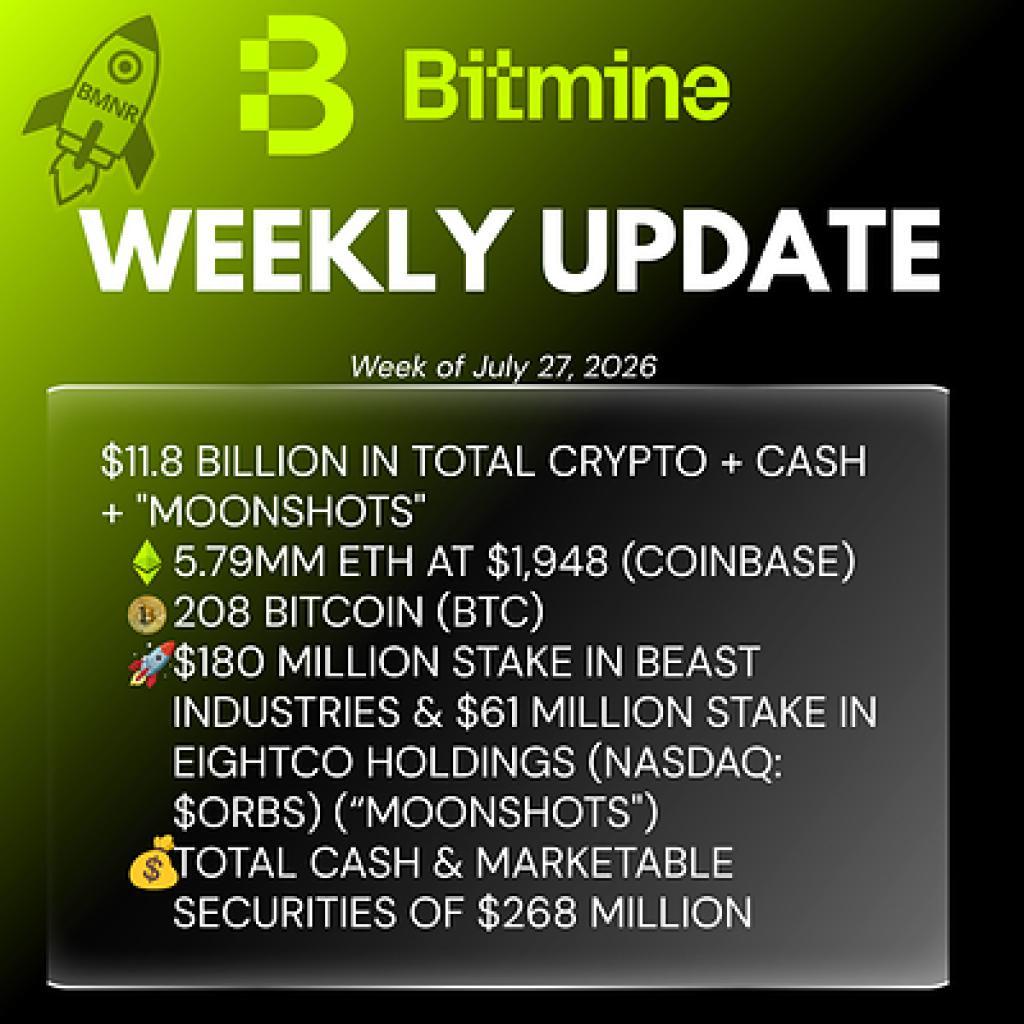
A crypto address withdrew 40,000 ETH from Binance, a transfer valued at about $76.67 million. The recipient is identified only as an on-chain address, and neither the owner nor the motive behind the move has been confirmed.

The withdrawal moved 40,000 ETH out of Binance in a single large transfer. Available on-chain framing identifies the destination as an address rather than a named individual, fund, or service. For related coverage, see Whale Withdraws 30,244 ETH Worth $57.8M From Binance in One Week.
The move is best read as a factual Ethereum whale movement, not as a confirmed bullish or bearish signal. The transaction alone does not establish intent, and no wallet owner should be inferred without direct proof. For related coverage, see New Wallet Withdraws 7,000 ETH From Binance and Stakes $13.46M.
Why Traders Watch Large Ethereum Exchange Withdrawals
Large exchange withdrawals are often tracked as potential signs of self-custody or repositioning. ETH held on an exchange remains readily available for trading, while ETH moved off-platform sits outside that immediate order-flow pool. For related coverage, see New Wallet Withdraws 10,000 ETH From Binance, Stakes Full Amount.
A move off Binance reduces the immediately available exchange balance tied to that specific wallet. That mechanical shift is what draws attention, but it says nothing definitive about the holder’s plans. For related coverage, see Wang Chun Withdraws 91K ETH and 973 WBTC From Binance.
A single transfer does not prove long-term holding intent. Traders can observe the direction of the flow, yet the inference stops there until follow-up activity appears. Similar patterns surfaced when a whale pulled 30,244 ETH from Binance over a single week, another case where the movement was visible but the motive was not. For related coverage, see F2Pool Co-Founder Wang Chun Withdraws 54,500 ETH From Binance.
Possible Explanations Behind the $76.67 Million ETH Move
The transfer could reflect self-custody, treasury management, OTC settlement, or internal fund movement. Large addresses sometimes consolidate assets outside exchanges for storage or operational reasons.
None of these motives are confirmed. The available data does not show whether the wallet belongs to an individual, an institutional fund, or a service provider, so any accumulation narrative would be unsupported.
Comparable withdrawals have gone in different directions once traced further. In some cases a new wallet withdrew 10,000 ETH and staked the entire amount, while a separate 7,000 ETH withdrawal was also routed into staking. Those outcomes only became clear through later on-chain steps, not the initial transfer.
What This Means for Ethereum and Binance in the Near Term
Large withdrawals can influence discussion around exchange reserves and near-term liquidity perception. That conversation applies to Ethereum monitoring broadly, not only to Binance as the source venue.
Ethereum watchers typically compare big transfers with broader price action and any follow-up wallet activity. What the address does next matters more than this single snapshot, and no direct price impact can be claimed from the transfer itself.
One transaction is usually not enough to define a trend. The relevant takeaway for market observers is to track subsequent movements from the same address rather than treat the outflow as a standalone forecast.
FAQ About the 40,000 ETH Binance Withdrawal
How much was withdrawn?
An address withdrew 40,000 ETH from Binance in a single transfer.
How much was it worth?
The transfer was valued at about $76.67 million at the time of the movement.
Who owns the wallet?
The owner is unconfirmed. The recipient is identified only as an on-chain address, with no verified link to any individual, fund, or service.
Does this signal bullish sentiment?
Not conclusively. Exchange withdrawals are sometimes read as self-custody or repositioning, but a single transfer does not confirm intent or direction.
Additional source references: source document 1.
Disclaimer: This article is for informational purposes only and does not constitute financial or investment advice. Cryptocurrency and digital asset markets carry significant risk. Always do your own research before making decisions.
No tags available.


Other Posts








- China, US Conclude Trade Talks with Focus on Cooperation
- Crypto Weekly: NYSE Backs OKX, Kraken Gets Fed Access, BTC Sells
- Court Upholds Fed’s Rejection of Custodia Bank’s Request
- Former CFO Convicted for $35M Fraudulent Crypto Investment
- DeriW Launches Edge Hour Trading Competition Platform for Derivatives Traders
- Michael Saylor Denies Bitcoin Sell-Off Amid Large BTC Transfer
- Buy Dogecoin on eToro: Step-by-Step Guide for Beginners (2024)
- Kazakhstan Explores Crypto Reserves Backed by National Funds
- JPMorgan Increases Holdings in BlackRock’s Bitcoin ETF
- Nordea Bank Introduces Bitcoin ETP Trading for Nordic Customers
- XRP Spot ETF Launches on Nasdaq Amid Market Fluctuations
- Peter Schiff Challenges Michael Saylor on MSTR’s Business Model
- Thailand Orders Worldcoin to Delete 1.2 Million Biometric Records
- UK Proposes New DeFi Tax Framework to Ease User Burden
- WLFI Under Fire: Analyst Warns Hyperliquid Could Be Next
- Ancient Ethereum Whale Moves $1.19 Billion After Decade
- BlackRock Receives Large Crypto Transfers from Coinbase
- SEC Scrutiny on ALT5 Sigma’s Leadership Disclosure Timing
- Yala Injects $5.5 Million Amid Recovery Efforts
- Radiant Capital Faces $50M Loss in Major Security Breach
- China, US Conclude Trade Talks with Focus on Cooperation
- Crypto Weekly: NYSE Backs OKX, Kraken Gets Fed Access, BTC Sells
- Court Upholds Fed’s Rejection of Custodia Bank’s Request
- Former CFO Convicted for $35M Fraudulent Crypto Investment
- DeriW Launches Edge Hour Trading Competition Platform for Derivatives Traders
- Michael Saylor Denies Bitcoin Sell-Off Amid Large BTC Transfer
- Buy Dogecoin on eToro: Step-by-Step Guide for Beginners (2024)
- Kazakhstan Explores Crypto Reserves Backed by National Funds
- JPMorgan Increases Holdings in BlackRock’s Bitcoin ETF
- Nordea Bank Introduces Bitcoin ETP Trading for Nordic Customers
- XRP Spot ETF Launches on Nasdaq Amid Market Fluctuations
- Peter Schiff Challenges Michael Saylor on MSTR’s Business Model
- Thailand Orders Worldcoin to Delete 1.2 Million Biometric Records
- UK Proposes New DeFi Tax Framework to Ease User Burden
- WLFI Under Fire: Analyst Warns Hyperliquid Could Be Next
- Ancient Ethereum Whale Moves $1.19 Billion After Decade
- BlackRock Receives Large Crypto Transfers from Coinbase
- SEC Scrutiny on ALT5 Sigma’s Leadership Disclosure Timing
- Yala Injects $5.5 Million Amid Recovery Efforts
- Radiant Capital Faces $50M Loss in Major Security Breach
- China, US Conclude Trade Talks with Focus on Cooperation
- Crypto Weekly: NYSE Backs OKX, Kraken Gets Fed Access, BTC Sells
- Court Upholds Fed’s Rejection of Custodia Bank’s Request
- Former CFO Convicted for $35M Fraudulent Crypto Investment
- DeriW Launches Edge Hour Trading Competition Platform for Derivatives Traders
- Michael Saylor Denies Bitcoin Sell-Off Amid Large BTC Transfer
- Buy Dogecoin on eToro: Step-by-Step Guide for Beginners (2024)
- Kazakhstan Explores Crypto Reserves Backed by National Funds
- JPMorgan Increases Holdings in BlackRock’s Bitcoin ETF
- Nordea Bank Introduces Bitcoin ETP Trading for Nordic Customers
- XRP Spot ETF Launches on Nasdaq Amid Market Fluctuations
- Peter Schiff Challenges Michael Saylor on MSTR’s Business Model
- Thailand Orders Worldcoin to Delete 1.2 Million Biometric Records
- UK Proposes New DeFi Tax Framework to Ease User Burden
- WLFI Under Fire: Analyst Warns Hyperliquid Could Be Next
- Ancient Ethereum Whale Moves $1.19 Billion After Decade
- BlackRock Receives Large Crypto Transfers from Coinbase
- SEC Scrutiny on ALT5 Sigma’s Leadership Disclosure Timing
- Yala Injects $5.5 Million Amid Recovery Efforts
- Radiant Capital Faces $50M Loss in Major Security Breach



Morgan Stanley MSSE ETF Lists as Spot Ethereum ETFs Add $14.53M

1inch launches Aqua to the public, introducing the first shared liquidity layer for DeFi
Canton’s Decentralized App Layer Launches, Backed by $1M+ Foundation Grant