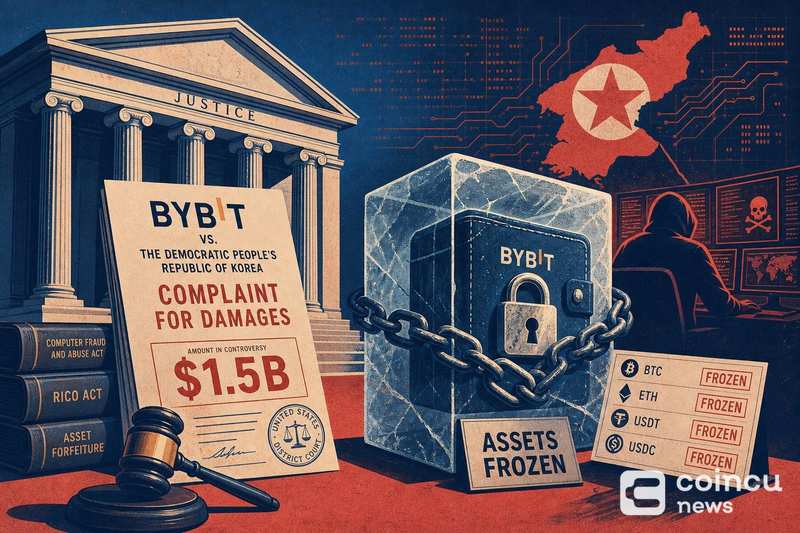
Bybit has sued North Korea over the roughly $1.5 billion hack of the exchange and secured a court order freezing stolen assets, marking one of the most aggressive legal responses yet by a crypto exchange to a state-linked theft.
What Bybit Is Alleging in the Lawsuit
Bybit named North Korea and the Lazarus Group as defendants in a suit tied to the theft, and won a preliminary injunction freezing stolen assets, according to the exchange’s announcement. For related coverage, see Bybit Sues North Korea and Lazarus Group Over $1.5B Hack, Secures Asset Freeze.
The action follows the February 2025 breach, which Decrypt reported drained about $1.5 billion from the platform. The lawsuit is framed as a direct response to that hack rather than a routine claim. For related coverage, see G7 to Address North Korea's $1.5 Billion Crypto Theft at Summit.
The case builds on prior tracing work, including efforts that linked addresses used in the Bybit hack to the BingX and Phemex breaches, reinforcing the attribution to a single actor.
What the Asset-Freezing Order Means
The freeze order is a meaningful escalation beyond simply filing a complaint. It is interim relief granted while the case develops, aimed at preserving funds before they can be moved or laundered further.
Bybit described the effort as a landmark crypto asset recovery push in its detailed statement on the injunction. Winning an early injunction is legally distinct from, and harder than, merely lodging a suit.
Why the Case Matters for Crypto Security
The scale of the theft makes the case notable. U.S. authorities have attributed the breach to North Korean actors, according to an FBI public service announcement on the incident.
Blockchain analysts have documented how the stolen funds were dispersed, with Chainalysis research detailing the DPRK-linked laundering. The combination of a large theft claim and a freeze order raises expectations that legal channels can support on-chain recovery.
Regulatory and Enforcement Relevance
A lawsuit tied to an alleged state-linked hack carries clear compliance and sanctions relevance. Asset-freezing actions typically draw attention to enforcement questions around how exchanges respond to nation-state theft.
The theft has already reached the international agenda, with the G7 set to address North Korea’s crypto theft at a summit. Related campaigns, such as Kimsuky’s AI-assisted cyberattacks on crypto and finance, underline the persistent threat exchanges face.
FAQ
What is Bybit suing over? Bybit is suing North Korea and the Lazarus Group over the February 2025 theft, per its official announcement.
What does the asset-freezing order do? It preserves the stolen assets during litigation, preventing further movement while the recovery case proceeds.
Why does the figure matter? The reported loss ranks among the largest exchange thefts, which is why the recovery effort is being described as a landmark case.
What could this mean for exchanges? The action tests whether courts and asset freezes can meaningfully aid recovery after a state-linked hack.
Disclaimer: This article is for informational purposes only and does not constitute financial or investment advice. Cryptocurrency and digital asset markets carry significant risk. Always do your own research before making decisions.
No tags available.


Other Posts








- China, US Conclude Trade Talks with Focus on Cooperation
- Crypto Weekly: NYSE Backs OKX, Kraken Gets Fed Access, BTC Sells
- Court Upholds Fed’s Rejection of Custodia Bank’s Request
- Former CFO Convicted for $35M Fraudulent Crypto Investment
- DeriW Launches Edge Hour Trading Competition Platform for Derivatives Traders
- Michael Saylor Denies Bitcoin Sell-Off Amid Large BTC Transfer
- Buy Dogecoin on eToro: Step-by-Step Guide for Beginners (2024)
- Kazakhstan Explores Crypto Reserves Backed by National Funds
- JPMorgan Increases Holdings in BlackRock’s Bitcoin ETF
- Nordea Bank Introduces Bitcoin ETP Trading for Nordic Customers
- XRP Spot ETF Launches on Nasdaq Amid Market Fluctuations
- Peter Schiff Challenges Michael Saylor on MSTR’s Business Model
- Thailand Orders Worldcoin to Delete 1.2 Million Biometric Records
- UK Proposes New DeFi Tax Framework to Ease User Burden
- WLFI Under Fire: Analyst Warns Hyperliquid Could Be Next
- Ancient Ethereum Whale Moves $1.19 Billion After Decade
- BlackRock Receives Large Crypto Transfers from Coinbase
- SEC Scrutiny on ALT5 Sigma’s Leadership Disclosure Timing
- Yala Injects $5.5 Million Amid Recovery Efforts
- Radiant Capital Faces $50M Loss in Major Security Breach
- China, US Conclude Trade Talks with Focus on Cooperation
- Crypto Weekly: NYSE Backs OKX, Kraken Gets Fed Access, BTC Sells
- Court Upholds Fed’s Rejection of Custodia Bank’s Request
- Former CFO Convicted for $35M Fraudulent Crypto Investment
- DeriW Launches Edge Hour Trading Competition Platform for Derivatives Traders
- Michael Saylor Denies Bitcoin Sell-Off Amid Large BTC Transfer
- Buy Dogecoin on eToro: Step-by-Step Guide for Beginners (2024)
- Kazakhstan Explores Crypto Reserves Backed by National Funds
- JPMorgan Increases Holdings in BlackRock’s Bitcoin ETF
- Nordea Bank Introduces Bitcoin ETP Trading for Nordic Customers
- XRP Spot ETF Launches on Nasdaq Amid Market Fluctuations
- Peter Schiff Challenges Michael Saylor on MSTR’s Business Model
- Thailand Orders Worldcoin to Delete 1.2 Million Biometric Records
- UK Proposes New DeFi Tax Framework to Ease User Burden
- WLFI Under Fire: Analyst Warns Hyperliquid Could Be Next
- Ancient Ethereum Whale Moves $1.19 Billion After Decade
- BlackRock Receives Large Crypto Transfers from Coinbase
- SEC Scrutiny on ALT5 Sigma’s Leadership Disclosure Timing
- Yala Injects $5.5 Million Amid Recovery Efforts
- Radiant Capital Faces $50M Loss in Major Security Breach
- China, US Conclude Trade Talks with Focus on Cooperation
- Crypto Weekly: NYSE Backs OKX, Kraken Gets Fed Access, BTC Sells
- Court Upholds Fed’s Rejection of Custodia Bank’s Request
- Former CFO Convicted for $35M Fraudulent Crypto Investment
- DeriW Launches Edge Hour Trading Competition Platform for Derivatives Traders
- Michael Saylor Denies Bitcoin Sell-Off Amid Large BTC Transfer
- Buy Dogecoin on eToro: Step-by-Step Guide for Beginners (2024)
- Kazakhstan Explores Crypto Reserves Backed by National Funds
- JPMorgan Increases Holdings in BlackRock’s Bitcoin ETF
- Nordea Bank Introduces Bitcoin ETP Trading for Nordic Customers
- XRP Spot ETF Launches on Nasdaq Amid Market Fluctuations
- Peter Schiff Challenges Michael Saylor on MSTR’s Business Model
- Thailand Orders Worldcoin to Delete 1.2 Million Biometric Records
- UK Proposes New DeFi Tax Framework to Ease User Burden
- WLFI Under Fire: Analyst Warns Hyperliquid Could Be Next
- Ancient Ethereum Whale Moves $1.19 Billion After Decade
- BlackRock Receives Large Crypto Transfers from Coinbase
- SEC Scrutiny on ALT5 Sigma’s Leadership Disclosure Timing
- Yala Injects $5.5 Million Amid Recovery Efforts
- Radiant Capital Faces $50M Loss in Major Security Breach

North Korea’s Kimsuky Uses AI in Crypto and Finance Cyberattacks

Cashelix Launches CASX Token Presale to Fuel the Future of Blockchain P2P Transactions
Bybit Sues North Korea and Lazarus Group, Secures Preliminary Injunction Freezing Stolen Assets in Landmark Crypto Asset Recovery Effort