Israel’s Largest Bank Taps Galaxy for Bitcoin, Ether and Solana Trading
Bank Leumi, described as Israel’s largest bank, is partnering with Galaxy to become the first bank in the country to offer digital asset trading, giving clients access to Bitcoin, Ether and Solana through an established banking relationship.
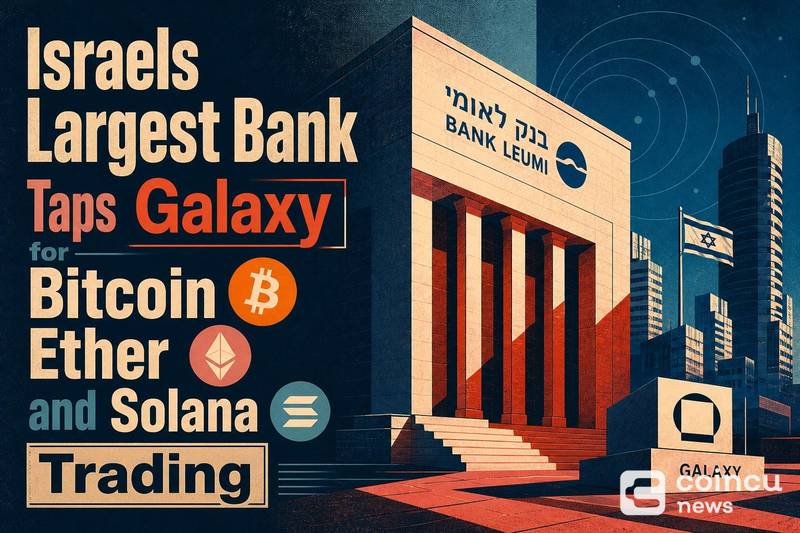
Bank Leumi Partners With Galaxy for Crypto Trading
The bank has tapped Galaxy as its crypto partner to launch the offering, according to Galaxy’s newsroom announcement. The move positions a major traditional lender alongside a crypto-focused firm to deliver regulated trading access. For related coverage, see Bitcoin Slides to $71,000 as Hormuz Tensions Hit Risk Appetite.
The initial offering explicitly covers three assets: Bitcoin, Ether and Solana, the companies said. Framing the launch as a trading access initiative, the partnership connects mainstream banking infrastructure with digital asset markets. For related coverage, see Analysts Say BlockDAG Can Outpace Cardano, Zcash, and Bitcoin Cash As The Next Crypto To Explode In 2026.
Bank Leumi is being described as the first bank in Israel to offer digital asset trading, according to reporting on the deal. For related coverage, see Hormuz's 'Powder Keg' Meets Bitcoin's 'Wall of Worry' Next Week.
What the New Offering Means for Bank Clients
The partnership delivers crypto services through a bank-linked experience, letting clients gain exposure without leaving a familiar banking relationship. That convenience is central to the appeal of institution-backed access.
By naming Bitcoin, Ether and Solana, the offering spans several major crypto segments rather than a single token. Multi-asset exposure across BTC, ETH and SOL lets clients diversify within one trusted channel, similar to how established venues have expanded access when they added new assets for spot trading.
Why Galaxy’s Role Matters
Galaxy serves as the enabling crypto partner in the deal, providing the specialist capability that lets a bank enter digital asset services. Relying on an outside partner rather than building in-house reflects a common pattern of institutional collaboration in crypto rollouts.
The arrangement ties into broader institutional adoption narratives, where banks lean on dedicated crypto firms to handle the complexity of digital asset markets. For a lender, partnering with a specialist can be faster and lower-risk than developing the infrastructure alone.
How the Move Reflects Bank-Crypto Adoption
A major national bank entering crypto trading is a marker of mainstream financial engagement with digital assets. The step brings regulated crypto access into a traditional banking setting.
Supporting three established assets at launch suggests client demand extends beyond a single-token strategy. That breadth signals the bank expects appetite across multiple large-cap tokens, even as crypto markets stay sensitive to macro shocks like the geopolitical tensions that have weighed on risk appetite and the supply shocks that have driven risk-off moves.
FAQ
Which cryptocurrencies are included?
The offering covers Bitcoin, Ether and Solana, per Bank Leumi disclosures and the partnership announcement.
Who is Galaxy in this deal?
Galaxy is the crypto-focused partner enabling the bank to launch digital asset trading, acting as the specialist behind the service.
Why is this significant for crypto adoption?
It marks the first Israeli bank to offer digital asset trading, bringing crypto access into mainstream, regulated banking channels.
Why would bank-based trading appeal to users?
It lets clients access Bitcoin, Ether and Solana through a familiar, institution-backed relationship rather than a standalone crypto platform.
Disclaimer: This article is for informational purposes only and does not constitute financial or investment advice. Cryptocurrency and digital asset markets carry significant risk. Always do your own research before making decisions.
No tags available.


Other Posts








- China, US Conclude Trade Talks with Focus on Cooperation
- Court Upholds Fed’s Rejection of Custodia Bank’s Request
- Crypto Weekly: NYSE Backs OKX, Kraken Gets Fed Access, BTC Sells
- Former CFO Convicted for $35M Fraudulent Crypto Investment
- DeriW Launches Edge Hour Trading Competition Platform for Derivatives Traders
- Michael Saylor Denies Bitcoin Sell-Off Amid Large BTC Transfer
- Buy Dogecoin on eToro: Step-by-Step Guide for Beginners (2024)
- Kazakhstan Explores Crypto Reserves Backed by National Funds
- JPMorgan Increases Holdings in BlackRock’s Bitcoin ETF
- Nordea Bank Introduces Bitcoin ETP Trading for Nordic Customers
- XRP Spot ETF Launches on Nasdaq Amid Market Fluctuations
- Peter Schiff Challenges Michael Saylor on MSTR’s Business Model
- Thailand Orders Worldcoin to Delete 1.2 Million Biometric Records
- UK Proposes New DeFi Tax Framework to Ease User Burden
- WLFI Under Fire: Analyst Warns Hyperliquid Could Be Next
- Ancient Ethereum Whale Moves $1.19 Billion After Decade
- BlackRock Receives Large Crypto Transfers from Coinbase
- SEC Scrutiny on ALT5 Sigma’s Leadership Disclosure Timing
- Yala Injects $5.5 Million Amid Recovery Efforts
- Radiant Capital Faces $50M Loss in Major Security Breach
- China, US Conclude Trade Talks with Focus on Cooperation
- Court Upholds Fed’s Rejection of Custodia Bank’s Request
- Crypto Weekly: NYSE Backs OKX, Kraken Gets Fed Access, BTC Sells
- Former CFO Convicted for $35M Fraudulent Crypto Investment
- DeriW Launches Edge Hour Trading Competition Platform for Derivatives Traders
- Michael Saylor Denies Bitcoin Sell-Off Amid Large BTC Transfer
- Buy Dogecoin on eToro: Step-by-Step Guide for Beginners (2024)
- Kazakhstan Explores Crypto Reserves Backed by National Funds
- JPMorgan Increases Holdings in BlackRock’s Bitcoin ETF
- Nordea Bank Introduces Bitcoin ETP Trading for Nordic Customers
- XRP Spot ETF Launches on Nasdaq Amid Market Fluctuations
- Peter Schiff Challenges Michael Saylor on MSTR’s Business Model
- Thailand Orders Worldcoin to Delete 1.2 Million Biometric Records
- UK Proposes New DeFi Tax Framework to Ease User Burden
- WLFI Under Fire: Analyst Warns Hyperliquid Could Be Next
- Ancient Ethereum Whale Moves $1.19 Billion After Decade
- BlackRock Receives Large Crypto Transfers from Coinbase
- SEC Scrutiny on ALT5 Sigma’s Leadership Disclosure Timing
- Yala Injects $5.5 Million Amid Recovery Efforts
- Radiant Capital Faces $50M Loss in Major Security Breach
- China, US Conclude Trade Talks with Focus on Cooperation
- Court Upholds Fed’s Rejection of Custodia Bank’s Request
- Crypto Weekly: NYSE Backs OKX, Kraken Gets Fed Access, BTC Sells
- Former CFO Convicted for $35M Fraudulent Crypto Investment
- DeriW Launches Edge Hour Trading Competition Platform for Derivatives Traders
- Michael Saylor Denies Bitcoin Sell-Off Amid Large BTC Transfer
- Buy Dogecoin on eToro: Step-by-Step Guide for Beginners (2024)
- Kazakhstan Explores Crypto Reserves Backed by National Funds
- JPMorgan Increases Holdings in BlackRock’s Bitcoin ETF
- Nordea Bank Introduces Bitcoin ETP Trading for Nordic Customers
- XRP Spot ETF Launches on Nasdaq Amid Market Fluctuations
- Peter Schiff Challenges Michael Saylor on MSTR’s Business Model
- Thailand Orders Worldcoin to Delete 1.2 Million Biometric Records
- UK Proposes New DeFi Tax Framework to Ease User Burden
- WLFI Under Fire: Analyst Warns Hyperliquid Could Be Next
- Ancient Ethereum Whale Moves $1.19 Billion After Decade
- BlackRock Receives Large Crypto Transfers from Coinbase
- SEC Scrutiny on ALT5 Sigma’s Leadership Disclosure Timing
- Yala Injects $5.5 Million Amid Recovery Efforts
- Radiant Capital Faces $50M Loss in Major Security Breach

Israel’s Largest Bank Taps Galaxy for Bitcoin, Ether and Solana Trading

SEC Cancels Reg Crypto Proposal and Delays Meeting Without New Date

Bitmine Immersion Technologies Announces Record and Payment Dates for Cash Dividends on 9.50% Series A Perpetual Preferred Stock

Crypto Player Takes Home $1.749M After a Million PSG Bet on 1win