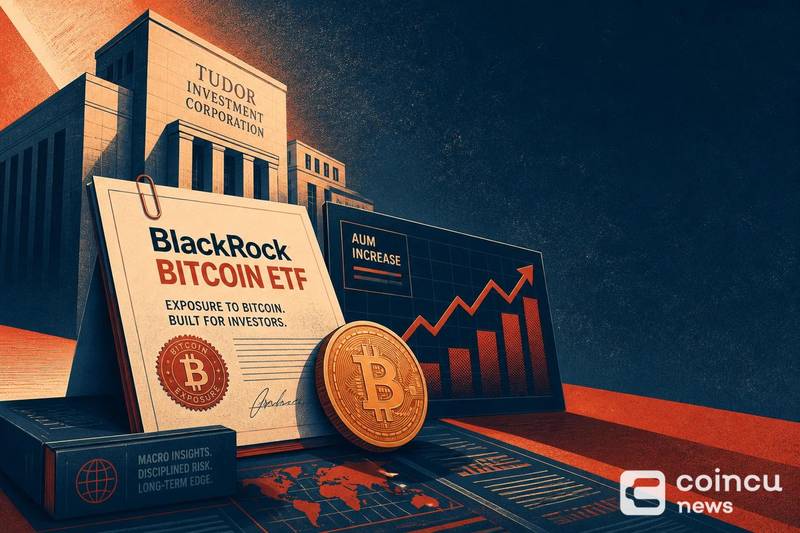
Paul Tudor Jones’ Tudor Investment Corp increased its position in BlackRock’s spot bitcoin ETF, IBIT, lifting its holding to 688,529 shares and reversing a year in which the firm had been trimming exposure, according to a recent regulatory filing.
What changed in Tudor’s BlackRock bitcoin ETF position
The move marks a reversal for the macro-focused hedge fund, which had spent the prior year reducing its bitcoin ETF exposure before rebuilding it. The increase brought Tudor’s stake to 688,529 shares of the iShares Bitcoin Trust. For related coverage, see Bitcoin Forks in 2026: Can BTC Holders Get New Assets 1:1?.
The exposure was taken through BlackRock’s bitcoin ETF rather than direct spot bitcoin, meaning the position sits inside Tudor’s regulated portfolio as a listed security. The change was disclosed in Tudor’s Form 13F filing with the SEC. For related coverage, see Bitcoin Miner Sells BTC to Fund AI Data Center Pivot.
This is a matter of institutional portfolio positioning, not a change in the ETF itself. The filing reflects how one large investment firm chose to allocate near the reporting date, as tracked in Tudor’s aggregated 13F record.
Why the reversal matters for institutional bitcoin sentiment
Paul Tudor Jones is among the more closely followed macro investors, so shifts in his firm’s disclosed holdings draw attention as a read on institutional appetite. A move from selling to buying can signal a change in conviction or risk tolerance, though a single filing does not confirm a durable trend.
Bitcoin ETF holdings are frequently used as one gauge of how institutions are positioning around regulated crypto products. Tudor’s renewed IBIT exposure adds to a run of institutional interest in bitcoin ETFs, including UBS, which sharply expanded its bitcoin exposure through ETF call options, as CoinDesk reported.
What BlackRock’s bitcoin ETF offers versus direct exposure
A spot bitcoin ETF lets a firm gain price exposure to bitcoin through a listed fund, avoiding the need to custody the asset directly. For a large manager, that simplifies operational handling and keeps the position within familiar compliance and reporting frameworks.
Institutional players often prefer listed products to manage exposure, which is one reason issuers continue to expand the category. Exchanges have pushed further into the space, with Cboe seeking SEC approval for leveraged bitcoin and ether ETFs, while some banks such as Israel’s Bank Leumi have moved to revisit bitcoin trading.
What may have driven the rebuild after a year of selling
The year-of-selling backdrop implies a deliberate de-risking phase before the recent increase. A later stake increase can reflect changing portfolio views, shifting risk conditions, or renewed confidence in the product, though the filing itself does not state a motive.
Any interpretation here should be treated as such rather than a confirmed reason. What the disclosure establishes is the contrast between prior reductions and current accumulation in the same vehicle.
FAQ: Paul Tudor Jones and BlackRock’s bitcoin ETF
What happened to the firm’s ETF stake? Tudor Investment Corp increased its holding in BlackRock’s IBIT, reversing a period of selling, per its 13F filing.
Why is BlackRock’s bitcoin ETF relevant? IBIT is the vehicle Tudor used for bitcoin exposure, offering regulated, listed access to bitcoin’s price without direct custody.
Why does the move matter? As a disclosure from a prominent macro firm, it is read by market watchers as one signal of institutional sentiment toward regulated bitcoin products, not as evidence of a market-wide rotation.
Disclaimer: This article is for informational purposes only and does not constitute financial or investment advice. Cryptocurrency and digital asset markets carry significant risk. Always do your own research before making decisions.
No tags available.


Other Posts








- China, US Conclude Trade Talks with Focus on Cooperation
- Court Upholds Fed’s Rejection of Custodia Bank’s Request
- Crypto Weekly: NYSE Backs OKX, Kraken Gets Fed Access, BTC Sells
- Former CFO Convicted for $35M Fraudulent Crypto Investment
- DeriW Launches Edge Hour Trading Competition Platform for Derivatives Traders
- Michael Saylor Denies Bitcoin Sell-Off Amid Large BTC Transfer
- Buy Dogecoin on eToro: Step-by-Step Guide for Beginners (2024)
- Kazakhstan Explores Crypto Reserves Backed by National Funds
- JPMorgan Increases Holdings in BlackRock’s Bitcoin ETF
- Nordea Bank Introduces Bitcoin ETP Trading for Nordic Customers
- XRP Spot ETF Launches on Nasdaq Amid Market Fluctuations
- Peter Schiff Challenges Michael Saylor on MSTR’s Business Model
- Thailand Orders Worldcoin to Delete 1.2 Million Biometric Records
- UK Proposes New DeFi Tax Framework to Ease User Burden
- WLFI Under Fire: Analyst Warns Hyperliquid Could Be Next
- Ancient Ethereum Whale Moves $1.19 Billion After Decade
- BlackRock Receives Large Crypto Transfers from Coinbase
- SEC Scrutiny on ALT5 Sigma’s Leadership Disclosure Timing
- Yala Injects $5.5 Million Amid Recovery Efforts
- Radiant Capital Faces $50M Loss in Major Security Breach
- China, US Conclude Trade Talks with Focus on Cooperation
- Court Upholds Fed’s Rejection of Custodia Bank’s Request
- Crypto Weekly: NYSE Backs OKX, Kraken Gets Fed Access, BTC Sells
- Former CFO Convicted for $35M Fraudulent Crypto Investment
- DeriW Launches Edge Hour Trading Competition Platform for Derivatives Traders
- Michael Saylor Denies Bitcoin Sell-Off Amid Large BTC Transfer
- Buy Dogecoin on eToro: Step-by-Step Guide for Beginners (2024)
- Kazakhstan Explores Crypto Reserves Backed by National Funds
- JPMorgan Increases Holdings in BlackRock’s Bitcoin ETF
- Nordea Bank Introduces Bitcoin ETP Trading for Nordic Customers
- XRP Spot ETF Launches on Nasdaq Amid Market Fluctuations
- Peter Schiff Challenges Michael Saylor on MSTR’s Business Model
- Thailand Orders Worldcoin to Delete 1.2 Million Biometric Records
- UK Proposes New DeFi Tax Framework to Ease User Burden
- WLFI Under Fire: Analyst Warns Hyperliquid Could Be Next
- Ancient Ethereum Whale Moves $1.19 Billion After Decade
- BlackRock Receives Large Crypto Transfers from Coinbase
- SEC Scrutiny on ALT5 Sigma’s Leadership Disclosure Timing
- Yala Injects $5.5 Million Amid Recovery Efforts
- Radiant Capital Faces $50M Loss in Major Security Breach
- China, US Conclude Trade Talks with Focus on Cooperation
- Court Upholds Fed’s Rejection of Custodia Bank’s Request
- Crypto Weekly: NYSE Backs OKX, Kraken Gets Fed Access, BTC Sells
- Former CFO Convicted for $35M Fraudulent Crypto Investment
- DeriW Launches Edge Hour Trading Competition Platform for Derivatives Traders
- Michael Saylor Denies Bitcoin Sell-Off Amid Large BTC Transfer
- Buy Dogecoin on eToro: Step-by-Step Guide for Beginners (2024)
- Kazakhstan Explores Crypto Reserves Backed by National Funds
- JPMorgan Increases Holdings in BlackRock’s Bitcoin ETF
- Nordea Bank Introduces Bitcoin ETP Trading for Nordic Customers
- XRP Spot ETF Launches on Nasdaq Amid Market Fluctuations
- Peter Schiff Challenges Michael Saylor on MSTR’s Business Model
- Thailand Orders Worldcoin to Delete 1.2 Million Biometric Records
- UK Proposes New DeFi Tax Framework to Ease User Burden
- WLFI Under Fire: Analyst Warns Hyperliquid Could Be Next
- Ancient Ethereum Whale Moves $1.19 Billion After Decade
- BlackRock Receives Large Crypto Transfers from Coinbase
- SEC Scrutiny on ALT5 Sigma’s Leadership Disclosure Timing
- Yala Injects $5.5 Million Amid Recovery Efforts
- Radiant Capital Faces $50M Loss in Major Security Breach



Israel’s Bank Leumi to Revisit Bitcoin Trading: Key Implications
Bitmine Immersion Technologies Announces Record and Payment Dates for Cash Dividends on 9.50% Series A Perpetual Preferred Stock

Crypto Player Takes Home $1.749M After a Million PSG Bet on 1win