US Treasury Seeks Public Comment on GENIUS Act Stablecoin Rules
The US Treasury has moved to open a public comment period on rules implementing the GENIUS Act, marking the transition of the stablecoin law from statute toward enforceable regulation for payment stablecoin issuers.
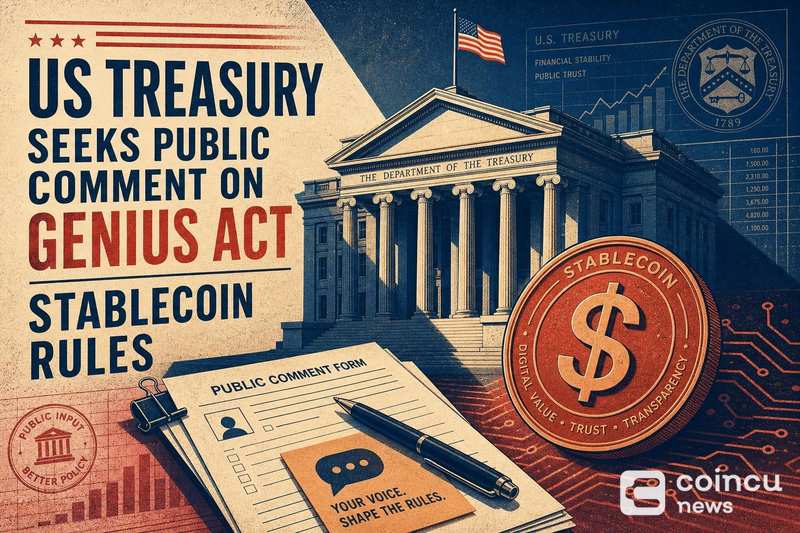
The step was announced through the Treasury Department, which is soliciting public feedback on how the GENIUS Act stablecoin rules should be applied. Reporting from CoinDesk described the action as a proposed rulemaking rather than a final enforcement measure.
The proposal has been staged for the rulemaking process through a Federal Register public inspection notice covering GENIUS Act regulations on payment stablecoin issuance, offer, and sale. For related coverage, see Aave DAO Proposal Seeks Control Over Aave Labs' Assets.
Why the Treasury is asking for public input now
A public comment request signals that regulators are gathering industry and public feedback before finalizing implementation details. It is the standard bridge between a law passed by Congress and the specific rules agencies use to enforce it. For related coverage, see U.S. Treasury's Federal Reserve Chair Interviews Imminent.
The Treasury’s role here indicates that operational, compliance, and supervisory questions are in scope. The GENIUS Act itself sets the framework; the rules under consultation determine how issuers must actually comply. For related coverage, see Nasdaq Seeks Extension for BlackRock IBIT and ETHA ETF Transition.
This regulatory phase mirrors moves seen in other jurisdictions weighing digital-asset frameworks, such as the UK Treasury’s plan to regulate crypto under the FCA, where consultation precedes binding requirements. No final compliance dates for the GENIUS Act rules are confirmed in the current filings.
Issues likely to shape the consultation
Stablecoin rulemaking commonly centers on reserve backing, disclosure standards, oversight, consumer protection, and issuer obligations. The Federal Register notice’s focus on issuance, offer, and sale of payment stablecoins points toward those areas.
Treasury-led input requests of this kind typically attract responses from issuers, exchanges, banks, and policy groups. Coin Center, for example, has previously submitted formal comments to FinCEN and OFAC on payment stablecoin program requirements covering AML, CFT, and sanctions obligations.
These themes should be read as likely consultation topics rather than confirmed final provisions. The evidence available describes the process, not the settled text of the rules.
What it could mean for issuers and the market
Regulatory clarity can affect issuer strategy, compliance costs, and product design. Firms building stablecoin payment infrastructure, such as those pursuing deals like Mastercard’s talks over stablecoin rails, have a direct stake in how reserve and disclosure standards are defined.
Stablecoin-specific rules may also influence exchange activity, payment use cases, and institutional participation. Because the process remains at the comment stage, near-term market outcomes are not established by the current filings.
FAQ
What is the GENIUS Act in this context? It is the US law providing the statutory framework for payment stablecoins, now entering the phase where Treasury drafts implementing rules for issuance, offer, and sale.
What does public comment mean? It is a formal window during which any interested party can submit written feedback on the proposed rules before they are finalized.
Who can submit feedback? The consultation is open to the public, and typically draws responses from issuers, exchanges, banks, legal experts, and policy organizations.
Are the rules final yet? No. The current step is a proposed rulemaking staged through the Federal Register, not a final or enforceable rule.
Disclaimer: This article is for informational purposes only and does not constitute financial or investment advice. Cryptocurrency and digital asset markets carry significant risk. Always do your own research before making decisions.
No tags available.


Other Posts








- China, US Conclude Trade Talks with Focus on Cooperation
- Court Upholds Fed’s Rejection of Custodia Bank’s Request
- Crypto Weekly: NYSE Backs OKX, Kraken Gets Fed Access, BTC Sells
- Former CFO Convicted for $35M Fraudulent Crypto Investment
- DeriW Launches Edge Hour Trading Competition Platform for Derivatives Traders
- Michael Saylor Denies Bitcoin Sell-Off Amid Large BTC Transfer
- Buy Dogecoin on eToro: Step-by-Step Guide for Beginners (2024)
- Kazakhstan Explores Crypto Reserves Backed by National Funds
- JPMorgan Increases Holdings in BlackRock’s Bitcoin ETF
- Nordea Bank Introduces Bitcoin ETP Trading for Nordic Customers
- XRP Spot ETF Launches on Nasdaq Amid Market Fluctuations
- Peter Schiff Challenges Michael Saylor on MSTR’s Business Model
- Thailand Orders Worldcoin to Delete 1.2 Million Biometric Records
- UK Proposes New DeFi Tax Framework to Ease User Burden
- WLFI Under Fire: Analyst Warns Hyperliquid Could Be Next
- Ancient Ethereum Whale Moves $1.19 Billion After Decade
- BlackRock Receives Large Crypto Transfers from Coinbase
- SEC Scrutiny on ALT5 Sigma’s Leadership Disclosure Timing
- Yala Injects $5.5 Million Amid Recovery Efforts
- Radiant Capital Faces $50M Loss in Major Security Breach
- China, US Conclude Trade Talks with Focus on Cooperation
- Court Upholds Fed’s Rejection of Custodia Bank’s Request
- Crypto Weekly: NYSE Backs OKX, Kraken Gets Fed Access, BTC Sells
- Former CFO Convicted for $35M Fraudulent Crypto Investment
- DeriW Launches Edge Hour Trading Competition Platform for Derivatives Traders
- Michael Saylor Denies Bitcoin Sell-Off Amid Large BTC Transfer
- Buy Dogecoin on eToro: Step-by-Step Guide for Beginners (2024)
- Kazakhstan Explores Crypto Reserves Backed by National Funds
- JPMorgan Increases Holdings in BlackRock’s Bitcoin ETF
- Nordea Bank Introduces Bitcoin ETP Trading for Nordic Customers
- XRP Spot ETF Launches on Nasdaq Amid Market Fluctuations
- Peter Schiff Challenges Michael Saylor on MSTR’s Business Model
- Thailand Orders Worldcoin to Delete 1.2 Million Biometric Records
- UK Proposes New DeFi Tax Framework to Ease User Burden
- WLFI Under Fire: Analyst Warns Hyperliquid Could Be Next
- Ancient Ethereum Whale Moves $1.19 Billion After Decade
- BlackRock Receives Large Crypto Transfers from Coinbase
- SEC Scrutiny on ALT5 Sigma’s Leadership Disclosure Timing
- Yala Injects $5.5 Million Amid Recovery Efforts
- Radiant Capital Faces $50M Loss in Major Security Breach
- China, US Conclude Trade Talks with Focus on Cooperation
- Court Upholds Fed’s Rejection of Custodia Bank’s Request
- Crypto Weekly: NYSE Backs OKX, Kraken Gets Fed Access, BTC Sells
- Former CFO Convicted for $35M Fraudulent Crypto Investment
- DeriW Launches Edge Hour Trading Competition Platform for Derivatives Traders
- Michael Saylor Denies Bitcoin Sell-Off Amid Large BTC Transfer
- Buy Dogecoin on eToro: Step-by-Step Guide for Beginners (2024)
- Kazakhstan Explores Crypto Reserves Backed by National Funds
- JPMorgan Increases Holdings in BlackRock’s Bitcoin ETF
- Nordea Bank Introduces Bitcoin ETP Trading for Nordic Customers
- XRP Spot ETF Launches on Nasdaq Amid Market Fluctuations
- Peter Schiff Challenges Michael Saylor on MSTR’s Business Model
- Thailand Orders Worldcoin to Delete 1.2 Million Biometric Records
- UK Proposes New DeFi Tax Framework to Ease User Burden
- WLFI Under Fire: Analyst Warns Hyperliquid Could Be Next
- Ancient Ethereum Whale Moves $1.19 Billion After Decade
- BlackRock Receives Large Crypto Transfers from Coinbase
- SEC Scrutiny on ALT5 Sigma’s Leadership Disclosure Timing
- Yala Injects $5.5 Million Amid Recovery Efforts
- Radiant Capital Faces $50M Loss in Major Security Breach



Tom Lee’s Bitmine Owns 4.8% of Ethereum Supply After Latest ETH Purchase
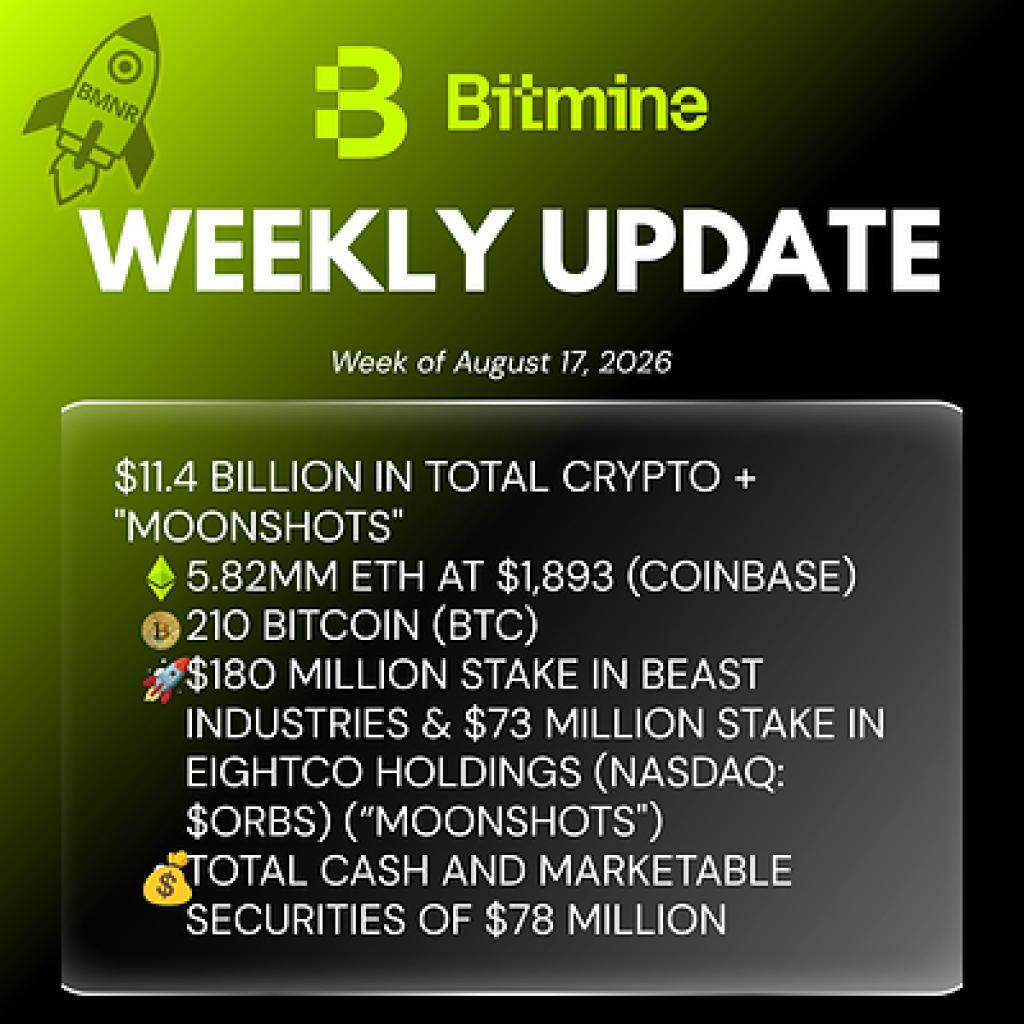
Bitmine Immersion Technologies (BMNR) Announces ETH Holdings Reach 5.82 Million Tokens, and Total Crypto and Total Cash Holdings of $11.4 Billion

BiggerZ: Building a Fairness-First Crypto Casino, Sportsbook and Prediction Markets Platform