Base Outage Analysis: Sequencer Bug Caused Brief Block Production Downtime
Base published a postmortem detailing a block production outage on June 25, attributing the incident to a sequencer bug that caused a brief period of downtime on the Coinbase-incubated Layer 2 network.
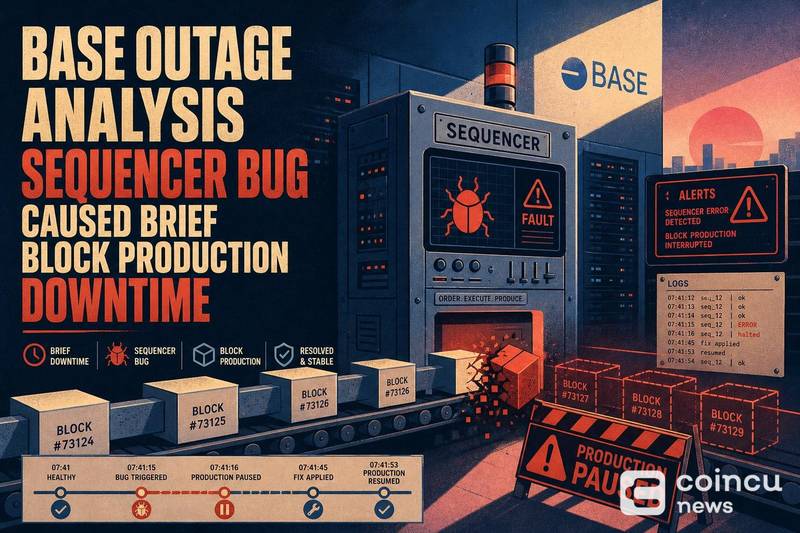
The analysis, posted on the Base developer blog, identified the root cause as a bug in the network’s sequencer, the component responsible for ordering and producing blocks on the chain. The disruption temporarily halted block production but did not constitute a full network failure. For related coverage, see Morgan Stanley Bitcoin Holdings Exceed 4,700 BTC.
Sequencer Bug Stopped Block Production
According to Base’s postmortem, a sequencer bug triggered the block production outage. The sequencer is the single entity on Base, as on most optimistic rollups, that accepts transactions from users, orders them, and submits them as blocks to the network. For related coverage, see Coinbase Bitcoin Premium Index Negative for 40 Days Signals Weak U.S. Demand.
When the sequencer stops functioning correctly, no new blocks are produced. Transactions submitted during that window remain pending, and applications built on the network cannot process new state changes until block production resumes.
This type of failure is distinct from a consensus-level chain halt. The underlying Ethereum settlement layer continued operating normally. The issue was isolated to Base’s execution layer, where the sequencer serves as the sole block producer.
Base has experienced similar disruptions before. The network suffered a second outage in two days during a previous incident, highlighting an ongoing challenge with sequencer reliability for centralized Layer 2 architectures.
What the Outage Meant for Users and Builders
During the block production halt, users would have been unable to confirm transactions on Base. Any swaps, transfers, bridge operations, or smart contract interactions submitted during the outage window would have been delayed until the sequencer resumed producing blocks.
For developers running applications on Base, the outage served as a reminder of the single-point-of-failure risk inherent in L2 sequencer designs. Unlike decentralized block production on Ethereum’s base layer, a single sequencer architecture means one bug can pause the entire chain’s activity.
The incident raises familiar questions about infrastructure reliability on rollup networks. Similar concerns emerged when Polygon zkEVM experienced an outage lasting over 12 hours, underscoring that sequencer and prover reliability remains a shared challenge across Layer 2 solutions.
Why Publishing the Postmortem Matters
Base’s decision to publish a detailed postmortem on its developer blog reflects an industry norm around post-incident transparency. Public root-cause analyses allow external developers and users to assess the severity of an issue and evaluate the team’s response.
Root-cause disclosure typically signals that internal remediation is underway. For a sequencer bug, that would involve patching the specific code path that failed, adding monitoring to detect similar conditions earlier, and potentially expanding testing coverage around edge cases in block production logic.
Base, which is built on the OP Stack and incubated by Coinbase, operates with a centralized sequencer, as do most current optimistic rollups. The long-term roadmap for many L2 networks includes decentralizing the sequencer role, which would reduce the blast radius of a single component failure.
Users and developers on Base should monitor the project’s official channels for follow-up updates on the specific patch deployed and any changes to the network’s monitoring infrastructure resulting from this incident.
FAQ
What caused the Base block production outage on June 25?
Base attributed the outage to a bug in its sequencer, the component responsible for ordering transactions and producing new blocks. The bug caused block production to halt temporarily.
Was Base fully offline during the outage?
No. The issue was limited to block production on Base’s execution layer. The underlying Ethereum settlement layer was unaffected. However, users could not confirm new transactions on Base during the downtime.
Why does the sequencer matter for Base’s operations?
Base currently uses a single centralized sequencer to order all transactions and produce blocks. If the sequencer fails, no new blocks are created, effectively pausing all on-chain activity until the issue is resolved.
Additional source references: source document 1.
Disclaimer: This article is for informational purposes only and does not constitute financial or investment advice. Cryptocurrency and digital asset markets carry significant risk. Always do your own research before making decisions.
No tags available.


Other Posts








- China, US Conclude Trade Talks with Focus on Cooperation
- Crypto Weekly: NYSE Backs OKX, Kraken Gets Fed Access, BTC Sells
- Court Upholds Fed’s Rejection of Custodia Bank’s Request
- Former CFO Convicted for $35M Fraudulent Crypto Investment
- DeriW Launches Edge Hour Trading Competition Platform for Derivatives Traders
- Michael Saylor Denies Bitcoin Sell-Off Amid Large BTC Transfer
- Buy Dogecoin on eToro: Step-by-Step Guide for Beginners (2024)
- Kazakhstan Explores Crypto Reserves Backed by National Funds
- JPMorgan Increases Holdings in BlackRock’s Bitcoin ETF
- Nordea Bank Introduces Bitcoin ETP Trading for Nordic Customers
- XRP Spot ETF Launches on Nasdaq Amid Market Fluctuations
- Peter Schiff Challenges Michael Saylor on MSTR’s Business Model
- Thailand Orders Worldcoin to Delete 1.2 Million Biometric Records
- UK Proposes New DeFi Tax Framework to Ease User Burden
- WLFI Under Fire: Analyst Warns Hyperliquid Could Be Next
- Ancient Ethereum Whale Moves $1.19 Billion After Decade
- BlackRock Receives Large Crypto Transfers from Coinbase
- SEC Scrutiny on ALT5 Sigma’s Leadership Disclosure Timing
- Yala Injects $5.5 Million Amid Recovery Efforts
- Radiant Capital Faces $50M Loss in Major Security Breach
- China, US Conclude Trade Talks with Focus on Cooperation
- Crypto Weekly: NYSE Backs OKX, Kraken Gets Fed Access, BTC Sells
- Court Upholds Fed’s Rejection of Custodia Bank’s Request
- Former CFO Convicted for $35M Fraudulent Crypto Investment
- DeriW Launches Edge Hour Trading Competition Platform for Derivatives Traders
- Michael Saylor Denies Bitcoin Sell-Off Amid Large BTC Transfer
- Buy Dogecoin on eToro: Step-by-Step Guide for Beginners (2024)
- Kazakhstan Explores Crypto Reserves Backed by National Funds
- JPMorgan Increases Holdings in BlackRock’s Bitcoin ETF
- Nordea Bank Introduces Bitcoin ETP Trading for Nordic Customers
- XRP Spot ETF Launches on Nasdaq Amid Market Fluctuations
- Peter Schiff Challenges Michael Saylor on MSTR’s Business Model
- Thailand Orders Worldcoin to Delete 1.2 Million Biometric Records
- UK Proposes New DeFi Tax Framework to Ease User Burden
- WLFI Under Fire: Analyst Warns Hyperliquid Could Be Next
- Ancient Ethereum Whale Moves $1.19 Billion After Decade
- BlackRock Receives Large Crypto Transfers from Coinbase
- SEC Scrutiny on ALT5 Sigma’s Leadership Disclosure Timing
- Yala Injects $5.5 Million Amid Recovery Efforts
- Radiant Capital Faces $50M Loss in Major Security Breach
- China, US Conclude Trade Talks with Focus on Cooperation
- Crypto Weekly: NYSE Backs OKX, Kraken Gets Fed Access, BTC Sells
- Court Upholds Fed’s Rejection of Custodia Bank’s Request
- Former CFO Convicted for $35M Fraudulent Crypto Investment
- DeriW Launches Edge Hour Trading Competition Platform for Derivatives Traders
- Michael Saylor Denies Bitcoin Sell-Off Amid Large BTC Transfer
- Buy Dogecoin on eToro: Step-by-Step Guide for Beginners (2024)
- Kazakhstan Explores Crypto Reserves Backed by National Funds
- JPMorgan Increases Holdings in BlackRock’s Bitcoin ETF
- Nordea Bank Introduces Bitcoin ETP Trading for Nordic Customers
- XRP Spot ETF Launches on Nasdaq Amid Market Fluctuations
- Peter Schiff Challenges Michael Saylor on MSTR’s Business Model
- Thailand Orders Worldcoin to Delete 1.2 Million Biometric Records
- UK Proposes New DeFi Tax Framework to Ease User Burden
- WLFI Under Fire: Analyst Warns Hyperliquid Could Be Next
- Ancient Ethereum Whale Moves $1.19 Billion After Decade
- BlackRock Receives Large Crypto Transfers from Coinbase
- SEC Scrutiny on ALT5 Sigma’s Leadership Disclosure Timing
- Yala Injects $5.5 Million Amid Recovery Efforts
- Radiant Capital Faces $50M Loss in Major Security Breach



Pump.fun Let Staff Go Just Before Their Tokens Were Due to Pay Out