Bitcoin UTXO Profit-Loss Ratio Hits Historic Lows, Bottom Unconfirmed
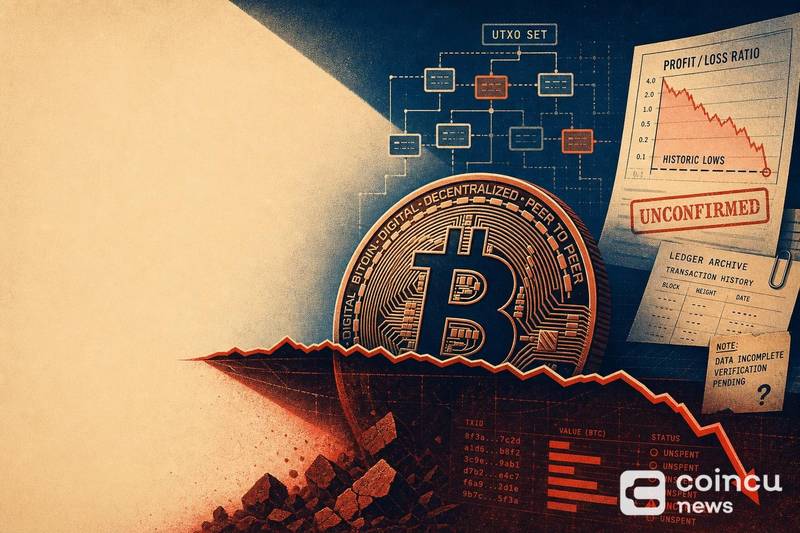
Bitcoin’s UTXO profit-loss ratio has dropped into a range that has historically aligned with late-stage bear market drawdowns, according to on-chain data. The metric’s decline signals growing capitulation pressure, but analysts caution that a confirmed market bottom requires additional follow-through that has not yet materialized.
What the UTXO Profit-Loss Ratio Measures
A UTXO, or unspent transaction output, represents coins held at a Bitcoin address that have not been moved since they were last received. The UTXO profit-loss ratio compares the number of coins currently worth more than their acquisition price against those sitting at a loss. For related coverage, see Polymarket Launches World Cup Knockout Prediction Campaign in Select U.S. Regions.
When the ratio falls sharply, it means a growing share of Bitcoin holders are underwater on their positions. Analysts treat extreme lows in this metric as a sign of broad market stress, similar to conditions observed near prior cycle bottoms.
No single on-chain metric confirms a bottom by itself. The UTXO profit-loss ratio is one input among many, and its value comes from context rather than isolation. Earlier this cycle, Bitcoin’s UTXO profit percentage reached 99%, signaling peak euphoria; the current move in the opposite direction reflects a significant shift in holder positioning.
Why the Historical Bottom Range Matters
The current reading has entered a band that analysts have identified as a capitulation zone, where the proportion of underwater coins reaches levels seen during previous bear market troughs. These conditions typically reflect forced selling, weak holder conviction, and broad portfolio pain.
Historical similarity is informative but not predictive. In past cycles, the ratio has lingered in extreme territory for weeks or months before any sustained recovery began. The metric entering this range indicates that selling pressure has pushed a large portion of the supply into loss, but it does not guarantee that the worst is over.
During prior bear markets, similar readings coincided with periods where long-term holders accumulated while short-term participants exited. That dynamic is worth monitoring now, though current conditions may differ from earlier cycles in duration and severity.
Why the Bottom Signal Has Not Been Confirmed
Entering an extreme range and confirming a durable bottom are distinct events. A CryptoQuant analysis of the metric highlights that confirmation typically requires the ratio to stabilize and begin recovering, not simply touch a low point once.
A metric can reach an extreme level and remain depressed if broader selling pressure continues. In some past instances, the ratio made multiple visits to the bottom range before a genuine reversal took hold, meaning that a single dip into the zone does not constitute a definitive signal.
Confirmation signals that analysts typically look for include sustained price resilience above key support levels, a shift in holder behavior from distribution to accumulation, and an improving trend in the ratio itself over multiple weeks. None of these conditions have been clearly established yet.
What to Watch Next
Traders monitoring this signal should focus on persistence rather than reacting to a single reading. If the ratio stabilizes and begins trending upward from the current range, that would represent a more meaningful development than the initial drop alone.
Several adjacent indicators can provide additional context. Exchange reserve trends, which track the volume of Bitcoin held on trading platforms, offer insight into whether holders are withdrawing coins for long-term storage or depositing them for potential sale. Broader market risk signals from institutional players also help frame whether current conditions reflect localized on-chain stress or wider structural concerns.
Short-term volatility can coexist with early bottoming behavior. Even if the UTXO ratio has reached a historically significant level, confirmation may take weeks, and outlook projections for Bitcoin’s trajectory in 2026 remain widely divided among market participants.
FAQ: Bitcoin UTXO Profit-Loss Ratio and Bottom Signals
Is the Bitcoin bottom already confirmed?
No. The UTXO profit-loss ratio has entered a historical bottom range, but confirmation requires sustained recovery in the metric alongside supportive price action and holder behavior shifts. A single extreme reading is not sufficient.
How reliable is the UTXO profit-loss ratio as a bottom indicator?
The metric has aligned with late-stage drawdowns in prior Bitcoin cycles, making it a useful stress gauge. However, it has also produced extended periods in extreme territory without immediate reversals, so it works best as one component of a broader analytical framework rather than a standalone signal.
What other signals should be checked alongside this metric?
Analysts commonly cross-reference exchange reserve flows, mining difficulty and miner behavior, long-term holder supply changes, and price structure at key support levels. A convergence of multiple indicators pointing toward accumulation and stabilization carries more weight than any single metric.
Disclaimer: This article is for informational purposes only and does not constitute financial or investment advice. Cryptocurrency and digital asset markets carry significant risk. Always do your own research before making decisions.
No tags available.


Other Posts








- China, US Conclude Trade Talks with Focus on Cooperation
- Crypto Weekly: NYSE Backs OKX, Kraken Gets Fed Access, BTC Sells
- Court Upholds Fed’s Rejection of Custodia Bank’s Request
- Former CFO Convicted for $35M Fraudulent Crypto Investment
- DeriW Launches Edge Hour Trading Competition Platform for Derivatives Traders
- Michael Saylor Denies Bitcoin Sell-Off Amid Large BTC Transfer
- Buy Dogecoin on eToro: Step-by-Step Guide for Beginners (2024)
- Kazakhstan Explores Crypto Reserves Backed by National Funds
- JPMorgan Increases Holdings in BlackRock’s Bitcoin ETF
- Nordea Bank Introduces Bitcoin ETP Trading for Nordic Customers
- XRP Spot ETF Launches on Nasdaq Amid Market Fluctuations
- Peter Schiff Challenges Michael Saylor on MSTR’s Business Model
- Thailand Orders Worldcoin to Delete 1.2 Million Biometric Records
- UK Proposes New DeFi Tax Framework to Ease User Burden
- WLFI Under Fire: Analyst Warns Hyperliquid Could Be Next
- Ancient Ethereum Whale Moves $1.19 Billion After Decade
- BlackRock Receives Large Crypto Transfers from Coinbase
- SEC Scrutiny on ALT5 Sigma’s Leadership Disclosure Timing
- Yala Injects $5.5 Million Amid Recovery Efforts
- Radiant Capital Faces $50M Loss in Major Security Breach
- China, US Conclude Trade Talks with Focus on Cooperation
- Crypto Weekly: NYSE Backs OKX, Kraken Gets Fed Access, BTC Sells
- Court Upholds Fed’s Rejection of Custodia Bank’s Request
- Former CFO Convicted for $35M Fraudulent Crypto Investment
- DeriW Launches Edge Hour Trading Competition Platform for Derivatives Traders
- Michael Saylor Denies Bitcoin Sell-Off Amid Large BTC Transfer
- Buy Dogecoin on eToro: Step-by-Step Guide for Beginners (2024)
- Kazakhstan Explores Crypto Reserves Backed by National Funds
- JPMorgan Increases Holdings in BlackRock’s Bitcoin ETF
- Nordea Bank Introduces Bitcoin ETP Trading for Nordic Customers
- XRP Spot ETF Launches on Nasdaq Amid Market Fluctuations
- Peter Schiff Challenges Michael Saylor on MSTR’s Business Model
- Thailand Orders Worldcoin to Delete 1.2 Million Biometric Records
- UK Proposes New DeFi Tax Framework to Ease User Burden
- WLFI Under Fire: Analyst Warns Hyperliquid Could Be Next
- Ancient Ethereum Whale Moves $1.19 Billion After Decade
- BlackRock Receives Large Crypto Transfers from Coinbase
- SEC Scrutiny on ALT5 Sigma’s Leadership Disclosure Timing
- Yala Injects $5.5 Million Amid Recovery Efforts
- Radiant Capital Faces $50M Loss in Major Security Breach
- China, US Conclude Trade Talks with Focus on Cooperation
- Crypto Weekly: NYSE Backs OKX, Kraken Gets Fed Access, BTC Sells
- Court Upholds Fed’s Rejection of Custodia Bank’s Request
- Former CFO Convicted for $35M Fraudulent Crypto Investment
- DeriW Launches Edge Hour Trading Competition Platform for Derivatives Traders
- Michael Saylor Denies Bitcoin Sell-Off Amid Large BTC Transfer
- Buy Dogecoin on eToro: Step-by-Step Guide for Beginners (2024)
- Kazakhstan Explores Crypto Reserves Backed by National Funds
- JPMorgan Increases Holdings in BlackRock’s Bitcoin ETF
- Nordea Bank Introduces Bitcoin ETP Trading for Nordic Customers
- XRP Spot ETF Launches on Nasdaq Amid Market Fluctuations
- Peter Schiff Challenges Michael Saylor on MSTR’s Business Model
- Thailand Orders Worldcoin to Delete 1.2 Million Biometric Records
- UK Proposes New DeFi Tax Framework to Ease User Burden
- WLFI Under Fire: Analyst Warns Hyperliquid Could Be Next
- Ancient Ethereum Whale Moves $1.19 Billion After Decade
- BlackRock Receives Large Crypto Transfers from Coinbase
- SEC Scrutiny on ALT5 Sigma’s Leadership Disclosure Timing
- Yala Injects $5.5 Million Amid Recovery Efforts
- Radiant Capital Faces $50M Loss in Major Security Breach


Over 100 Crypto Projects Shut Down in 2026 as Industry Shakeout Deepens


Cashelix Launches CASX Token Presale to Fuel the Future of Blockchain P2P Transactions
Bybit Sues North Korea and Lazarus Group, Secures Preliminary Injunction Freezing Stolen Assets in Landmark Crypto Asset Recovery Effort