Polymarket announced an upgraded trading platform alongside a $1 million liquidity incentive program on April 28, 2026, pairing infrastructure changes with a financial commitment aimed at deepening market participation on the prediction market venue.
What Polymarket Announced in Its April 28 Upgrade
The platform published an exchange upgrade notice through its Help Center detailing the rollout. The two headline elements are the upgraded trading platform itself and the accompanying $1 million incentive program designed to attract liquidity providers.
Official Polymarket documentation, including v2 migration materials, indicates the upgrade involves a meaningful architectural shift rather than a minor patch. The migration documentation suggests traders may need to take specific steps to transition to the new system.
What the Announcement Confirms
The upgrade is live as of April 28, 2026. It pairs a platform-level technology change with a dedicated financial incentive pool worth $1 million. Both elements launched simultaneously, signaling that Polymarket views liquidity depth as inseparable from the infrastructure upgrade itself.
What the Announcement Does Not Specify
The available materials do not detail specific feature-by-feature changes to the trading interface, order matching engine, or settlement mechanics. Exact latency improvements, new order types, or API changes have not been independently confirmed through the sources reviewed for this report.
How the $1 Million Liquidity Program Fits the Rollout
Polymarket’s decision to pair the platform upgrade with a dedicated liquidity incentive program reflects a common pattern in trading venue launches. New infrastructure, no matter how technically superior, is only useful if markets have sufficient depth for traders to execute at reasonable spreads.
The platform’s rewards page provides additional context on the program structure. The $1 million figure represents the total incentive pool, though the precise distribution mechanics, eligibility criteria, and payout timelines are not fully detailed in the currently available documentation.
Why Liquidity Incentives Accompany Platform Changes
When a trading venue migrates to new infrastructure, existing market makers and liquidity providers must adapt their systems. Incentive programs offset the cost of that transition and reduce the risk of a temporary liquidity gap during the changeover period. This approach has been widely adopted across both traditional and crypto trading venues during major upgrades.
For Polymarket specifically, prediction markets rely on tight spreads and deep order books to function effectively. Without adequate liquidity, prediction accuracy suffers because prices cannot efficiently aggregate information from participants. The incentive program directly addresses this structural requirement, similar to how broader crypto market movements can affect participation across trading venues.
Unanswered Program Details
Traders evaluating the incentive program still lack confirmation on several key points. These include the minimum volume or liquidity thresholds required to qualify, whether rewards are distributed in USDC or another token, the duration of the program, and whether there are tiered reward structures based on market or asset class.
Until Polymarket publishes detailed program rules, participants should monitor official channels for updates rather than relying on assumptions about reward mechanics.
Why the Upgrade Matters for Traders and Market Depth
The practical significance of this upgrade centers on execution quality and market depth rather than token price movements. Polymarket operates as a prediction market, not a token exchange, so the relevant performance metrics are spread tightness, settlement reliability, and the range of available markets.
An upgraded trading platform, combined with active liquidity incentives, should theoretically improve the experience for both retail participants placing individual predictions and institutional or algorithmic traders providing continuous liquidity. The combination addresses both sides of the marketplace simultaneously, which is a consideration that also applies to developments like institutional Bitcoin strategies where execution infrastructure plays a key role.
Immediate Trader Takeaways
Traders should focus on three observable indicators in the weeks following the upgrade. First, whether bid-ask spreads on popular prediction markets tighten compared to pre-upgrade levels. Second, whether the total number of active markets increases as improved infrastructure supports broader coverage. Third, whether settlement times and reliability improve under the new system.
No market data, trading volume figures, or price reaction metrics are available in the current source set to quantify early results from the upgrade. Any claims about immediate trading volume changes or user growth would be speculative at this stage.
The broader context of platform upgrades across the crypto industry, including how regulatory developments in stablecoin infrastructure are reshaping how trading venues operate, makes Polymarket’s timing notable even without detailed performance data.
What the Available Evidence Confirms and Leaves Open
This article is based on a limited set of confirmed information. The research supporting this report reached a verification confidence level of 0.35 out of 1.0, with the research phase terminating early due to source-fetching budget constraints. No expert quotes, market reaction data, or independent analysis were available at the time of writing.
Evidence Gaps Readers Should Know About
The following elements remain unconfirmed and were intentionally excluded from this article: specific technical changes in the platform upgrade, comparative benchmarks against the previous trading system, user or volume growth projections, reactions from competing prediction market platforms, and detailed mechanics of the $1 million incentive distribution.
The decision to keep this article narrowly focused reflects the evidence ceiling rather than editorial choice. A full product analysis of the Polymarket upgrade would require access to detailed technical documentation, early user feedback, and comparative trading data that are not yet available through public sources.
Readers seeking the most current information should consult Polymarket’s official Help Center and documentation pages directly, as the platform is likely to publish additional details as the rollout progresses.
FAQ: Polymarket Platform Upgrade and $1M Incentive Program
What did Polymarket launch on April 28, 2026?
Polymarket launched an upgraded trading platform alongside a $1 million liquidity incentive program, as detailed in its official exchange upgrade notice.
How large is the incentive program?
The announced incentive pool totals $1 million, dedicated to supporting liquidity on the upgraded platform.
Are the exact reward mechanics confirmed?
No. The available documentation does not fully specify eligibility rules, payout schedules, or distribution formulas. Traders should monitor Polymarket’s official rewards and documentation pages for updates.
Why do liquidity incentives matter during a platform rollout?
Platform migrations can temporarily disrupt existing liquidity as market makers adjust their systems. Incentive programs offset transition costs and help maintain tight spreads during the changeover, protecting execution quality for all participants.
What should readers watch for next?
Official Polymarket channels are the most reliable source for updated program details, technical specifications, and early performance metrics following the upgrade.
Disclaimer: This article is for informational purposes only and does not constitute financial or investment advice. Cryptocurrency and digital asset markets carry significant risk. Always do your own research before making decisions.
No tags available.


Other Posts








- Amplify 2024: Ohio’s Premier Blockchain Summit
- Polymarket Announces U.S. Beta Relaunch Amid Market Buzz
- China, US Conclude Trade Talks with Focus on Cooperation
- Crypto Weekly: NYSE Backs OKX, Kraken Gets Fed Access, BTC Sells
- CELO holds as Celo reviews Opera 160M token claim
- DeriW Launches Edge Hour Trading Competition Platform for Derivatives Traders
- Michael Saylor Denies Bitcoin Sell-Off Amid Large BTC Transfer
- Court Upholds Fed’s Rejection of Custodia Bank’s Request
- EU Opens Antitrust Probe Into Deutsche Boerse and Nasdaq Derivatives Dealings
- Kazakhstan Explores Crypto Reserves Backed by National Funds
- JPMorgan Increases Holdings in BlackRock’s Bitcoin ETF
- Nordea Bank Introduces Bitcoin ETP Trading for Nordic Customers
- XRP Spot ETF Launches on Nasdaq Amid Market Fluctuations
- JPMorgan Chase Launches 24/7 Digital Deposit Token for Clients
- Crypto Leaders Address Macro Volatility Amid Market Shifts
- Former CFO Convicted for $35M Fraudulent Crypto Investment
- Peter Schiff Challenges Michael Saylor on MSTR’s Business Model
- Thailand Orders Worldcoin to Delete 1.2 Million Biometric Records
- UK Proposes New DeFi Tax Framework to Ease User Burden
- U.S. Treasury Proposes New Tax Relief Regulations
- Amplify 2024: Ohio’s Premier Blockchain Summit
- Polymarket Announces U.S. Beta Relaunch Amid Market Buzz
- China, US Conclude Trade Talks with Focus on Cooperation
- Crypto Weekly: NYSE Backs OKX, Kraken Gets Fed Access, BTC Sells
- CELO holds as Celo reviews Opera 160M token claim
- DeriW Launches Edge Hour Trading Competition Platform for Derivatives Traders
- Michael Saylor Denies Bitcoin Sell-Off Amid Large BTC Transfer
- Court Upholds Fed’s Rejection of Custodia Bank’s Request
- EU Opens Antitrust Probe Into Deutsche Boerse and Nasdaq Derivatives Dealings
- Kazakhstan Explores Crypto Reserves Backed by National Funds
- JPMorgan Increases Holdings in BlackRock’s Bitcoin ETF
- Nordea Bank Introduces Bitcoin ETP Trading for Nordic Customers
- XRP Spot ETF Launches on Nasdaq Amid Market Fluctuations
- JPMorgan Chase Launches 24/7 Digital Deposit Token for Clients
- Crypto Leaders Address Macro Volatility Amid Market Shifts
- Former CFO Convicted for $35M Fraudulent Crypto Investment
- Peter Schiff Challenges Michael Saylor on MSTR’s Business Model
- Thailand Orders Worldcoin to Delete 1.2 Million Biometric Records
- UK Proposes New DeFi Tax Framework to Ease User Burden
- U.S. Treasury Proposes New Tax Relief Regulations
- Amplify 2024: Ohio’s Premier Blockchain Summit
- Polymarket Announces U.S. Beta Relaunch Amid Market Buzz
- China, US Conclude Trade Talks with Focus on Cooperation
- Crypto Weekly: NYSE Backs OKX, Kraken Gets Fed Access, BTC Sells
- CELO holds as Celo reviews Opera 160M token claim
- DeriW Launches Edge Hour Trading Competition Platform for Derivatives Traders
- Michael Saylor Denies Bitcoin Sell-Off Amid Large BTC Transfer
- Court Upholds Fed’s Rejection of Custodia Bank’s Request
- EU Opens Antitrust Probe Into Deutsche Boerse and Nasdaq Derivatives Dealings
- Kazakhstan Explores Crypto Reserves Backed by National Funds
- JPMorgan Increases Holdings in BlackRock’s Bitcoin ETF
- Nordea Bank Introduces Bitcoin ETP Trading for Nordic Customers
- XRP Spot ETF Launches on Nasdaq Amid Market Fluctuations
- JPMorgan Chase Launches 24/7 Digital Deposit Token for Clients
- Crypto Leaders Address Macro Volatility Amid Market Shifts
- Former CFO Convicted for $35M Fraudulent Crypto Investment
- Peter Schiff Challenges Michael Saylor on MSTR’s Business Model
- Thailand Orders Worldcoin to Delete 1.2 Million Biometric Records
- UK Proposes New DeFi Tax Framework to Ease User Burden
- U.S. Treasury Proposes New Tax Relief Regulations
Latest


Bitcoin Rises Above 77,000 USDT as 24-Hour Loss Narrows to 1.81%

Coinbase to Launch Wrapped Ronin (WRON) Spot Trading: What It Means
Press Release
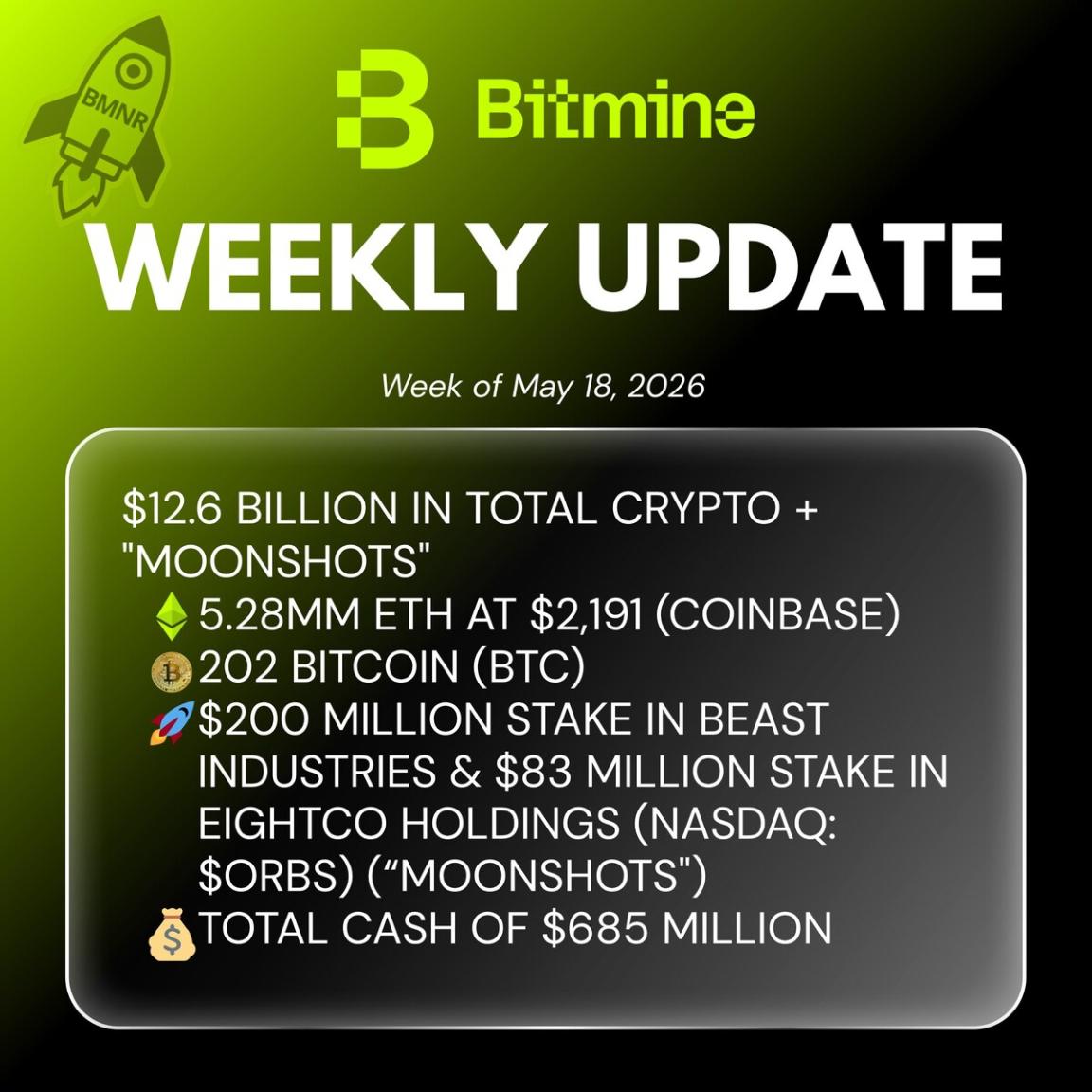
Bitmine Immersion Technologies (BMNR) Announces ETH Holdings Reach 5.28 Million Tokens, and Total Crypto and Total Cash Holdings of $12.6 Billion
Lock.com Enters Early Access With Isolated Signing and Post-Quantum Architecture