Kraken Launches U.S. Retail Crypto Spot Leverage Trading Up to 10x
Kraken has launched spot leverage trading for U.S. retail crypto traders, offering up to 10x leverage on select trading pairs. The move expands the exchange’s product lineup for individual investors in the United States, giving them access to amplified spot market exposure through a regulated platform.
What Kraken Launched for U.S. Retail Crypto Traders
Kraken’s new product allows U.S.-based retail users to trade crypto spot markets with leverage, according to an official announcement. The offering is categorized as spot leverage trading, which differs from standard spot buying by letting traders borrow funds to increase their position size.
The launch targets retail customers rather than institutional clients. This distinction matters because leverage products in the U.S. crypto market have historically been more accessible to professional or accredited traders than to everyday users.
Kraken’s margin trading support page outlines the trading pairs and their corresponding maximum leverage levels. Not all pairs receive the same leverage cap, and availability varies by asset.
How Up to 10x Leverage Changes the Offering
What 10x Leverage Means in Practice
Up to 10x leverage means a trader can control a position worth up to ten times their deposited collateral. A $1,000 deposit, for example, could open a $10,000 position. The phrase “up to” is critical, as the maximum leverage depends on the specific trading pair.
This is not the same as simply buying and holding crypto. With unleveraged spot purchases, a trader’s maximum loss is the amount invested. With leveraged positions, losses are magnified proportionally, and positions can be liquidated if the market moves far enough against the trader.
Risk Framing for Retail Traders
A 10% adverse price move on a 10x leveraged position would wipe out the entire collateral. Retail traders unfamiliar with leverage mechanics face meaningful liquidation risk, particularly in crypto markets where double-digit daily swings are not uncommon.
Spot leverage trading differs from derivatives-based leverage. Traders are buying and selling the actual underlying asset with borrowed funds, rather than trading contracts that reference the asset’s price. This distinction affects settlement, funding costs, and regulatory classification.
For traders evaluating what their crypto holdings are actually worth in real-world terms, comparisons like what 1 Bitcoin can buy in 2026 offer useful perspective on the purchasing power at stake when using leverage.
Why the U.S. Retail Rollout Matters Now
The U.S. market has been notably restrictive when it comes to leveraged crypto trading products for retail users. Several major global exchanges have limited or removed leverage options for American customers in recent years. Kraken’s decision to roll out this product domestically signals confidence in its regulatory standing.
For retail traders, the launch means access to a tool previously reserved for users on offshore platforms or those with professional trading accounts. The significance lies in what U.S. traders can now do, not in where any particular token’s price might go next.
The timing coincides with broader expansion across the crypto exchange sector. Kraken has been expanding its U.S. derivatives offering as part of a wider push to deepen its American product suite. The spot leverage launch fits within that trajectory.
The crypto industry more broadly is seeing increased product experimentation, with platforms like Roobet launching prediction markets and accelerators like Y Combinator holding dedicated crypto startup sessions in New York. Kraken’s leverage rollout adds to this wave of new retail-facing crypto products in the U.S.
What Traders Should Watch Before Using Kraken Spot Leverage
Leverage risk should be the first consideration. Amplified gains work in both directions, and retail traders without experience managing leveraged positions can face rapid, outsized losses. Kraken’s support documentation lists specific leverage limits per pair, and traders should review those before opening any position.
Eligibility requirements, collateral rules, margin call thresholds, and fee structures are all factors that traders should verify directly on Kraken’s platform. These details determine the true cost and risk profile of any leveraged trade, and they may differ from what other exchanges offer.
Traders exploring leveraged crypto products for the first time should understand how liquidation mechanics work on the platform. Knowing the exact price level at which a position would be forcibly closed is essential before committing capital.
FAQ About Kraken U.S. Retail Spot Leverage Trading
What did Kraken launch?
Kraken launched a spot leverage trading product for U.S. retail crypto traders, allowing them to trade with borrowed funds on select crypto pairs.
What does up to 10x leverage mean?
It means traders can open positions worth up to ten times their deposited collateral. The maximum leverage available depends on the specific trading pair.
Is this available to all U.S. users?
The product is aimed at U.S. retail users, but specific eligibility requirements and state-level availability have not been fully detailed in the initial announcement. Traders should check Kraken’s platform for current access information.
How is spot leverage different from futures or derivatives?
Spot leverage trading involves buying or selling the actual cryptocurrency with borrowed funds, while futures and derivatives involve contracts that reference an asset’s price without direct ownership of the underlying token.
What are the risks?
Leveraged trading amplifies both gains and losses. A position can be liquidated if the market moves against the trader beyond their collateral threshold, resulting in a total loss of deposited funds.
Disclaimer: This article is for informational purposes only and does not constitute financial or investment advice. Cryptocurrency and digital asset markets carry significant risk. Always do your own research before making decisions.
No tags available.


Other Posts








- China, US Conclude Trade Talks with Focus on Cooperation
- Crypto Weekly: NYSE Backs OKX, Kraken Gets Fed Access, BTC Sells
- Court Upholds Fed’s Rejection of Custodia Bank’s Request
- DeriW Launches Edge Hour Trading Competition Platform for Derivatives Traders
- Former CFO Convicted for $35M Fraudulent Crypto Investment
- Michael Saylor Denies Bitcoin Sell-Off Amid Large BTC Transfer
- Buy Dogecoin on eToro: Step-by-Step Guide for Beginners (2024)
- Kazakhstan Explores Crypto Reserves Backed by National Funds
- JPMorgan Increases Holdings in BlackRock’s Bitcoin ETF
- Nordea Bank Introduces Bitcoin ETP Trading for Nordic Customers
- XRP Spot ETF Launches on Nasdaq Amid Market Fluctuations
- Peter Schiff Challenges Michael Saylor on MSTR’s Business Model
- Thailand Orders Worldcoin to Delete 1.2 Million Biometric Records
- UK Proposes New DeFi Tax Framework to Ease User Burden
- WLFI Under Fire: Analyst Warns Hyperliquid Could Be Next
- Ancient Ethereum Whale Moves $1.19 Billion After Decade
- BlackRock Receives Large Crypto Transfers from Coinbase
- SEC Scrutiny on ALT5 Sigma’s Leadership Disclosure Timing
- Yala Injects $5.5 Million Amid Recovery Efforts
- Radiant Capital Faces $50M Loss in Major Security Breach
- China, US Conclude Trade Talks with Focus on Cooperation
- Crypto Weekly: NYSE Backs OKX, Kraken Gets Fed Access, BTC Sells
- Court Upholds Fed’s Rejection of Custodia Bank’s Request
- DeriW Launches Edge Hour Trading Competition Platform for Derivatives Traders
- Former CFO Convicted for $35M Fraudulent Crypto Investment
- Michael Saylor Denies Bitcoin Sell-Off Amid Large BTC Transfer
- Buy Dogecoin on eToro: Step-by-Step Guide for Beginners (2024)
- Kazakhstan Explores Crypto Reserves Backed by National Funds
- JPMorgan Increases Holdings in BlackRock’s Bitcoin ETF
- Nordea Bank Introduces Bitcoin ETP Trading for Nordic Customers
- XRP Spot ETF Launches on Nasdaq Amid Market Fluctuations
- Peter Schiff Challenges Michael Saylor on MSTR’s Business Model
- Thailand Orders Worldcoin to Delete 1.2 Million Biometric Records
- UK Proposes New DeFi Tax Framework to Ease User Burden
- WLFI Under Fire: Analyst Warns Hyperliquid Could Be Next
- Ancient Ethereum Whale Moves $1.19 Billion After Decade
- BlackRock Receives Large Crypto Transfers from Coinbase
- SEC Scrutiny on ALT5 Sigma’s Leadership Disclosure Timing
- Yala Injects $5.5 Million Amid Recovery Efforts
- Radiant Capital Faces $50M Loss in Major Security Breach
- China, US Conclude Trade Talks with Focus on Cooperation
- Crypto Weekly: NYSE Backs OKX, Kraken Gets Fed Access, BTC Sells
- Court Upholds Fed’s Rejection of Custodia Bank’s Request
- DeriW Launches Edge Hour Trading Competition Platform for Derivatives Traders
- Former CFO Convicted for $35M Fraudulent Crypto Investment
- Michael Saylor Denies Bitcoin Sell-Off Amid Large BTC Transfer
- Buy Dogecoin on eToro: Step-by-Step Guide for Beginners (2024)
- Kazakhstan Explores Crypto Reserves Backed by National Funds
- JPMorgan Increases Holdings in BlackRock’s Bitcoin ETF
- Nordea Bank Introduces Bitcoin ETP Trading for Nordic Customers
- XRP Spot ETF Launches on Nasdaq Amid Market Fluctuations
- Peter Schiff Challenges Michael Saylor on MSTR’s Business Model
- Thailand Orders Worldcoin to Delete 1.2 Million Biometric Records
- UK Proposes New DeFi Tax Framework to Ease User Burden
- WLFI Under Fire: Analyst Warns Hyperliquid Could Be Next
- Ancient Ethereum Whale Moves $1.19 Billion After Decade
- BlackRock Receives Large Crypto Transfers from Coinbase
- SEC Scrutiny on ALT5 Sigma’s Leadership Disclosure Timing
- Yala Injects $5.5 Million Amid Recovery Efforts
- Radiant Capital Faces $50M Loss in Major Security Breach

BSTR Deal Collapses After $1.5B Financing Fails; American Bitcoin Adds 500 BTC

Prediction Market World Announces Migration From Solana to Robinhood Chain

Bitcoin Suisse Advances Middle East Expansion, Receives Financial Services Permission in Abu Dhabi
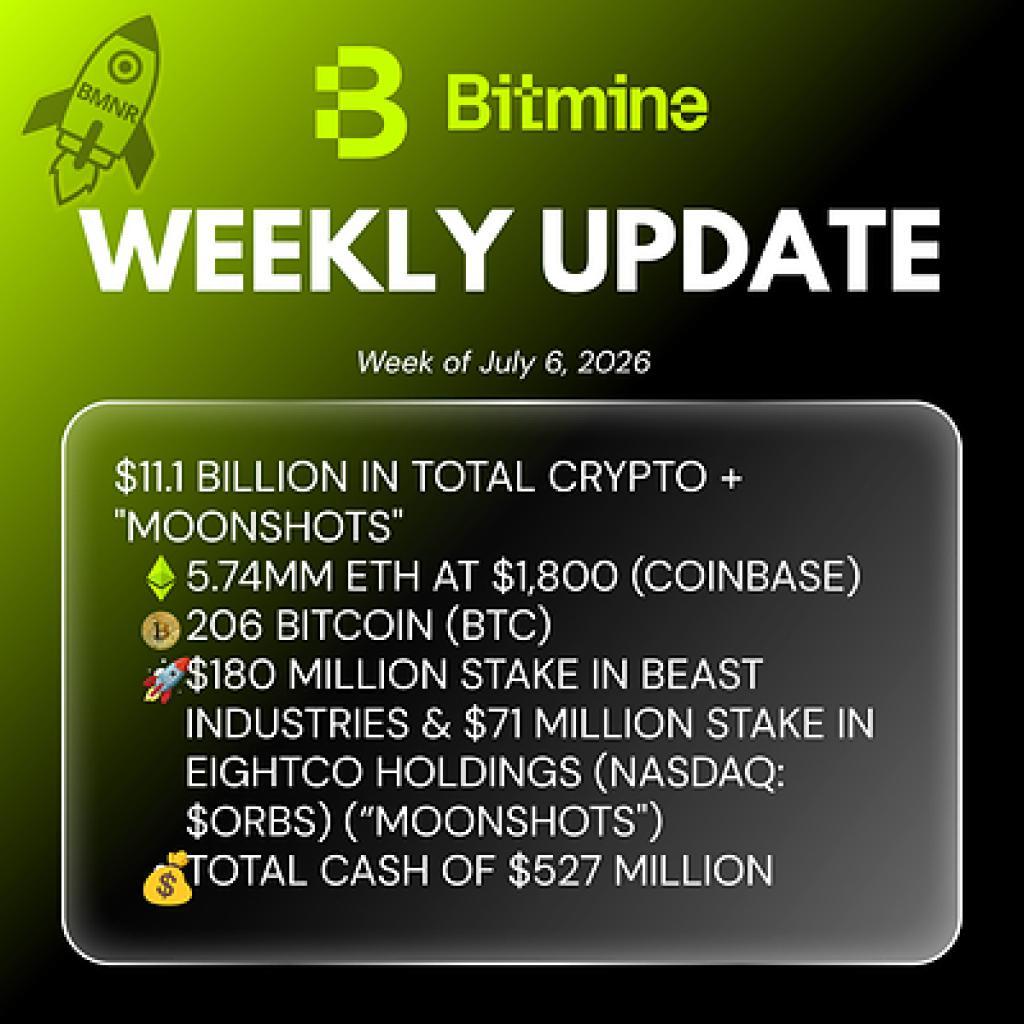
Bitmine Immersion Technologies (BMNR) Announces Total Crypto and Cash Holdings Top $11.1 Billion Now