Bitcoin miner TeraWulf has completed an approximately $1.035 billion equity placement, marking one of the largest capital raises by a publicly traded mining company in recent memory.
The completion of the financing positions TeraWulf among a small group of Bitcoin miners that have secured billion-dollar-scale funding. The company disclosed the equity placement through its investor relations page, confirming the deal closed rather than remaining at the proposal stage.
An equity placement of this type involves the sale of new shares to investors, raising capital that flows directly to the company. Unlike debt financing, equity does not require scheduled interest payments or principal repayment, giving the issuer more flexibility in how and when it deploys the funds.
Why a Billion-Dollar Raise Matters for a Bitcoin Miner
Bitcoin mining is one of the most capital-intensive segments of the cryptocurrency industry. Operators must fund specialized hardware (ASIC miners), secure long-term energy contracts, and build or lease data center infrastructure, all before generating a single bitcoin.
A raise of approximately $1.035 billion gives TeraWulf significant balance-sheet capacity relative to most publicly listed miners. Equity financing, in particular, avoids the debt-service burden that can strain cash flows during periods when Bitcoin prices decline or mining difficulty rises.
The trade-off is dilution. Issuing new shares spreads ownership across a larger base, reducing each existing shareholder’s proportional stake. Whether the raise ultimately benefits shareholders depends on how efficiently TeraWulf deploys the capital and whether the resulting growth in hash rate or revenue outpaces the dilutive effect.
TeraWulf’s approach mirrors a pattern seen across the mining sector, where companies have turned to equity markets to fund expansion. SEC filings from TeraWulf provide the regulatory record of the company’s capital-raising activity.
What Existing Shareholders Should Understand
For current TeraWulf investors, the completed placement expands the total share count. In practical terms, this means each share represents a smaller slice of the company’s earnings and assets than it did before the raise.
That said, dilution is not inherently negative. If the $1.035 billion is invested in infrastructure that generates returns exceeding the cost of capital, the per-share value can grow even with more shares outstanding. The critical variable is execution.
Large equity placements can also signal institutional confidence. Investors committing capital at this scale typically conduct extensive due diligence, suggesting that underwriters and institutional buyers see a viable path to returns. However, without disclosed details on pricing or participating investors, the market’s read on the deal remains incomplete.
This type of large-scale corporate treasury activity in the mining sector has drawn comparisons to other recent capital moves, such as when Metaplanet raised 8 billion yen for Bitcoin through zero-coupon bonds, illustrating the range of financing instruments miners and Bitcoin-focused companies are using to build positions.
How the Deal Fits the Broader Mining Landscape
Access to capital is a defining competitive advantage in Bitcoin mining. Operators with deeper funding can purchase next-generation hardware at scale, negotiate better energy rates, and expand into new geographies before competitors.
The timing of large raises often correlates with strategic windows in the Bitcoin cycle. Miners that secure funding before or during market upswings can deploy infrastructure ahead of rising revenues, while those that raise during downturns may face less favorable terms but benefit from lower hardware costs.
TeraWulf’s billion-dollar placement positions the company to compete on scale, though specific plans for the proceeds have not been detailed in the available disclosures. The broader mining sector continues to consolidate around well-capitalized operators, and raises of this magnitude reinforce that trend.
Capital market activity across crypto-adjacent companies has been notable in recent months. Movements in Ethereum spot ETF flows and exchange listing expansions at Coinbase suggest that institutional engagement with digital assets remains active across multiple fronts.
FAQ About TeraWulf’s Equity Placement
What is an equity placement?
An equity placement is a sale of new company shares to investors, typically institutional buyers. The company receives the proceeds from the sale, which it can use for operations, expansion, debt repayment, or other corporate purposes. It differs from secondary market trading, where shares change hands between investors without the company receiving funds.
Why would a Bitcoin miner raise equity capital instead of taking on debt?
Equity does not carry mandatory interest payments or repayment deadlines. For a mining company whose revenue depends on volatile Bitcoin prices and fluctuating network difficulty, this flexibility can be critical. Debt obligations during a market downturn can force asset sales or operational cuts, while equity capital remains on the balance sheet without those constraints.
Does an equity placement automatically mean dilution for existing shareholders?
Yes, in the mechanical sense. New shares increase the total share count, so each existing share represents a smaller percentage of the company. However, if the raised capital generates value that exceeds the dilutive effect, the net result for shareholders can still be positive. The outcome depends entirely on how the company deploys the funds.
Disclaimer: This article is for informational purposes only and does not constitute financial or investment advice. Cryptocurrency and digital asset markets carry significant risk. Always do your own research before making decisions.
No tags available.


Other Posts








- China, US Conclude Trade Talks with Focus on Cooperation
- Crypto Weekly: NYSE Backs OKX, Kraken Gets Fed Access, BTC Sells
- DeriW Launches Edge Hour Trading Competition Platform for Derivatives Traders
- Court Upholds Fed’s Rejection of Custodia Bank’s Request
- Former CFO Convicted for $35M Fraudulent Crypto Investment
- Michael Saylor Denies Bitcoin Sell-Off Amid Large BTC Transfer
- Buy Dogecoin on eToro: Step-by-Step Guide for Beginners (2024)
- Kazakhstan Explores Crypto Reserves Backed by National Funds
- JPMorgan Increases Holdings in BlackRock’s Bitcoin ETF
- Nordea Bank Introduces Bitcoin ETP Trading for Nordic Customers
- XRP Spot ETF Launches on Nasdaq Amid Market Fluctuations
- Crypto Leaders Address Macro Volatility Amid Market Shifts
- Peter Schiff Challenges Michael Saylor on MSTR’s Business Model
- Thailand Orders Worldcoin to Delete 1.2 Million Biometric Records
- UK Proposes New DeFi Tax Framework to Ease User Burden
- WLFI Under Fire: Analyst Warns Hyperliquid Could Be Next
- Ancient Ethereum Whale Moves $1.19 Billion After Decade
- BlackRock Receives Large Crypto Transfers from Coinbase
- SEC Scrutiny on ALT5 Sigma’s Leadership Disclosure Timing
- MoonPay Gains Trust License for Crypto Operations in New York
- China, US Conclude Trade Talks with Focus on Cooperation
- Crypto Weekly: NYSE Backs OKX, Kraken Gets Fed Access, BTC Sells
- DeriW Launches Edge Hour Trading Competition Platform for Derivatives Traders
- Court Upholds Fed’s Rejection of Custodia Bank’s Request
- Former CFO Convicted for $35M Fraudulent Crypto Investment
- Michael Saylor Denies Bitcoin Sell-Off Amid Large BTC Transfer
- Buy Dogecoin on eToro: Step-by-Step Guide for Beginners (2024)
- Kazakhstan Explores Crypto Reserves Backed by National Funds
- JPMorgan Increases Holdings in BlackRock’s Bitcoin ETF
- Nordea Bank Introduces Bitcoin ETP Trading for Nordic Customers
- XRP Spot ETF Launches on Nasdaq Amid Market Fluctuations
- Crypto Leaders Address Macro Volatility Amid Market Shifts
- Peter Schiff Challenges Michael Saylor on MSTR’s Business Model
- Thailand Orders Worldcoin to Delete 1.2 Million Biometric Records
- UK Proposes New DeFi Tax Framework to Ease User Burden
- WLFI Under Fire: Analyst Warns Hyperliquid Could Be Next
- Ancient Ethereum Whale Moves $1.19 Billion After Decade
- BlackRock Receives Large Crypto Transfers from Coinbase
- SEC Scrutiny on ALT5 Sigma’s Leadership Disclosure Timing
- MoonPay Gains Trust License for Crypto Operations in New York
- China, US Conclude Trade Talks with Focus on Cooperation
- Crypto Weekly: NYSE Backs OKX, Kraken Gets Fed Access, BTC Sells
- DeriW Launches Edge Hour Trading Competition Platform for Derivatives Traders
- Court Upholds Fed’s Rejection of Custodia Bank’s Request
- Former CFO Convicted for $35M Fraudulent Crypto Investment
- Michael Saylor Denies Bitcoin Sell-Off Amid Large BTC Transfer
- Buy Dogecoin on eToro: Step-by-Step Guide for Beginners (2024)
- Kazakhstan Explores Crypto Reserves Backed by National Funds
- JPMorgan Increases Holdings in BlackRock’s Bitcoin ETF
- Nordea Bank Introduces Bitcoin ETP Trading for Nordic Customers
- XRP Spot ETF Launches on Nasdaq Amid Market Fluctuations
- Crypto Leaders Address Macro Volatility Amid Market Shifts
- Peter Schiff Challenges Michael Saylor on MSTR’s Business Model
- Thailand Orders Worldcoin to Delete 1.2 Million Biometric Records
- UK Proposes New DeFi Tax Framework to Ease User Burden
- WLFI Under Fire: Analyst Warns Hyperliquid Could Be Next
- Ancient Ethereum Whale Moves $1.19 Billion After Decade
- BlackRock Receives Large Crypto Transfers from Coinbase
- SEC Scrutiny on ALT5 Sigma’s Leadership Disclosure Timing
- MoonPay Gains Trust License for Crypto Operations in New York


SEC launches ETF rule review focused on crypto funds and prediction markets

Sovright Launches Argos Wallet Recovery Tool for Early Zcash Users

Autheo Introduces the Internet Operating System: A Decentralized Coordination Layer for Web, Blockchain, & AI
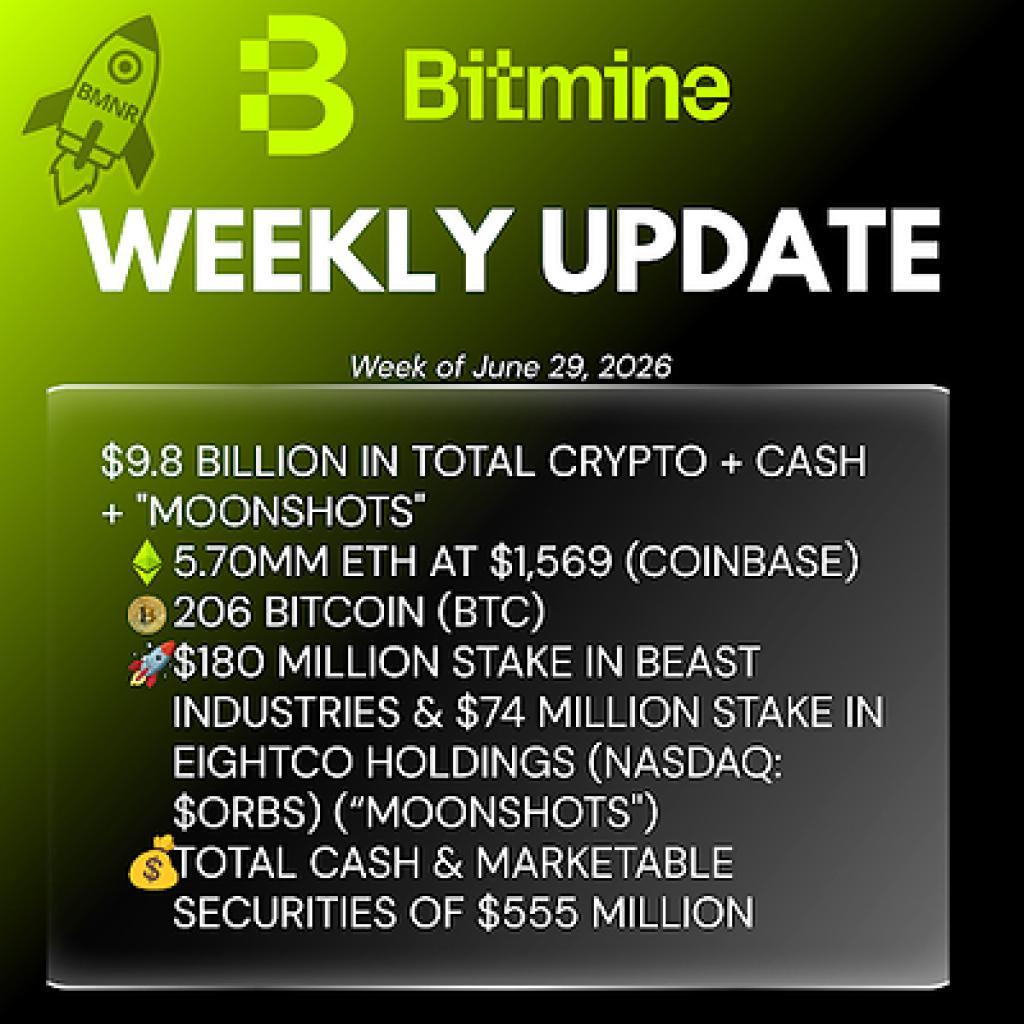
Bitmine Immersion Technologies (BMNR) Announces ETH Holdings Reach 5.70 Million Tokens, and Total Crypto and Total Cash Holdings of $9.8 Billion