U.S. XRP spot ETFs recorded $5.30 million in daily net inflows, marking a positive session for the investment vehicles as market participants continue to gauge demand for regulated XRP exposure.
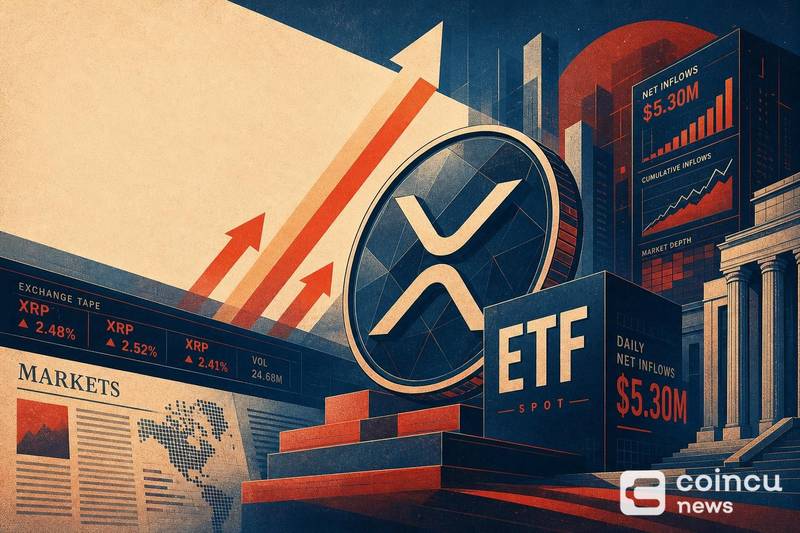
The figure represents the net difference between new capital entering and existing capital exiting XRP spot ETFs during a single trading day. A positive net inflow means more dollars were allocated to these funds than were redeemed, reflecting active buyer interest at current price levels.
Daily ETF flow data has become one of the most closely watched indicators in digital asset markets. For XRP, the $5.30 million inflow print offers a snapshot of how investors are positioning through regulated channels rather than direct token purchases on exchanges.
What the Inflow Figure Suggests About Investor Demand
Positive net inflows signal that, on balance, more capital entered XRP ETFs than left during the session. This is commonly interpreted as a demand signal, but a single day of data carries limited weight on its own.
One session of inflows does not confirm a sustained accumulation trend. Flows can reverse sharply the following day based on broader risk appetite, profit-taking, or macro events unrelated to XRP fundamentals.
The distinction matters because ETF flow headlines often generate outsized sentiment reactions. Investors tracking these products should compare the figure against a rolling series of daily prints, available through platforms like CoinGlass ETF trackers, to identify whether buying pressure is building or fading over time.
Why XRP ETF Flows Matter for the Broader Crypto Market
Spot ETF products for digital assets have reshaped how both institutional and retail investors gain exposure to crypto. XRP-specific ETFs extend that framework beyond Bitcoin and Ethereum, broadening the menu of regulated investment vehicles available in U.S. markets.
The availability of these products draws attention because they provide a compliant entry point for capital that may not otherwise flow into XRP directly. Fund-level purchases do not require investors to manage private keys, interact with exchanges, or navigate custody arrangements.
ETF flow data also carries a signaling effect. When XRP ETF inflow figures make headlines, they can influence short-term sentiment across altcoin markets more broadly. Traders in adjacent assets often interpret growing ETF demand for one token as a proxy for wider risk appetite in the sector.
This dynamic has played out repeatedly with Bitcoin ETFs, where flow data became a primary narrative driver. The question for XRP is whether similar attention translates into consistent capital allocation or remains episodic. The growing regulatory backdrop surrounding digital assets, including legislative efforts to shape stablecoin oversight under the GENIUS Bill, continues to influence investor confidence in these products.
Key Metrics to Watch After the Inflow Update
The most immediate follow-up indicator is the next series of daily flow reports. Consecutive positive sessions would strengthen the case that demand is building, while a reversal into outflows would suggest the inflow figure was an isolated event.
Trading volume within the ETFs themselves is another useful signal. Rising volume alongside positive flows suggests genuine participation rather than thin, low-conviction activity. Conversely, inflows on declining volume may indicate a narrower base of buyers.
Assets under management growth over weekly and monthly periods provides a more reliable picture than any single daily print. AUM captures the cumulative effect of flows and price changes, offering a clearer view of whether the products are gaining traction with allocators.
Price action in XRP itself is worth monitoring but should be treated as a secondary signal. ETF flows and spot price can diverge meaningfully in the short term, and shifts in broader market conditions, such as the volume rotation seen recently in South Korean crypto markets, can shape near-term dynamics independently of ETF activity.
Meanwhile, ongoing stablecoin regulation discussions at the federal level add another layer of context for investors evaluating the trajectory of regulated crypto products more broadly.
FAQ
What are net inflows in an ETF?
Net inflows measure the difference between money entering an ETF through new share purchases and money leaving through redemptions during a given period. A positive figure means more capital came in than went out.
Does $5.30 million in inflows mean XRP demand is rising?
It indicates that demand exceeded redemptions for that specific trading session. However, one day of positive flows does not establish a trend. Sustained inflows over multiple sessions would be a stronger signal of growing demand.
What should investors watch after this update?
Follow-up daily flow reports, ETF trading volume, and changes in assets under management are the most relevant indicators. These metrics, viewed together over days and weeks, paint a more complete picture than any single headline number.
Disclaimer: This article is for informational purposes only and does not constitute financial or investment advice. Cryptocurrency and digital asset markets carry significant risk. Always do your own research before making decisions.
No tags available.


Other Posts








- China, US Conclude Trade Talks with Focus on Cooperation
- Court Upholds Fed’s Rejection of Custodia Bank’s Request
- Crypto Weekly: NYSE Backs OKX, Kraken Gets Fed Access, BTC Sells
- Former CFO Convicted for $35M Fraudulent Crypto Investment
- DeriW Launches Edge Hour Trading Competition Platform for Derivatives Traders
- Michael Saylor Denies Bitcoin Sell-Off Amid Large BTC Transfer
- Buy Dogecoin on eToro: Step-by-Step Guide for Beginners (2024)
- Kazakhstan Explores Crypto Reserves Backed by National Funds
- JPMorgan Increases Holdings in BlackRock’s Bitcoin ETF
- Nordea Bank Introduces Bitcoin ETP Trading for Nordic Customers
- XRP Spot ETF Launches on Nasdaq Amid Market Fluctuations
- Peter Schiff Challenges Michael Saylor on MSTR’s Business Model
- Thailand Orders Worldcoin to Delete 1.2 Million Biometric Records
- UK Proposes New DeFi Tax Framework to Ease User Burden
- WLFI Under Fire: Analyst Warns Hyperliquid Could Be Next
- Ancient Ethereum Whale Moves $1.19 Billion After Decade
- BlackRock Receives Large Crypto Transfers from Coinbase
- SEC Scrutiny on ALT5 Sigma’s Leadership Disclosure Timing
- Yala Injects $5.5 Million Amid Recovery Efforts
- Radiant Capital Faces $50M Loss in Major Security Breach
- China, US Conclude Trade Talks with Focus on Cooperation
- Court Upholds Fed’s Rejection of Custodia Bank’s Request
- Crypto Weekly: NYSE Backs OKX, Kraken Gets Fed Access, BTC Sells
- Former CFO Convicted for $35M Fraudulent Crypto Investment
- DeriW Launches Edge Hour Trading Competition Platform for Derivatives Traders
- Michael Saylor Denies Bitcoin Sell-Off Amid Large BTC Transfer
- Buy Dogecoin on eToro: Step-by-Step Guide for Beginners (2024)
- Kazakhstan Explores Crypto Reserves Backed by National Funds
- JPMorgan Increases Holdings in BlackRock’s Bitcoin ETF
- Nordea Bank Introduces Bitcoin ETP Trading for Nordic Customers
- XRP Spot ETF Launches on Nasdaq Amid Market Fluctuations
- Peter Schiff Challenges Michael Saylor on MSTR’s Business Model
- Thailand Orders Worldcoin to Delete 1.2 Million Biometric Records
- UK Proposes New DeFi Tax Framework to Ease User Burden
- WLFI Under Fire: Analyst Warns Hyperliquid Could Be Next
- Ancient Ethereum Whale Moves $1.19 Billion After Decade
- BlackRock Receives Large Crypto Transfers from Coinbase
- SEC Scrutiny on ALT5 Sigma’s Leadership Disclosure Timing
- Yala Injects $5.5 Million Amid Recovery Efforts
- Radiant Capital Faces $50M Loss in Major Security Breach
- China, US Conclude Trade Talks with Focus on Cooperation
- Court Upholds Fed’s Rejection of Custodia Bank’s Request
- Crypto Weekly: NYSE Backs OKX, Kraken Gets Fed Access, BTC Sells
- Former CFO Convicted for $35M Fraudulent Crypto Investment
- DeriW Launches Edge Hour Trading Competition Platform for Derivatives Traders
- Michael Saylor Denies Bitcoin Sell-Off Amid Large BTC Transfer
- Buy Dogecoin on eToro: Step-by-Step Guide for Beginners (2024)
- Kazakhstan Explores Crypto Reserves Backed by National Funds
- JPMorgan Increases Holdings in BlackRock’s Bitcoin ETF
- Nordea Bank Introduces Bitcoin ETP Trading for Nordic Customers
- XRP Spot ETF Launches on Nasdaq Amid Market Fluctuations
- Peter Schiff Challenges Michael Saylor on MSTR’s Business Model
- Thailand Orders Worldcoin to Delete 1.2 Million Biometric Records
- UK Proposes New DeFi Tax Framework to Ease User Burden
- WLFI Under Fire: Analyst Warns Hyperliquid Could Be Next
- Ancient Ethereum Whale Moves $1.19 Billion After Decade
- BlackRock Receives Large Crypto Transfers from Coinbase
- SEC Scrutiny on ALT5 Sigma’s Leadership Disclosure Timing
- Yala Injects $5.5 Million Amid Recovery Efforts
- Radiant Capital Faces $50M Loss in Major Security Breach

Bitcoin’s $116M Self-Custody Wake-Up Call Raises ETF Questions

SafePal Data Breach Exposes Nearly 40,000 Customers’ Order Info


BiggerZ: Building a Fairness-First Crypto Casino, Sportsbook and Prediction Markets Platform

Bitmine Immersion Technologies Announces Record and Payment Dates for Cash Dividends on 9.50% Series A Perpetual Preferred Stock