Ethereum-Bitcoin Price Ratio Rebounds as Crypto Market Activity Picks Up
Ethereum’s price ratio against Bitcoin has rebounded roughly 4.75% from a 30-day low, coinciding with the strongest week of institutional inflows into digital asset products since January. The recovery in relative strength comes as trading volumes surge, though broader market sentiment remains firmly in fear territory.
ETH/BTC Rebounds From a 30-Day Low
The ETH/BTC ratio, which tracks how much Bitcoin one unit of Ether is worth, stood at 0.03136 BTC on April 15. That marks a recovery from a 30-day low of 0.02994 recorded on March 27.
Ratio Move in Numbers
The 4.75% bounce is modest in absolute terms, but it reverses a stretch of persistent Ethereum underperformance against Bitcoin that had pushed the pair to its lowest level in the past month. Ether was trading at $2,330 at press time, while its 24-hour price change was down 1.53%.
Why ETH/BTC Matters
The ETH/BTC ratio is widely watched as a gauge of risk appetite within crypto. When Ether gains ground against Bitcoin, it typically signals that capital is rotating toward higher-beta assets, a pattern often associated with improving confidence in the broader altcoin market.
The ratio’s recent move is particularly notable against the backdrop of renewed institutional interest in Ethereum products, including developments like the ETHGas and ether.fi $3 billion deal aimed at institutional blockspace markets.
Fund Flows Point to Renewed Demand for Bitcoin and Ethereum
CoinShares reported US$1.1 billion of weekly inflows into digital asset investment products in its April 13 report, calling it the strongest weekly total since January.
Bitcoin vs Ethereum Inflows
Bitcoin products led with US$871 million of weekly inflows, while Ethereum products drew US$196.5 million. In absolute terms, Bitcoin dominated, but the Ethereum figure is significant because it shows institutional buyers are not simply parking capital in the largest asset.
Ethereum’s share of the inflows, roughly 18% of the total, aligns with the ETH/BTC ratio recovery. Institutional capital flowing into both assets simultaneously suggests a broadening of demand rather than a narrow Bitcoin-only bid. That dynamic also touches broader market participation patterns, as seen in metrics like RAVE liquidation volumes that track activity across the top assets.
Macro Backdrop
CoinShares attributed the improving demand to softer-than-expected U.S. CPI and retail-sales data alongside reduced geopolitical risk. No single discrete catalyst explains the ETH/BTC rebound; the move appears driven by a broad shift in macro sentiment rather than an Ethereum-specific development.
Crypto Trading Activity Is Rising, but the Broad Recovery Is Uneven
Beyond fund flows, raw trading activity has also picked up. Total 24-hour crypto trading volume reached US$161 billion, a 34.2% increase from the prior day. CoinShares separately noted that exchange-traded product volumes rose 13% week over week.
Volume Rebound
The volume surge is broad-based. Total crypto market capitalization stood at US$2.59 trillion, with Bitcoin dominance at 57.3% and Ethereum dominance at 10.8%. The combination of higher volumes and stable dominance shares suggests participation is increasing across the market rather than concentrating in a single asset.
Infrastructure developments that reduce friction for stablecoin execution, such as gasless routing layers, may be contributing to smoother capital flows across chains and exchanges.
Why the Price Picture Is Still Mixed
Despite the volume increase, the 24-hour change in total market capitalization was slightly negative at -0.1%. This means more capital was being traded, but aggregate spot prices were not meaningfully higher over the most recent session.
The distinction matters. Improving volume and fund flows confirm rising participation. But participation and price appreciation are not the same thing, and the headline framing of “market picks up overall” is better supported by activity data than by spot returns.
Why This Still Falls Short of a Full Risk-On Signal
The Crypto Fear & Greed Index registered 23 on April 15, a reading classified as Extreme Fear. That score sits well below the neutral threshold of 50 and indicates the broader market remains deeply cautious despite the improving flow and volume data.
A 4.75% rebound in a single ratio over less than three weeks does not, by itself, confirm sustained Ethereum leadership or the onset of a broader altcoin season. Historical ETH/BTC rallies that preceded meaningful altcoin rotations were typically larger in magnitude and accompanied by a shift in sentiment toward greed, not fear.
What Would Confirm a Stronger Trend Next
For the current rebound to mature into a durable trend, several conditions would need to align: the ETH/BTC ratio would need to sustain levels above the 0.033-0.035 range, weekly inflows would need to hold or accelerate beyond the US$1.1 billion pace, and the Fear & Greed Index would need to climb out of Extreme Fear territory.
Without those confirmations, the current data points to an early-stage recovery in activity and relative strength, not a clean all-clear signal for risk assets.
FAQ: What the Ethereum-Bitcoin Ratio Rebound Means Now
What does the ETH/BTC ratio measure?
The ETH/BTC ratio expresses the price of one Ether in Bitcoin terms. A rising ratio means Ethereum is gaining value relative to Bitcoin, regardless of whether both assets are rising or falling in dollar terms. It is used as a barometer for risk appetite within crypto markets.
What drove the recent ETH/BTC rebound?
The ratio recovered 4.75% from its 30-day low, supported by US$196.5 million of weekly Ethereum inflows and a broader macro backdrop of softer U.S. economic data. No single catalyst has been identified; the move reflects improving sentiment rather than a specific Ethereum-only event.
Has the entire crypto market recovered?
Not fully. Trading volumes rose 34.2% day over day and institutional inflows hit their strongest week since January, but total market capitalization was still slightly negative over 24 hours and the Fear & Greed Index remained at 23, in Extreme Fear. Activity has improved more clearly than aggregate prices.
Is this the start of altcoin season?
The data does not support that conclusion yet. A single ratio bounce from a short-term low, combined with an Extreme Fear sentiment reading, is insufficient to declare a rotation into altcoins. Sustained outperformance and a shift in sentiment would be needed to confirm that thesis.
Disclaimer: This article is for informational purposes only and does not constitute financial or investment advice. Cryptocurrency and digital asset markets carry significant risk. Always do your own research before making decisions.
No tags available.






- China, US Conclude Trade Talks with Focus on Cooperation
- Crypto Weekly: NYSE Backs OKX, Kraken Gets Fed Access, BTC Sells
- Court Upholds Fed’s Rejection of Custodia Bank’s Request
- Former CFO Convicted for $35M Fraudulent Crypto Investment
- DeriW Launches Edge Hour Trading Competition Platform for Derivatives Traders
- Michael Saylor Denies Bitcoin Sell-Off Amid Large BTC Transfer
- Buy Dogecoin on eToro: Step-by-Step Guide for Beginners (2024)
- Kazakhstan Explores Crypto Reserves Backed by National Funds
- JPMorgan Increases Holdings in BlackRock’s Bitcoin ETF
- Nordea Bank Introduces Bitcoin ETP Trading for Nordic Customers
- XRP Spot ETF Launches on Nasdaq Amid Market Fluctuations
- Peter Schiff Challenges Michael Saylor on MSTR’s Business Model
- Thailand Orders Worldcoin to Delete 1.2 Million Biometric Records
- UK Proposes New DeFi Tax Framework to Ease User Burden
- WLFI Under Fire: Analyst Warns Hyperliquid Could Be Next
- Ancient Ethereum Whale Moves $1.19 Billion After Decade
- BlackRock Receives Large Crypto Transfers from Coinbase
- SEC Scrutiny on ALT5 Sigma’s Leadership Disclosure Timing
- Yala Injects $5.5 Million Amid Recovery Efforts
- Radiant Capital Faces $50M Loss in Major Security Breach
- China, US Conclude Trade Talks with Focus on Cooperation
- Crypto Weekly: NYSE Backs OKX, Kraken Gets Fed Access, BTC Sells
- Court Upholds Fed’s Rejection of Custodia Bank’s Request
- Former CFO Convicted for $35M Fraudulent Crypto Investment
- DeriW Launches Edge Hour Trading Competition Platform for Derivatives Traders
- Michael Saylor Denies Bitcoin Sell-Off Amid Large BTC Transfer
- Buy Dogecoin on eToro: Step-by-Step Guide for Beginners (2024)
- Kazakhstan Explores Crypto Reserves Backed by National Funds
- JPMorgan Increases Holdings in BlackRock’s Bitcoin ETF
- Nordea Bank Introduces Bitcoin ETP Trading for Nordic Customers
- XRP Spot ETF Launches on Nasdaq Amid Market Fluctuations
- Peter Schiff Challenges Michael Saylor on MSTR’s Business Model
- Thailand Orders Worldcoin to Delete 1.2 Million Biometric Records
- UK Proposes New DeFi Tax Framework to Ease User Burden
- WLFI Under Fire: Analyst Warns Hyperliquid Could Be Next
- Ancient Ethereum Whale Moves $1.19 Billion After Decade
- BlackRock Receives Large Crypto Transfers from Coinbase
- SEC Scrutiny on ALT5 Sigma’s Leadership Disclosure Timing
- Yala Injects $5.5 Million Amid Recovery Efforts
- Radiant Capital Faces $50M Loss in Major Security Breach
- China, US Conclude Trade Talks with Focus on Cooperation
- Crypto Weekly: NYSE Backs OKX, Kraken Gets Fed Access, BTC Sells
- Court Upholds Fed’s Rejection of Custodia Bank’s Request
- Former CFO Convicted for $35M Fraudulent Crypto Investment
- DeriW Launches Edge Hour Trading Competition Platform for Derivatives Traders
- Michael Saylor Denies Bitcoin Sell-Off Amid Large BTC Transfer
- Buy Dogecoin on eToro: Step-by-Step Guide for Beginners (2024)
- Kazakhstan Explores Crypto Reserves Backed by National Funds
- JPMorgan Increases Holdings in BlackRock’s Bitcoin ETF
- Nordea Bank Introduces Bitcoin ETP Trading for Nordic Customers
- XRP Spot ETF Launches on Nasdaq Amid Market Fluctuations
- Peter Schiff Challenges Michael Saylor on MSTR’s Business Model
- Thailand Orders Worldcoin to Delete 1.2 Million Biometric Records
- UK Proposes New DeFi Tax Framework to Ease User Burden
- WLFI Under Fire: Analyst Warns Hyperliquid Could Be Next
- Ancient Ethereum Whale Moves $1.19 Billion After Decade
- BlackRock Receives Large Crypto Transfers from Coinbase
- SEC Scrutiny on ALT5 Sigma’s Leadership Disclosure Timing
- Yala Injects $5.5 Million Amid Recovery Efforts
- Radiant Capital Faces $50M Loss in Major Security Breach

Binance Wallet Adds Limit Orders on Ethereum and Base for Web and App Users


EthSystems Launches to Build Privacy Solutions for Institutions on Ethereum
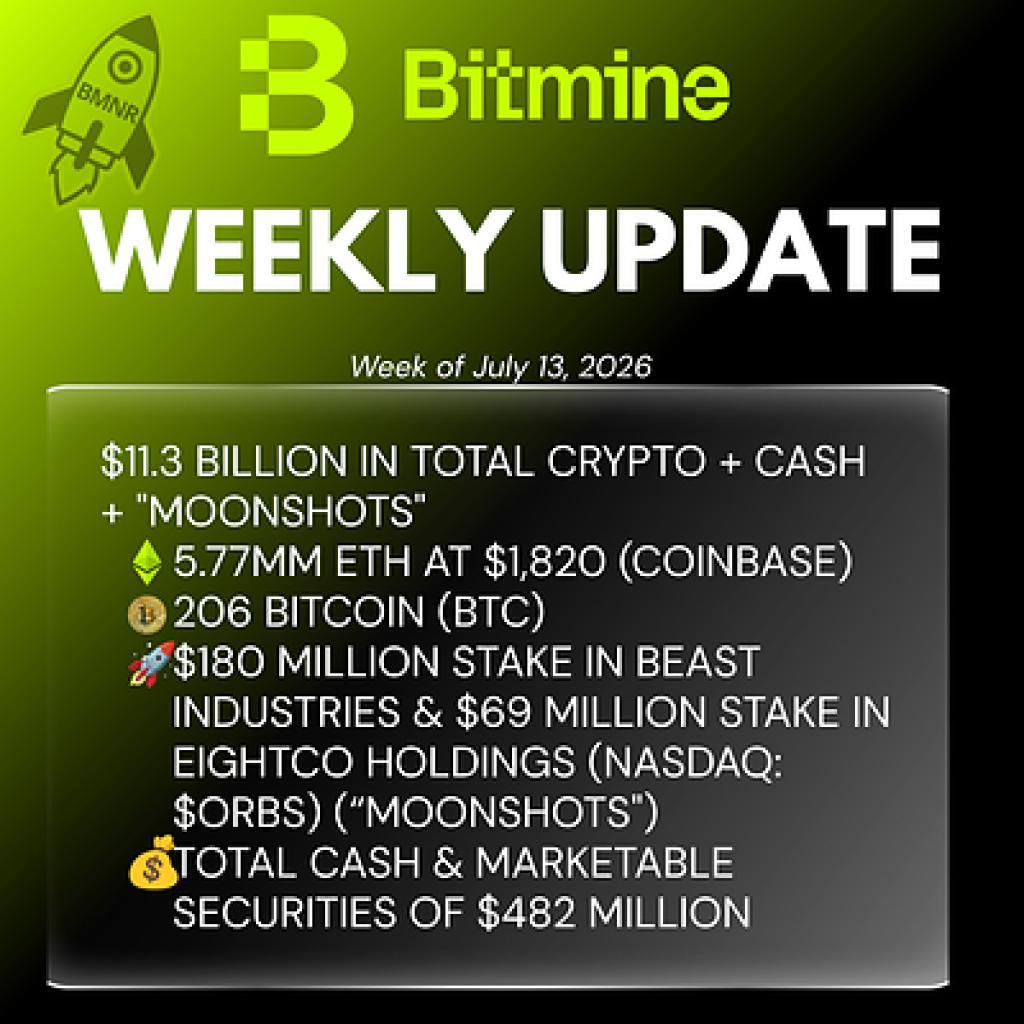
Bitmine Immersion Technologies (BMNR) Announces ETH Holdings Reach 5.77 Million Tokens, and Total Crypto and Total Cash Holdings of $11.3 Billion