Reality Partners With U.S. Compliance Broker Alpaca to Expand RWA Access
Reality, a tokenized real-world asset protocol backed by Bitget, has announced a partnership with Alpaca, a U.S.-regulated brokerage infrastructure provider, in a move aimed at strengthening compliance frameworks for RWA access.
The partnership pairs Reality’s RWA tokenization platform with Alpaca’s U.S. brokerage and compliance infrastructure. Reality operates as Bitget’s tokenized RWA platform, designed to bring traditional financial assets on-chain. Alpaca provides brokerage API services and tokenization infrastructure built around U.S. regulatory requirements.
The deal signals a compliance-first approach rather than a generic marketing arrangement. By integrating with a broker-dealer that operates under U.S. financial regulations, Reality positions itself to offer regulated access pathways for tokenized assets.
Why a U.S. Compliance Broker Matters for RWA Protocols
RWA protocols face a fundamental challenge: tokenizing real-world assets like equities, bonds, or real estate requires navigating jurisdiction-specific securities laws. Without compliant infrastructure, these platforms risk restricting access for institutional participants and U.S.-based users.
Alpaca’s role as a regulated brokerage provider could address onboarding friction. A U.S. compliance broker can serve as the regulated wrapper that handles investor verification, asset custody, and settlement in ways that satisfy financial regulators.
This type of partnership matters because institutional adoption of tokenized assets often stalls at the compliance layer. Projects that can demonstrate regulated infrastructure tend to attract capital from traditional finance participants who require legal certainty before allocating funds. The recent wave of interest in tokenized securities at the SEC level underscores why compliance alignment is strategically relevant.
However, partnering with a compliance broker is not the same as receiving full regulatory approval. The distinction matters: compliance support reduces friction, but it does not guarantee that every product launched through the partnership will meet all regulatory thresholds across jurisdictions.
What the Reality-Alpaca Deal Could Mean for Adoption
For Reality, the partnership could improve market positioning against competing RWA protocols. The tokenized asset space has grown increasingly competitive, with major exchanges exploring tokenized stock trading and traditional brokerages building blockchain settlement layers.
A compliance-focused partnership may help Reality differentiate by offering a credible bridge between blockchain-native products and regulated financial infrastructure. This could translate into expanded product availability, smoother onboarding for institutional users, and stronger trust signals for cautious retail participants.
The deal may also open pathways for future product launches involving tokenized U.S. equities or other traditional assets. Alpaca’s existing brokerage infrastructure could provide the settlement and custody rails needed to bring these products to market.
That said, adoption impact depends entirely on execution after the announcement. Partnerships in crypto frequently generate initial attention but deliver value only when concrete integrations reach users. How Reality and Alpaca translate this agreement into live, user-facing products will determine whether the deal carries lasting significance.
Open Questions and What to Watch Next
Several key details remain unconfirmed. The partnership announcement does not specify rollout timelines, which asset classes will be supported first, or whether the integration will be available to users outside the United States.
Transaction volumes, fee structures, and integration milestones have not been disclosed. Without these details, the market impact of the partnership remains speculative. As broader crypto retail participation trends shift, the ability to attract and retain users will depend on tangible product delivery.
RWA execution risk typically stems from operational, legal, and distribution bottlenecks rather than technology limitations. Even well-structured partnerships can stall if regulatory interpretations change, if custody arrangements prove insufficient, or if user demand for tokenized assets does not materialize at the expected scale.
Readers tracking this story should watch for concrete integration announcements, user-facing product launches, and any regulatory filings that confirm the scope of compliance coverage. These milestones, not the partnership announcement itself, will determine whether the Reality-Alpaca deal meaningfully advances tokenized asset infrastructure in the U.S. market.
FAQ About Reality’s Partnership With Alpaca
What is Reality?
Reality is a tokenized real-world asset platform associated with Bitget. It aims to bring traditional financial assets, such as equities and other instruments, onto blockchain infrastructure.
What is Alpaca?
Alpaca is a U.S.-based brokerage infrastructure provider that offers API-driven trading and tokenization services built around U.S. regulatory compliance requirements.
Why does this partnership matter for RWAs?
Tokenized real-world assets require compliant brokerage infrastructure to operate within securities law. A partnership with a regulated U.S. broker could provide the legal and operational framework needed to serve institutional and retail users.
Does this announcement confirm immediate product changes?
No. The partnership has been announced, but specific product launches, timelines, and supported asset classes have not been publicly confirmed. Users should watch for follow-up announcements detailing concrete integrations.
Disclaimer: This article is for informational purposes only and does not constitute financial or investment advice. Cryptocurrency and digital asset markets carry significant risk. Always do your own research before making decisions.
No tags available.


Other Posts







- China, US Conclude Trade Talks with Focus on Cooperation
- Crypto Weekly: NYSE Backs OKX, Kraken Gets Fed Access, BTC Sells
- Court Upholds Fed’s Rejection of Custodia Bank’s Request
- Former CFO Convicted for $35M Fraudulent Crypto Investment
- DeriW Launches Edge Hour Trading Competition Platform for Derivatives Traders
- Michael Saylor Denies Bitcoin Sell-Off Amid Large BTC Transfer
- Buy Dogecoin on eToro: Step-by-Step Guide for Beginners (2024)
- Kazakhstan Explores Crypto Reserves Backed by National Funds
- JPMorgan Increases Holdings in BlackRock’s Bitcoin ETF
- Nordea Bank Introduces Bitcoin ETP Trading for Nordic Customers
- XRP Spot ETF Launches on Nasdaq Amid Market Fluctuations
- Peter Schiff Challenges Michael Saylor on MSTR’s Business Model
- Thailand Orders Worldcoin to Delete 1.2 Million Biometric Records
- UK Proposes New DeFi Tax Framework to Ease User Burden
- WLFI Under Fire: Analyst Warns Hyperliquid Could Be Next
- Ancient Ethereum Whale Moves $1.19 Billion After Decade
- BlackRock Receives Large Crypto Transfers from Coinbase
- SEC Scrutiny on ALT5 Sigma’s Leadership Disclosure Timing
- Yala Injects $5.5 Million Amid Recovery Efforts
- Radiant Capital Faces $50M Loss in Major Security Breach
- China, US Conclude Trade Talks with Focus on Cooperation
- Crypto Weekly: NYSE Backs OKX, Kraken Gets Fed Access, BTC Sells
- Court Upholds Fed’s Rejection of Custodia Bank’s Request
- Former CFO Convicted for $35M Fraudulent Crypto Investment
- DeriW Launches Edge Hour Trading Competition Platform for Derivatives Traders
- Michael Saylor Denies Bitcoin Sell-Off Amid Large BTC Transfer
- Buy Dogecoin on eToro: Step-by-Step Guide for Beginners (2024)
- Kazakhstan Explores Crypto Reserves Backed by National Funds
- JPMorgan Increases Holdings in BlackRock’s Bitcoin ETF
- Nordea Bank Introduces Bitcoin ETP Trading for Nordic Customers
- XRP Spot ETF Launches on Nasdaq Amid Market Fluctuations
- Peter Schiff Challenges Michael Saylor on MSTR’s Business Model
- Thailand Orders Worldcoin to Delete 1.2 Million Biometric Records
- UK Proposes New DeFi Tax Framework to Ease User Burden
- WLFI Under Fire: Analyst Warns Hyperliquid Could Be Next
- Ancient Ethereum Whale Moves $1.19 Billion After Decade
- BlackRock Receives Large Crypto Transfers from Coinbase
- SEC Scrutiny on ALT5 Sigma’s Leadership Disclosure Timing
- Yala Injects $5.5 Million Amid Recovery Efforts
- Radiant Capital Faces $50M Loss in Major Security Breach
- China, US Conclude Trade Talks with Focus on Cooperation
- Crypto Weekly: NYSE Backs OKX, Kraken Gets Fed Access, BTC Sells
- Court Upholds Fed’s Rejection of Custodia Bank’s Request
- Former CFO Convicted for $35M Fraudulent Crypto Investment
- DeriW Launches Edge Hour Trading Competition Platform for Derivatives Traders
- Michael Saylor Denies Bitcoin Sell-Off Amid Large BTC Transfer
- Buy Dogecoin on eToro: Step-by-Step Guide for Beginners (2024)
- Kazakhstan Explores Crypto Reserves Backed by National Funds
- JPMorgan Increases Holdings in BlackRock’s Bitcoin ETF
- Nordea Bank Introduces Bitcoin ETP Trading for Nordic Customers
- XRP Spot ETF Launches on Nasdaq Amid Market Fluctuations
- Peter Schiff Challenges Michael Saylor on MSTR’s Business Model
- Thailand Orders Worldcoin to Delete 1.2 Million Biometric Records
- UK Proposes New DeFi Tax Framework to Ease User Burden
- WLFI Under Fire: Analyst Warns Hyperliquid Could Be Next
- Ancient Ethereum Whale Moves $1.19 Billion After Decade
- BlackRock Receives Large Crypto Transfers from Coinbase
- SEC Scrutiny on ALT5 Sigma’s Leadership Disclosure Timing
- Yala Injects $5.5 Million Amid Recovery Efforts
- Radiant Capital Faces $50M Loss in Major Security Breach

Binance Wallet Adds Changxin Technology Perpetuals With 20x Leverage

SOON Security Incident Review Finds No Impact on User Assets, Mainnet RPC Restored

South Korean Police Raid Former Incheon Mayor Over 21,000 Allegedly Hidden Crypto Assets
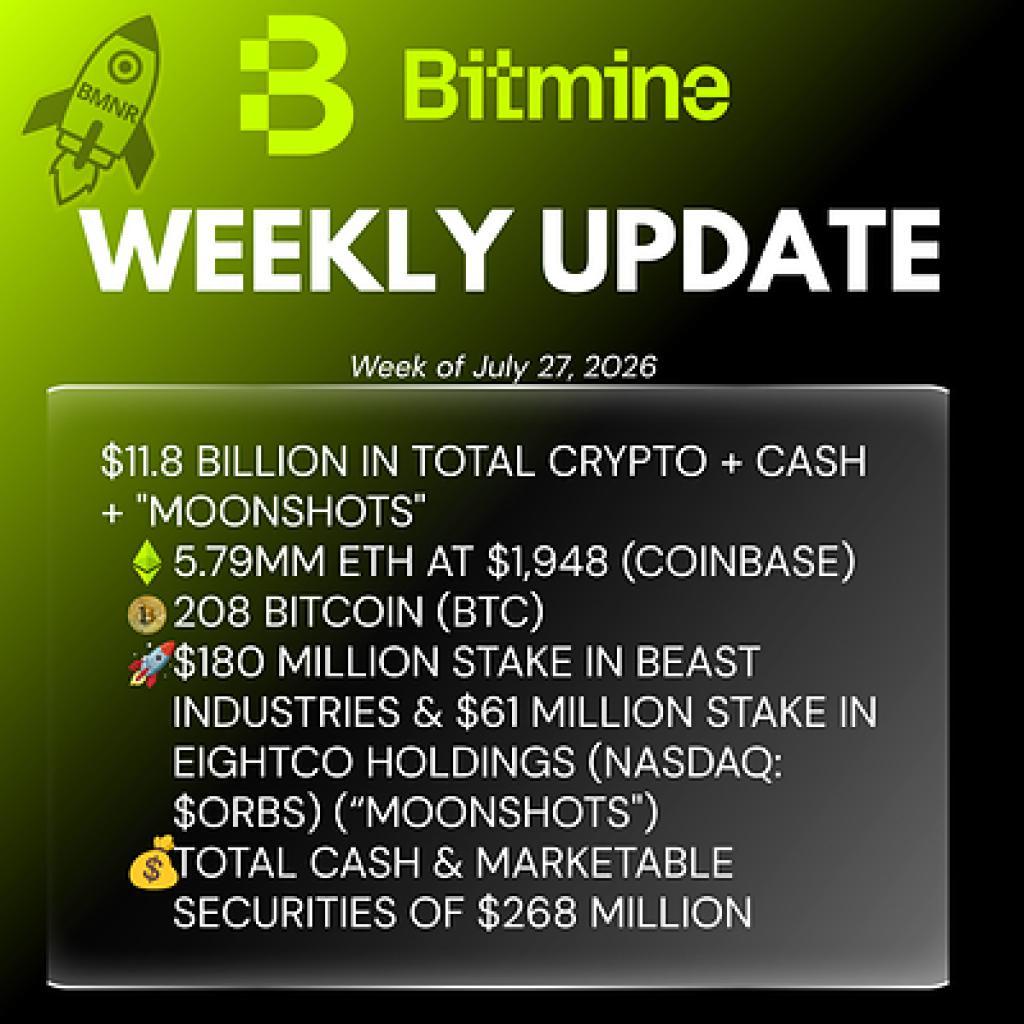
Bitmine Immersion Technologies (BMNR) Announces ETH Holdings Reach 5.79 Million Tokens, and Total Crypto and Total Cash Holdings of $11.8 Billion
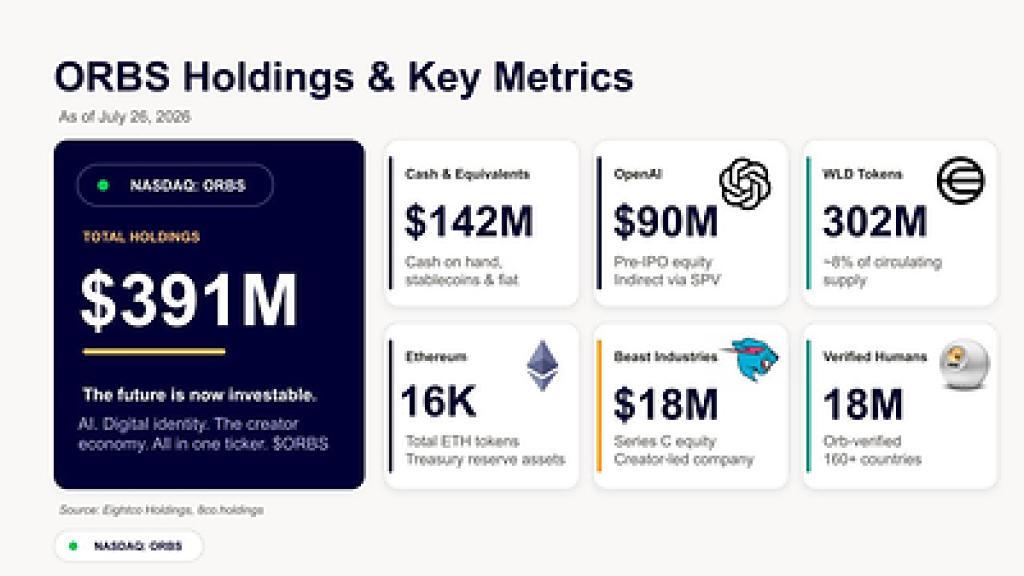
Eightco Holdings (NASDAQ: ORBS) Announces its Participation in World Foundation’s $52.5M funding round as World Shifts From Building the Network to Scaling Utility