Coinbase has added a USDC-BRL trading pair for users in Brazil, letting customers trade the dollar-backed stablecoin USDC directly against the Brazilian real on the exchange.
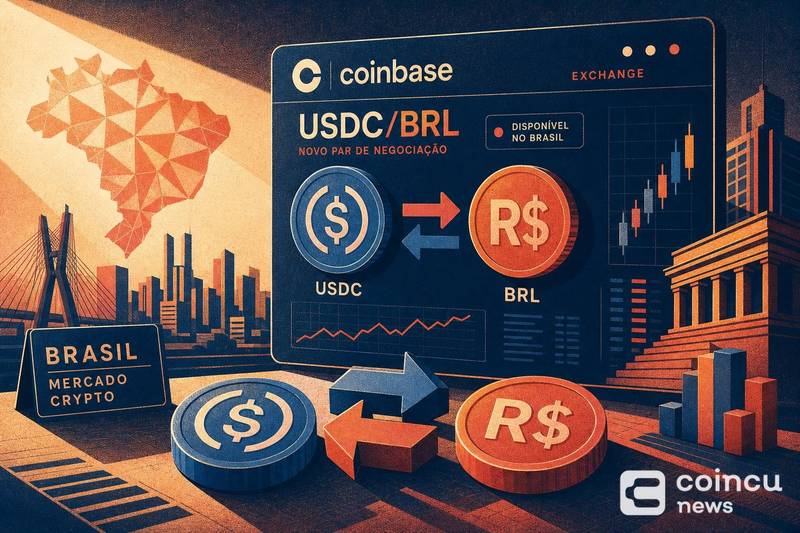
The pair connects USDC, a stablecoin designed to track the U.S. dollar, with BRL, the ticker for the Brazilian real. It gives Brazil-based users a direct market between their local currency and USDC rather than routing through an intermediary asset. For related coverage, see BitMEX to Shut Down on September 23, 2026: What Users Need to Know.
Coinbase framed the addition as part of a set of updates aimed at its Brazilian customer base, according to the company’s product announcement. The listing is localized for users in Brazil. For related coverage, see Uniswap Launches Permissioned Pools for Tokenized Regulated Assets.
Why a Direct USDC-BRL Market Matters Locally
A dedicated fiat pair lets users price USDC in their own currency without first converting to dollars or another crypto asset. For Brazil-based traders, that means clearer real-denominated pricing when moving in and out of a stablecoin position.
USDC is engineered to hold a stable value near the U.S. dollar, which is what distinguishes it from volatile crypto assets. Pairing it directly with the real gives local users a reference point tied to their everyday currency.
How Traders and Retail Users Could Use the Pair
The trading-pair format implies two-way exchange activity between USDC and BRL on the platform. Users could rely on it to enter or exit stablecoin positions using the real, or to convert between local-currency exposure and a dollar-tracking asset.
Exact availability, fees, and features depend on Coinbase’s rollout details, which the company controls at the product level. The announcement establishes the pair’s existence for Brazilian users but does not on its own confirm every functional detail.
What the Listing Signals for Coinbase in Brazil
Adding a BRL-denominated pair points to a Brazil-focused product step rather than a global change. Local-currency support can improve an exchange’s relevance in a regional market by meeting users in their own denomination.
Any broader read on strategy is inference, not confirmed company intent. What is observable is a localized listing; the strategic meaning beyond that is reasonable interpretation. Coinbase has continued to expand asset and payment support elsewhere, including moves letting its enterprise customers accept AI agent payments and adding native support for new assets like INJ.
Stablecoins have also drawn policy attention in Brazil, where industry groups have raised concerns over a proposed stablecoin tax. That backdrop is context for the market Coinbase is entering, not a feature of the listing itself. The exchange’s own valuation has also been under scrutiny, with Citigroup lowering its Coinbase price target.
FAQ About Coinbase’s USDC-BRL Trading Pair
What is the USDC-BRL trading pair? It is a market on Coinbase that lets users trade the USDC stablecoin directly against the Brazilian real.
Who can access the pair? The listing is described as being for Coinbase users in Brazil.
Why is it relevant for Brazil-based users? It provides pricing and trading in the local currency, so users can move between the real and a dollar-tracking stablecoin without an intermediary asset.
Is this the same as buying USDC with BRL directly? A trading pair enables exchange between the two, but specific purchase flows and features depend on Coinbase’s product rollout.
Disclaimer: This article is for informational purposes only and does not constitute financial or investment advice. Cryptocurrency and digital asset markets carry significant risk. Always do your own research before making decisions.
No tags available.


Other Posts







- China, US Conclude Trade Talks with Focus on Cooperation
- Court Upholds Fed’s Rejection of Custodia Bank’s Request
- Crypto Weekly: NYSE Backs OKX, Kraken Gets Fed Access, BTC Sells
- Former CFO Convicted for $35M Fraudulent Crypto Investment
- DeriW Launches Edge Hour Trading Competition Platform for Derivatives Traders
- Michael Saylor Denies Bitcoin Sell-Off Amid Large BTC Transfer
- Buy Dogecoin on eToro: Step-by-Step Guide for Beginners (2024)
- Kazakhstan Explores Crypto Reserves Backed by National Funds
- JPMorgan Increases Holdings in BlackRock’s Bitcoin ETF
- Nordea Bank Introduces Bitcoin ETP Trading for Nordic Customers
- XRP Spot ETF Launches on Nasdaq Amid Market Fluctuations
- Peter Schiff Challenges Michael Saylor on MSTR’s Business Model
- Thailand Orders Worldcoin to Delete 1.2 Million Biometric Records
- UK Proposes New DeFi Tax Framework to Ease User Burden
- WLFI Under Fire: Analyst Warns Hyperliquid Could Be Next
- Ancient Ethereum Whale Moves $1.19 Billion After Decade
- BlackRock Receives Large Crypto Transfers from Coinbase
- SEC Scrutiny on ALT5 Sigma’s Leadership Disclosure Timing
- Yala Injects $5.5 Million Amid Recovery Efforts
- Radiant Capital Faces $50M Loss in Major Security Breach
- China, US Conclude Trade Talks with Focus on Cooperation
- Court Upholds Fed’s Rejection of Custodia Bank’s Request
- Crypto Weekly: NYSE Backs OKX, Kraken Gets Fed Access, BTC Sells
- Former CFO Convicted for $35M Fraudulent Crypto Investment
- DeriW Launches Edge Hour Trading Competition Platform for Derivatives Traders
- Michael Saylor Denies Bitcoin Sell-Off Amid Large BTC Transfer
- Buy Dogecoin on eToro: Step-by-Step Guide for Beginners (2024)
- Kazakhstan Explores Crypto Reserves Backed by National Funds
- JPMorgan Increases Holdings in BlackRock’s Bitcoin ETF
- Nordea Bank Introduces Bitcoin ETP Trading for Nordic Customers
- XRP Spot ETF Launches on Nasdaq Amid Market Fluctuations
- Peter Schiff Challenges Michael Saylor on MSTR’s Business Model
- Thailand Orders Worldcoin to Delete 1.2 Million Biometric Records
- UK Proposes New DeFi Tax Framework to Ease User Burden
- WLFI Under Fire: Analyst Warns Hyperliquid Could Be Next
- Ancient Ethereum Whale Moves $1.19 Billion After Decade
- BlackRock Receives Large Crypto Transfers from Coinbase
- SEC Scrutiny on ALT5 Sigma’s Leadership Disclosure Timing
- Yala Injects $5.5 Million Amid Recovery Efforts
- Radiant Capital Faces $50M Loss in Major Security Breach
- China, US Conclude Trade Talks with Focus on Cooperation
- Court Upholds Fed’s Rejection of Custodia Bank’s Request
- Crypto Weekly: NYSE Backs OKX, Kraken Gets Fed Access, BTC Sells
- Former CFO Convicted for $35M Fraudulent Crypto Investment
- DeriW Launches Edge Hour Trading Competition Platform for Derivatives Traders
- Michael Saylor Denies Bitcoin Sell-Off Amid Large BTC Transfer
- Buy Dogecoin on eToro: Step-by-Step Guide for Beginners (2024)
- Kazakhstan Explores Crypto Reserves Backed by National Funds
- JPMorgan Increases Holdings in BlackRock’s Bitcoin ETF
- Nordea Bank Introduces Bitcoin ETP Trading for Nordic Customers
- XRP Spot ETF Launches on Nasdaq Amid Market Fluctuations
- Peter Schiff Challenges Michael Saylor on MSTR’s Business Model
- Thailand Orders Worldcoin to Delete 1.2 Million Biometric Records
- UK Proposes New DeFi Tax Framework to Ease User Burden
- WLFI Under Fire: Analyst Warns Hyperliquid Could Be Next
- Ancient Ethereum Whale Moves $1.19 Billion After Decade
- BlackRock Receives Large Crypto Transfers from Coinbase
- SEC Scrutiny on ALT5 Sigma’s Leadership Disclosure Timing
- Yala Injects $5.5 Million Amid Recovery Efforts
- Radiant Capital Faces $50M Loss in Major Security Breach

Citigroup CEO Wants Clarity Act Progress Amid Stablecoin Debate

Ether.fi Adds Tokenized Stocks and Portfolio-Backed Loans to DeFi Platform

Metaplanet Launches BitBonds, Rejects $320M Bitcoin Sale Claim


Pepperstone Appoints New CTO to Drive AI-Native Proprietary Tech Push