ZEC, the native token of the Zcash privacy blockchain, fell after reports circulated suggesting a possible increase in token issuance. The unconfirmed reports triggered a negative market reaction, with traders responding to the prospect of expanded supply pressuring the token’s valuation.
The decline follows a turbulent period for Zcash, which has already faced headwinds from a critical vulnerability discovered through an AI security review that previously sent ZEC down sharply. That earlier incident required emergency action from the Zcash Foundation and developers.
Why Reports of Higher Issuance Rattled ZEC Holders
Token issuance refers to the rate at which new coins are created and enter circulation. For fixed-supply or predictable-supply assets, any suggestion that the issuance schedule could be expanded is treated as a dilution risk by holders and traders.
The reports in question have not been confirmed as a formal proposal or governance vote. It is important to distinguish between community discussion, a developer proposal, and a ratified protocol change. At this stage, the claim remains unverified, and no official implementation timeline has been published.
Traders often react to tokenomics headlines before details are confirmed. In altcoin markets, where liquidity is thinner than in Bitcoin or Ethereum pairs, even speculative supply-side narratives can trigger outsized price moves. This pattern has played out repeatedly across the broader crypto market, including in recent episodes where Bitcoin options with $1.89B notional value expired and moved sentiment across correlated assets.
What a Supply Change Could Mean for Zcash
If an issuance increase were eventually implemented, it would raise the expected circulating supply of ZEC over time. Higher supply, absent proportional demand growth, tends to place downward pressure on price.
For miners and validators, increased issuance could alter block reward incentives. For holders, the concern centers on dilution of existing positions. These dynamics affect how market participants model Zcash’s long-term value relative to competitors with stricter supply caps.
The Zcash network has undergone significant protocol changes in recent months. The Zcash Foundation activated the NU6-2 network upgrade alongside an emergency soft fork, addressing vulnerabilities in the Orchard shielded pool. These upgrades demonstrate that the protocol’s governance can execute rapid changes when needed, which cuts both ways for market confidence.
Supply expectations can move price even before any change is implemented. Markets price in probabilities, and the mere possibility of expanded issuance is enough to shift sentiment among traders already on edge from Zcash’s recent security incidents, including the Orchard vulnerability that required an emergency upgrade.
How Traders Are Reading the ZEC Decline
The price weakness reflects both the issuance headline and broader uncertainty about Zcash’s near-term trajectory. Traders watching ZEC are likely focused on support levels, momentum indicators, and whether the reports gain further confirmation or are dismissed.
Altcoins tend to react more sharply to tokenomics news than large-cap assets. A report suggesting supply expansion, even if speculative, can trigger selling from holders who prefer not to wait for clarification. This is especially true for privacy coins, which already carry elevated regulatory risk in several jurisdictions, a factor that compounds headline sensitivity.
The broader crypto market context also matters. Regulatory developments continue to shape sentiment across all digital assets, as seen in recent policy shifts like South Korea ending mandatory reporting for crypto transfers above 10 million won. Meanwhile, institutional market structure is evolving, with CME Group’s CEO warning on U.S. crypto perpetual contract approval.
Volatility in ZEC may persist until the issuance reports are either confirmed or denied by official sources. Traders are watching for follow-up statements from the Zcash Foundation, Electric Coin Company, or ecosystem governance participants.
What Still Needs Confirmation
Several key questions remain unanswered. Readers and traders should watch for the following before drawing firm conclusions:
- Is there a formal proposal? No official governance proposal or ZIP (Zcash Improvement Proposal) tied to an issuance increase has been publicly identified at this time.
- Who made the claim? The origin and specifics of the reports remain unclear, which limits the ability to assess credibility.
- Is there a timeline? No implementation path or activation date has been stated.
- Have project representatives responded? Public statements from the Zcash Foundation or Electric Coin Company would clarify whether this is under active consideration.
Unverified tokenomics headlines can move markets quickly precisely because supply parameters are among the most closely watched fundamentals in crypto. Until these questions are answered, the market’s reaction is based on uncertainty rather than confirmed change.
FAQ About the ZEC Issuance Report
Is the token issuance increase confirmed?
No. As of now, the reports suggesting a possible increase in ZEC token issuance have not been confirmed through any official governance process or public statement from the Zcash Foundation or Electric Coin Company.
Why would a possible supply increase affect ZEC price?
Higher token issuance increases the expected circulating supply. If demand does not rise proportionally, a larger supply dilutes existing holdings and can pressure price. Markets often price in these changes before they happen, meaning even unconfirmed reports can trigger selling.
What should investors watch next?
Look for official responses from Zcash governance bodies, any formal ZIP proposals related to issuance changes, and whether the reports gain corroboration from credible sources. Until then, the situation remains speculative.
Disclaimer: This article is for informational purposes only and does not constitute financial or investment advice. Cryptocurrency and digital asset markets carry significant risk. Always do your own research before making decisions.
No tags available.


Other Posts








- China, US Conclude Trade Talks with Focus on Cooperation
- Crypto Weekly: NYSE Backs OKX, Kraken Gets Fed Access, BTC Sells
- Court Upholds Fed’s Rejection of Custodia Bank’s Request
- Former CFO Convicted for $35M Fraudulent Crypto Investment
- DeriW Launches Edge Hour Trading Competition Platform for Derivatives Traders
- Michael Saylor Denies Bitcoin Sell-Off Amid Large BTC Transfer
- Buy Dogecoin on eToro: Step-by-Step Guide for Beginners (2024)
- Kazakhstan Explores Crypto Reserves Backed by National Funds
- JPMorgan Increases Holdings in BlackRock’s Bitcoin ETF
- Nordea Bank Introduces Bitcoin ETP Trading for Nordic Customers
- XRP Spot ETF Launches on Nasdaq Amid Market Fluctuations
- Peter Schiff Challenges Michael Saylor on MSTR’s Business Model
- Thailand Orders Worldcoin to Delete 1.2 Million Biometric Records
- UK Proposes New DeFi Tax Framework to Ease User Burden
- WLFI Under Fire: Analyst Warns Hyperliquid Could Be Next
- Ancient Ethereum Whale Moves $1.19 Billion After Decade
- BlackRock Receives Large Crypto Transfers from Coinbase
- SEC Scrutiny on ALT5 Sigma’s Leadership Disclosure Timing
- Yala Injects $5.5 Million Amid Recovery Efforts
- Radiant Capital Faces $50M Loss in Major Security Breach
- China, US Conclude Trade Talks with Focus on Cooperation
- Crypto Weekly: NYSE Backs OKX, Kraken Gets Fed Access, BTC Sells
- Court Upholds Fed’s Rejection of Custodia Bank’s Request
- Former CFO Convicted for $35M Fraudulent Crypto Investment
- DeriW Launches Edge Hour Trading Competition Platform for Derivatives Traders
- Michael Saylor Denies Bitcoin Sell-Off Amid Large BTC Transfer
- Buy Dogecoin on eToro: Step-by-Step Guide for Beginners (2024)
- Kazakhstan Explores Crypto Reserves Backed by National Funds
- JPMorgan Increases Holdings in BlackRock’s Bitcoin ETF
- Nordea Bank Introduces Bitcoin ETP Trading for Nordic Customers
- XRP Spot ETF Launches on Nasdaq Amid Market Fluctuations
- Peter Schiff Challenges Michael Saylor on MSTR’s Business Model
- Thailand Orders Worldcoin to Delete 1.2 Million Biometric Records
- UK Proposes New DeFi Tax Framework to Ease User Burden
- WLFI Under Fire: Analyst Warns Hyperliquid Could Be Next
- Ancient Ethereum Whale Moves $1.19 Billion After Decade
- BlackRock Receives Large Crypto Transfers from Coinbase
- SEC Scrutiny on ALT5 Sigma’s Leadership Disclosure Timing
- Yala Injects $5.5 Million Amid Recovery Efforts
- Radiant Capital Faces $50M Loss in Major Security Breach
- China, US Conclude Trade Talks with Focus on Cooperation
- Crypto Weekly: NYSE Backs OKX, Kraken Gets Fed Access, BTC Sells
- Court Upholds Fed’s Rejection of Custodia Bank’s Request
- Former CFO Convicted for $35M Fraudulent Crypto Investment
- DeriW Launches Edge Hour Trading Competition Platform for Derivatives Traders
- Michael Saylor Denies Bitcoin Sell-Off Amid Large BTC Transfer
- Buy Dogecoin on eToro: Step-by-Step Guide for Beginners (2024)
- Kazakhstan Explores Crypto Reserves Backed by National Funds
- JPMorgan Increases Holdings in BlackRock’s Bitcoin ETF
- Nordea Bank Introduces Bitcoin ETP Trading for Nordic Customers
- XRP Spot ETF Launches on Nasdaq Amid Market Fluctuations
- Peter Schiff Challenges Michael Saylor on MSTR’s Business Model
- Thailand Orders Worldcoin to Delete 1.2 Million Biometric Records
- UK Proposes New DeFi Tax Framework to Ease User Burden
- WLFI Under Fire: Analyst Warns Hyperliquid Could Be Next
- Ancient Ethereum Whale Moves $1.19 Billion After Decade
- BlackRock Receives Large Crypto Transfers from Coinbase
- SEC Scrutiny on ALT5 Sigma’s Leadership Disclosure Timing
- Yala Injects $5.5 Million Amid Recovery Efforts
- Radiant Capital Faces $50M Loss in Major Security Breach

Maharashtra DELTA Act Targets Real Estate Blockchain Tokenization

HashKey Middle East Launches BTC and ETH Perpetual Derivatives After Dubai VARA Approval

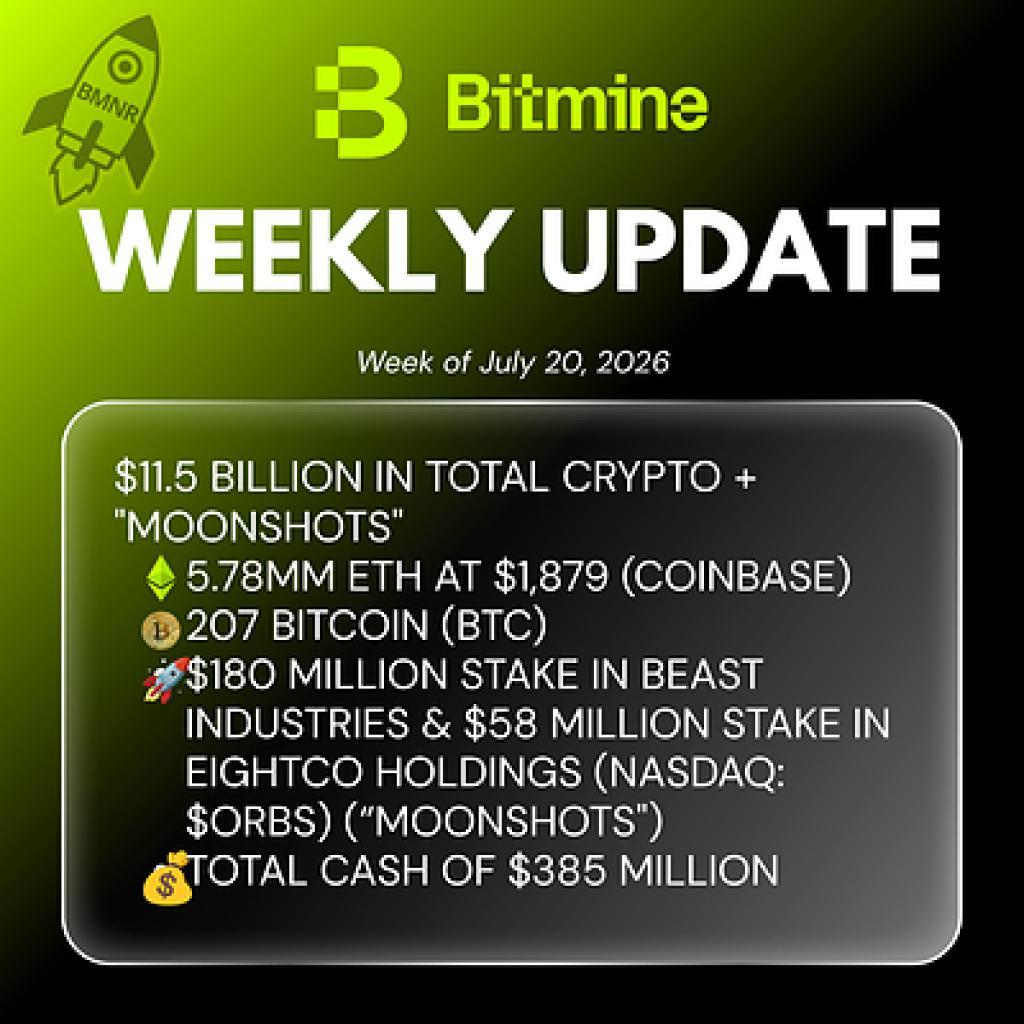
Bitmine Immersion Technologies (BMNR) Announces ETH Holdings Reach 5.78 Million Tokens, and Total Crypto and Total Cash Holdings of $11.5 Billion

GLOBAL MEDIA PROCUREMENT: THE 500-YEAR YIXING ZISHA TEAPOTS PARADIGM