Binance has begun rolling out U.S. stock and ETF trading on its platform, with plans to launch bStocks, a tokenized version of those equities, in the coming weeks. The move positions the world’s largest crypto exchange to compete directly with rivals already offering tokenized stock products.
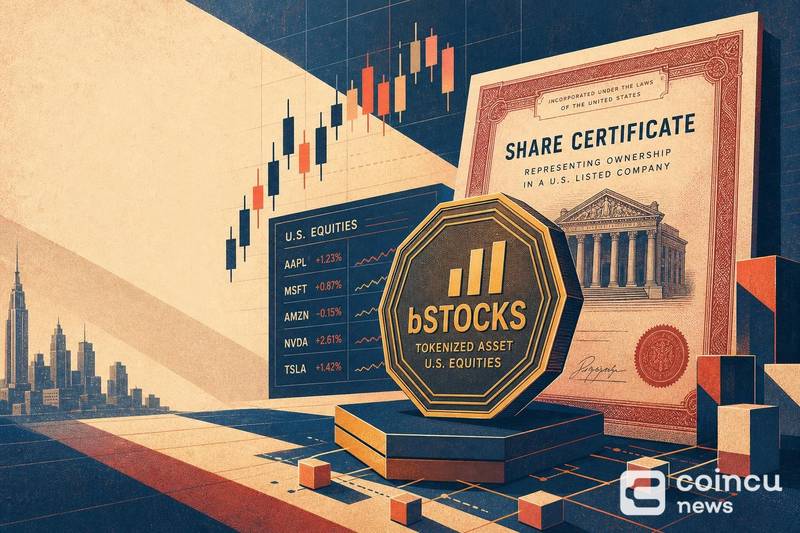
The exchange announced on June 1, 2026 that users can now trade U.S.-listed stocks and ETFs directly from a Binance account. The rollout covers 7,000+ U.S.-listed stocks and ETFs, with fractional shares available starting from $5.
However, the headline product, bStocks, is not yet live. Binance’s own announcement states that bStocks will “soon launch” with the official release planned for the coming weeks. This distinction matters: what launched on June 1 is brokerage-style access to U.S. equities, not the tokenized on-chain certificates that bStocks will represent.
Stocks can be purchased using supported balances including select stablecoins and BNB. The minimum platform fee sits at $0.35 per order, positioning Binance’s pricing below many traditional brokerages for small trades.
Binance’s Two-Phase Stock Strategy
The rollout is structured in two phases. Phase one, now live, gives Binance users traditional brokerage exposure to U.S. equities through a partnership with Alpaca, a regulated brokerage infrastructure provider that powers 24/5 trading on the platform.
Phase two will introduce bStocks, which Binance describes as tokenized certificates representing financial instruments. These are classified as Certificates representing certain Financial Instruments under paragraph 92, Schedule 1 to FSMR, and their issuance is subject to FSRA approval.
Shunyet Jan, a Binance executive, noted that “many users are looking for a more seamless way to access both digital assets and traditional financial products.” The comment underscores Binance’s bet that crypto-native users want equity exposure without leaving the platform.
Yoshi Yokokawa, CEO of Alpaca, said that “Binance’s launch of US stocks and ETFs is an important example of how digital asset platforms are responding to user demand.” Alpaca confirmed it provides the brokerage rails underlying the initial stock-trading rollout.
BNB, the native token of the Binance ecosystem, held a market capitalization of roughly $78.38 billion at the time of the announcement, reflecting the scale of the platform pursuing this expansion.
How bStocks Compares to Existing Tokenized Stock Products
Binance is not the first crypto exchange to pursue tokenized equities. Kraken already operates xStocks, a live tokenized-equities product offering 24/5 trading with a $1 minimum purchase and 60 launch assets. Kraken’s product also advertises self-custody options, a feature Binance has not yet detailed for bStocks.
The key difference in Binance’s approach is scale. Where Kraken launched with 60 assets, Binance’s underlying brokerage layer already supports over 7,000 instruments. If bStocks tokenizes a significant portion of that catalog, it would dwarf competing offerings in breadth.
The trend toward merging crypto and traditional finance platforms has accelerated in 2026, with exchanges increasingly viewing stock access as a retention tool. For platforms tracking which digital assets are drawing the most trading interest, projects like Solana, Ripple, and Avalanche remain part of the broader conversation about where user capital flows.
Why Tokenized Stocks Appeal to Crypto Users
Tokenized equities promise to bring stock ownership onto blockchain rails, enabling fractional ownership, near-instant settlement, and 24/7 trading rather than being limited to traditional market hours. For crypto-native users, the appeal is consolidation: managing stocks and digital assets in a single interface.
The convenience factor is real. Traditional brokerage accounts require separate onboarding, bank connections, and often multi-day settlement. A tokenized stock product integrated into an existing crypto exchange eliminates those friction points for users already verified on the platform.
However, tokenized stocks are not the same as owning actual shares. The underlying structure typically involves a custodian or issuer holding the real shares while the token represents a claim on that position. This distinction carries implications for investor protections, dividend treatment, and what happens if the issuing platform faces insolvency.
The broader push toward tokenizing real-world assets extends beyond stocks. As Web3 infrastructure continues to evolve, the integration of traditional financial instruments onto blockchain platforms represents one of the more commercially significant use cases being pursued.
Regulatory and Risk Considerations
Binance’s bStocks product faces several regulatory constraints that users should understand before the tokenized layer goes live. The announcement explicitly states that bStocks have not been registered under the U.S. Securities Act of 1933 and are not offered to U.S. persons.
The FSRA approval dependency is a meaningful caveat. Until that regulatory sign-off is confirmed, bStocks remains a planned product rather than a launched one. Users in jurisdictions where tokenized securities are restricted may find themselves unable to access the product even after launch.
Questions remain about the redemption mechanism, specifically whether bStocks holders can convert tokens back to underlying shares or only to cash equivalents. The custody structure, whether assets are held in segregated accounts, and the dispute resolution process have not been detailed in the initial announcement.
The broader crypto market context adds another layer. The Fear and Greed Index sat at 9 (Extreme Fear) around the announcement period, suggesting that even significant product launches are landing in a cautious environment. How corporate strategic decisions are being evaluated across markets reflects this risk-averse sentiment.
FAQ About Binance bStocks
What is Binance bStocks?
bStocks is Binance’s planned tokenized securities product that will represent U.S.-listed stocks and ETFs as blockchain-based certificates. It is classified under FSMR regulations and is distinct from the brokerage stock-trading service that launched on June 1, 2026.
Is bStocks live yet?
No. As of the June 1 announcement, Binance stated that bStocks will launch “in the coming weeks.” What is currently live is direct brokerage access to U.S. stocks and ETFs through Binance’s partnership with Alpaca.
Is holding bStocks the same as owning actual shares?
No. bStocks are tokenized certificates representing financial instruments, not direct share ownership. The specific rights, protections, and redemption terms have not been fully detailed yet and will depend on the final product structure and applicable regulations.
Who can access Binance’s stock trading?
The service is available to eligible Binance users outside the United States. The announcement explicitly states that bStocks have not been registered under the U.S. Securities Act of 1933 and are not available to U.S. persons.
What payment methods are supported?
Binance says users can purchase stocks using supported balances including select stablecoins and BNB. The minimum purchase is $5, and the minimum platform fee is $0.35 per order.
Disclaimer: This article is for informational purposes only and does not constitute financial or investment advice. Cryptocurrency and digital asset markets carry significant risk. Always do your own research before making decisions.
No tags available.


Other Posts







- China, US Conclude Trade Talks with Focus on Cooperation
- Crypto Weekly: NYSE Backs OKX, Kraken Gets Fed Access, BTC Sells
- Court Upholds Fed’s Rejection of Custodia Bank’s Request
- Former CFO Convicted for $35M Fraudulent Crypto Investment
- DeriW Launches Edge Hour Trading Competition Platform for Derivatives Traders
- Michael Saylor Denies Bitcoin Sell-Off Amid Large BTC Transfer
- Buy Dogecoin on eToro: Step-by-Step Guide for Beginners (2024)
- Kazakhstan Explores Crypto Reserves Backed by National Funds
- JPMorgan Increases Holdings in BlackRock’s Bitcoin ETF
- Nordea Bank Introduces Bitcoin ETP Trading for Nordic Customers
- XRP Spot ETF Launches on Nasdaq Amid Market Fluctuations
- Peter Schiff Challenges Michael Saylor on MSTR’s Business Model
- Thailand Orders Worldcoin to Delete 1.2 Million Biometric Records
- UK Proposes New DeFi Tax Framework to Ease User Burden
- WLFI Under Fire: Analyst Warns Hyperliquid Could Be Next
- Ancient Ethereum Whale Moves $1.19 Billion After Decade
- BlackRock Receives Large Crypto Transfers from Coinbase
- SEC Scrutiny on ALT5 Sigma’s Leadership Disclosure Timing
- Yala Injects $5.5 Million Amid Recovery Efforts
- Radiant Capital Faces $50M Loss in Major Security Breach
- China, US Conclude Trade Talks with Focus on Cooperation
- Crypto Weekly: NYSE Backs OKX, Kraken Gets Fed Access, BTC Sells
- Court Upholds Fed’s Rejection of Custodia Bank’s Request
- Former CFO Convicted for $35M Fraudulent Crypto Investment
- DeriW Launches Edge Hour Trading Competition Platform for Derivatives Traders
- Michael Saylor Denies Bitcoin Sell-Off Amid Large BTC Transfer
- Buy Dogecoin on eToro: Step-by-Step Guide for Beginners (2024)
- Kazakhstan Explores Crypto Reserves Backed by National Funds
- JPMorgan Increases Holdings in BlackRock’s Bitcoin ETF
- Nordea Bank Introduces Bitcoin ETP Trading for Nordic Customers
- XRP Spot ETF Launches on Nasdaq Amid Market Fluctuations
- Peter Schiff Challenges Michael Saylor on MSTR’s Business Model
- Thailand Orders Worldcoin to Delete 1.2 Million Biometric Records
- UK Proposes New DeFi Tax Framework to Ease User Burden
- WLFI Under Fire: Analyst Warns Hyperliquid Could Be Next
- Ancient Ethereum Whale Moves $1.19 Billion After Decade
- BlackRock Receives Large Crypto Transfers from Coinbase
- SEC Scrutiny on ALT5 Sigma’s Leadership Disclosure Timing
- Yala Injects $5.5 Million Amid Recovery Efforts
- Radiant Capital Faces $50M Loss in Major Security Breach
- China, US Conclude Trade Talks with Focus on Cooperation
- Crypto Weekly: NYSE Backs OKX, Kraken Gets Fed Access, BTC Sells
- Court Upholds Fed’s Rejection of Custodia Bank’s Request
- Former CFO Convicted for $35M Fraudulent Crypto Investment
- DeriW Launches Edge Hour Trading Competition Platform for Derivatives Traders
- Michael Saylor Denies Bitcoin Sell-Off Amid Large BTC Transfer
- Buy Dogecoin on eToro: Step-by-Step Guide for Beginners (2024)
- Kazakhstan Explores Crypto Reserves Backed by National Funds
- JPMorgan Increases Holdings in BlackRock’s Bitcoin ETF
- Nordea Bank Introduces Bitcoin ETP Trading for Nordic Customers
- XRP Spot ETF Launches on Nasdaq Amid Market Fluctuations
- Peter Schiff Challenges Michael Saylor on MSTR’s Business Model
- Thailand Orders Worldcoin to Delete 1.2 Million Biometric Records
- UK Proposes New DeFi Tax Framework to Ease User Burden
- WLFI Under Fire: Analyst Warns Hyperliquid Could Be Next
- Ancient Ethereum Whale Moves $1.19 Billion After Decade
- BlackRock Receives Large Crypto Transfers from Coinbase
- SEC Scrutiny on ALT5 Sigma’s Leadership Disclosure Timing
- Yala Injects $5.5 Million Amid Recovery Efforts
- Radiant Capital Faces $50M Loss in Major Security Breach

Cash App Removes Bitcoin Transaction Fees for Purchases Over $2,000 and Auto Buys

Tom Lee Says Ethereum Won’t Be Cannibalized by L2s as Finance, AI Settlement Layer
RISEx Launches ‘Ignite’ Season 1 Points Program, Following $3B in Volume During the Early Access Phase

Zoomex X Space Recap With Fernando Llorente and the World Cup Final Panel