BlockDAG Review 2026: Tokenomics, Team, Audit, and Ecosystem Overview
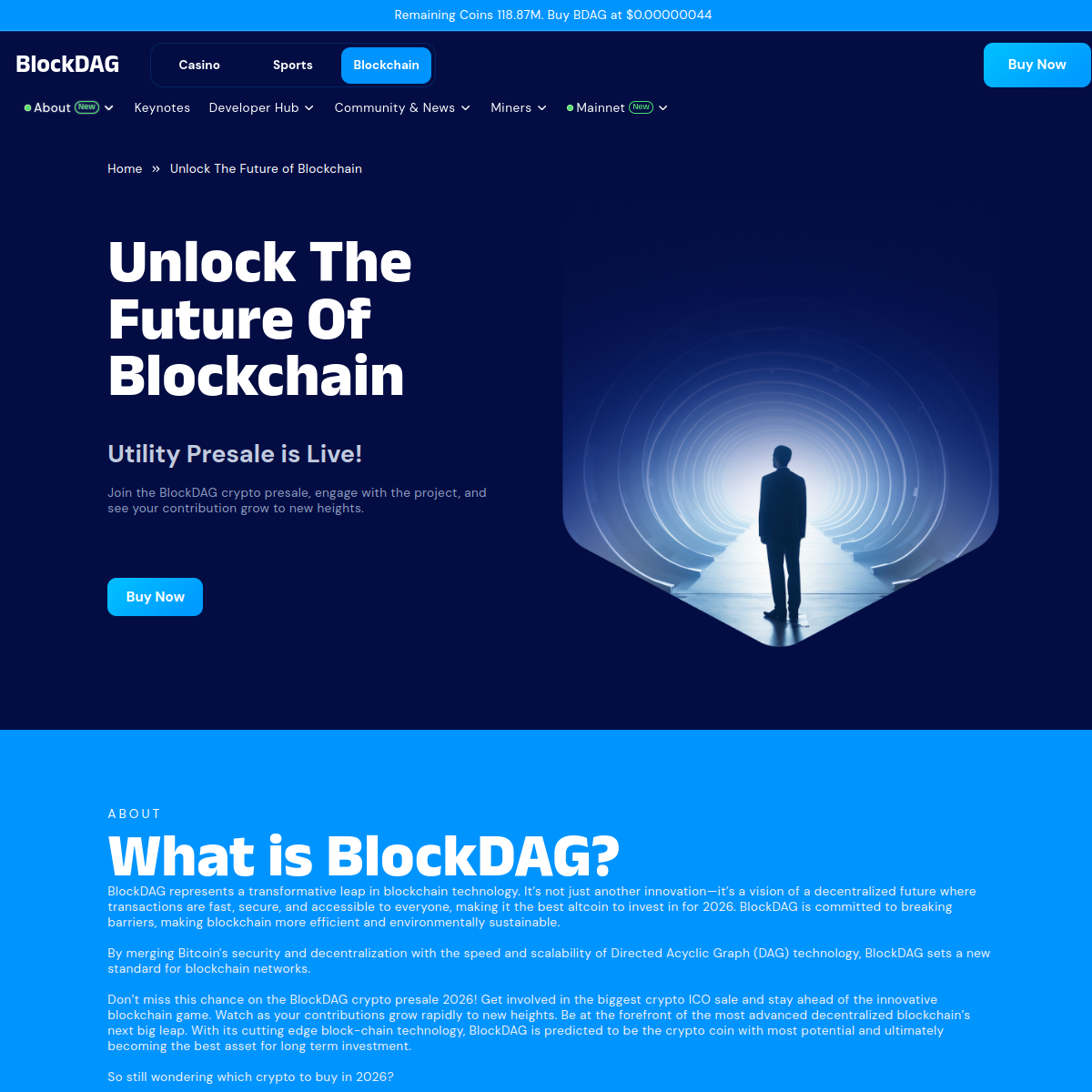
BlockDAG is easier to research than the average crypto presale because the project exposes more public material than many sale-stage tokens. It has a live website, public docs, node setup guides, network details, a Litepaper, a public audit PDF, and a visible team page. That already gives readers a larger base to work from than a typical launch page.
This review focuses on the areas readers usually care about most: what BlockDAG says it is building, how the tokenomics are presented, what the team and company pages show, what the audit material covers, and which points still deserve verification. Readers who want a general framework for reading supply design can start with Coincu’s guide to tokenomics before comparing BDAG’s numbers across sources.
Disclosure: This review was researched on June 15, 2026 using public materials. It is an editorial review, not financial advice, and includes no affiliate links.
Quick Verdict
BlockDAG stands out for having a broader public product surface than many sale-stage projects, with enough documentation and infrastructure references to support a full review.
| Area | What Checks Out | What Readers Should Still Verify |
|---|---|---|
| Product surface | Public docs, mainnet details, EVM RPC, explorer, node setup guides, GitHub org | How much current network usage and ecosystem activity can be independently tracked |
| Tokenomics | Litepaper and wiki both support a 150B max supply model | Which token-distribution version should be treated as the latest canonical source |
| Team transparency | Named leadership page exists | How readers want to interpret older and newer team presentations together |
| Security posture | Public CertiK audit PDF exists | How much of the broader stack the public audit materials cover |
| Market transparency | CoinMarketCap listing exists | How readers want to treat self-reported and platform-level market fields |
| Overall | Researchable | Which areas deserve the closest follow-up before making strong conclusions |
What BlockDAG Says It Is
BlockDAG presents itself as a Layer 1 proof-of-work network designed to improve scalability while keeping a Bitcoin-inspired mining foundation. The original whitepaper described a hybrid model with both UTXO and EVM-style components. The current docs, however, lean much more clearly toward an EVM-facing implementation.
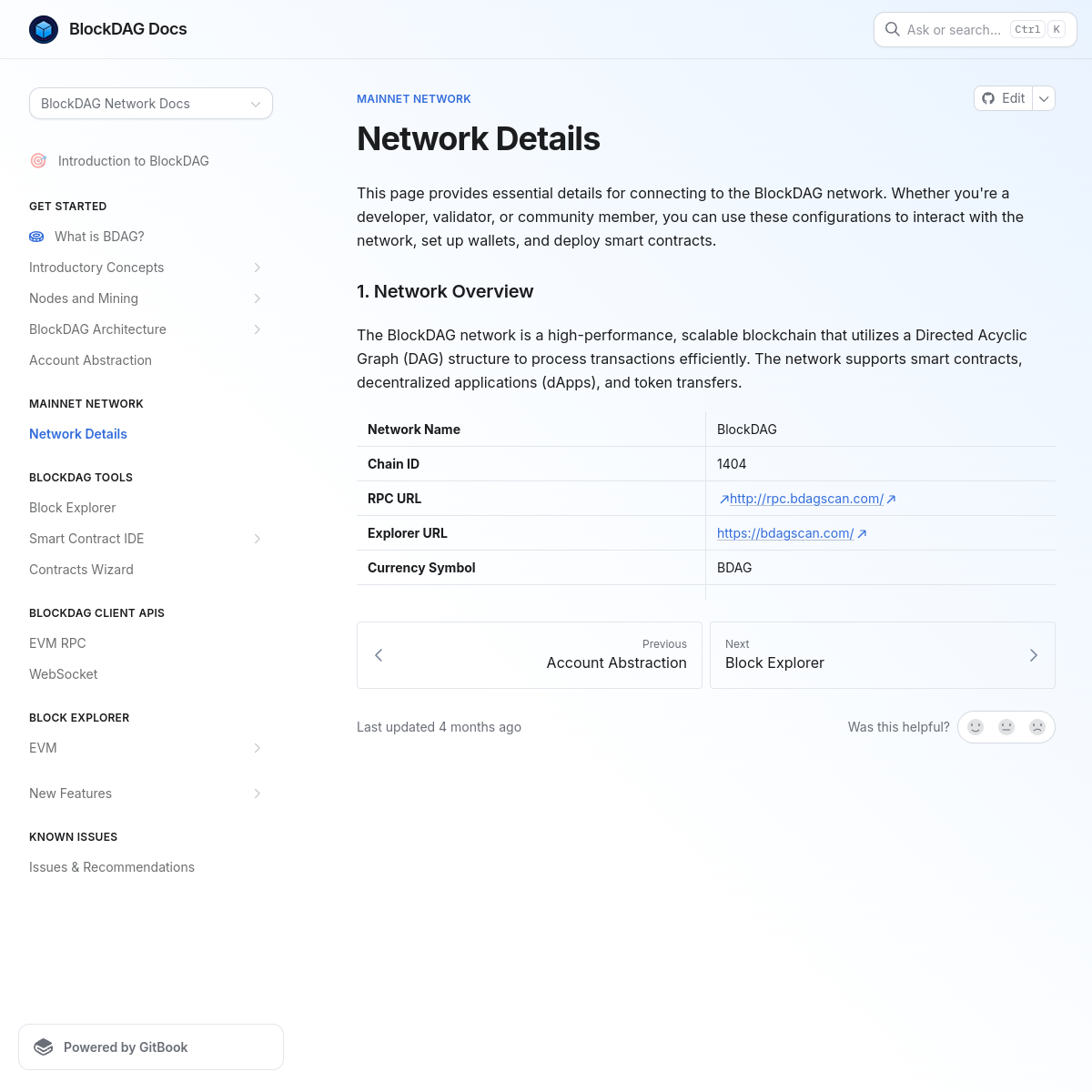
The mainnet network docs list:
- Chain ID 1404
- EVM RPC support
- wallet connectivity and developer access through the current docs stack
That makes BlockDAG easier to classify as a project with visible infrastructure rather than a pure fundraising website.
What Exists Today
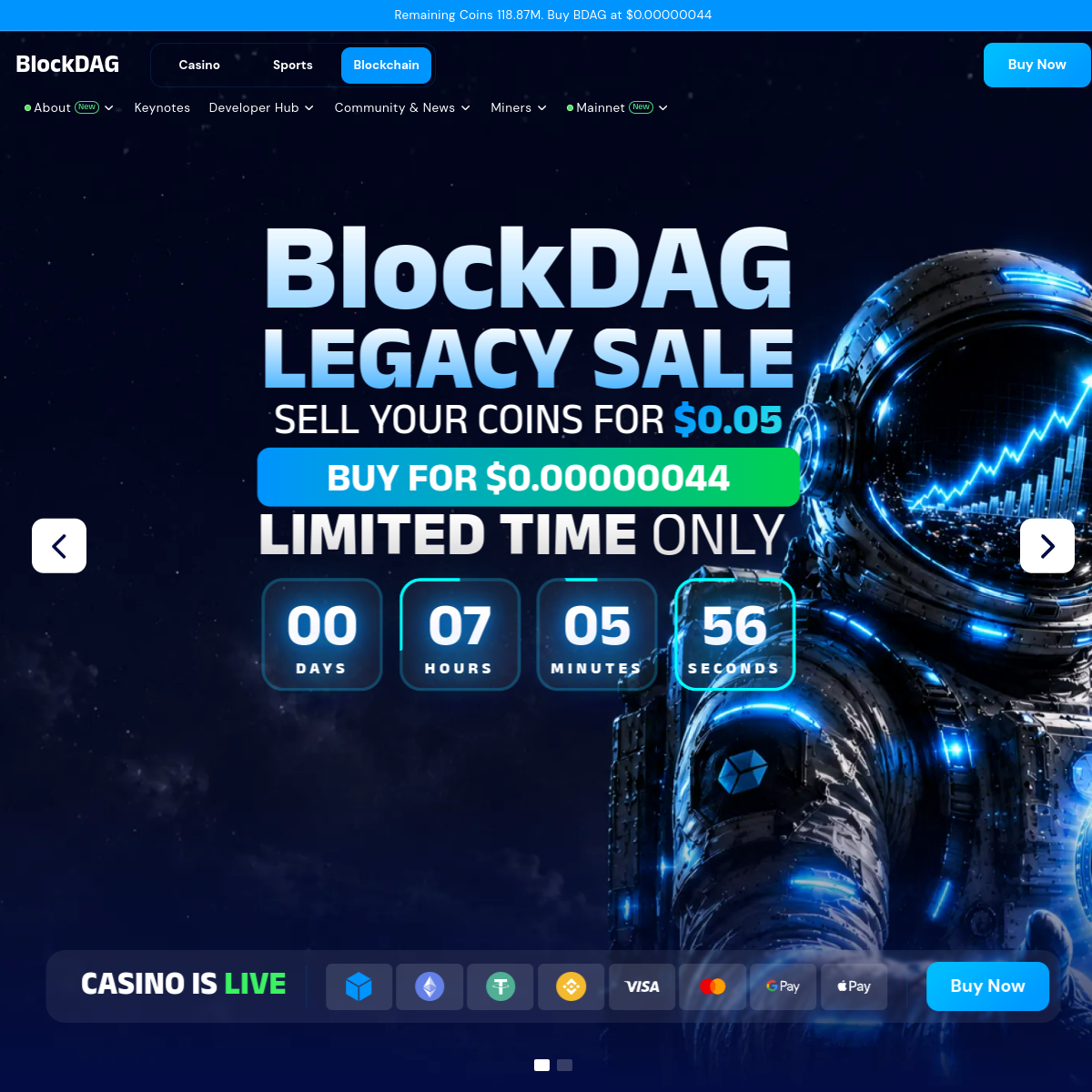
This is the strongest part of the BlockDAG story. The project exposes more public product surface than many sale-stage tokens:
- a main site
- a docs portal
- network details
- node setup guides
- account abstraction docs
- EVM RPC docs
- a public explorer
- a public GitHub organization
That matters because readers can at least inspect the operating claims rather than rely entirely on brand copy. The docs also show a concrete technical evolution. One node-setup page states plainly that legacy UTXO-based PK addresses are no longer supported, which signals that the live implementation has moved beyond the simpler hybrid story many readers may still associate with the project.
Tokenomics: The Main Official Model Readers Will See
The clearest tokenomics model appears in the Litepaper and the public tokenomics wiki. Together, they support a 150 billion BDAG max supply broken down roughly as follows:
- Presale: 50 billion, or 33.3%
- Miners: 75 billion, or 50%
- Community and ecosystem: 19 billion, or 12.7%
- Liquidity: 4.5 billion, or 3%
- Team: 1.5 billion, or 1%
The Litepaper adds two details that matter for any serious review:
- presale tokens vest at 40% at launch and then 20% per month thereafter
- team allocation carries a 2-year lockup
Readers should note that the current About page also surfaces an older token-distribution version tied to a 50 billion model. The practical takeaway is simple: if you are using BlockDAG’s tokenomics in a review or investment memo, anchor your reading to the latest Litepaper and tokenomics materials, then cross-check them against the current site presentation.
Team and Leadership
BlockDAG now presents Nicolaas David van den Bergh on its About page as CEO and founder. That is the current official leadership presentation.
The broader public record on BlockDAG’s own site also includes an earlier team post that introduced Antony Turner as CEO. For readers, that mainly means the leadership presentation has evolved over time and is worth reading in sequence rather than as a single frozen snapshot.
Company Structure and Jurisdiction
The current site says BlockDAG operates through Dag Systems Ltd, registered in Apia, Samoa. It also published a March 2026 post saying it has no operational presence in Seychelles.
That is useful because it gives readers a current corporate and jurisdictional reference point. For anyone doing deeper due diligence, it still makes sense to compare the current disclosure language with earlier public discussions so the timeline stays clear.
Security and Audit Posture
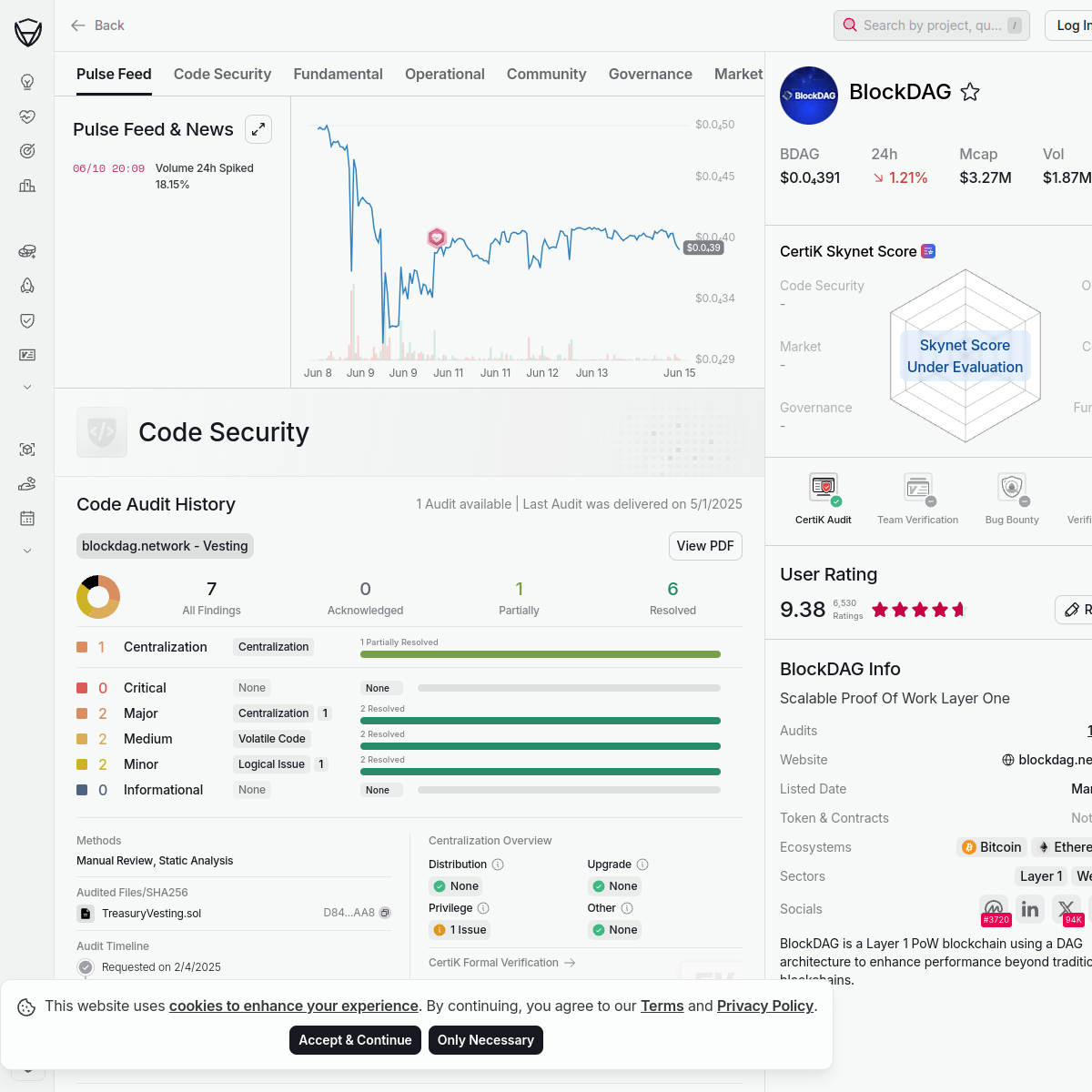
BlockDAG does have a real trust signal here: a public CertiK audit PDF for its vesting contracts. The audit summary shows:
- 2 major findings resolved
- 2 medium findings resolved
- 2 minor findings resolved
That is a legitimate source worth including in any review. Readers trying to understand what audit language does and does not guarantee can compare it with Coincu’s explainers on smart contract audits and top crypto audit companies.
Readers should still keep the scope in mind. CertiK’s public project page shows one audit available, a privilege-related issue category, and no verified formal-verification properties surfaced on the public dashboard. In other words, the public audit material is meaningful, but it should be read as part of the broader review rather than the only trust signal.
Market Data and Explorer Visibility
CoinMarketCap gives BlockDAG a public market page, which helps readers track the token’s market-facing profile. The page also mixes self-reported and platform-level fields, so it makes sense to read those metrics carefully and treat them as part of a moving market-data layer rather than as a fixed final snapshot.
The explorer layer is also worth checking directly at the time of reading. During this review, the visible page HTML surfaced a “show all 0 blocks” state even though the broader page clearly presents itself as the BlockDAG explorer. That may simply reflect how the page renders, but it is one reason readers should verify explorer behavior firsthand.
What Readers May Want to Verify Further
The main follow-up points for readers are BlockDAG-specific:
- which tokenomics version BlockDAG wants readers to treat as definitive
- how the team timeline is best read across older and newer official pages
- how much of the network and token stack is covered by the public audit material
- how the market-data and explorer layers look at the exact time a reader checks them
Final Verdict
BlockDAG is not a zero-substance story. There is real documentation, visible infrastructure, a live technical surface, and at least one public audit artifact. That is enough to make it worth researching.
The strongest case for the project is that it gives readers enough public material to evaluate the story in more depth than a typical sale-stage token. The most practical approach is to treat the docs, Litepaper, tokenomics pages, and audit materials as a set, then verify the latest live details directly before drawing strong conclusions.
The most defensible conclusion is simple:
- BlockDAG is researchable
- BlockDAG has a broader visible footprint than many projects at a similar stage
- readers should still verify the latest live details directly before making strong conclusions
Source Notes
This review was based on public materials checked on June 15, 2026, including:
- CoinMarketCap’s BlockDAG page
- BlockDAG’s homepage, About page, Litepaper, and blog posts
- BlockDAG docs and network details pages
- BlockDAG’s tokenomics wiki
- CertiK’s public project page and audit PDF
- current public team and company pages
Editorial note: Readers should verify current sale terms, supply disclosures, audit scope, listings, and company claims directly from primary materials before making any decision.
No tags available.


Other Posts

- China, US Conclude Trade Talks with Focus on Cooperation
- Crypto Weekly: NYSE Backs OKX, Kraken Gets Fed Access, BTC Sells
- DeriW Launches Edge Hour Trading Competition Platform for Derivatives Traders
- Court Upholds Fed’s Rejection of Custodia Bank’s Request
- Former CFO Convicted for $35M Fraudulent Crypto Investment
- Michael Saylor Denies Bitcoin Sell-Off Amid Large BTC Transfer
- Kazakhstan Explores Crypto Reserves Backed by National Funds
- JPMorgan Increases Holdings in BlackRock’s Bitcoin ETF
- Nordea Bank Introduces Bitcoin ETP Trading for Nordic Customers
- Buy Dogecoin on eToro: Step-by-Step Guide for Beginners (2024)
- XRP Spot ETF Launches on Nasdaq Amid Market Fluctuations
- Crypto Leaders Address Macro Volatility Amid Market Shifts
- Peter Schiff Challenges Michael Saylor on MSTR’s Business Model
- Thailand Orders Worldcoin to Delete 1.2 Million Biometric Records
- UK Proposes New DeFi Tax Framework to Ease User Burden
- WLFI Under Fire: Analyst Warns Hyperliquid Could Be Next
- Ancient Ethereum Whale Moves $1.19 Billion After Decade
- BlackRock Receives Large Crypto Transfers from Coinbase
- SEC Scrutiny on ALT5 Sigma’s Leadership Disclosure Timing
- MoonPay Gains Trust License for Crypto Operations in New York
- China, US Conclude Trade Talks with Focus on Cooperation
- Crypto Weekly: NYSE Backs OKX, Kraken Gets Fed Access, BTC Sells
- DeriW Launches Edge Hour Trading Competition Platform for Derivatives Traders
- Court Upholds Fed’s Rejection of Custodia Bank’s Request
- Former CFO Convicted for $35M Fraudulent Crypto Investment
- Michael Saylor Denies Bitcoin Sell-Off Amid Large BTC Transfer
- Kazakhstan Explores Crypto Reserves Backed by National Funds
- JPMorgan Increases Holdings in BlackRock’s Bitcoin ETF
- Nordea Bank Introduces Bitcoin ETP Trading for Nordic Customers
- Buy Dogecoin on eToro: Step-by-Step Guide for Beginners (2024)
- XRP Spot ETF Launches on Nasdaq Amid Market Fluctuations
- Crypto Leaders Address Macro Volatility Amid Market Shifts
- Peter Schiff Challenges Michael Saylor on MSTR’s Business Model
- Thailand Orders Worldcoin to Delete 1.2 Million Biometric Records
- UK Proposes New DeFi Tax Framework to Ease User Burden
- WLFI Under Fire: Analyst Warns Hyperliquid Could Be Next
- Ancient Ethereum Whale Moves $1.19 Billion After Decade
- BlackRock Receives Large Crypto Transfers from Coinbase
- SEC Scrutiny on ALT5 Sigma’s Leadership Disclosure Timing
- MoonPay Gains Trust License for Crypto Operations in New York
- China, US Conclude Trade Talks with Focus on Cooperation
- Crypto Weekly: NYSE Backs OKX, Kraken Gets Fed Access, BTC Sells
- DeriW Launches Edge Hour Trading Competition Platform for Derivatives Traders
- Court Upholds Fed’s Rejection of Custodia Bank’s Request
- Former CFO Convicted for $35M Fraudulent Crypto Investment
- Michael Saylor Denies Bitcoin Sell-Off Amid Large BTC Transfer
- Kazakhstan Explores Crypto Reserves Backed by National Funds
- JPMorgan Increases Holdings in BlackRock’s Bitcoin ETF
- Nordea Bank Introduces Bitcoin ETP Trading for Nordic Customers
- Buy Dogecoin on eToro: Step-by-Step Guide for Beginners (2024)
- XRP Spot ETF Launches on Nasdaq Amid Market Fluctuations
- Crypto Leaders Address Macro Volatility Amid Market Shifts
- Peter Schiff Challenges Michael Saylor on MSTR’s Business Model
- Thailand Orders Worldcoin to Delete 1.2 Million Biometric Records
- UK Proposes New DeFi Tax Framework to Ease User Burden
- WLFI Under Fire: Analyst Warns Hyperliquid Could Be Next
- Ancient Ethereum Whale Moves $1.19 Billion After Decade
- BlackRock Receives Large Crypto Transfers from Coinbase
- SEC Scrutiny on ALT5 Sigma’s Leadership Disclosure Timing
- MoonPay Gains Trust License for Crypto Operations in New York

Upbit Lists OpenGradient (OPG) With BTC and USDT Trading Pairs

Tokenized Pokemon Card Sales on Solana, Other Blockchains Hit $230M in May


Comparing Partner Exchanges on TetherBack, the Crypto Cashback Platform
Bitmine Immersion Technologies Announces Initial Dividends and NYSE Listing for Series A Preferred Stock