TL;DR: I spent months comparing crypto market developments from 2024 to 2026 with frameworks from economics, philosophy, and behavioral finance. What emerged was not a price model, but a structural one: systems solve one problem, create another, trigger an overcorrection, and sometimes give way to a more durable resolution. I do not think Hegel gives us a trading system. I do think he offers a useful lens for understanding why some crypto structures mature while others break down.
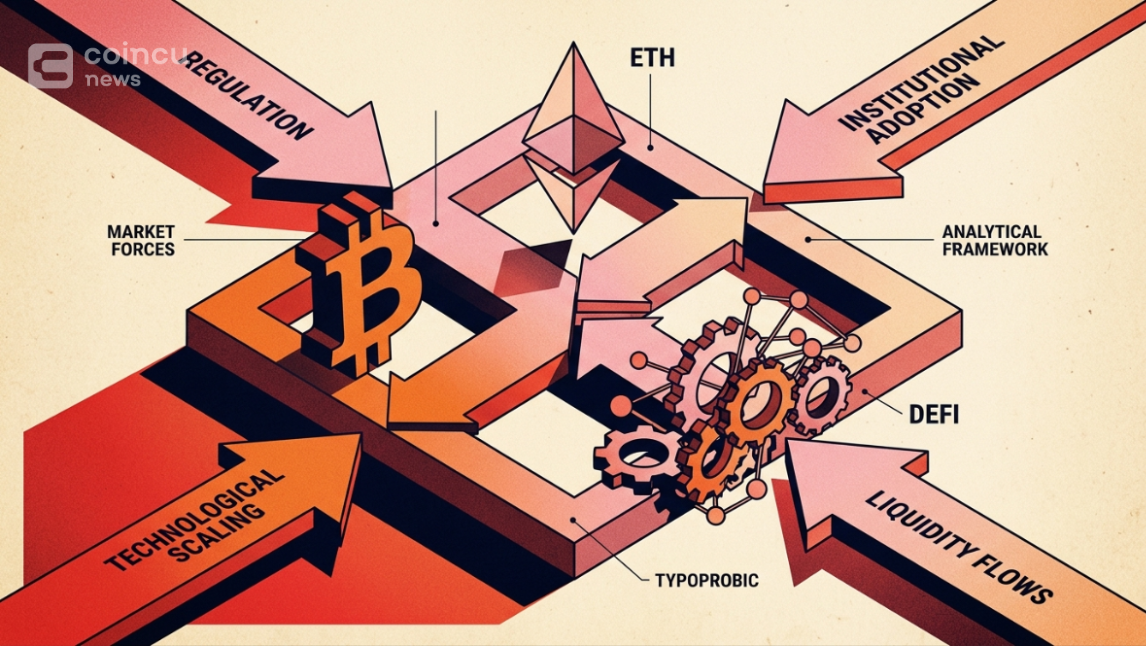
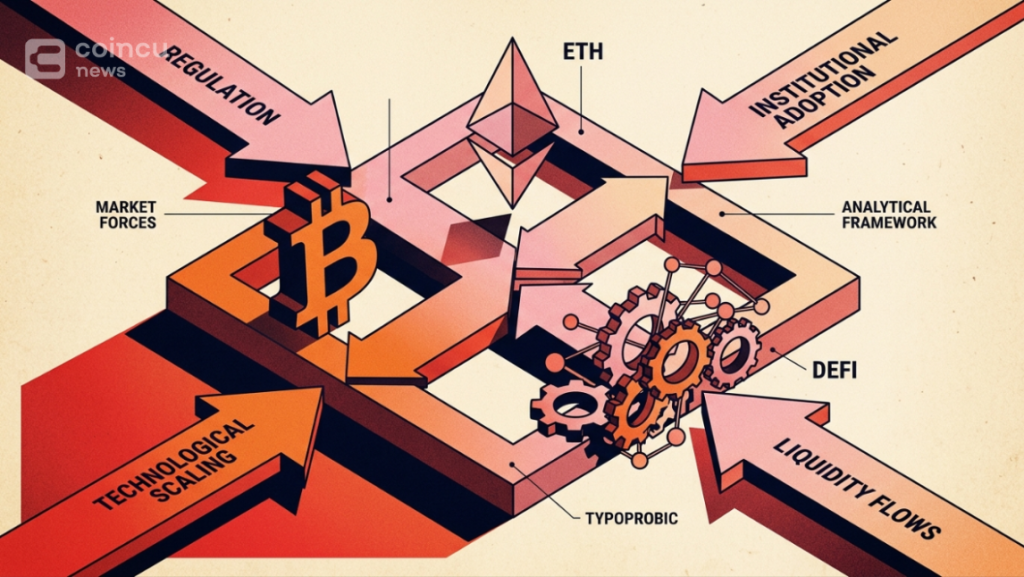
Crypto’s next phase may be easier to understand through structural tensions than through simple bull-bear narratives.
Why This Framework Became Useful
I did not begin this project looking for philosophy to explain crypto. I started from a simpler frustration: the market no longer felt coherent when viewed through one narrative. Bitcoin was becoming more financialized and more political at the same time. Ethereum was scaling, but its scaling model was creating fragmentation. DeFi was trying to move past inflationary yield, but the replacement models were uneven. Hyperliquid was attracting attention by challenging the old exchange template rather than fitting neatly into it.
So I went back to first principles. The part of Hegel that stayed useful was simple: structures often fail not because an outside force attacks them, but because the strengths that made them successful create new weaknesses. A corrective form emerges, solves one problem, creates another, and sometimes leads to a more durable arrangement.
I am not claiming that every chart or every price move follows a philosophical law. I am saying that several of the market’s most important structural shifts look easier to understand when viewed through contradiction, overcorrection, and partial resolution rather than through linear narratives of progress.
Table of Contents
Hyperliquid and the CEX-DEX Contradiction
The cleanest example of this framework may be crypto trading infrastructure.
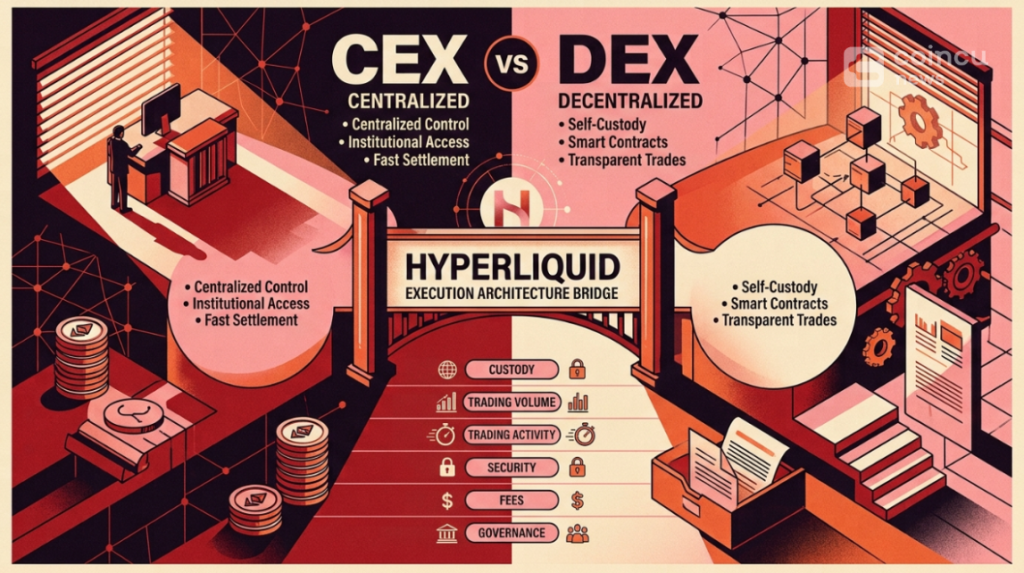
CEXs solved usability with speed, depth, and familiar order books, but concentrated custody and trust in one intermediary. Early DEXs corrected the custody problem, but often asked traders to accept weaker execution, fragmented liquidity, and more complexity.
Hyperliquid is interesting because it narrows that contradiction more effectively than earlier designs. Its public materials describe a fully onchain order book, a HyperCore execution layer, and a chain built to house exchange activity and broader application development on the same stack (Hyper Foundation).
That does not mean the problem is solved permanently, and it does not mean Hyperliquid will dominate forever. It does mean the market may be moving toward a new expectation: traders increasingly want exchange-like execution without inheriting the full black-box risk of the old exchange model.
Coincu’s earlier Hyperliquid review is useful background here because it shows how the platform has already been framed inside the exchange and derivatives category rather than as a conventional DEX clone.
That is what I mean by synthesis here. Not perfection. A new structure that resolves part of the old contradiction well enough to reset the category.
Hyperliquid matters because it narrows the old tradeoff between exchange-like execution and onchain transparency.
Suggested source note: Editorial comparison graphic based on Hyper Foundation materials and exchange market structure analysis.
Bitcoin Is No Longer One Thesis
The biggest mistake I see in Bitcoin analysis is assuming there is still one dominant user logic behind the asset.
That was once closer to true. The early Bitcoin thesis was mostly personal. Self-custody, fiat skepticism, censorship resistance, and long-term monetary independence sat close to the center of the story.
That thesis still matters, but it no longer describes the whole market. Bitcoin now operates across at least three overlapping groups.
The first group is the original self-sovereignty holder. The second is the institutional and corporate buyer, who treats Bitcoin more like a financial product or treasury asset. The third is the strategic or geopolitical buyer, who sees Bitcoin less as a trade and more as reserve optionality.
Strategy’s own treasury disclosures show how far the corporate side of this shift has already gone: on June 22, 2026, the company said it held 847,363 BTC and a USD reserve of $1.4 billion (Strategy).
For a broader view of concentration and treasury exposure, Coincu’s explainer on who owns the most Bitcoin remains a useful companion read.
This is why Bitcoin analysis is so often confused. Different observers are describing different buyer classes and then arguing as though they are talking about the same thing.
My conclusion is not that one of these theses will eliminate the others. It is that Bitcoin now has to be analyzed as a layered ownership system. The key question for 2027 is not simply whether demand rises or falls. It is which type of demand proves most durable.
Ethereum and the Cost of Fragmentation
Ethereum’s scaling path also looks more intelligible through contradiction than through pure roadmap language.
Ethereum layer 1 solved for security, neutrality, and settlement credibility, but that strength came with obvious cost and throughput constraints. Layer 2 expansion emerged as the corrective response. Rollups and app-specific execution environments reduced costs and made more activity possible.
But every additional execution environment also increased another form of complexity: liquidity fragmentation, bridge dependence, cross-rollup confusion, and a higher coordination burden for both users and developers.
That is why developments in 2026 mattered so much. The Ethereum Foundation’s restructuring, its sharper emphasis on what only the base layer can do, and ENS deciding to remain on Ethereum mainnet all pointed in the same direction. On June 23, 2026, the EF said it was emerging from reorganization with 54 fewer colleagues, roughly 20% of the foundation, and with a leaner structure focused on critical work (Ethereum Foundation). Earlier, on February 6, 2026, ENS said ENSv2 would be deployed exclusively on Ethereum and that it would cease development of Namechain, its planned L2 path, citing lower gas costs and simpler architecture (ENS). The question is no longer whether Ethereum scales through multiple layers. It is whether those layers can become more coherent and less self-defeating.
I do not think the right conclusion is that most L2s are destined to disappear on a fixed timetable. The better conclusion is that the market is becoming more selective about which scaling relationships actually strengthen Ethereum and which ones merely add surface area. Expansion is no longer enough by itself. Coordination quality now matters just as much.
The key Ethereum question is no longer whether to scale, but how to scale without making fragmentation the dominant user experience.
DeFi’s Move From Incentives to Revenue
If one area of crypto has already taught this lesson repeatedly, it is DeFi.
The inflationary yield era solved a real bootstrapping problem. Protocols needed liquidity, users, and attention. Token emissions supplied all three. But the contradiction was there from the beginning: the more the model depended on continued issuance, the harder it became to separate usage from subsidy.
When market conditions tightened, many of those structures revealed how little recurring economic value they had actually built. The memecoin response that followed was, in one sense, an overcorrection: if the market no longer believed most governance-token utility stories, then abandoning utility claims altogether became a kind of brutal honesty.
What I see emerging now is not a perfect replacement, but a more defensible category: protocols that are increasingly judged by fee generation, revenue quality, and whether returns can be explained without hiding behind token inflation. GMX’s documentation, for example, explicitly ties liquidity-provider returns to trading, borrowing, swap, and liquidation fees, while Pendle’s documentation is explicit that its system is built around yield tokenization rather than invented yield (GMX Docs, Pendle Docs).
Coincu’s older GMX review and Pendle review show how the market first approached these protocols from a product angle before the current shift toward revenue quality and yield credibility.
This matters because “real yield” is not just a slogan. It is a shift in accounting discipline. The more a protocol can show that its economics are tied to trading activity, settlement, lending, or other recurring use, the more legible it becomes to serious capital.
That does not mean every protocol with fees is healthy. Revenue can still be cyclical, concentrated, or fragile. But it does mean the market is moving toward a harder question than it used to ask: not how high the yield is, but what actually funds it.
Memecoins and Institutionalization
The memecoin debate is not mainly a branding problem. It is a contradiction between two forms of legitimacy. Community-native projects react against opaque allocation and insider capture, while institutional capital wants clean legal structures, revenue visibility, and governance it can defend internally. Those two logics can overlap for a time, but they do not merge easily. That is why so many rebrand stories feel unstable: the deeper a project moves into formal capital structures, the more it changes the power relationships the original community valued.
Stablecoins and the Slow Rewiring of Cross-Border Finance
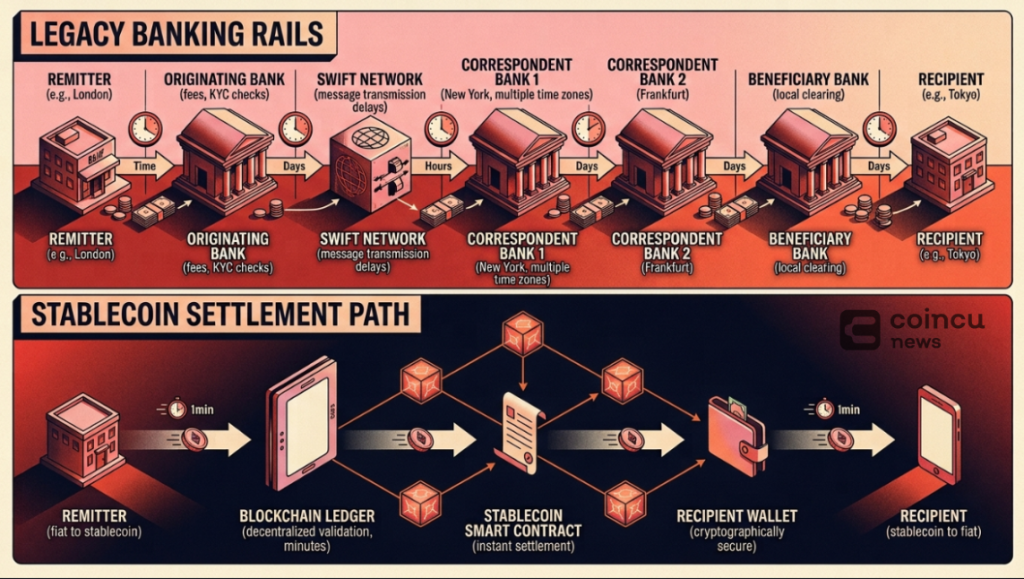
The final area where this framework seems useful is cross-border payments. Traditional correspondent banking and SWIFT-linked processes remain globally important because they are stable and deeply embedded in institutional operations. But they also carry frictions: delayed settlement, higher reconciliation burden, and time-zone constraints. Pure crypto assets corrected some of that with speed and programmability, but their volatility made them weak tools for many real-world payment uses.
Stablecoin infrastructure is interesting because it reduces part of that contradiction. It offers a more familiar unit of account while keeping some of the operational advantages of blockchain-based transfer. Institutional projects around stablecoin settlement and foreign exchange now matter because they move the conversation from abstract disruption to workflow improvement.
I do not think the most useful framing is that stablecoins will simply replace traditional systems overnight. The more serious framing is that they may increasingly upgrade specific parts of the settlement stack where speed, programmability, and continuous operation create obvious value. That is the logic behind Project Pangea, announced on June 23, 2026 as a collaborative effort among Chainlink, FairSquareLab, UniKA, and Qivalis to evaluate T+0, stablecoin-based FX settlement models between Europe and South Korea (PR Newswire).
That is why cross-border stablecoin work looks more consequential to me than many market participants still assume. The relevant change may come less as a dramatic overthrow than as a gradual reallocation of which rails are used for which jobs. Institutional support for stablecoin infrastructure is also showing up elsewhere. Anchorage Digital announced a $100 million strategic investment from Tether on June 24, 2026, underscoring how seriously large operators now take regulated digital-asset rails (Anchorage Digital).
Stablecoin infrastructure is increasingly relevant not because it replaces every existing rail, but because it may improve specific settlement jobs first.
What This Framework Is Good For and What It Is Not
I want to be explicit about the limits of this framework.
It is not a trading system. It does not tell anyone what Bitcoin will trade at in a given quarter. It does not eliminate macro risk, policy shocks, or plain old human error. It also does not prove that every contradiction resolves into a cleaner and more durable system.
When I look at a crypto market structure now, I ask a smaller set of questions:
What problem did this structure solve originally?
What new contradiction did that solution create?
Is the current corrective phase actually better, or just reacting emotionally to the old failure?
If a synthesis is emerging, what strengths from both sides does it retain?
What I Think Matters Most for 2027
If I had to reduce this entire framework to one point, it would be this: the assets and protocols that matter most in 2027 are likely to be the ones that resolve real structural tensions rather than simply marketing around them.
That does not require certainty about winners. It requires clarity about the kinds of systems that are becoming harder to defend.
Structures that depend on endless dilution, fragile bridges, narrative-only utility, or permanent black-box trust look weaker to me than they once did. Structures that improve transparency, revenue quality, settlement efficiency, or coordination across layers look more durable.
That is the lens I am taking into 2027.
Not a prophecy. A framework for watching which contradictions are being resolved and which ones are only being delayed.
Frequently Asked Questions
What does Hegel’s dialectical method mean in this article?
In this article, it refers to a pattern of development where an existing structure creates internal tensions, a corrective form emerges in response, and a more durable system sometimes appears by resolving part of that contradiction. I am using it as an analytical lens, not as a claim that markets obey a rigid philosophical law.
Does this article make a Bitcoin price prediction for 2027?
No. This version does not use explicit price targets. The more useful 2027 question is which buyer class becomes most durable and whether Bitcoin is increasingly treated as a retail asset, a financial product, a strategic reserve asset, or all three at once.
Why is Hyperliquid central to this framework?
Because it is one of the clearest recent examples of a market trying to preserve centralized-exchange style execution while reducing some of the trust and custody compromises that defined the earlier model.
What is the key Ethereum takeaway?
Ethereum still appears committed to scaling through multiple layers, but the market is becoming much less tolerant of unnecessary fragmentation. Coherence now matters almost as much as expansion.
What is the DeFi takeaway?
The market is gradually becoming less impressed by headline APY and more focused on where yield actually comes from. Protocols that can explain revenue clearly are better positioned than those still relying mainly on token emissions to justify returns.
This article reflects a personal analytical framework built from market observation, economics, and political-philosophical reading. It is not investment advice, and it should be read as an interpretive essay rather than a predictive model.