Chainalysis Plans On-Chain Tracking Standards System With Address Clustering Ontology
Chainalysis has proposed an on-chain tracking standards system built around what it calls an Address Clustering Ontology, a framework designed to bring consistency to how blockchain analytics providers classify and label wallet relationships across networks.
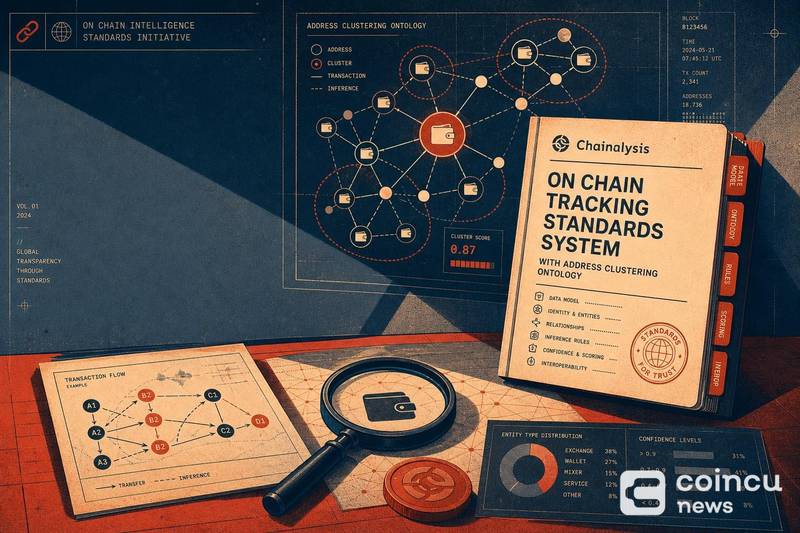
The proposal, outlined in a Chainalysis blog post on ontology and data quality, positions standardized classification as a way to improve the reliability of blockchain analytics output. Rather than a finished product, the initiative represents a formalized approach to how entities, addresses, and their relationships are categorized across the industry. For related coverage, see Ripple Says XRP and RLUSD Are Entering x402 Payment System.
A separate CoinDesk report confirmed that the firm is pushing for broader adoption of these tracing standards among compliance teams and law enforcement agencies. For related coverage, see Vietnam Plans Pilot Crypto Asset Trading Market: What It Means.
What the Address Clustering Ontology Actually Means
Address clustering is the practice of grouping multiple blockchain addresses that are likely controlled by the same entity. Analysts use heuristics, such as shared transaction inputs on Bitcoin, to link wallets together and attribute them to exchanges, services, or individual actors. For related coverage, see Kraken to List Bittensor Subnet Alpha Token: What Is Confirmed.
An ontology, in this context, refers to a shared vocabulary and set of classification rules. The Chainalysis Address Clustering Ontology would define how clusters are labeled, what relationship types exist between addresses, and how confidence levels are assigned to those groupings.
Without a shared ontology, two analytics providers might classify the same wallet cluster differently. One might label an address as belonging to a specific exchange, while another flags it as an unknown intermediary. This inconsistency creates problems for compliance teams that rely on multiple data sources, similar to Chainalysis research identifying gray-market peptide suppliers using Bitcoin and stablecoins, where accurate address attribution was central to the findings.
How Standardized Tracking Could Affect Compliance and Investigations
Compliance teams at exchanges and financial institutions use blockchain analytics to screen transactions for sanctions exposure, fraud indicators, and money laundering patterns. A standardized ontology would allow these teams to compare results across providers using a common language.
For law enforcement investigators, consistent clustering standards could reduce the friction of cross-referencing evidence gathered from different analytics platforms. When two agencies use different providers, mismatched labels for the same wallet cluster can slow investigations or introduce confusion in court proceedings.
The proposal also carries implications for regulatory reporting. As jurisdictions introduce travel rule requirements and transaction monitoring obligations, a shared classification framework could make compliance outputs more auditable and comparable. This is particularly relevant as countries like Vietnam move toward piloting regulated crypto asset trading markets that will require robust monitoring infrastructure.
Open Questions Around Adoption and Methodology
Any standards proposal raises the question of who participates. Chainalysis is one of several blockchain analytics firms, and competitors may resist adopting a framework designed by a rival. Whether the ontology becomes an open standard or remains proprietary will likely shape its adoption trajectory.
Methodology transparency is another concern. Address clustering relies on heuristics that can produce false positives, incorrectly linking unrelated addresses to the same entity. A standardized ontology does not eliminate this risk; it only standardizes how the results are labeled and communicated.
Privacy considerations also remain unresolved. A more consistent and interoperable tracking system could make it easier for authorities to trace transactions, which raises questions from privacy advocates about surveillance scope. The balance between investigative utility and user privacy is not addressed by a classification framework alone.
Large-scale anonymous address transfers involving hundreds of BTC illustrate why consistent attribution standards matter, but also why false-positive risks in clustering carry real consequences for wrongly flagged users.
Where This Fits in the Blockchain Analytics Landscape
The push for standards reflects a maturing blockchain analytics sector. As more institutions enter crypto markets and regulators expand oversight, the demand for consistent, auditable data has grown. Standard-setting efforts, even before formal adoption, signal that the industry is moving beyond ad hoc tooling toward repeatable frameworks.
Chainalysis has published related work on defining blockchain clusters, suggesting the ontology proposal builds on an existing research agenda rather than emerging as a standalone initiative.
Whether competing firms join or develop alternative standards will determine whether the industry converges on a single framework or fragments into competing classification systems.
FAQ
What is the Address Clustering Ontology?
It is a proposed framework by Chainalysis that defines shared labels, relationship types, and classification rules for grouping blockchain addresses controlled by the same entity. The goal is to standardize how analytics providers categorize wallet clusters.
What is an on-chain tracking standards system?
It refers to a formalized set of rules and definitions for how blockchain transaction data is analyzed, labeled, and reported. The system aims to make outputs from different analytics providers more consistent and comparable.
Why would Chainalysis push for tracking standards?
As the largest blockchain analytics provider, Chainalysis has an interest in establishing industry norms that align with its methodology. Standardization could also expand the addressable market by making blockchain analytics more trusted and interoperable for compliance and law enforcement use cases.
Disclaimer: This article is for informational purposes only and does not constitute financial or investment advice. Cryptocurrency and digital asset markets carry significant risk. Always do your own research before making decisions.
No tags available.


Other Posts








- China, US Conclude Trade Talks with Focus on Cooperation
- Crypto Weekly: NYSE Backs OKX, Kraken Gets Fed Access, BTC Sells
- Court Upholds Fed’s Rejection of Custodia Bank’s Request
- Former CFO Convicted for $35M Fraudulent Crypto Investment
- DeriW Launches Edge Hour Trading Competition Platform for Derivatives Traders
- Michael Saylor Denies Bitcoin Sell-Off Amid Large BTC Transfer
- Buy Dogecoin on eToro: Step-by-Step Guide for Beginners (2024)
- Kazakhstan Explores Crypto Reserves Backed by National Funds
- JPMorgan Increases Holdings in BlackRock’s Bitcoin ETF
- Nordea Bank Introduces Bitcoin ETP Trading for Nordic Customers
- XRP Spot ETF Launches on Nasdaq Amid Market Fluctuations
- Peter Schiff Challenges Michael Saylor on MSTR’s Business Model
- Thailand Orders Worldcoin to Delete 1.2 Million Biometric Records
- UK Proposes New DeFi Tax Framework to Ease User Burden
- WLFI Under Fire: Analyst Warns Hyperliquid Could Be Next
- Ancient Ethereum Whale Moves $1.19 Billion After Decade
- BlackRock Receives Large Crypto Transfers from Coinbase
- SEC Scrutiny on ALT5 Sigma’s Leadership Disclosure Timing
- Yala Injects $5.5 Million Amid Recovery Efforts
- Radiant Capital Faces $50M Loss in Major Security Breach
- China, US Conclude Trade Talks with Focus on Cooperation
- Crypto Weekly: NYSE Backs OKX, Kraken Gets Fed Access, BTC Sells
- Court Upholds Fed’s Rejection of Custodia Bank’s Request
- Former CFO Convicted for $35M Fraudulent Crypto Investment
- DeriW Launches Edge Hour Trading Competition Platform for Derivatives Traders
- Michael Saylor Denies Bitcoin Sell-Off Amid Large BTC Transfer
- Buy Dogecoin on eToro: Step-by-Step Guide for Beginners (2024)
- Kazakhstan Explores Crypto Reserves Backed by National Funds
- JPMorgan Increases Holdings in BlackRock’s Bitcoin ETF
- Nordea Bank Introduces Bitcoin ETP Trading for Nordic Customers
- XRP Spot ETF Launches on Nasdaq Amid Market Fluctuations
- Peter Schiff Challenges Michael Saylor on MSTR’s Business Model
- Thailand Orders Worldcoin to Delete 1.2 Million Biometric Records
- UK Proposes New DeFi Tax Framework to Ease User Burden
- WLFI Under Fire: Analyst Warns Hyperliquid Could Be Next
- Ancient Ethereum Whale Moves $1.19 Billion After Decade
- BlackRock Receives Large Crypto Transfers from Coinbase
- SEC Scrutiny on ALT5 Sigma’s Leadership Disclosure Timing
- Yala Injects $5.5 Million Amid Recovery Efforts
- Radiant Capital Faces $50M Loss in Major Security Breach
- China, US Conclude Trade Talks with Focus on Cooperation
- Crypto Weekly: NYSE Backs OKX, Kraken Gets Fed Access, BTC Sells
- Court Upholds Fed’s Rejection of Custodia Bank’s Request
- Former CFO Convicted for $35M Fraudulent Crypto Investment
- DeriW Launches Edge Hour Trading Competition Platform for Derivatives Traders
- Michael Saylor Denies Bitcoin Sell-Off Amid Large BTC Transfer
- Buy Dogecoin on eToro: Step-by-Step Guide for Beginners (2024)
- Kazakhstan Explores Crypto Reserves Backed by National Funds
- JPMorgan Increases Holdings in BlackRock’s Bitcoin ETF
- Nordea Bank Introduces Bitcoin ETP Trading for Nordic Customers
- XRP Spot ETF Launches on Nasdaq Amid Market Fluctuations
- Peter Schiff Challenges Michael Saylor on MSTR’s Business Model
- Thailand Orders Worldcoin to Delete 1.2 Million Biometric Records
- UK Proposes New DeFi Tax Framework to Ease User Burden
- WLFI Under Fire: Analyst Warns Hyperliquid Could Be Next
- Ancient Ethereum Whale Moves $1.19 Billion After Decade
- BlackRock Receives Large Crypto Transfers from Coinbase
- SEC Scrutiny on ALT5 Sigma’s Leadership Disclosure Timing
- Yala Injects $5.5 Million Amid Recovery Efforts
- Radiant Capital Faces $50M Loss in Major Security Breach

Brazil Tightens Crypto Fraud Controls With 24-Hour Wallet Delay


Over 100 Crypto Projects Shut Down in 2026 as Industry Shakeout Deepens
Cashelix Launches CASX Token Presale to Fuel the Future of Blockchain P2P Transactions
Bybit Sues North Korea and Lazarus Group, Secures Preliminary Injunction Freezing Stolen Assets in Landmark Crypto Asset Recovery Effort