American Bitcoin 1-for-15 Reverse Stock Split to Maintain Nasdaq Listing
American Bitcoin, the Bitcoin mining company trading under the ticker ABTC, is set to execute a 1-for-15 reverse stock split to maintain its Nasdaq listing qualifications. The corporate action will consolidate every 15 existing shares into a single share, proportionally increasing the per-share price while leaving shareholders’ overall ownership percentages unchanged.
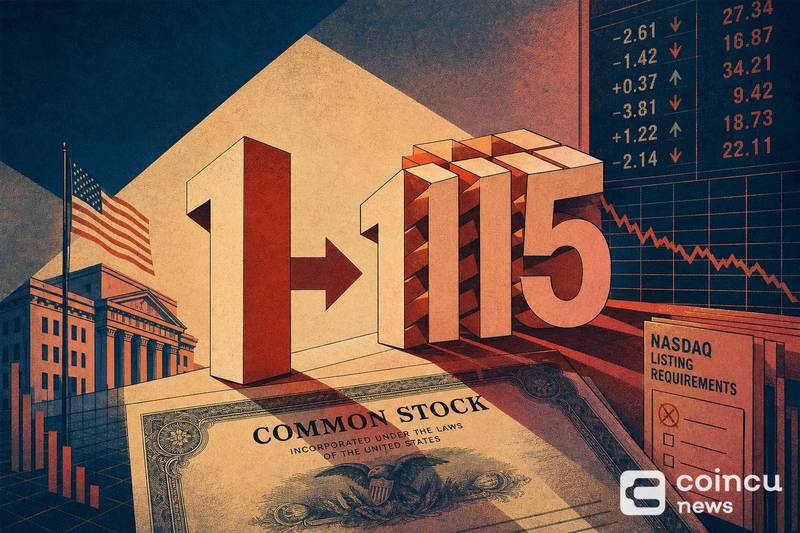
The company announced the effective date of the reverse stock split as part of its effort to regain compliance with Nasdaq’s minimum bid-price requirements. The move follows board approval of the 1-for-15 ratio, a decision that was also disclosed in a filing with the U.S. Securities and Exchange Commission.
This is not the first time the company’s stock structure has drawn attention. Coincu previously reported when American Bitcoin Corp’s board approved the 1-for-15 reverse stock split, and the current announcement confirms the implementation timeline. For related coverage, see U.S. House Bitcoin Reserve Proposal Sets 20-Year Hold.
Why Nasdaq Compliance Is Driving This Move
Nasdaq-listed companies must maintain a minimum bid price, typically $1.00 per share, to remain in compliance with the exchange’s continued listing standards. When a stock trades below that threshold for an extended period, the exchange issues a deficiency notice and grants a compliance window. For related coverage, see Coinbase Bitcoin Premium Index Negative for 19 Days: What -0.0401% Means.
A reverse stock split is one of the most common mechanisms companies use to address this requirement. By reducing the total number of outstanding shares and proportionally increasing the per-share price, the company can bring its stock price back above the minimum threshold without any change to its market capitalization or underlying business operations.
It is important to note that executing a reverse split does not guarantee long-term listing security. If the stock price declines again after the split, the company could face renewed compliance pressure. The reverse split addresses the symptom, the low share price, rather than the underlying factors that drove it below the threshold.
What the 1-for-15 Ratio Means for Shareholders
Under the 1-for-15 reverse split, a shareholder who holds 1,500 shares before the effective date would hold 100 shares afterward. The per-share price would increase by a factor of 15 to offset the reduction in share count, so the total dollar value of holdings remains the same at the moment of conversion.
Shareholders should watch for broker communications regarding the handling of fractional shares. In most reverse splits, fractional shares resulting from the conversion are either rounded or cashed out at the prevailing market price. American Bitcoin’s specific treatment of fractional shares should be detailed in the company’s SEC filing and broker notices.
While a reverse split is mechanically neutral to ownership value, market perception can shift. Some investors view reverse splits as a signal of financial distress, which can create selling pressure in the days surrounding the effective date. Others see compliance-driven splits as routine corporate housekeeping, particularly among smaller public companies navigating capital structure decisions in the current market environment.
Key Dates and What Investors Should Monitor
Investors holding ABTC shares should track several operational details as the reverse split takes effect. The ticker symbol may temporarily carry a “D” suffix or similar notation from the exchange to indicate the adjusted share structure, depending on Nasdaq’s standard processing procedures.
Brokerage accounts will reflect the updated share count and adjusted per-share price once the split is processed, though there may be a brief delay between the effective date and when accounts fully reconcile. Shareholders should verify their updated positions with their broker after the effective date passes.
Post-split, the key metric to watch is whether ABTC’s share price sustains above Nasdaq’s minimum bid-price requirement. The broader environment for Bitcoin-related public equities and the company’s operational performance as a mining firm will both influence whether the higher per-share price holds over time.
The reverse split does not alter American Bitcoin’s total market capitalization, its mining operations, its Bitcoin holdings, or any other fundamental business metric. It is strictly a share-structure adjustment designed to meet exchange listing rules.
FAQ About American Bitcoin’s Reverse Stock Split
What does a 1-for-15 reverse stock split mean?
Every 15 shares of ABTC stock are consolidated into one share. The per-share price increases by 15x proportionally, so the total value of a shareholder’s position remains the same at the time of conversion.
Why is American Bitcoin doing this now?
The company is conducting the reverse split to maintain compliance with Nasdaq’s minimum bid-price listing requirements. Without the adjustment, the stock risked being delisted from the exchange.
Does a reverse split automatically solve Nasdaq compliance issues?
No. A reverse split raises the per-share price mechanically, but it does not guarantee the stock will remain above the minimum threshold. If the share price declines again after the split, the company could face another compliance notice. Long-term listing security depends on sustaining the share price through business performance and market demand.
Will my total investment value change?
At the moment of the split, no. The reduction in share count is offset by the proportional increase in per-share price. However, subsequent market trading may move the price in either direction based on investor sentiment and broader market conditions.
Disclaimer: This article is for informational purposes only and does not constitute financial or investment advice. Cryptocurrency and digital asset markets carry significant risk. Always do your own research before making decisions.
No tags available.


Other Posts








- China, US Conclude Trade Talks with Focus on Cooperation
- Crypto Weekly: NYSE Backs OKX, Kraken Gets Fed Access, BTC Sells
- DeriW Launches Edge Hour Trading Competition Platform for Derivatives Traders
- Court Upholds Fed’s Rejection of Custodia Bank’s Request
- Former CFO Convicted for $35M Fraudulent Crypto Investment
- Michael Saylor Denies Bitcoin Sell-Off Amid Large BTC Transfer
- Buy Dogecoin on eToro: Step-by-Step Guide for Beginners (2024)
- Kazakhstan Explores Crypto Reserves Backed by National Funds
- JPMorgan Increases Holdings in BlackRock’s Bitcoin ETF
- Nordea Bank Introduces Bitcoin ETP Trading for Nordic Customers
- XRP Spot ETF Launches on Nasdaq Amid Market Fluctuations
- Crypto Leaders Address Macro Volatility Amid Market Shifts
- Peter Schiff Challenges Michael Saylor on MSTR’s Business Model
- Thailand Orders Worldcoin to Delete 1.2 Million Biometric Records
- UK Proposes New DeFi Tax Framework to Ease User Burden
- WLFI Under Fire: Analyst Warns Hyperliquid Could Be Next
- Ancient Ethereum Whale Moves $1.19 Billion After Decade
- BlackRock Receives Large Crypto Transfers from Coinbase
- SEC Scrutiny on ALT5 Sigma’s Leadership Disclosure Timing
- MoonPay Gains Trust License for Crypto Operations in New York
- China, US Conclude Trade Talks with Focus on Cooperation
- Crypto Weekly: NYSE Backs OKX, Kraken Gets Fed Access, BTC Sells
- DeriW Launches Edge Hour Trading Competition Platform for Derivatives Traders
- Court Upholds Fed’s Rejection of Custodia Bank’s Request
- Former CFO Convicted for $35M Fraudulent Crypto Investment
- Michael Saylor Denies Bitcoin Sell-Off Amid Large BTC Transfer
- Buy Dogecoin on eToro: Step-by-Step Guide for Beginners (2024)
- Kazakhstan Explores Crypto Reserves Backed by National Funds
- JPMorgan Increases Holdings in BlackRock’s Bitcoin ETF
- Nordea Bank Introduces Bitcoin ETP Trading for Nordic Customers
- XRP Spot ETF Launches on Nasdaq Amid Market Fluctuations
- Crypto Leaders Address Macro Volatility Amid Market Shifts
- Peter Schiff Challenges Michael Saylor on MSTR’s Business Model
- Thailand Orders Worldcoin to Delete 1.2 Million Biometric Records
- UK Proposes New DeFi Tax Framework to Ease User Burden
- WLFI Under Fire: Analyst Warns Hyperliquid Could Be Next
- Ancient Ethereum Whale Moves $1.19 Billion After Decade
- BlackRock Receives Large Crypto Transfers from Coinbase
- SEC Scrutiny on ALT5 Sigma’s Leadership Disclosure Timing
- MoonPay Gains Trust License for Crypto Operations in New York
- China, US Conclude Trade Talks with Focus on Cooperation
- Crypto Weekly: NYSE Backs OKX, Kraken Gets Fed Access, BTC Sells
- DeriW Launches Edge Hour Trading Competition Platform for Derivatives Traders
- Court Upholds Fed’s Rejection of Custodia Bank’s Request
- Former CFO Convicted for $35M Fraudulent Crypto Investment
- Michael Saylor Denies Bitcoin Sell-Off Amid Large BTC Transfer
- Buy Dogecoin on eToro: Step-by-Step Guide for Beginners (2024)
- Kazakhstan Explores Crypto Reserves Backed by National Funds
- JPMorgan Increases Holdings in BlackRock’s Bitcoin ETF
- Nordea Bank Introduces Bitcoin ETP Trading for Nordic Customers
- XRP Spot ETF Launches on Nasdaq Amid Market Fluctuations
- Crypto Leaders Address Macro Volatility Amid Market Shifts
- Peter Schiff Challenges Michael Saylor on MSTR’s Business Model
- Thailand Orders Worldcoin to Delete 1.2 Million Biometric Records
- UK Proposes New DeFi Tax Framework to Ease User Burden
- WLFI Under Fire: Analyst Warns Hyperliquid Could Be Next
- Ancient Ethereum Whale Moves $1.19 Billion After Decade
- BlackRock Receives Large Crypto Transfers from Coinbase
- SEC Scrutiny on ALT5 Sigma’s Leadership Disclosure Timing
- MoonPay Gains Trust License for Crypto Operations in New York

American Bitcoin 1-for-15 Reverse Stock Split to Maintain Nasdaq Listing


Strategy Plans to Raise STRC Dividend to 12% and Authorize Bitcoin Sales

Ethereum Institutional Launches as Independent Non-Profit to Bring Institutional Finance Onchain at Scale