SEC launches ETF rule review focused on crypto funds and prediction markets
The SEC has initiated a formal review of rules governing exchange-traded funds, with a particular focus on novel products including crypto funds and prediction market ETFs. The move signals the agency’s intent to evaluate whether existing regulatory frameworks adequately address the risks posed by these newer investment vehicles.
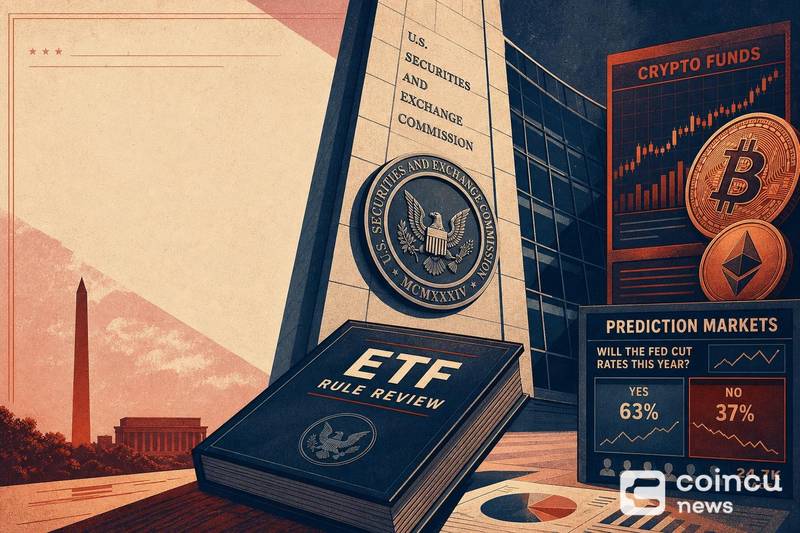
SEC Chairman Paul Atkins released a statement on novel exchange-traded funds, outlining the agency’s decision to solicit public input on how ETF rules should apply to products offering exposure to crypto assets and prediction markets. For related coverage, see Solana Foundation Launches Frontier Traders VIP Program for High-Volume Traders.
The regulator has also called for public comment on these novel ETF structures, opening a formal channel for industry participants, investors, and legal experts to weigh in on the regulatory treatment of these products. For related coverage, see Binance Wallet Launches Pre-IPO Asset Section: What It Means.
What the SEC’s ETF rule review covers
This is a rule review process, not an enforcement action or a product approval decision. The distinction matters. A rule review examines whether existing regulations are fit for purpose, potentially leading to updated guidance, new rulemaking, or amended disclosure requirements down the line.
The SEC’s review does not immediately approve or block any specific ETF filing. Instead, it creates a structured period during which the agency gathers information before deciding whether rule changes are warranted.
Scope and process
The review targets ETF structures that wrap novel or higher-risk asset classes, specifically crypto funds and prediction market products. The public comment process allows stakeholders to submit views on how existing rules handle these instruments.
The formal rule document published by the SEC provides the technical framework for the review and outlines the specific regulatory provisions under examination.
Why crypto funds sit at the center of the review
Crypto-linked ETFs raise distinct regulatory questions that traditional equity or bond ETFs do not. These include challenges around custody of digital assets, valuation methodologies for volatile tokens, disclosure standards for retail investors, and market surveillance across fragmented crypto exchanges.
The SEC has historically scrutinized crypto ETF applications more heavily than conventional fund filings. This review suggests the agency is now looking beyond individual product approvals to examine whether the broader ETF rulebook needs updating to accommodate digital asset exposure at scale.
Product structure concerns
Spot crypto ETFs hold the underlying digital asset directly, creating custody and security risks that differ fundamentally from ETFs holding equities or bonds. The review likely examines whether current custody rules provide adequate investor protection for these structures.
As traditional financial firms increasingly move into digital asset services, with developments like Schwab launching its spot crypto trading service, the intersection of conventional finance and crypto continues to expand, making regulatory clarity around ETF wrappers more pressing.
Regulatory risk for crypto fund issuers
ETF sponsors with pending or planned crypto fund filings face uncertainty about whether the review could result in stricter disclosure requirements or modified listing standards. The review period itself introduces ambiguity around filing timelines and approval expectations.
Market integrity remains a core SEC concern. The agency has consistently flagged the potential for manipulation in crypto markets, and this review provides a formal mechanism to assess whether ETF rules sufficiently address those risks.
How prediction market ETFs face added scrutiny
Prediction market ETFs allow investors to gain exposure to the outcomes of real-world events through an exchange-traded wrapper. These products sit at the intersection of financial markets and event-based speculation, raising classification questions that existing ETF rules were not designed to address.
For readers unfamiliar with the concept, prediction market ETFs package contracts tied to the probability of specific outcomes, such as election results, economic indicators, or policy decisions, into a fund structure that trades on traditional stock exchanges.
Where prediction market and crypto ETF concerns overlap
Both product categories share a common regulatory challenge: they bring novel, higher-risk exposure types into a fund wrapper originally designed for conventional securities. The SEC’s decision to group them in a single review reflects a broader concern about the ETF structure being used to package increasingly exotic underlying assets.
Prediction market ETFs raise investor suitability questions similar to those surrounding leveraged crypto products. Regulators must evaluate whether standard ETF disclosures give retail investors adequate information about the unique risks these products carry.
The growing complexity of ETF structures mirrors broader trends in crypto market innovation, including developments like CME Group’s concerns about U.S. approval of crypto perpetual contracts, where established market operators have questioned whether regulatory frameworks keep pace with product innovation.
What the review could mean for issuers and the ETF pipeline
ETF sponsors actively preparing filings for crypto or prediction market products now face a period of regulatory uncertainty. The review could result in updated disclosure templates, modified listing standards, or new compliance requirements that affect how these products are structured and marketed.
Filing strategies may shift as issuers wait for signals about the SEC’s direction. Some sponsors may delay submissions until the review produces clearer guidance, while others may accelerate filings to establish precedent before any rule changes take effect.
The review does not necessarily mean delays. It could also streamline the approval process by establishing clearer standards, reducing the case-by-case uncertainty that has characterized crypto ETF applications in recent years.
Market participants will watch the public comment period closely for indications of how the SEC balances innovation with investor protection. The outcome will shape the competitive landscape for ETF issuers positioning in the crypto and alternative asset space.
FAQ: SEC ETF rule review on crypto funds and prediction markets
What is the SEC’s ETF rule review?
It is a formal regulatory process in which the SEC examines whether existing ETF rules adequately cover novel products, specifically crypto funds and prediction market ETFs. The agency has opened a public comment period to gather input from industry participants and investors.
Does this review approve or block any specific ETF?
No. A rule review examines the regulatory framework itself, not individual product applications. Specific ETF approvals and rejections are handled through separate filing processes.
Who is affected by this review?
ETF issuers with crypto or prediction market product lines, compliance teams at asset management firms, exchanges listing these products, and retail investors holding or considering these ETFs are all potentially affected.
Will existing crypto ETFs be delisted?
The review does not indicate any plans to delist currently trading products. It focuses on whether the rules governing these products need updating, not on removing approved funds from the market.
What happens after the public comment period?
The SEC will review submitted comments and determine whether to propose formal rule changes, issue updated guidance, or maintain current standards. This process can take months to complete.
How does this relate to broader crypto regulation?
The ETF rule review is one component of the SEC’s broader approach to digital asset oversight, which includes considerations around crypto reporting standards and exchange-level compliance requirements across jurisdictions.
Disclaimer: This article is for informational purposes only and does not constitute financial or investment advice. Cryptocurrency and digital asset markets carry significant risk. Always do your own research before making decisions.
No tags available.


Other Posts








- China, US Conclude Trade Talks with Focus on Cooperation
- Crypto Weekly: NYSE Backs OKX, Kraken Gets Fed Access, BTC Sells
- Court Upholds Fed’s Rejection of Custodia Bank’s Request
- Former CFO Convicted for $35M Fraudulent Crypto Investment
- DeriW Launches Edge Hour Trading Competition Platform for Derivatives Traders
- Michael Saylor Denies Bitcoin Sell-Off Amid Large BTC Transfer
- Buy Dogecoin on eToro: Step-by-Step Guide for Beginners (2024)
- Kazakhstan Explores Crypto Reserves Backed by National Funds
- JPMorgan Increases Holdings in BlackRock’s Bitcoin ETF
- Nordea Bank Introduces Bitcoin ETP Trading for Nordic Customers
- XRP Spot ETF Launches on Nasdaq Amid Market Fluctuations
- Peter Schiff Challenges Michael Saylor on MSTR’s Business Model
- Thailand Orders Worldcoin to Delete 1.2 Million Biometric Records
- UK Proposes New DeFi Tax Framework to Ease User Burden
- WLFI Under Fire: Analyst Warns Hyperliquid Could Be Next
- Ancient Ethereum Whale Moves $1.19 Billion After Decade
- BlackRock Receives Large Crypto Transfers from Coinbase
- SEC Scrutiny on ALT5 Sigma’s Leadership Disclosure Timing
- Yala Injects $5.5 Million Amid Recovery Efforts
- Radiant Capital Faces $50M Loss in Major Security Breach
- China, US Conclude Trade Talks with Focus on Cooperation
- Crypto Weekly: NYSE Backs OKX, Kraken Gets Fed Access, BTC Sells
- Court Upholds Fed’s Rejection of Custodia Bank’s Request
- Former CFO Convicted for $35M Fraudulent Crypto Investment
- DeriW Launches Edge Hour Trading Competition Platform for Derivatives Traders
- Michael Saylor Denies Bitcoin Sell-Off Amid Large BTC Transfer
- Buy Dogecoin on eToro: Step-by-Step Guide for Beginners (2024)
- Kazakhstan Explores Crypto Reserves Backed by National Funds
- JPMorgan Increases Holdings in BlackRock’s Bitcoin ETF
- Nordea Bank Introduces Bitcoin ETP Trading for Nordic Customers
- XRP Spot ETF Launches on Nasdaq Amid Market Fluctuations
- Peter Schiff Challenges Michael Saylor on MSTR’s Business Model
- Thailand Orders Worldcoin to Delete 1.2 Million Biometric Records
- UK Proposes New DeFi Tax Framework to Ease User Burden
- WLFI Under Fire: Analyst Warns Hyperliquid Could Be Next
- Ancient Ethereum Whale Moves $1.19 Billion After Decade
- BlackRock Receives Large Crypto Transfers from Coinbase
- SEC Scrutiny on ALT5 Sigma’s Leadership Disclosure Timing
- Yala Injects $5.5 Million Amid Recovery Efforts
- Radiant Capital Faces $50M Loss in Major Security Breach
- China, US Conclude Trade Talks with Focus on Cooperation
- Crypto Weekly: NYSE Backs OKX, Kraken Gets Fed Access, BTC Sells
- Court Upholds Fed’s Rejection of Custodia Bank’s Request
- Former CFO Convicted for $35M Fraudulent Crypto Investment
- DeriW Launches Edge Hour Trading Competition Platform for Derivatives Traders
- Michael Saylor Denies Bitcoin Sell-Off Amid Large BTC Transfer
- Buy Dogecoin on eToro: Step-by-Step Guide for Beginners (2024)
- Kazakhstan Explores Crypto Reserves Backed by National Funds
- JPMorgan Increases Holdings in BlackRock’s Bitcoin ETF
- Nordea Bank Introduces Bitcoin ETP Trading for Nordic Customers
- XRP Spot ETF Launches on Nasdaq Amid Market Fluctuations
- Peter Schiff Challenges Michael Saylor on MSTR’s Business Model
- Thailand Orders Worldcoin to Delete 1.2 Million Biometric Records
- UK Proposes New DeFi Tax Framework to Ease User Burden
- WLFI Under Fire: Analyst Warns Hyperliquid Could Be Next
- Ancient Ethereum Whale Moves $1.19 Billion After Decade
- BlackRock Receives Large Crypto Transfers from Coinbase
- SEC Scrutiny on ALT5 Sigma’s Leadership Disclosure Timing
- Yala Injects $5.5 Million Amid Recovery Efforts
- Radiant Capital Faces $50M Loss in Major Security Breach

Strategy Builds $4.75B Cash Cushion as Investors Seek More Than Bitcoin Exposure

Vitalik Buterin’s Ethereum Roadmap Prioritizes Privacy and Quantum Resistance

Trump Media Bitcoin Holdings Shrink as Crypto Losses Hit $361M

CT3 Begins Preparing Its Ecosystem for the Launch of the CT3GB Economy
Syntetika Launches Tokenization Hub Bringing Regulated Investment Strategies Onchain