Irish Authorities Recover Another 500 BTC From Clifton Collins’ Lost Bitcoin
Ireland’s Criminal Assets Bureau has recovered another 500 BTC linked to convicted drug dealer Clifton Collins, bringing the total seized from his cryptocurrency stash to 1,500 BTC across three separate operations since March 2026.
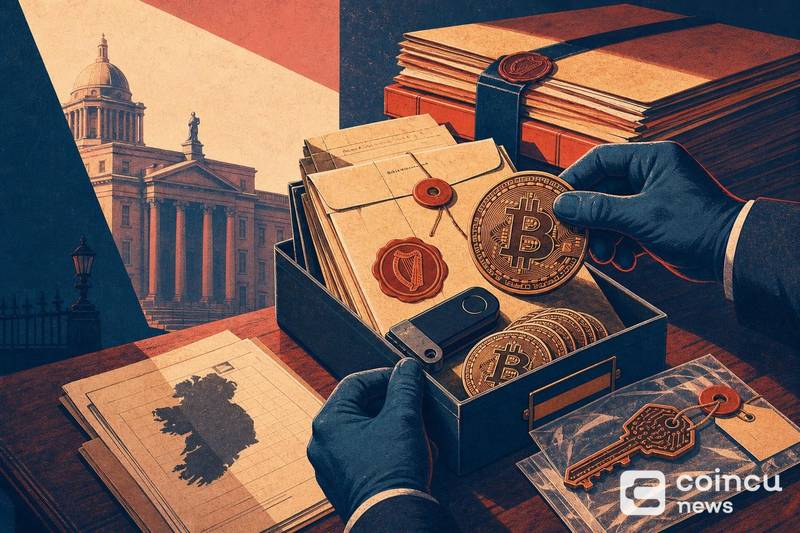
The latest recovery, reported on July 2, 2026, followed the same operational pathway used in two prior seizures. CAB worked with Europol’s European Cybercrime Centre to locate and seize the wallet, according to The Block. At current prices, the $61,417 per BTC spot rate puts the latest tranche at roughly $30.7 million.
The seizure marks the third successful wallet recovery from Collins’ original cache of 6,000 BTC spread across 12 wallets. With 1,500 BTC now in state hands, an estimated 4,500 BTC remains in dormant wallets, according to unconfirmed blockchain labeling data. For related coverage, see BTC Contract Open Interest Rises 5.85% in 24 Hours: What It Signals.
How Clifton Collins’ Bitcoin Became a Multi-Year Recovery Operation
Collins, a convicted cannabis dealer, accumulated approximately 6,000 BTC across 12 wallets using proceeds from drug trafficking. After his conviction, Irish authorities identified the wallets as proceeds of crime but could not immediately access them. For related coverage, see Reflec Recovery Plan Targets USDC+ Holders Hit by Drift Hack.
The keys to those wallets were reportedly lost or hidden, turning the case into one of Ireland’s most unusual asset-recovery challenges. The Criminal Assets Bureau spent years working with international partners to trace and unlock the funds.
In March 2026, CAB and Europol achieved the first breakthrough. The Garda officially announced on March 24 that CAB had seized a cryptocurrency wallet containing 500 BTC identified as proceeds of crime, relying on operational meetings in The Hague and Europol’s decryption resources. A related address linked to Clifton Collins deposited 500 BTC to Coinbase around the same period, drawing widespread attention to the case.
Three Recoveries in Four Months
The pace of seizures has accelerated. The first 500 BTC was recovered in March 2026, with the Garda press release confirming CAB’s authority and Europol EC3’s supporting role.
A second 500 BTC recovery followed in May 2026, when CAB and Europol secured another dormant wallet tied to the same trafficking case. That operation brought the running total to 1,000 BTC at the time.
The July 2 operation completed the third recovery, pushing the cumulative total to 1,500 BTC. All three seizures followed the same CAB-Europol operational framework established in the March operation.
Nine of the original 12 wallets reportedly remain untouched, according to a single source citing blockchain analytics labeling. Whether CAB can maintain this quarterly cadence depends on whether the same decryption and tracing methods apply to the remaining wallets.
Why a 1,500 BTC Law Enforcement Recovery Matters for Bitcoin
The Collins case is now one of the largest European cryptocurrency seizures by volume. At current spot prices, the 1,500 BTC recovered so far represents over $92 million in assets returned to state control.
For bitcoin watchers, the case demonstrates that dormant wallets are not beyond the reach of law enforcement when agencies coordinate across borders. The CAB-Europol partnership specifically relied on Europol’s cybercrime decryption capabilities, a resource that could be applied to similar cases across EU member states.
The recovery also comes during a period of broad market unease. The Fear & Greed Index sits at 21, deep in “Extreme Fear” territory, even as BTC has gained 2.57% over the past 24 hours. Large-scale government-held BTC, whether from seizures like this or from national reserve discussions, increasingly factors into supply-side analysis.
The traceability angle is equally significant. Law enforcement agencies worldwide are refining crypto evidence collection processes, and the Collins case provides a high-profile proof point that even wallets dormant for years can be identified, attributed, and seized.
What Remains Unrecovered
An estimated 4,500 BTC across nine wallets has not yet been seized, based on unconfirmed blockchain analytics data. At current prices, that remaining cache would be worth roughly $276 million.
No official Garda or CAB press release for the July 2 seizure has been published as of this writing. The March 24 Garda statement remains the only first-party government source confirming the operational framework.
Whether the remaining wallets use the same security architecture as the three already recovered is unknown. CAB has not disclosed its decryption methods or indicated a timeline for further operations.
FAQ About the 500 BTC Recovery and Clifton Collins’ Lost Bitcoin
How much bitcoin has been recovered from Clifton Collins?
A total of 1,500 BTC has been recovered across three separate operations in March, May, and July 2026. Each operation recovered 500 BTC.
Who is recovering the bitcoin?
Ireland’s Criminal Assets Bureau leads the operations with support from Europol’s European Cybercrime Centre. The Garda confirmed this partnership in its March 2026 press release.
How much bitcoin is still missing?
Collins originally held approximately 6,000 BTC across 12 wallets. With 1,500 BTC recovered from three wallets, an estimated 4,500 BTC in nine wallets remains unrecovered, according to unconfirmed blockchain analytics data.
Could more bitcoin be recovered?
The three successful seizures in four months suggest CAB has developed a repeatable methodology. However, authorities have not confirmed whether the same approach will work on the remaining wallets, and no public timeline for further operations has been disclosed.
What happens to the seized bitcoin?
Under Irish law, assets seized by the Criminal Assets Bureau as proceeds of crime are ultimately disposed of by the state. The specific disposition of the recovered BTC has not been publicly announced.
Disclaimer: This article is for informational purposes only and does not constitute financial or investment advice. Cryptocurrency and digital asset markets carry significant risk. Always do your own research before making decisions.
No tags available.


Other Posts








- China, US Conclude Trade Talks with Focus on Cooperation
- Crypto Weekly: NYSE Backs OKX, Kraken Gets Fed Access, BTC Sells
- DeriW Launches Edge Hour Trading Competition Platform for Derivatives Traders
- Court Upholds Fed’s Rejection of Custodia Bank’s Request
- Former CFO Convicted for $35M Fraudulent Crypto Investment
- Michael Saylor Denies Bitcoin Sell-Off Amid Large BTC Transfer
- Buy Dogecoin on eToro: Step-by-Step Guide for Beginners (2024)
- Kazakhstan Explores Crypto Reserves Backed by National Funds
- JPMorgan Increases Holdings in BlackRock’s Bitcoin ETF
- Nordea Bank Introduces Bitcoin ETP Trading for Nordic Customers
- XRP Spot ETF Launches on Nasdaq Amid Market Fluctuations
- Peter Schiff Challenges Michael Saylor on MSTR’s Business Model
- Thailand Orders Worldcoin to Delete 1.2 Million Biometric Records
- UK Proposes New DeFi Tax Framework to Ease User Burden
- WLFI Under Fire: Analyst Warns Hyperliquid Could Be Next
- Ancient Ethereum Whale Moves $1.19 Billion After Decade
- BlackRock Receives Large Crypto Transfers from Coinbase
- SEC Scrutiny on ALT5 Sigma’s Leadership Disclosure Timing
- Yala Injects $5.5 Million Amid Recovery Efforts
- Radiant Capital Faces $50M Loss in Major Security Breach
- China, US Conclude Trade Talks with Focus on Cooperation
- Crypto Weekly: NYSE Backs OKX, Kraken Gets Fed Access, BTC Sells
- DeriW Launches Edge Hour Trading Competition Platform for Derivatives Traders
- Court Upholds Fed’s Rejection of Custodia Bank’s Request
- Former CFO Convicted for $35M Fraudulent Crypto Investment
- Michael Saylor Denies Bitcoin Sell-Off Amid Large BTC Transfer
- Buy Dogecoin on eToro: Step-by-Step Guide for Beginners (2024)
- Kazakhstan Explores Crypto Reserves Backed by National Funds
- JPMorgan Increases Holdings in BlackRock’s Bitcoin ETF
- Nordea Bank Introduces Bitcoin ETP Trading for Nordic Customers
- XRP Spot ETF Launches on Nasdaq Amid Market Fluctuations
- Peter Schiff Challenges Michael Saylor on MSTR’s Business Model
- Thailand Orders Worldcoin to Delete 1.2 Million Biometric Records
- UK Proposes New DeFi Tax Framework to Ease User Burden
- WLFI Under Fire: Analyst Warns Hyperliquid Could Be Next
- Ancient Ethereum Whale Moves $1.19 Billion After Decade
- BlackRock Receives Large Crypto Transfers from Coinbase
- SEC Scrutiny on ALT5 Sigma’s Leadership Disclosure Timing
- Yala Injects $5.5 Million Amid Recovery Efforts
- Radiant Capital Faces $50M Loss in Major Security Breach
- China, US Conclude Trade Talks with Focus on Cooperation
- Crypto Weekly: NYSE Backs OKX, Kraken Gets Fed Access, BTC Sells
- DeriW Launches Edge Hour Trading Competition Platform for Derivatives Traders
- Court Upholds Fed’s Rejection of Custodia Bank’s Request
- Former CFO Convicted for $35M Fraudulent Crypto Investment
- Michael Saylor Denies Bitcoin Sell-Off Amid Large BTC Transfer
- Buy Dogecoin on eToro: Step-by-Step Guide for Beginners (2024)
- Kazakhstan Explores Crypto Reserves Backed by National Funds
- JPMorgan Increases Holdings in BlackRock’s Bitcoin ETF
- Nordea Bank Introduces Bitcoin ETP Trading for Nordic Customers
- XRP Spot ETF Launches on Nasdaq Amid Market Fluctuations
- Peter Schiff Challenges Michael Saylor on MSTR’s Business Model
- Thailand Orders Worldcoin to Delete 1.2 Million Biometric Records
- UK Proposes New DeFi Tax Framework to Ease User Burden
- WLFI Under Fire: Analyst Warns Hyperliquid Could Be Next
- Ancient Ethereum Whale Moves $1.19 Billion After Decade
- BlackRock Receives Large Crypto Transfers from Coinbase
- SEC Scrutiny on ALT5 Sigma’s Leadership Disclosure Timing
- Yala Injects $5.5 Million Amid Recovery Efforts
- Radiant Capital Faces $50M Loss in Major Security Breach

Irish Authorities Recover Another 500 BTC From Clifton Collins’ Lost Bitcoin

BTC Contract Open Interest Rises 5.85% in 24 Hours: What It Signals

Chinese Police Reveal Crypto Evidence Collection Process for Tracking and Freezing Funds