Top Crypto Trading Platforms in 2026: 6 Exchanges and Apps Worth Comparing
The top crypto trading platforms worth comparing in 2026 are Coinbase Advanced, Binance, Kraken Pro, OKX, Bybit, and Uniswap.
Coinbase Advanced is easier to trust for many mainstream users. Binance still matters for liquidity and breadth. Kraken Pro remains one of the cleaner advanced-trader platforms. OKX stands out for automation and product depth. Bybit suits users who want a more active spot-plus-margin workflow. Uniswap is the strongest fit for readers who prefer self-custody and onchain execution instead of exchange custody.
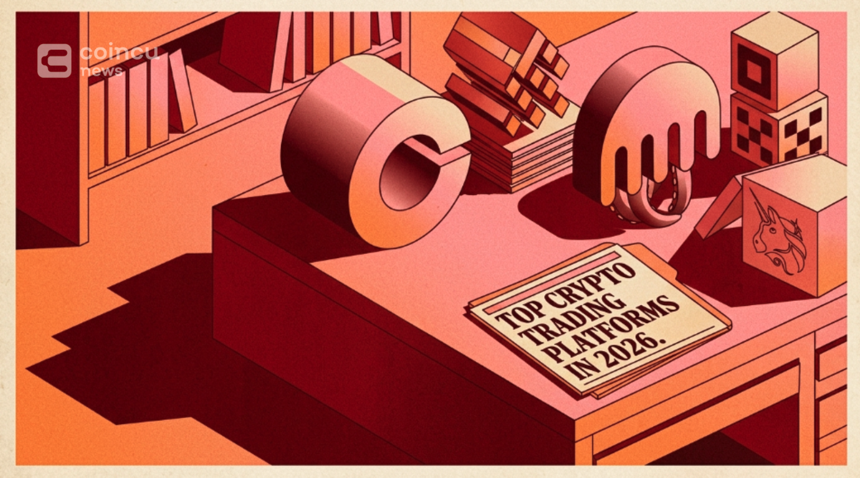
The better question is not “which platform is best?” It is which custody model, fee structure, and trading workflow actually fit the way you trade.
How We Chose These Platforms
This article is not a ranking of the most aggressive platform, the highest-leverage venue, or the app most likely to go viral on social media.
Instead, the shortlist is built around the factors that matter most for readers comparing trading venues in 2026:
- custody model, meaning whether the platform holds user assets or the user trades from a wallet
- product depth, including spot trading, margin, derivatives, automation tools, and order types
- trust signals, including CoinGecko Trust Score methodology, public platform documentation, and transparency around trading features
- usability for a specific type of reader rather than one generic “best exchange” claim
- the main trade-offs or risks that a comparison page should not hide
CoinGecko currently says it tracks 169 crypto exchanges with a combined 24-hour volume of about $54.9 billion in its exchange rankings, and lists Coinbase Exchange, Binance, and Kraken among the largest venues it tracks by Trust Score and market activity. CoinGecko also explains in its Trust Score methodology that the model weighs liquidity at 50%, cybersecurity at 20%, regulation at 15%, incident history at 10%, and proof of reserves at 5%.
That methodology does not tell you everything. But it is a better anchor than pure marketing copy.
For readers trying to understand how crypto market access keeps expanding through different wrappers and venues, Coincu’s explainer on Bitcoin Spot ETF vs Futures ETF is useful background before comparing direct trading platforms.
Quick Comparison
| Platform | Custody model | Best for | Spot trading | Margin or derivatives | Fee profile | Main trade-off |
|---|---|---|---|---|---|---|
| Coinbase Advanced | Custodial | Beginners growing into active trading | Yes | Limited compared with global derivatives-heavy venues | Simpler but not always the cheapest | fewer power-user features than some offshore rivals |
| Binance | Custodial | Global liquidity and broad market access | Yes | Yes | competitive but product-dependent | availability and regulatory context vary by jurisdiction |
| Kraken Pro | Custodial | Advanced traders who want cleaner structure and fiat rails | Yes | Yes | volume-tiered | narrower narrative appeal than bigger global brands |
| OKX | Custodial plus Web3 integrations | Automation and product depth | Yes | Yes | broad fee tiers and bot-related execution costs | complexity can overwhelm newer users |
| Bybit | Custodial | Active traders who want spot, margin, and derivatives-style workflow | Yes | Yes | competitive but leverage changes effective risk quickly | risk rises materially once users move beyond spot |
| Uniswap | Self-custodial | Onchain traders and wallet-native users | Yes | No traditional exchange margin | network and routing costs vary by chain and trade path | user is responsible for wallet security and execution quality |
Why These Six Matter In 2026
CoinGecko’s Q1 2026 crypto industry report says spot trading volume on centralized exchanges fell 39.1% in the first quarter to $2.7 trillion. At the same time, CoinGecko’s 2026 CEX and DEX trading activity report says DEX spot market share doubled from 6.9% in January 2024 to 13.6% in January 2026.
It means a useful “top crypto trading platforms” article can no longer pretend every reader wants the same thing. Some want the simplest regulated-feeling exchange possible. Others want automation or margin. Others want self-custody and onchain execution even if the workflow is less forgiving.
1. Coinbase Advanced
Coinbase Advanced makes the list because it is one of the clearest bridges between mainstream accessibility and more serious trading tools.
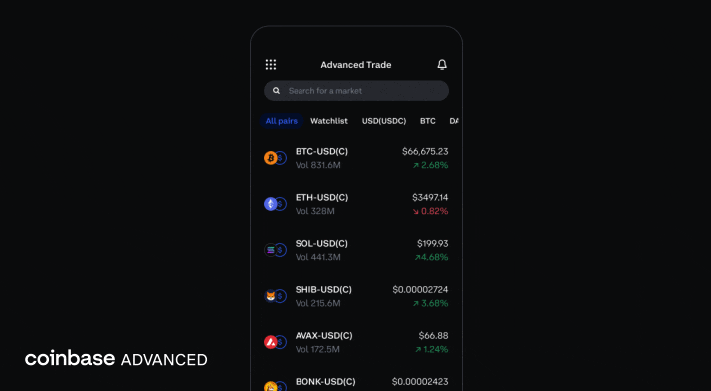
In its Advanced Trade documentation, Coinbase says the platform is built for more experienced traders and includes TradingView-powered charts, lower volume-based fees than simple retail flows, and advanced order types. CoinGecko currently gives Coinbase Exchange a 10 out of 10 Trust Score.
Why it made the list:
- recognizable mainstream brand with a stronger trust profile than many smaller exchanges
- clear upgrade path from simple buying to more active trading
- cleaner fit for readers who want a large custodial platform without jumping immediately into the most complex global venues
What looks credible:
- public documentation around Advanced Trade features is straightforward
- strong independent visibility on CoinGecko exchange rankings
What remains limited:
- some users will still find fee competitiveness and market breadth stronger elsewhere
- it is not the best fit for readers whose first priority is derivatives-heavy trading
Who it may suit:
- newer traders
- U.S.-centric readers
- users who want custody convenience but still need better charts and order controls
If you want the platform-specific Coincu background page, the site already has a dedicated Coinbase review.
2. Binance
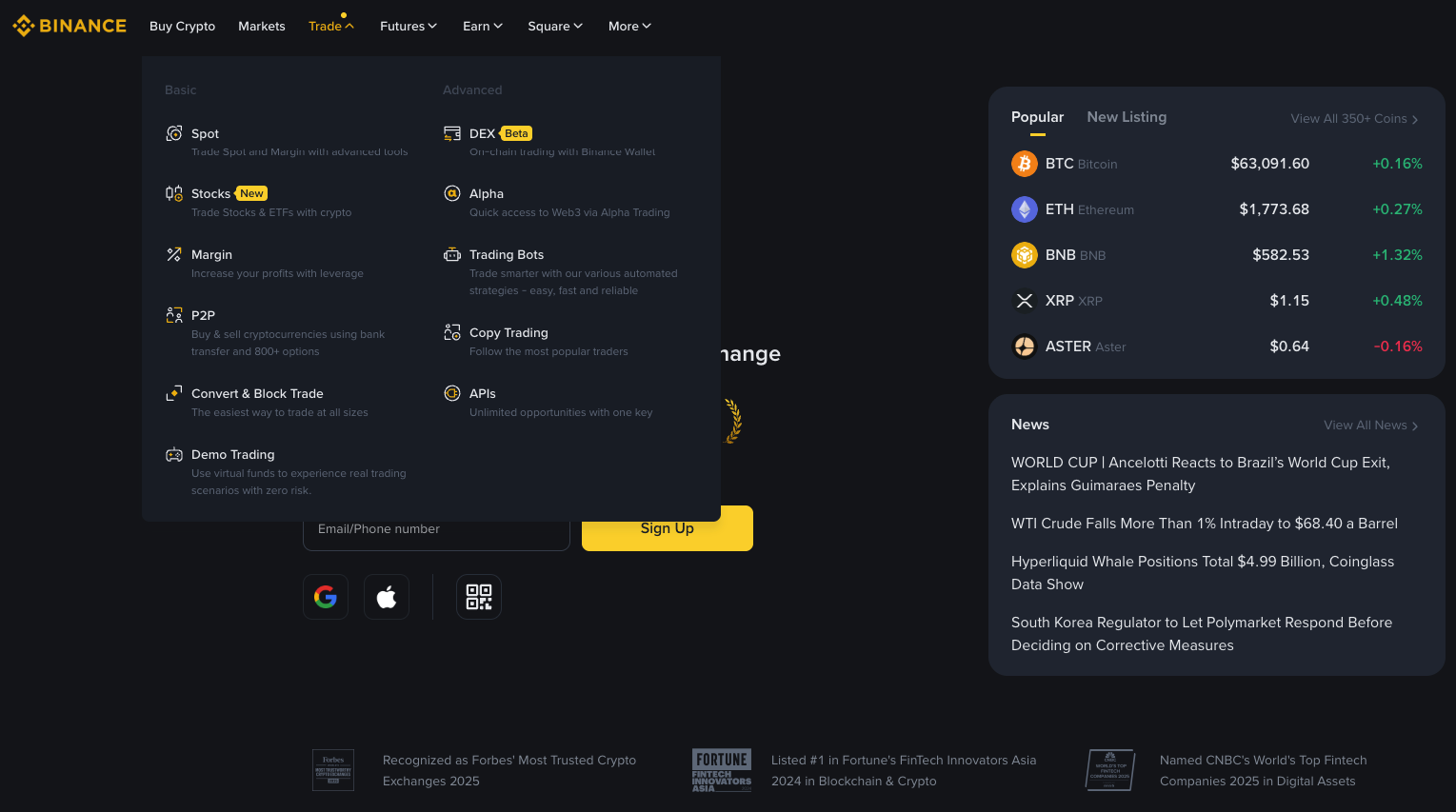
Binance remains difficult to ignore because liquidity, market breadth, and product coverage still matter to a large share of crypto traders.
Binance Academy’s guide to spot trading says Binance Spot supports market orders, limit orders, stop-limit orders, and OCO orders, while also positioning spot trading as a lower-risk starting point than leveraged products. CoinGecko continues to list Binance among the largest exchanges it tracks.
Why it made the list:
- deep global brand recognition
- broad asset and market coverage
- meaningful liquidity advantage in many trading pairs
What looks credible:
- product documentation is extensive
- spot trading features are well documented and not hidden behind vague marketing language
What remains limited or risky:
- availability varies by jurisdiction, which matters more here than many listicles admit
- a broad product suite can be a weakness for newer users who only needed a simpler spot platform
Who it may suit:
- readers who care most about market breadth
- active traders who want one large venue rather than several niche apps
Coincu already has a published Binance review for readers who want a platform-specific deep dive after the comparison.
3. Kraken Pro
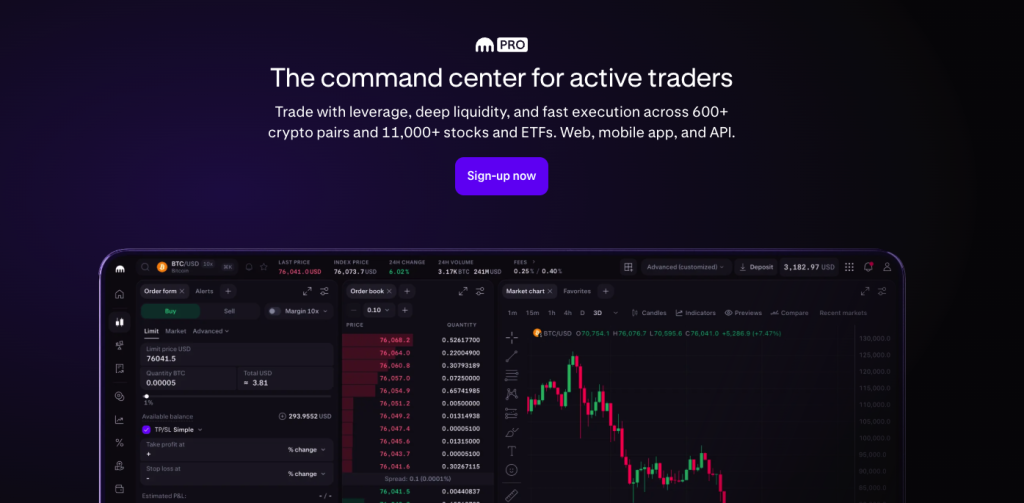
Kraken Pro is one of the cleaner inclusions on this list because the value proposition is easy to explain. It is an advanced trading platform for readers who want a more serious interface, better order tools, and solid fiat connectivity without the loudest possible product sprawl.
Kraken’s launch materials for Kraken Pro describe it as a unified platform for spot trading, margin trading, staking, and portfolio management, and say clients can trade more than 200 digital assets and 8 national currencies. CoinGecko currently gives Kraken a 10 out of 10 Trust Score.
Why it made the list:
- strong fit for active traders who still want a structured, relatively clean product story
- solid trust and reputation signals compared with smaller venues
- better fit than many mainstream apps for users who have outgrown basic buy-and-sell flows
What looks credible:
- feature positioning is explicit and documented
- it continues to show up near the top of the exchange rankings that many users already use as a shortcut
What remains limited:
- it is not the broadest narrative platform in crypto culture terms
- some users may still prefer exchanges with heavier promotional ecosystems or more experimentation around bots and copy tools
Who it may suit:
- advanced spot traders
- users who need fiat rails
- readers who want a more professional custodial exchange without leaning hardest into complexity
Readers who want the older Coincu platform page can continue to the existing Kraken review.
4. OKX
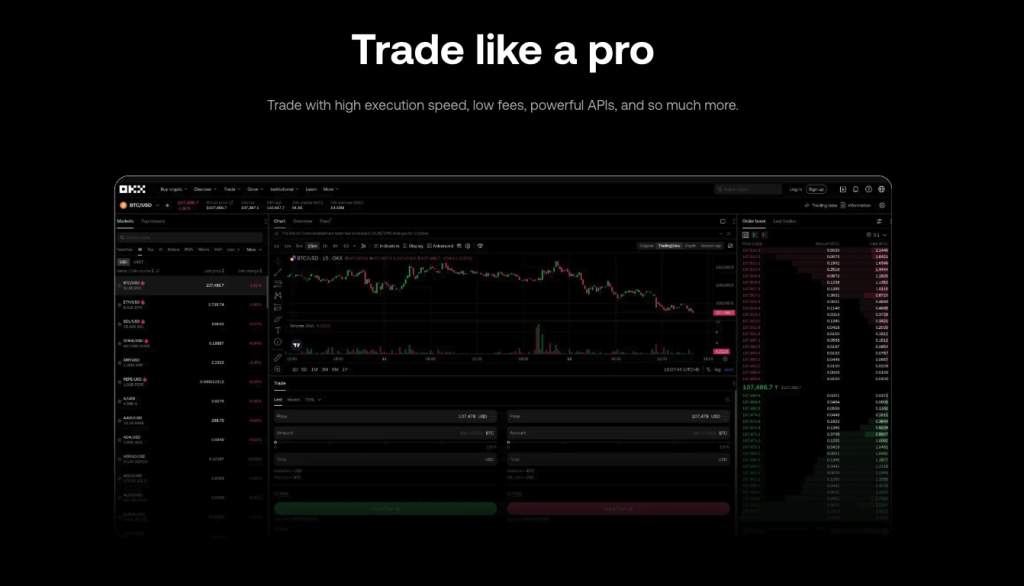
OKX made the shortlist because it represents the “power tools” end of the market more clearly than most mainstream exchange brands.
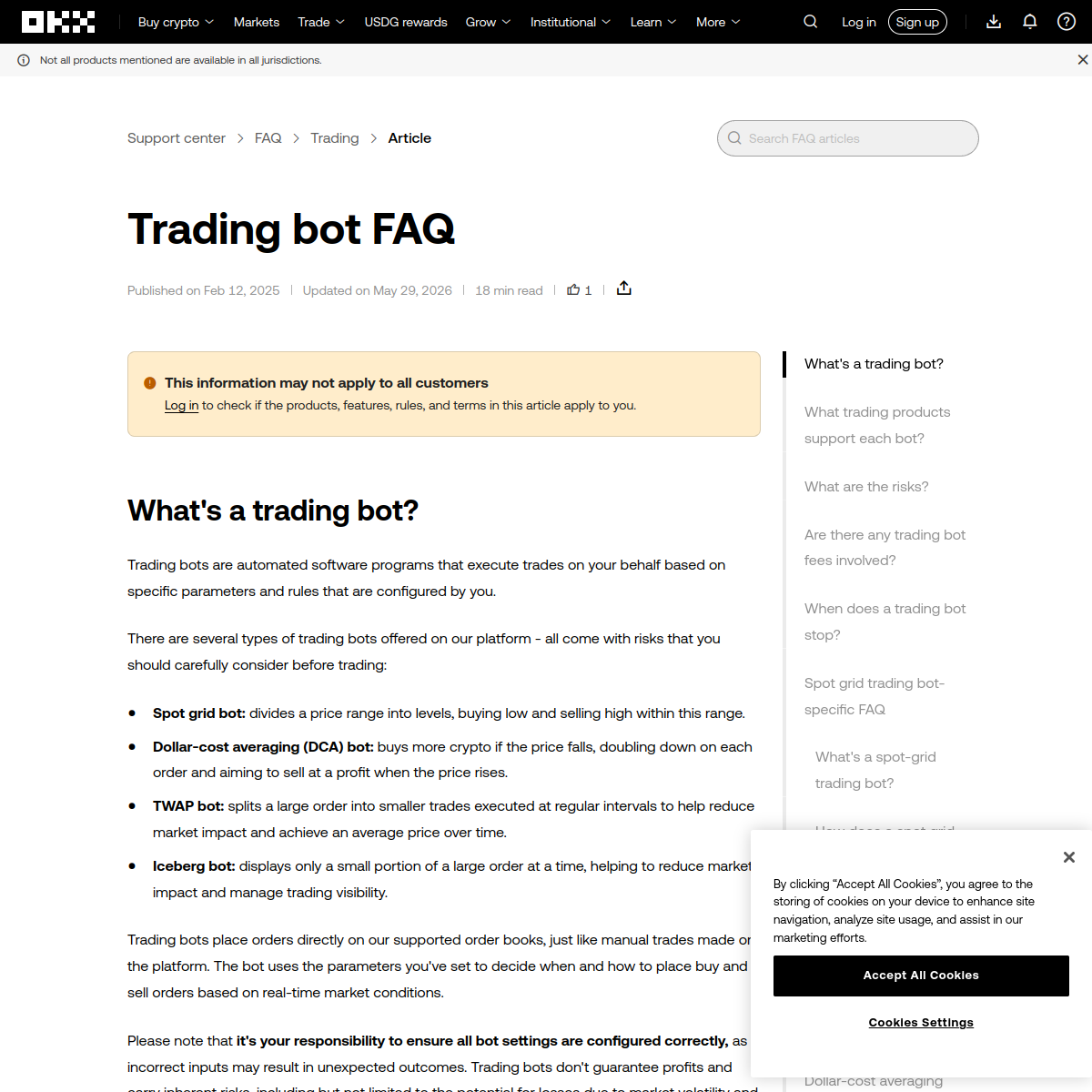
CoinGecko describes OKX as a large crypto exchange with broad trading options, advanced security measures, and Web3 integration. OKX’s trading bot FAQ documents multiple bot types, including spot grid, futures grid, DCA, smart arbitrage, TWAP, iceberg, and signal bot workflows.
Why it made the list:
- strong product depth for users who want more than plain spot trading
- automation options are more mature than what many basic exchanges provide
- useful for readers who already know they want a denser toolkit
What looks credible:
- bot categories and usage models are documented clearly
- it sits in the part of the exchange market where feature depth is a real differentiator
What remains limited or risky:
- more tools do not automatically mean better outcomes
- newer traders often underestimate how much operational complexity adds to trading mistakes
Who it may suit:
- experienced traders
- users comparing automated strategies
- readers who want both centralized exchange access and some Web3 adjacency
Coincu also has an older OKX review that can support internal linking from this page.
5. Bybit
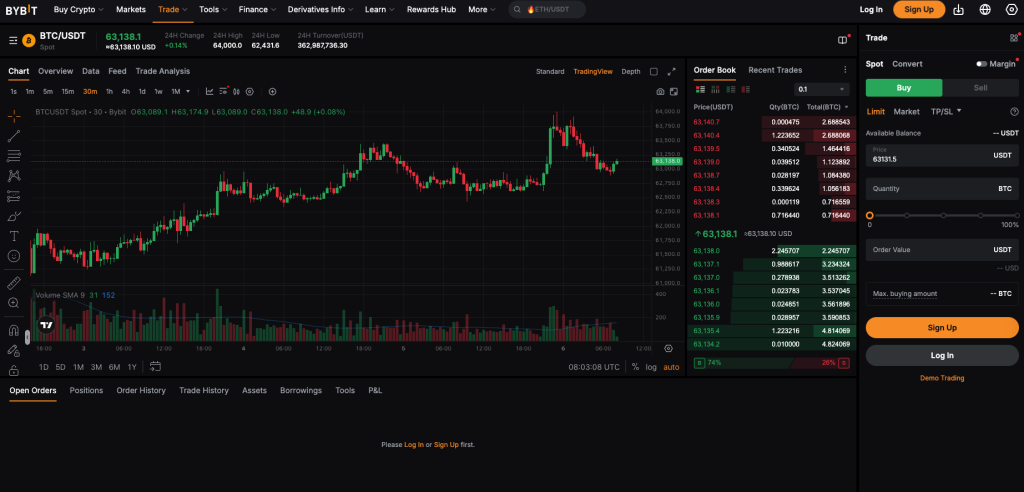
Bybit belongs on the list because it serves traders who want a faster path from spot trading into a more active multi-product workflow.
CoinGecko currently gives Bybit a 9 out of 10 Trust Score. Bybit’s own spot margin FAQ says spot margin trading is available through its Unified Trading Account and that users can borrow against spot collateral, with more than 200 cryptocurrencies available for spot margin borrowing.
Why it made the list:
- broad fit for active traders who do not want a beginner-first interface
- more natural step-up path from spot into margin-style workflows
- strong relevance for readers who trade frequently and care about execution flexibility
What looks credible:
- the margin product is documented directly rather than described vaguely
- it still holds meaningful visibility in exchange comparison ecosystems
What remains limited or risky:
- once users move beyond spot, the risk profile changes fast
- many readers searching for “top crypto trading platforms” really need a spot-first explanation, not a subtle push toward leverage
Who it may suit:
- active traders
- altcoin-focused users
- readers who understand the difference between spot and leveraged products
Coincu’s existing Bybit review can serve as the natural internal follow-up page.
6. Uniswap
Uniswap is the most important non-custodial inclusion on this list because it prevents the article from pretending every serious trader wants a custodial exchange account.
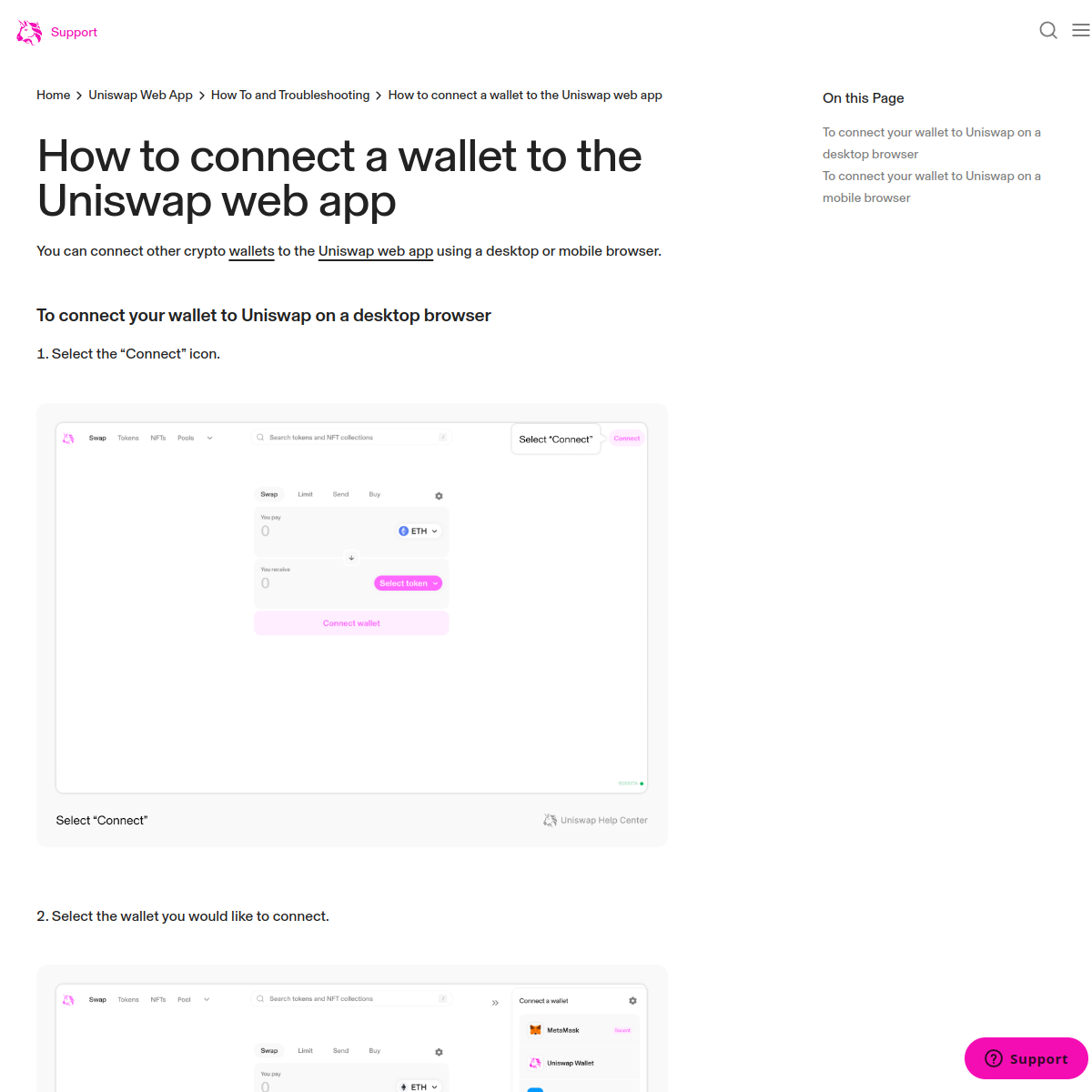
Uniswap’s wallet connection guide explains how users connect a wallet to the web app and trade directly from that wallet. Uniswap’s trade routing documentation also says default routing can use UniswapX and liquidity from v2, v3, and v4 pools where eligible.
Why it made the list:
- best fit on this shortlist for readers who prioritize self-custody
- important counterweight to centralized exchange comparisons
- increasingly relevant because DEX market share has grown meaningfully over the last two years
What looks credible:
- the workflow is clear and directly documented
- it reflects a real structural shift, not just a niche preference
What remains limited or risky:
- wallet responsibility, routing complexity, and network costs are real friction points
- it is not a drop-in substitute for every centralized exchange use case
Who it may suit:
- onchain traders
- DeFi-native users
- readers who care more about self-custody than account convenience
Coincu already has a related Uniswap V3 review, and for readers comparing exchange design models more conceptually, the older explainer on AMM vs OrderBook is still useful context.
How To Choose Between A CEX And A DEX
If you are still deciding between a centralized exchange and a decentralized exchange, the cleanest split is this:
- choose a CEX if you want easier onboarding, simpler fiat access, and a more familiar trading interface
- choose a DEX if you want self-custody, wallet-native execution, and less dependence on a centralized platform holding your funds
That does not mean one model is automatically better. It means they solve different problems.
For example:
- Coinbase Advanced and Kraken Pro are better fits for readers who want a cleaner transition from cash to crypto trading
- Binance, OKX, and Bybit suit users who want broader product menus and more active trading tools
- Uniswap suits users who already understand wallet workflows and want to keep direct control of assets
Red Flags Before Signing Up To Any Platform
Even strong listicles can fail readers if they only talk about upside. These are the practical red flags worth checking before choosing any crypto trading platform:
- unclear fee documentation
- weak product separation between spot and leveraged products
- poor explanation of custody responsibilities
- overreliance on referral-style marketing instead of clear documentation
- no obvious help-center or product documentation for trading workflows
- jurisdiction ambiguity for users who assume a platform is available everywhere
If a page tries to rank for “best crypto trading platform” but avoids these trade-offs, it is probably more promotional than useful.
FAQ
What is the best crypto trading platform for beginners?
For many readers, Coinbase Advanced is the easiest starting point among the platforms on this list because it offers a recognizable interface and a more gradual path into active trading. But “best” still depends on whether you prioritize simplicity, fees, or self-custody.
Which crypto trading platform has the lowest fees?
There is no universal answer because fee schedules vary by product, volume tier, and trading behavior. Binance, OKX, and Bybit may look cheaper in some workflows, while Coinbase Advanced or Kraken Pro may still be the better overall fit for readers who care more about trust, simplicity, or fiat access.
Is Uniswap better than a centralized exchange?
Not categorically. Uniswap is better for readers who want self-custody and onchain execution. A centralized exchange is often better for readers who want easier onboarding, simpler account recovery, or direct fiat trading access.
Why is Hyperliquid not on this list?
Hyperliquid is relevant, especially for users focused on onchain perpetual trading. It did not make this specific shortlist because the target keyword here is broader and the dominant search intent still favors multi-use trading platforms with clearer spot-trading or beginner-comparison relevance.
Are crypto trading apps and crypto exchanges the same thing?
Often, but not always. Many of the top crypto trading platforms now combine a mobile app, web interface, and multiple trading products under one brand. The more important distinction is usually custody model and product depth, not whether the user starts on mobile or desktop.
Final Takeaway
The top crypto trading platforms in 2026 are not competing on one axis.
Coinbase Advanced is the cleanest mainstream bridge into active trading. Binance still matters for liquidity and market breadth. Kraken Pro remains one of the better fits for advanced traders who want a more structured experience. OKX stands out for automation. Bybit fits users who want a more active multi-product workflow. Uniswap is the clearest self-custody option on this list.
That is why a useful comparison page should not pretend one platform is “best” for everyone. The better result is helping readers identify which custody model, workflow, and risk profile actually fit them.
Sources
- CoinGecko Exchanges: https://www.coingecko.com/en/exchanges
- CoinGecko Trust Score Methodology: https://support.coingecko.com/hc/en-us/articles/36442561461657-Trust-Score-Methodology
- CoinGecko 2026 Q1 Crypto Industry Report: https://www.coingecko.com/research/publications/2026-q1-crypto-industry-report
- CoinGecko 2026 CEX and DEX Trading Activity Report: https://www.coingecko.com/research/publications/cex-dex-trading-activity-report-2026
- Coinbase Advanced: https://help.coinbase.com/en/coinbase/trading-and-funding/advanced-trade/what-is-advanced-trade
- Binance Spot Trading Guide: https://academy.binance.com/articles/your-guide-to-binance-spot-trading
- Kraken Pro announcement: https://www.kraken.com/press/releases/announcing-kraken-pro
- OKX Trading Bot FAQ: https://www.okx.com/en-us/help/trading-bot-faq-au
- Bybit Spot Margin FAQ: https://www.bybit.com/en/help-center/article/FAQ-Spot-Margin-Trading
- Uniswap wallet connection guide: https://support.uniswap.org/hc/en-us/articles/8121191796749-How-to-connect-a-wallet-to-the-Uniswap-web-app
- Uniswap trade routing guide: https://support.uniswap.org/hc/en-us/articles/27362707722637-How-to-change-default-trade-options
Disclosure
This article is for informational purposes only and does not constitute investment advice. Exchange availability, fees, supported assets, and product access can change by region and over time, so readers should verify the latest platform disclosures before opening an account or placing trades.
No tags available.


Other Posts







- China, US Conclude Trade Talks with Focus on Cooperation
- Crypto Weekly: NYSE Backs OKX, Kraken Gets Fed Access, BTC Sells
- Court Upholds Fed’s Rejection of Custodia Bank’s Request
- DeriW Launches Edge Hour Trading Competition Platform for Derivatives Traders
- Former CFO Convicted for $35M Fraudulent Crypto Investment
- Michael Saylor Denies Bitcoin Sell-Off Amid Large BTC Transfer
- Buy Dogecoin on eToro: Step-by-Step Guide for Beginners (2024)
- Kazakhstan Explores Crypto Reserves Backed by National Funds
- JPMorgan Increases Holdings in BlackRock’s Bitcoin ETF
- Nordea Bank Introduces Bitcoin ETP Trading for Nordic Customers
- XRP Spot ETF Launches on Nasdaq Amid Market Fluctuations
- Peter Schiff Challenges Michael Saylor on MSTR’s Business Model
- Thailand Orders Worldcoin to Delete 1.2 Million Biometric Records
- UK Proposes New DeFi Tax Framework to Ease User Burden
- WLFI Under Fire: Analyst Warns Hyperliquid Could Be Next
- Ancient Ethereum Whale Moves $1.19 Billion After Decade
- BlackRock Receives Large Crypto Transfers from Coinbase
- SEC Scrutiny on ALT5 Sigma’s Leadership Disclosure Timing
- Yala Injects $5.5 Million Amid Recovery Efforts
- Radiant Capital Faces $50M Loss in Major Security Breach
- China, US Conclude Trade Talks with Focus on Cooperation
- Crypto Weekly: NYSE Backs OKX, Kraken Gets Fed Access, BTC Sells
- Court Upholds Fed’s Rejection of Custodia Bank’s Request
- DeriW Launches Edge Hour Trading Competition Platform for Derivatives Traders
- Former CFO Convicted for $35M Fraudulent Crypto Investment
- Michael Saylor Denies Bitcoin Sell-Off Amid Large BTC Transfer
- Buy Dogecoin on eToro: Step-by-Step Guide for Beginners (2024)
- Kazakhstan Explores Crypto Reserves Backed by National Funds
- JPMorgan Increases Holdings in BlackRock’s Bitcoin ETF
- Nordea Bank Introduces Bitcoin ETP Trading for Nordic Customers
- XRP Spot ETF Launches on Nasdaq Amid Market Fluctuations
- Peter Schiff Challenges Michael Saylor on MSTR’s Business Model
- Thailand Orders Worldcoin to Delete 1.2 Million Biometric Records
- UK Proposes New DeFi Tax Framework to Ease User Burden
- WLFI Under Fire: Analyst Warns Hyperliquid Could Be Next
- Ancient Ethereum Whale Moves $1.19 Billion After Decade
- BlackRock Receives Large Crypto Transfers from Coinbase
- SEC Scrutiny on ALT5 Sigma’s Leadership Disclosure Timing
- Yala Injects $5.5 Million Amid Recovery Efforts
- Radiant Capital Faces $50M Loss in Major Security Breach
- China, US Conclude Trade Talks with Focus on Cooperation
- Crypto Weekly: NYSE Backs OKX, Kraken Gets Fed Access, BTC Sells
- Court Upholds Fed’s Rejection of Custodia Bank’s Request
- DeriW Launches Edge Hour Trading Competition Platform for Derivatives Traders
- Former CFO Convicted for $35M Fraudulent Crypto Investment
- Michael Saylor Denies Bitcoin Sell-Off Amid Large BTC Transfer
- Buy Dogecoin on eToro: Step-by-Step Guide for Beginners (2024)
- Kazakhstan Explores Crypto Reserves Backed by National Funds
- JPMorgan Increases Holdings in BlackRock’s Bitcoin ETF
- Nordea Bank Introduces Bitcoin ETP Trading for Nordic Customers
- XRP Spot ETF Launches on Nasdaq Amid Market Fluctuations
- Peter Schiff Challenges Michael Saylor on MSTR’s Business Model
- Thailand Orders Worldcoin to Delete 1.2 Million Biometric Records
- UK Proposes New DeFi Tax Framework to Ease User Burden
- WLFI Under Fire: Analyst Warns Hyperliquid Could Be Next
- Ancient Ethereum Whale Moves $1.19 Billion After Decade
- BlackRock Receives Large Crypto Transfers from Coinbase
- SEC Scrutiny on ALT5 Sigma’s Leadership Disclosure Timing
- Yala Injects $5.5 Million Amid Recovery Efforts
- Radiant Capital Faces $50M Loss in Major Security Breach


ABcripto Says Brazil’s 24-Hour Stablecoin Lock Proposal Is Disproportionate

Busan Bank Completes Korean Won Stablecoin Infrastructure Pilot on Kaia Chain