An early Lido investor deposited 4.3 million LDO to Kraken after holding the tokens for roughly five years, an exchange transfer that has drawn attention because large deposits from long-dormant wallets can shift how much LDO supply becomes available for trading.
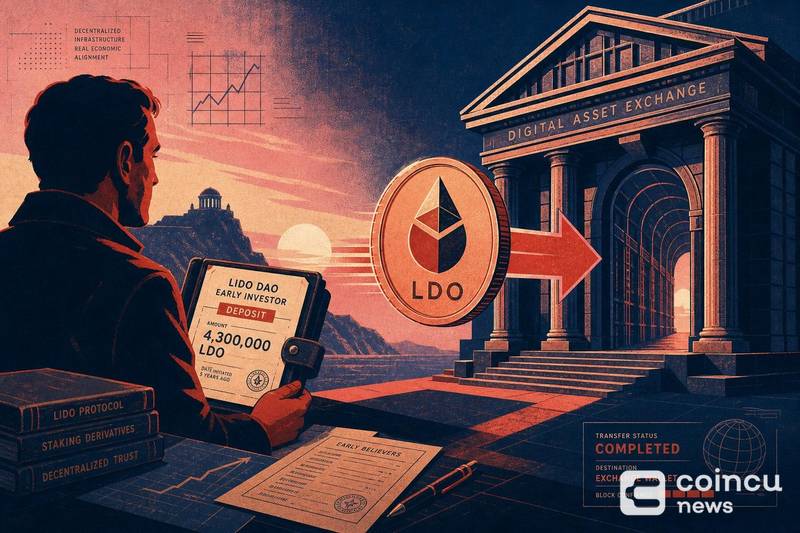
The movement was tracked through the wallet’s on-chain history, which shows LDO tokens sent to an exchange-associated address, according to Ethereum blockchain records. The transfer routed the tokens to Kraken. For related coverage, see Lido Proposes Up to $5.8M in stETH for Kelp Funding Gap.
The activity of this holder can be reviewed through the LDO token contract, which logs the address’s LDO balance and transaction record. A deposit to an exchange is not the same as a confirmed sale, and the on-chain data alone does not reveal intent. For related coverage, see ether.fi Partners with Nexus Mutual to Protect Against ETH Slashing at Institutional Scale.
Why a long-held LDO deposit draws attention
Movements from wallets that have sat idle for years tend to attract scrutiny because they can add to the LDO supply sitting on exchanges, where tokens are more readily sold. That potential supply shift is the main reason such transfers are watched.
Framing the wallet as an early investor sharpens that interest, since holders from a project’s earliest phase are often assumed to be sitting on large unrealized positions. Similar interpretations followed when KR1 transferred 3.7 million LDO to Kraken, another large early-holder move to the same exchange.
None of this confirms the holder’s motive. A deposit can precede a sale, but it can equally reflect custody changes, internal reshuffling, or over-the-counter arrangements that never touch the open order book.
What traders can monitor next
The measurable follow-through signals are whether additional tokens leave the wallet and whether exchange balances continue to climb. A single deposit does not, on its own, establish a trend.
Whether the market reacts typically depends on further wallet activity and broader exchange inflow context rather than one transaction. Traders watching LDO can track the same address for any subsequent transfers before drawing conclusions about selling pressure.
How this fits the broader Lido picture
LDO is the governance token tied to Lido, one of the most recognized names in decentralized finance and a leading protocol for Ethereum staking. Token-holder behavior in governance assets is read through governance, liquidity, and sentiment lenses.
Large-holder movement remains a recurring theme around the token. Lido’s own treasury mechanics have also kept LDO flows in focus, including when the Growth Committee wallet received 4.82 million LDO during a repurchase execution.
FAQ about the LDO deposit to Kraken
Does depositing LDO to Kraken mean the investor sold? No. A deposit places tokens on an exchange but does not confirm a trade. On-chain data shows the movement, not the intent behind it.
Why is the five-year holding period notable? A wallet that held through multiple cycles before moving tokens is treated as a long-term position, which is why its activity is watched more closely than routine transfers.
What should traders monitor after a large exchange deposit? Further movements from the same wallet and rising exchange balances are the concrete signals to track before assessing any impact on supply.
What is LDO in the Lido ecosystem? LDO is the governance token of Lido, a DeFi protocol known for liquid staking, and it is used in decisions over the protocol’s direction.
Disclaimer: This article is for informational purposes only and does not constitute financial or investment advice. Cryptocurrency and digital asset markets carry significant risk. Always do your own research before making decisions.
No tags available.


Other Posts








- China, US Conclude Trade Talks with Focus on Cooperation
- Crypto Weekly: NYSE Backs OKX, Kraken Gets Fed Access, BTC Sells
- Court Upholds Fed’s Rejection of Custodia Bank’s Request
- Former CFO Convicted for $35M Fraudulent Crypto Investment
- DeriW Launches Edge Hour Trading Competition Platform for Derivatives Traders
- Michael Saylor Denies Bitcoin Sell-Off Amid Large BTC Transfer
- Buy Dogecoin on eToro: Step-by-Step Guide for Beginners (2024)
- Kazakhstan Explores Crypto Reserves Backed by National Funds
- JPMorgan Increases Holdings in BlackRock’s Bitcoin ETF
- Nordea Bank Introduces Bitcoin ETP Trading for Nordic Customers
- XRP Spot ETF Launches on Nasdaq Amid Market Fluctuations
- Peter Schiff Challenges Michael Saylor on MSTR’s Business Model
- Thailand Orders Worldcoin to Delete 1.2 Million Biometric Records
- UK Proposes New DeFi Tax Framework to Ease User Burden
- WLFI Under Fire: Analyst Warns Hyperliquid Could Be Next
- Ancient Ethereum Whale Moves $1.19 Billion After Decade
- BlackRock Receives Large Crypto Transfers from Coinbase
- SEC Scrutiny on ALT5 Sigma’s Leadership Disclosure Timing
- Yala Injects $5.5 Million Amid Recovery Efforts
- Radiant Capital Faces $50M Loss in Major Security Breach
- China, US Conclude Trade Talks with Focus on Cooperation
- Crypto Weekly: NYSE Backs OKX, Kraken Gets Fed Access, BTC Sells
- Court Upholds Fed’s Rejection of Custodia Bank’s Request
- Former CFO Convicted for $35M Fraudulent Crypto Investment
- DeriW Launches Edge Hour Trading Competition Platform for Derivatives Traders
- Michael Saylor Denies Bitcoin Sell-Off Amid Large BTC Transfer
- Buy Dogecoin on eToro: Step-by-Step Guide for Beginners (2024)
- Kazakhstan Explores Crypto Reserves Backed by National Funds
- JPMorgan Increases Holdings in BlackRock’s Bitcoin ETF
- Nordea Bank Introduces Bitcoin ETP Trading for Nordic Customers
- XRP Spot ETF Launches on Nasdaq Amid Market Fluctuations
- Peter Schiff Challenges Michael Saylor on MSTR’s Business Model
- Thailand Orders Worldcoin to Delete 1.2 Million Biometric Records
- UK Proposes New DeFi Tax Framework to Ease User Burden
- WLFI Under Fire: Analyst Warns Hyperliquid Could Be Next
- Ancient Ethereum Whale Moves $1.19 Billion After Decade
- BlackRock Receives Large Crypto Transfers from Coinbase
- SEC Scrutiny on ALT5 Sigma’s Leadership Disclosure Timing
- Yala Injects $5.5 Million Amid Recovery Efforts
- Radiant Capital Faces $50M Loss in Major Security Breach
- China, US Conclude Trade Talks with Focus on Cooperation
- Crypto Weekly: NYSE Backs OKX, Kraken Gets Fed Access, BTC Sells
- Court Upholds Fed’s Rejection of Custodia Bank’s Request
- Former CFO Convicted for $35M Fraudulent Crypto Investment
- DeriW Launches Edge Hour Trading Competition Platform for Derivatives Traders
- Michael Saylor Denies Bitcoin Sell-Off Amid Large BTC Transfer
- Buy Dogecoin on eToro: Step-by-Step Guide for Beginners (2024)
- Kazakhstan Explores Crypto Reserves Backed by National Funds
- JPMorgan Increases Holdings in BlackRock’s Bitcoin ETF
- Nordea Bank Introduces Bitcoin ETP Trading for Nordic Customers
- XRP Spot ETF Launches on Nasdaq Amid Market Fluctuations
- Peter Schiff Challenges Michael Saylor on MSTR’s Business Model
- Thailand Orders Worldcoin to Delete 1.2 Million Biometric Records
- UK Proposes New DeFi Tax Framework to Ease User Burden
- WLFI Under Fire: Analyst Warns Hyperliquid Could Be Next
- Ancient Ethereum Whale Moves $1.19 Billion After Decade
- BlackRock Receives Large Crypto Transfers from Coinbase
- SEC Scrutiny on ALT5 Sigma’s Leadership Disclosure Timing
- Yala Injects $5.5 Million Amid Recovery Efforts
- Radiant Capital Faces $50M Loss in Major Security Breach


Dash Launches Orchard Privacy Pool on Mainnet With 1-Second Confirmations

ESMA Adds 14 Crypto Companies, Including Ripple Payments Europe, to MiCA Registration List
ether.fi Partners with Nexus Mutual to Protect Against ETH Slashing at Institutional Scale