KR1, a European digital asset investment company, has transferred 3.7 million LDO tokens to the Kraken exchange, drawing attention from on-chain watchers tracking large governance-token movements to centralized platforms.
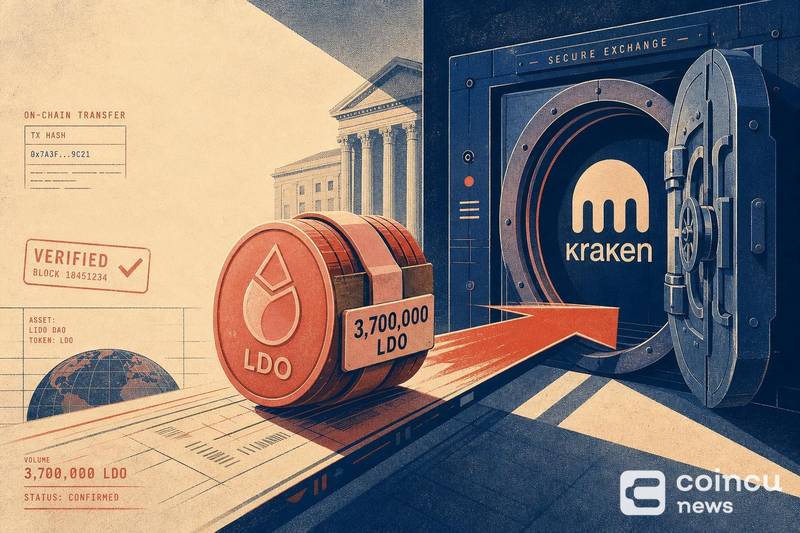
The transfer was flagged by on-chain tracking accounts, with Spot On Chain highlighting the movement of tokens from KR1’s wallet to Kraken. The sending address on Etherscan has been linked to KR1, a publicly listed firm that holds positions across multiple blockchain protocols.
Large token deposits to centralized exchanges are routinely monitored because they can precede sell orders. When a fund or institutional holder moves a significant allocation to an exchange, market participants often interpret it as a signal of potential liquidation, similar to how BlackRock’s recent transfers of BTC and ETH to Coinbase prompted similar scrutiny. For related coverage, see Circle Issues Additional 250 Million USDC on Solana.
Why exchange-bound LDO draws attention
A transfer to Kraken does not confirm a sale. Institutional holders deposit tokens to exchanges for multiple reasons, including portfolio rebalancing, OTC trade settlement, liquidity provisioning, or collateral management. For related coverage, see Fintech Revolution Summit Malaysia 2026 Opens Sponsorship, Speaking, and Exhibition Opportunities.
That said, 3.7 million LDO represents a sizable position in a governance token with moderate daily trading volume. Even the perception of incoming sell pressure can shift short-term sentiment, particularly for altcoins where order book depth is thinner than for major assets like Bitcoin or Ethereum. For related coverage, see 40.54M USDT Transferred Out of Binance, Monitoring Data Shows.
Whale wallet activity in governance tokens tends to generate outsized narrative impact. Traders and automated alert systems flag these movements in real time, and the resulting attention can influence price action before any actual selling occurs. This pattern has repeated across multiple tokens, as seen with large USDT movements out of Binance that triggered market speculation. For related coverage, see Spotify asks Kalshi, Polymarket to remove logos amid settlement dispute.
Short-term implications versus long-term positioning
If KR1 executes a full sale of the transferred tokens, it would add supply to Kraken’s LDO order books. The immediate price impact would depend on how the sale is structured, whether through market orders, limit orders, or OTC arrangements that bypass public order books entirely.
Market participants watching for confirmation should monitor the Kraken-linked deposit address for subsequent movement. If the tokens remain on the exchange without corresponding sell activity, it may indicate the deposit serves a non-liquidation purpose.
Broader crypto market conditions will also determine how the LDO market absorbs or reacts to the transfer. In risk-on environments, large deposits are often absorbed without lasting price disruption. In weaker markets, they can accelerate existing downward pressure.
What LDO represents
LDO is the governance token of Lido DAO, one of the largest liquid staking protocols in decentralized finance. Lido allows users to stake Ethereum and other assets while retaining liquidity through derivative tokens.
Because LDO grants voting power over protocol decisions, including fee structures, operator sets, and treasury allocations, large movements of the token attract scrutiny beyond ordinary transfer activity. A significant holder reducing their LDO position could shift governance dynamics in addition to market price.
KR1’s involvement with Lido dates to its broader strategy of holding governance positions across DeFi protocols. Whether this transfer represents a strategic exit, a partial rebalancing, or routine treasury operations remains unconfirmed at the time of writing.
FAQ
Did KR1 sell the LDO?
Not necessarily. Transferring tokens to an exchange is a prerequisite for selling, but it does not confirm a sale took place. The tokens may be held on Kraken for other purposes, including collateral or future trading.
What is LDO?
LDO is the governance token of Lido DAO, a decentralized protocol that provides liquid staking services primarily for Ethereum. Holders use LDO to vote on protocol upgrades and treasury decisions.
Why do traders watch exchange inflows?
When tokens move from private wallets to exchange wallets, it often signals intent to trade or sell. Large inflows can increase the available supply on an exchange’s order book, creating potential downward pressure on price if the holder sells.
Additional source references: source document 1.
Disclaimer: This article is for informational purposes only and does not constitute financial or investment advice. Cryptocurrency and digital asset markets carry significant risk. Always do your own research before making decisions.
No tags available.


Other Posts








- China, US Conclude Trade Talks with Focus on Cooperation
- Crypto Weekly: NYSE Backs OKX, Kraken Gets Fed Access, BTC Sells
- Court Upholds Fed’s Rejection of Custodia Bank’s Request
- Former CFO Convicted for $35M Fraudulent Crypto Investment
- DeriW Launches Edge Hour Trading Competition Platform for Derivatives Traders
- Michael Saylor Denies Bitcoin Sell-Off Amid Large BTC Transfer
- Buy Dogecoin on eToro: Step-by-Step Guide for Beginners (2024)
- Kazakhstan Explores Crypto Reserves Backed by National Funds
- JPMorgan Increases Holdings in BlackRock’s Bitcoin ETF
- Nordea Bank Introduces Bitcoin ETP Trading for Nordic Customers
- XRP Spot ETF Launches on Nasdaq Amid Market Fluctuations
- Peter Schiff Challenges Michael Saylor on MSTR’s Business Model
- Thailand Orders Worldcoin to Delete 1.2 Million Biometric Records
- UK Proposes New DeFi Tax Framework to Ease User Burden
- WLFI Under Fire: Analyst Warns Hyperliquid Could Be Next
- Ancient Ethereum Whale Moves $1.19 Billion After Decade
- BlackRock Receives Large Crypto Transfers from Coinbase
- SEC Scrutiny on ALT5 Sigma’s Leadership Disclosure Timing
- Yala Injects $5.5 Million Amid Recovery Efforts
- Radiant Capital Faces $50M Loss in Major Security Breach
- China, US Conclude Trade Talks with Focus on Cooperation
- Crypto Weekly: NYSE Backs OKX, Kraken Gets Fed Access, BTC Sells
- Court Upholds Fed’s Rejection of Custodia Bank’s Request
- Former CFO Convicted for $35M Fraudulent Crypto Investment
- DeriW Launches Edge Hour Trading Competition Platform for Derivatives Traders
- Michael Saylor Denies Bitcoin Sell-Off Amid Large BTC Transfer
- Buy Dogecoin on eToro: Step-by-Step Guide for Beginners (2024)
- Kazakhstan Explores Crypto Reserves Backed by National Funds
- JPMorgan Increases Holdings in BlackRock’s Bitcoin ETF
- Nordea Bank Introduces Bitcoin ETP Trading for Nordic Customers
- XRP Spot ETF Launches on Nasdaq Amid Market Fluctuations
- Peter Schiff Challenges Michael Saylor on MSTR’s Business Model
- Thailand Orders Worldcoin to Delete 1.2 Million Biometric Records
- UK Proposes New DeFi Tax Framework to Ease User Burden
- WLFI Under Fire: Analyst Warns Hyperliquid Could Be Next
- Ancient Ethereum Whale Moves $1.19 Billion After Decade
- BlackRock Receives Large Crypto Transfers from Coinbase
- SEC Scrutiny on ALT5 Sigma’s Leadership Disclosure Timing
- Yala Injects $5.5 Million Amid Recovery Efforts
- Radiant Capital Faces $50M Loss in Major Security Breach
- China, US Conclude Trade Talks with Focus on Cooperation
- Crypto Weekly: NYSE Backs OKX, Kraken Gets Fed Access, BTC Sells
- Court Upholds Fed’s Rejection of Custodia Bank’s Request
- Former CFO Convicted for $35M Fraudulent Crypto Investment
- DeriW Launches Edge Hour Trading Competition Platform for Derivatives Traders
- Michael Saylor Denies Bitcoin Sell-Off Amid Large BTC Transfer
- Buy Dogecoin on eToro: Step-by-Step Guide for Beginners (2024)
- Kazakhstan Explores Crypto Reserves Backed by National Funds
- JPMorgan Increases Holdings in BlackRock’s Bitcoin ETF
- Nordea Bank Introduces Bitcoin ETP Trading for Nordic Customers
- XRP Spot ETF Launches on Nasdaq Amid Market Fluctuations
- Peter Schiff Challenges Michael Saylor on MSTR’s Business Model
- Thailand Orders Worldcoin to Delete 1.2 Million Biometric Records
- UK Proposes New DeFi Tax Framework to Ease User Burden
- WLFI Under Fire: Analyst Warns Hyperliquid Could Be Next
- Ancient Ethereum Whale Moves $1.19 Billion After Decade
- BlackRock Receives Large Crypto Transfers from Coinbase
- SEC Scrutiny on ALT5 Sigma’s Leadership Disclosure Timing
- Yala Injects $5.5 Million Amid Recovery Efforts
- Radiant Capital Faces $50M Loss in Major Security Breach

CFTC Urges Prediction Markets to Revise Faulty Incentive Filings

After Coldcard Hack, $15 Billion in Bitcoin Was Moved: What It Means

Zerohash Rebuffed in U.S. Trust Bank Bid as Crypto Charter Scrutiny Deepens
ForumPay Expands Payment Infrastructure with New Card and Bank Transfer Acceptance Solution

Newest Assets, Improved User Promotions & Much Greater Crypto Experience_ Xxkk Trade Exchange Reinforces Its Trade Environment