Korean Exchange Activates Program Trading Suspension for KOSPI
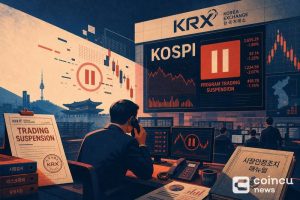
The Korea Exchange activated a KOSPI program trading suspension on June 25, 2026, halting bid-side program orders for five minutes after the benchmark index surged more than 5% at the open on a chip-led rally. The move is a market-structure event that investors across South Korea and broader risk markets are tracking closely.
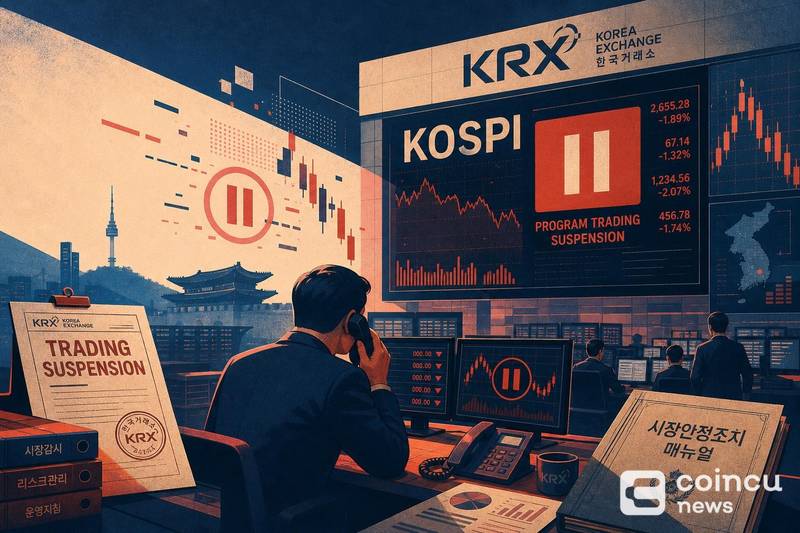
The action was a buy-side sidecar, an exchange-level trading control triggered by an unusually sharp upward move rather than a company earnings or news event. It applies to program trading in KOSPI-listed shares and is separate from a full market-wide circuit breaker. For related coverage, see Bybit Alpha and Byreal List SKHY for Trading: What to Know.
Yonhap reported that the KOSPI stood at 8,902.97, up 431.95 points or 5.1%, as of 9:09 a.m. local time, with program trading for KOSPI-listed shares suspended for five minutes shortly after the market opened. The surge followed concentrated positioning in AI-chip names including Samsung Electronics and SK Hynix. For related coverage, see Toss and Optimism Explore Korean Won Stablecoin, Plan OP Stack Test.
This was not the first time the exchange reached for its stabilization toolkit during the recent bout of volatility, and it follows earlier instances where the Korea Exchange activated its sidecar mechanism amid market turbulence.
What a Program Trading Suspension Means for KOSPI
Program trading refers to large, automated basket orders that execute across many stocks at once, typically driven by algorithms tied to index or futures positions. When these orders move in the same direction simultaneously, they can amplify a rally or a sell-off.
A sidecar is a temporary market-control measure. Rather than freezing the entire market, it pauses one side of program trading briefly to let order flow normalize before automated baskets resume.
Under the official KRX framework, a buy-side sidecar can trigger once per day after 09:05 when KOSPI 200 futures rise 5% or more for at least one minute, suspending bid-side program trading for five minutes. The June 25 event fit that pattern precisely as futures spiked at the open.
Why the Suspension Matters to South Korean and Risk Markets
An exchange intervention on a benchmark like the KOSPI is inherently relevant to regional equity sentiment, signaling the size and speed of the underlying move. The suspension itself becomes a data point that traders watch beyond the local market.
Historical data shows the KOSPI opened June 25 at 8,703.42, hit an intraday high of 9,044.04, and closed at 8,930.30, up 5.42% on volume of 456.88M, confirming the session finished sharply higher after the temporary program-trading halt.
The move landed during a period of heightened attention on Korean market plumbing, from the regulatory scrutiny of leveraged retail products to the recent slide in local crypto activity, where South Korea crypto exchange volume fell 89% year-on-year. Any crypto linkage to the equity spike remains conditional rather than definitive.
On that front, the crypto reaction was muted. Bitcoin traded at $64,900, down about 1.3% over 24 hours, with the Fear & Greed Index at 28, classified as Fear, pointing to a risk-off backdrop rather than a crypto-specific rebound tied to the Korean equity move.
The absence of a clean spillover matters for the contagion narrative: a sharp Korean equity rally did not translate into a matching crypto bid, underscoring that the two markets were driven by separate flows on the day. Cross-asset interest in Korean-linked tokens has continued elsewhere, as seen when Bybit Alpha and Byreal listed SKHY for trading.
What Traders Should Watch Next
The immediate monitoring point is whether the KOSPI stabilizes or sees renewed volatility that could prompt further sidecar or circuit-breaker activity, given the once-per-day limit on the buy-side sidecar.
Traders will also watch for official exchange updates and any regulatory follow-up on leveraged retail trading, an area that has drawn growing concern and that intersects with product innovation such as Polymarket’s 20x perp trading for crypto and stocks.
FAQ About the KOSPI Program Trading Suspension
What is a KOSPI program trading suspension?
It is a buy-side sidecar, a temporary five-minute pause on bid-side program trading in KOSPI-listed shares, triggered when KOSPI 200 futures jump sharply.
Why is a sidecar used?
It is a market-stabilization tool designed to slow automated basket orders during an extreme move so order flow can normalize before program trading resumes.
Does it halt all trading on the exchange?
No. It pauses only one side of program trading for five minutes and is distinct from a full market-wide circuit breaker.
Why do global traders care?
A benchmark index intervention signals the scale and speed of a market move, and traders monitor such exchange actions as a volatility signal even beyond the local equity market.
Disclaimer: This article is for informational purposes only and does not constitute financial or investment advice. Cryptocurrency and digital asset markets carry significant risk. Always do your own research before making decisions.
No tags available.


Other Posts


- China, US Conclude Trade Talks with Focus on Cooperation
- Crypto Weekly: NYSE Backs OKX, Kraken Gets Fed Access, BTC Sells
- Court Upholds Fed’s Rejection of Custodia Bank’s Request
- Former CFO Convicted for $35M Fraudulent Crypto Investment
- DeriW Launches Edge Hour Trading Competition Platform for Derivatives Traders
- Michael Saylor Denies Bitcoin Sell-Off Amid Large BTC Transfer
- Buy Dogecoin on eToro: Step-by-Step Guide for Beginners (2024)
- Kazakhstan Explores Crypto Reserves Backed by National Funds
- JPMorgan Increases Holdings in BlackRock’s Bitcoin ETF
- Nordea Bank Introduces Bitcoin ETP Trading for Nordic Customers
- XRP Spot ETF Launches on Nasdaq Amid Market Fluctuations
- Peter Schiff Challenges Michael Saylor on MSTR’s Business Model
- Thailand Orders Worldcoin to Delete 1.2 Million Biometric Records
- UK Proposes New DeFi Tax Framework to Ease User Burden
- WLFI Under Fire: Analyst Warns Hyperliquid Could Be Next
- Ancient Ethereum Whale Moves $1.19 Billion After Decade
- BlackRock Receives Large Crypto Transfers from Coinbase
- SEC Scrutiny on ALT5 Sigma’s Leadership Disclosure Timing
- Yala Injects $5.5 Million Amid Recovery Efforts
- Radiant Capital Faces $50M Loss in Major Security Breach
- China, US Conclude Trade Talks with Focus on Cooperation
- Crypto Weekly: NYSE Backs OKX, Kraken Gets Fed Access, BTC Sells
- Court Upholds Fed’s Rejection of Custodia Bank’s Request
- Former CFO Convicted for $35M Fraudulent Crypto Investment
- DeriW Launches Edge Hour Trading Competition Platform for Derivatives Traders
- Michael Saylor Denies Bitcoin Sell-Off Amid Large BTC Transfer
- Buy Dogecoin on eToro: Step-by-Step Guide for Beginners (2024)
- Kazakhstan Explores Crypto Reserves Backed by National Funds
- JPMorgan Increases Holdings in BlackRock’s Bitcoin ETF
- Nordea Bank Introduces Bitcoin ETP Trading for Nordic Customers
- XRP Spot ETF Launches on Nasdaq Amid Market Fluctuations
- Peter Schiff Challenges Michael Saylor on MSTR’s Business Model
- Thailand Orders Worldcoin to Delete 1.2 Million Biometric Records
- UK Proposes New DeFi Tax Framework to Ease User Burden
- WLFI Under Fire: Analyst Warns Hyperliquid Could Be Next
- Ancient Ethereum Whale Moves $1.19 Billion After Decade
- BlackRock Receives Large Crypto Transfers from Coinbase
- SEC Scrutiny on ALT5 Sigma’s Leadership Disclosure Timing
- Yala Injects $5.5 Million Amid Recovery Efforts
- Radiant Capital Faces $50M Loss in Major Security Breach
- China, US Conclude Trade Talks with Focus on Cooperation
- Crypto Weekly: NYSE Backs OKX, Kraken Gets Fed Access, BTC Sells
- Court Upholds Fed’s Rejection of Custodia Bank’s Request
- Former CFO Convicted for $35M Fraudulent Crypto Investment
- DeriW Launches Edge Hour Trading Competition Platform for Derivatives Traders
- Michael Saylor Denies Bitcoin Sell-Off Amid Large BTC Transfer
- Buy Dogecoin on eToro: Step-by-Step Guide for Beginners (2024)
- Kazakhstan Explores Crypto Reserves Backed by National Funds
- JPMorgan Increases Holdings in BlackRock’s Bitcoin ETF
- Nordea Bank Introduces Bitcoin ETP Trading for Nordic Customers
- XRP Spot ETF Launches on Nasdaq Amid Market Fluctuations
- Peter Schiff Challenges Michael Saylor on MSTR’s Business Model
- Thailand Orders Worldcoin to Delete 1.2 Million Biometric Records
- UK Proposes New DeFi Tax Framework to Ease User Burden
- WLFI Under Fire: Analyst Warns Hyperliquid Could Be Next
- Ancient Ethereum Whale Moves $1.19 Billion After Decade
- BlackRock Receives Large Crypto Transfers from Coinbase
- SEC Scrutiny on ALT5 Sigma’s Leadership Disclosure Timing
- Yala Injects $5.5 Million Amid Recovery Efforts
- Radiant Capital Faces $50M Loss in Major Security Breach
Odos to Shut Down and Cease Services on July 30: What Users Need to Know


Zoomex X Space Recap With Fernando Llorente and the World Cup Final Panel
CoinRabbit and GoMining Report: Managing Bitcoin Matters More Than Mining Volume