Across Protocol Attacker-Linked Address Returns 331.8 ETH After Exploit
An address linked to the Across Protocol incident has returned 331.8 ETH, an on-chain movement that shifts the episode from outright loss toward partial recovery, though it does not confirm that the matter is fully resolved.

The return was surfaced through Across Protocol’s own account on X, which tied the transfer to an attacker-linked wallet. Beyond the amount and the attribution to Across Protocol, the available record is limited, and details such as the transaction hash, timing, and destination of the funds are not independently established here. For related coverage, see Binance to Launch U/USD Spot Trading Pair on July 30, 2026.
What the 331.8 ETH Return Could Mean for Across Protocol Users
A returned transfer changes the practical framing of the incident. Instead of a story defined solely by funds leaving the protocol, there is now on-chain evidence of value moving back toward it, which is the first thing most affected users will look for. For related coverage, see Psalion Launches $50 Million Fund for Early-Stage Blockchain Startups.
It is important to separate a single return transfer from a completed resolution. Returned ETH can reduce the net shortfall, but it does not by itself confirm reimbursements, restored liquidity, or a closed investigation. Whether user exposure is meaningfully reduced depends on figures Across Protocol has not detailed in the material reviewed here. For related coverage, see HSBC Says Crypto Allocation Fell to 6% as 45% of HNW Investors Plan to Increase Holdings.
For a cross-chain protocol, credibility is closely tied to how visibly funds move after an incident. A verifiable return can support user confidence, but that confidence typically hardens only once the protocol publishes a full accounting of losses versus recovered assets.
What the On-Chain Movement Suggests About the Attacker
The wallet is described as attacker-linked rather than definitively identified, and that distinction matters. What can be stated is narrow: an address associated with the incident executed a purposeful transfer back after the fact.
The motive behind that transfer is not established. A return of funds is consistent with several explanations, including negotiation, external pressure, or white-hat-style behavior, but none of these is confirmed by the transfer alone. The verified element is the wallet movement; the reasoning behind it is inference, not fact.
Similar dynamics have played out elsewhere in DeFi. In one case, a UXLINK attacker swapped stolen DAI for ETH after an exploit, while in another, Humanity Protocol attackers moved funds toward an exchange, showing how varied post-incident wallet behavior can be.
Security Takeaways for DeFi Bridges and Cross-Chain Protocols
The update reinforces the value of continuous wallet monitoring and rapid disclosure. Across Protocol’s decision to surface the return through its official channel is the kind of prompt communication that lets users track an incident in near real time.
It also underscores treasury and recovery planning. Whether recovered ETH is applied to reimbursements or held pending investigation is a governance decision, and protocols that map this out in advance tend to respond with less friction.
Cross-chain and bridge protocols carry amplified trust pressure because they concentrate liquidity across networks. Attacker fund movements at this layer draw outsized scrutiny of monitoring and incident-response standards, which is precisely why a visible return draws attention.
FAQ: Across Protocol and the 331.8 ETH Return
Did the attacker return all stolen funds?
The available record confirms a return of ETH from an attacker-linked address, but it does not establish that this represents the full amount involved in the incident. It should be treated as a partial development unless Across Protocol states otherwise.
What is Across Protocol?
Across Protocol is a cross-chain DeFi project. The research reviewed here confirms its role as the protocol tied to this specific fund return but does not add further operational detail.
Does the return mean the incident is resolved?
No. A returned transfer and a fully resolved incident are different things. Resolution would require confirmation of total losses, recovered assets, and any reimbursement plan, none of which is established by the transfer alone.
Additional source references: source document 1, source document 2.
Disclaimer: This article is for informational purposes only and does not constitute financial or investment advice. Cryptocurrency and digital asset markets carry significant risk. Always do your own research before making decisions.
No tags available.


Other Posts








- China, US Conclude Trade Talks with Focus on Cooperation
- Crypto Weekly: NYSE Backs OKX, Kraken Gets Fed Access, BTC Sells
- Court Upholds Fed’s Rejection of Custodia Bank’s Request
- Former CFO Convicted for $35M Fraudulent Crypto Investment
- DeriW Launches Edge Hour Trading Competition Platform for Derivatives Traders
- Michael Saylor Denies Bitcoin Sell-Off Amid Large BTC Transfer
- Buy Dogecoin on eToro: Step-by-Step Guide for Beginners (2024)
- Kazakhstan Explores Crypto Reserves Backed by National Funds
- JPMorgan Increases Holdings in BlackRock’s Bitcoin ETF
- Nordea Bank Introduces Bitcoin ETP Trading for Nordic Customers
- XRP Spot ETF Launches on Nasdaq Amid Market Fluctuations
- Peter Schiff Challenges Michael Saylor on MSTR’s Business Model
- Thailand Orders Worldcoin to Delete 1.2 Million Biometric Records
- UK Proposes New DeFi Tax Framework to Ease User Burden
- WLFI Under Fire: Analyst Warns Hyperliquid Could Be Next
- Ancient Ethereum Whale Moves $1.19 Billion After Decade
- BlackRock Receives Large Crypto Transfers from Coinbase
- SEC Scrutiny on ALT5 Sigma’s Leadership Disclosure Timing
- Yala Injects $5.5 Million Amid Recovery Efforts
- Radiant Capital Faces $50M Loss in Major Security Breach
- China, US Conclude Trade Talks with Focus on Cooperation
- Crypto Weekly: NYSE Backs OKX, Kraken Gets Fed Access, BTC Sells
- Court Upholds Fed’s Rejection of Custodia Bank’s Request
- Former CFO Convicted for $35M Fraudulent Crypto Investment
- DeriW Launches Edge Hour Trading Competition Platform for Derivatives Traders
- Michael Saylor Denies Bitcoin Sell-Off Amid Large BTC Transfer
- Buy Dogecoin on eToro: Step-by-Step Guide for Beginners (2024)
- Kazakhstan Explores Crypto Reserves Backed by National Funds
- JPMorgan Increases Holdings in BlackRock’s Bitcoin ETF
- Nordea Bank Introduces Bitcoin ETP Trading for Nordic Customers
- XRP Spot ETF Launches on Nasdaq Amid Market Fluctuations
- Peter Schiff Challenges Michael Saylor on MSTR’s Business Model
- Thailand Orders Worldcoin to Delete 1.2 Million Biometric Records
- UK Proposes New DeFi Tax Framework to Ease User Burden
- WLFI Under Fire: Analyst Warns Hyperliquid Could Be Next
- Ancient Ethereum Whale Moves $1.19 Billion After Decade
- BlackRock Receives Large Crypto Transfers from Coinbase
- SEC Scrutiny on ALT5 Sigma’s Leadership Disclosure Timing
- Yala Injects $5.5 Million Amid Recovery Efforts
- Radiant Capital Faces $50M Loss in Major Security Breach
- China, US Conclude Trade Talks with Focus on Cooperation
- Crypto Weekly: NYSE Backs OKX, Kraken Gets Fed Access, BTC Sells
- Court Upholds Fed’s Rejection of Custodia Bank’s Request
- Former CFO Convicted for $35M Fraudulent Crypto Investment
- DeriW Launches Edge Hour Trading Competition Platform for Derivatives Traders
- Michael Saylor Denies Bitcoin Sell-Off Amid Large BTC Transfer
- Buy Dogecoin on eToro: Step-by-Step Guide for Beginners (2024)
- Kazakhstan Explores Crypto Reserves Backed by National Funds
- JPMorgan Increases Holdings in BlackRock’s Bitcoin ETF
- Nordea Bank Introduces Bitcoin ETP Trading for Nordic Customers
- XRP Spot ETF Launches on Nasdaq Amid Market Fluctuations
- Peter Schiff Challenges Michael Saylor on MSTR’s Business Model
- Thailand Orders Worldcoin to Delete 1.2 Million Biometric Records
- UK Proposes New DeFi Tax Framework to Ease User Burden
- WLFI Under Fire: Analyst Warns Hyperliquid Could Be Next
- Ancient Ethereum Whale Moves $1.19 Billion After Decade
- BlackRock Receives Large Crypto Transfers from Coinbase
- SEC Scrutiny on ALT5 Sigma’s Leadership Disclosure Timing
- Yala Injects $5.5 Million Amid Recovery Efforts
- Radiant Capital Faces $50M Loss in Major Security Breach


Psalion Launches $50 Million Fund for Early-Stage Blockchain Startups

HSBC Says Crypto Allocation Fell to 6% as 45% of HNW Investors Plan to Increase Holdings

Bitmine Immersion Technologies (BMNR) Announces ETH Holdings Reach 5.79 Million Tokens, and Total Crypto and Total Cash Holdings of $11.8 Billion
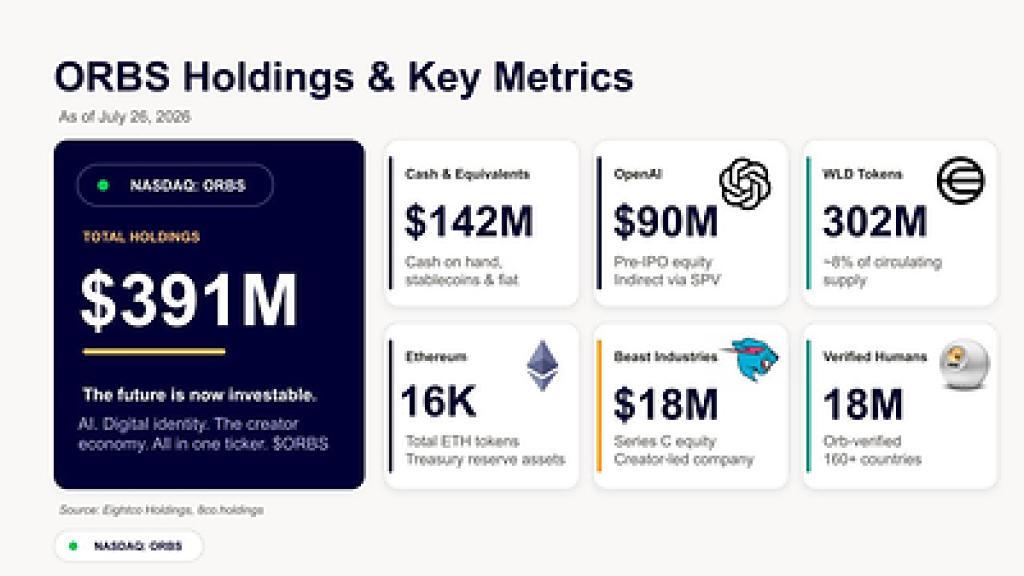
Eightco Holdings (NASDAQ: ORBS) Announces its Participation in World Foundation’s $52.5M funding round as World Shifts From Building the Network to Scaling Utility