
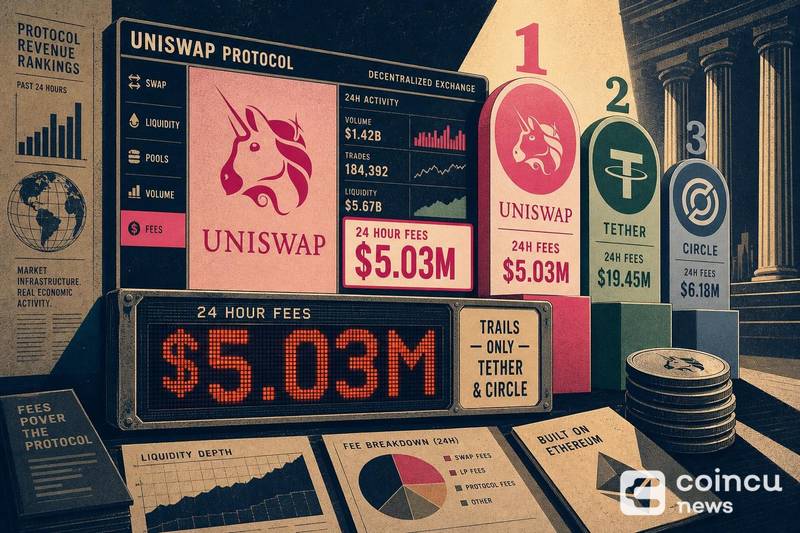

Uniswap generated approximately $5.03 million in transaction fees over a 24-hour period, placing the decentralized exchange protocol behind only Tether and Circle in fee generation across the crypto industry.
The fee figure positions Uniswap as one of the highest-earning protocols in crypto on a daily basis. The reading is a snapshot of platform activity rather than a sustained trend, but it signals meaningful trading demand flowing through decentralized venues.
A DeFi Protocol Competing With Stablecoin Giants
Tether and Circle, the issuers of USDT and USDC respectively, dominate fee generation through the sheer volume of stablecoin transfers processed across multiple blockchains. For a decentralized trading protocol like Uniswap to rank directly behind them is notable.

The distinction matters because Tether and Circle operate as centralized entities collecting fees on infrastructure-level payment rails. Uniswap, by contrast, generates fees from peer-to-peer token swaps executed through automated market maker smart contracts. Reaching a comparable fee level suggests concentrated trading activity on the protocol during the measured window.
This ranking adds to growing attention around Uniswap’s revenue trajectory. Uniswap Labs recently proposed protocol fees for v4 pools, a move that could redirect a portion of these fees toward the protocol itself rather than solely to liquidity providers.
What the $5.03 Million Fee Reading Signals
Transaction fees on Uniswap are paid by traders executing swaps. A higher fee total directly reflects more swap volume passing through the protocol’s liquidity pools. The daily figure points to elevated trader participation.
Fee generation on decentralized exchanges tends to spike during periods of heightened market volatility or when new token launches drive speculative activity. While no specific catalyst has been identified behind this reading, the metric functions as a real-time gauge of DeFi engagement.
Uniswap’s fee performance also reflects broader dynamics within the Ethereum DeFi ecosystem, where the protocol remains the dominant decentralized exchange by volume. Standard Chartered has projected long-term value growth for UNI, partly on the basis of the protocol’s fee-generating capacity.
Why 24-Hour Fee Snapshots Matter
Short-window fee metrics offer crypto market watchers a fast indicator of where capital is actively moving. Unlike total value locked, which measures passive deposits, fees reflect real transactions being executed and paid for in the moment.
A single 24-hour reading should not be mistaken for a sustained trend. Daily fee figures can vary sharply depending on market conditions, gas prices, and whether specific trading events are driving activity.
When a DeFi protocol’s daily fees approach the level of centralized stablecoin infrastructure, it draws attention from analysts tracking where crypto fee revenue is concentrating. Uniswap’s market profile on CoinGecko provides additional context on the token’s trading activity alongside these fee metrics.
FAQ About Uniswap’s Latest Fee Milestone
What are 24-hour transaction fees on Uniswap?
They represent the total fees paid by traders executing token swaps on Uniswap’s smart contracts over a rolling 24-hour period. These fees go to liquidity providers who supply tokens to the protocol’s trading pools.
Why is trailing only Tether and Circle significant?
Tether and Circle are centralized stablecoin issuers processing enormous transaction volumes across the entire crypto market. A permissionless DeFi protocol ranking just behind them in daily fee generation indicates substantial decentralized trading activity.
Does this metric confirm stronger DeFi activity?
It suggests elevated activity during the measured period, but a single day’s reading does not establish a trend. Sustained fee levels over multiple days or weeks would provide stronger evidence of a broader shift in DeFi trading demand.
How does Uniswap generate fees?
Uniswap charges a small percentage fee on each token swap executed through its automated market maker pools. The fee rate varies by pool tier, typically ranging from 0.01% to 1%, and is distributed to liquidity providers.
Where can I track Uniswap’s fee data?
Protocol fee tracking platforms such as DefiLlama’s Ethereum dashboard provide daily and cumulative fee breakdowns for Uniswap and other DeFi protocols.
Disclaimer: This article is for informational purposes only and does not constitute financial or investment advice. Cryptocurrency and digital asset markets carry significant risk. Always do your own research before making decisions.

