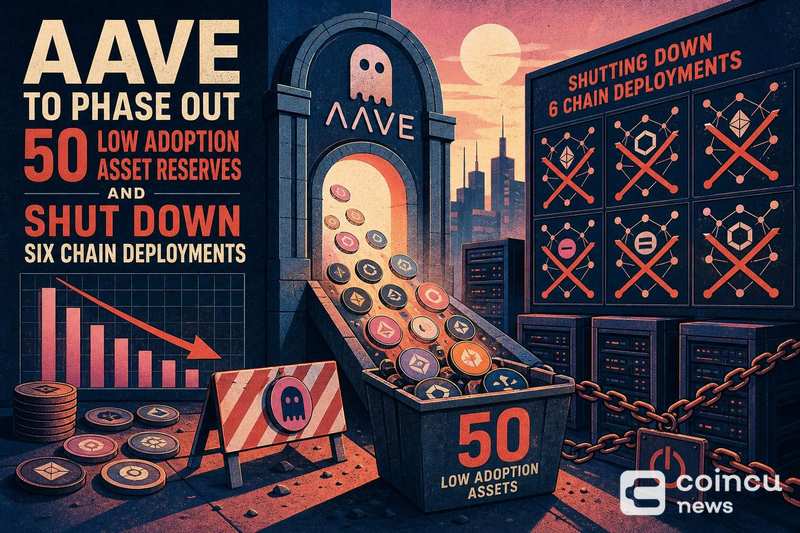
Aave to Phase Out 50 Low-Adoption Asset Reserves and Shut Down Six Chain Deployments
Aave is moving to phase out 50 low-adoption asset reserves and shut down its deployments on six chains, a portfolio rationalization effort laid out in a governance proposal for Aave V3.
What Aave Is Proposing
The plan centers on two linked actions: deprecating a batch of asset reserves that have seen limited usage, and winding down Aave deployments across six chains. Both are set out in an ARFC on low-adoption asset deprecation for Aave v3. For related coverage, see Aave Eyes Traditional Assets and Securities Lending Expansion.
The measure is framed as a streamlining of the protocol rather than a response to any single incident. It targets markets and networks where adoption has stayed thin, consolidating Aave’s operational footprint around its more active venues. For related coverage, see AAVE Faces Key Support Breakdown at $125 Could Lead to 40% Downside Risk.
Why Low-Adoption Reserves Are Being Removed
In a DeFi lending context, a low-adoption reserve is an asset market with little deposit or borrow activity. Each reserve still carries risk parameters and oracle dependencies that require ongoing monitoring, so idle markets add maintenance overhead without contributing meaningful liquidity. For related coverage, see Attacker in Venus Liquidation Incident Sells 1,912 ETH to Repay Aave Loan.
Retiring these reserves reduces fragmentation across inactive markets and lightens the governance burden of maintaining risk settings for assets few users touch. The change contrasts with Aave’s growth-side work, such as its push into traditional assets and securities lending, which widens the platform rather than trimming it.
What the Six Chain Shutdowns Mean for Users
The proposal also calls for shutting down deployments on six chains, the more consequential part of the plan for existing users. Those with positions on affected deployments should watch the governance process for migration details, withdrawal guidance, and timelines before any wind-down takes effect.
Depositors, borrowers, and liquidity providers face the most direct impact. Open positions may need to be closed or migrated, and app access to the affected markets could be curtailed once the shutdown is executed. The specific chains are defined in the governance filing rather than confirmed here.
How the Move Could Reshape Aave’s DeFi Footprint
Consolidating away from underused reserves and smaller chain deployments can concentrate activity into Aave’s higher-demand markets, tightening both liquidity and operational focus across its multichain lending footprint. It narrows the surface area the protocol has to secure and maintain.
The tradeoff is reduced multichain reach. Fewer deployments mean fewer entry points for users on smaller networks, a deliberate narrowing that can free governance bandwidth for priorities like Aave’s expanding real-world asset markets and its deposit vault proposal for shortfall repayment.
FAQ About Aave’s Reserve and Chain Wind-Down
What are low-adoption reserves? They are asset markets on Aave with minimal deposit or borrow activity, which still require risk maintenance despite contributing little liquidity.
Do users need to act? Users on affected reserves or the six targeted chain deployments should follow the governance process for migration steps, withdrawal windows, and timelines. No confirmed dates are stated in the proposal summary.
Why is Aave making this change? The stated goal is to reduce fragmentation and maintenance overhead by retiring underused markets and networks, concentrating the protocol’s resources on its more active deployments.
Disclaimer: This article is for informational purposes only and does not constitute financial or investment advice. Cryptocurrency and digital asset markets carry significant risk. Always do your own research before making decisions.
No tags available.


Other Posts








- China, US Conclude Trade Talks with Focus on Cooperation
- Crypto Weekly: NYSE Backs OKX, Kraken Gets Fed Access, BTC Sells
- Court Upholds Fed’s Rejection of Custodia Bank’s Request
- Former CFO Convicted for $35M Fraudulent Crypto Investment
- DeriW Launches Edge Hour Trading Competition Platform for Derivatives Traders
- Michael Saylor Denies Bitcoin Sell-Off Amid Large BTC Transfer
- Buy Dogecoin on eToro: Step-by-Step Guide for Beginners (2024)
- Kazakhstan Explores Crypto Reserves Backed by National Funds
- JPMorgan Increases Holdings in BlackRock’s Bitcoin ETF
- Nordea Bank Introduces Bitcoin ETP Trading for Nordic Customers
- XRP Spot ETF Launches on Nasdaq Amid Market Fluctuations
- Peter Schiff Challenges Michael Saylor on MSTR’s Business Model
- Thailand Orders Worldcoin to Delete 1.2 Million Biometric Records
- UK Proposes New DeFi Tax Framework to Ease User Burden
- WLFI Under Fire: Analyst Warns Hyperliquid Could Be Next
- Ancient Ethereum Whale Moves $1.19 Billion After Decade
- BlackRock Receives Large Crypto Transfers from Coinbase
- SEC Scrutiny on ALT5 Sigma’s Leadership Disclosure Timing
- Yala Injects $5.5 Million Amid Recovery Efforts
- Radiant Capital Faces $50M Loss in Major Security Breach
- China, US Conclude Trade Talks with Focus on Cooperation
- Crypto Weekly: NYSE Backs OKX, Kraken Gets Fed Access, BTC Sells
- Court Upholds Fed’s Rejection of Custodia Bank’s Request
- Former CFO Convicted for $35M Fraudulent Crypto Investment
- DeriW Launches Edge Hour Trading Competition Platform for Derivatives Traders
- Michael Saylor Denies Bitcoin Sell-Off Amid Large BTC Transfer
- Buy Dogecoin on eToro: Step-by-Step Guide for Beginners (2024)
- Kazakhstan Explores Crypto Reserves Backed by National Funds
- JPMorgan Increases Holdings in BlackRock’s Bitcoin ETF
- Nordea Bank Introduces Bitcoin ETP Trading for Nordic Customers
- XRP Spot ETF Launches on Nasdaq Amid Market Fluctuations
- Peter Schiff Challenges Michael Saylor on MSTR’s Business Model
- Thailand Orders Worldcoin to Delete 1.2 Million Biometric Records
- UK Proposes New DeFi Tax Framework to Ease User Burden
- WLFI Under Fire: Analyst Warns Hyperliquid Could Be Next
- Ancient Ethereum Whale Moves $1.19 Billion After Decade
- BlackRock Receives Large Crypto Transfers from Coinbase
- SEC Scrutiny on ALT5 Sigma’s Leadership Disclosure Timing
- Yala Injects $5.5 Million Amid Recovery Efforts
- Radiant Capital Faces $50M Loss in Major Security Breach
- China, US Conclude Trade Talks with Focus on Cooperation
- Crypto Weekly: NYSE Backs OKX, Kraken Gets Fed Access, BTC Sells
- Court Upholds Fed’s Rejection of Custodia Bank’s Request
- Former CFO Convicted for $35M Fraudulent Crypto Investment
- DeriW Launches Edge Hour Trading Competition Platform for Derivatives Traders
- Michael Saylor Denies Bitcoin Sell-Off Amid Large BTC Transfer
- Buy Dogecoin on eToro: Step-by-Step Guide for Beginners (2024)
- Kazakhstan Explores Crypto Reserves Backed by National Funds
- JPMorgan Increases Holdings in BlackRock’s Bitcoin ETF
- Nordea Bank Introduces Bitcoin ETP Trading for Nordic Customers
- XRP Spot ETF Launches on Nasdaq Amid Market Fluctuations
- Peter Schiff Challenges Michael Saylor on MSTR’s Business Model
- Thailand Orders Worldcoin to Delete 1.2 Million Biometric Records
- UK Proposes New DeFi Tax Framework to Ease User Burden
- WLFI Under Fire: Analyst Warns Hyperliquid Could Be Next
- Ancient Ethereum Whale Moves $1.19 Billion After Decade
- BlackRock Receives Large Crypto Transfers from Coinbase
- SEC Scrutiny on ALT5 Sigma’s Leadership Disclosure Timing
- Yala Injects $5.5 Million Amid Recovery Efforts
- Radiant Capital Faces $50M Loss in Major Security Breach

Aave to Phase Out 50 Low-Adoption Asset Reserves and Shut Down Six Chain Deployments



Zoomex to Attend Coinfest Asia 2026 as Gold Sponsor and Host Summer Bay Party in Bali

1inch launches Aqua to the public, introducing the first shared liquidity layer for DeFi