U.S. spot Bitcoin ETFs pulled in $854 million over five days as expectations for further interest-rate hikes faded, extending a run of institutional demand for regulated Bitcoin exposure.

Why Bitcoin ETFs Added $854M in Five Days
The five-day tally of $854 million in net inflows points to steady, rather than one-off, appetite for spot Bitcoin funds. A single strong day can reflect a lone large allocation, but a consecutive streak is a cleaner read on sustained institutional interest. For related coverage, see Bitcoin Spot ETFs Add $853M as BlackRock IBIT Leads.
Daily flow data for the U.S. spot Bitcoin ETF complex is tracked on SoSoValue’s ETF dashboard, which aggregates net creations and redemptions across issuers. For readers watching institutional demand, consecutive inflow days are a useful sentiment signal because they show buyers returning across multiple sessions. For related coverage, see Bitcoin BIP-110 signaling phase begins at block 961,632.
The pace echoes prior stretches of strong demand, including a week when Bitcoin and Ether ETFs drew $1.1 billion in their best inflow week since April despite low trading volume.
How Fading Rate-Hike Bets Are Shaping Bitcoin Demand
Fading rate-hike bets means markets increasingly expect the Federal Reserve to hold or ease policy rather than raise borrowing costs further. Those expectations are reflected in tools like the CME FedWatch Tool, which tracks implied probabilities for rate moves.
Lower expected policy pressure tends to improve appetite for risk-sensitive assets, and reporting tied the five-day ETF streak directly to that softening macro backdrop. The link is high level: cheaper expected money supports flows into higher-beta exposures like Bitcoin, though the exact magnitude is not quantified in the available data.
What the Inflow Streak Signals for Bitcoin Market Sentiment
ETF demand is widely watched as a proxy for institutional participation in Bitcoin, since spot funds channel regulated capital into the asset. A five-day trend carries more weight than a single spike because it shows conviction holding across sessions rather than a one-time rebalancing.
Still, inflows are one signal, not a complete forecast. The same institutional plumbing has cut both ways before, including a rare CME shift as hedge funds trimmed structural Bitcoin shorts, underscoring that positioning data should be read alongside flows rather than in isolation.
What Traders Should Watch Next After the ETF Inflows
The most direct follow-up is whether the flow streak continues; consistency matters more than a single weekly snapshot, and daily figures remain visible on SoSoValue’s tracker. A break in the streak would challenge the demand narrative more than any one large redemption.
Macro expectations are the second variable, since the move was attributed to softening rate-hike bets. Shifts in Fed pricing and Bitcoin’s own price reaction to those shifts are the confirmation signals to monitor, much as BTC rose after weaker-than-expected U.S. jobs data reset policy expectations.
FAQ About Bitcoin ETF Inflows and Rate-Hike Bets
Why do Bitcoin ETF inflows matter? They show regulated, often institutional, capital moving into Bitcoin exposure. Sustained inflows are read as a sign of improving investor conviction.
How do rate-hike expectations affect Bitcoin? When markets expect fewer or no further rate hikes, appetite for risk-sensitive assets tends to improve, which can support demand for Bitcoin exposure.
How much did Bitcoin ETFs draw in this streak? The funds recorded net inflows totaling $854 million across five days, according to reporting tied to the fading rate-hike narrative.
Disclaimer: This article is for informational purposes only and does not constitute financial or investment advice. Cryptocurrency and digital asset markets carry significant risk. Always do your own research before making decisions.
No tags available.


Other Posts








- China, US Conclude Trade Talks with Focus on Cooperation
- Crypto Weekly: NYSE Backs OKX, Kraken Gets Fed Access, BTC Sells
- Court Upholds Fed’s Rejection of Custodia Bank’s Request
- Former CFO Convicted for $35M Fraudulent Crypto Investment
- DeriW Launches Edge Hour Trading Competition Platform for Derivatives Traders
- Michael Saylor Denies Bitcoin Sell-Off Amid Large BTC Transfer
- Buy Dogecoin on eToro: Step-by-Step Guide for Beginners (2024)
- Kazakhstan Explores Crypto Reserves Backed by National Funds
- JPMorgan Increases Holdings in BlackRock’s Bitcoin ETF
- Nordea Bank Introduces Bitcoin ETP Trading for Nordic Customers
- XRP Spot ETF Launches on Nasdaq Amid Market Fluctuations
- Peter Schiff Challenges Michael Saylor on MSTR’s Business Model
- Thailand Orders Worldcoin to Delete 1.2 Million Biometric Records
- UK Proposes New DeFi Tax Framework to Ease User Burden
- WLFI Under Fire: Analyst Warns Hyperliquid Could Be Next
- Ancient Ethereum Whale Moves $1.19 Billion After Decade
- BlackRock Receives Large Crypto Transfers from Coinbase
- SEC Scrutiny on ALT5 Sigma’s Leadership Disclosure Timing
- Yala Injects $5.5 Million Amid Recovery Efforts
- Radiant Capital Faces $50M Loss in Major Security Breach
- China, US Conclude Trade Talks with Focus on Cooperation
- Crypto Weekly: NYSE Backs OKX, Kraken Gets Fed Access, BTC Sells
- Court Upholds Fed’s Rejection of Custodia Bank’s Request
- Former CFO Convicted for $35M Fraudulent Crypto Investment
- DeriW Launches Edge Hour Trading Competition Platform for Derivatives Traders
- Michael Saylor Denies Bitcoin Sell-Off Amid Large BTC Transfer
- Buy Dogecoin on eToro: Step-by-Step Guide for Beginners (2024)
- Kazakhstan Explores Crypto Reserves Backed by National Funds
- JPMorgan Increases Holdings in BlackRock’s Bitcoin ETF
- Nordea Bank Introduces Bitcoin ETP Trading for Nordic Customers
- XRP Spot ETF Launches on Nasdaq Amid Market Fluctuations
- Peter Schiff Challenges Michael Saylor on MSTR’s Business Model
- Thailand Orders Worldcoin to Delete 1.2 Million Biometric Records
- UK Proposes New DeFi Tax Framework to Ease User Burden
- WLFI Under Fire: Analyst Warns Hyperliquid Could Be Next
- Ancient Ethereum Whale Moves $1.19 Billion After Decade
- BlackRock Receives Large Crypto Transfers from Coinbase
- SEC Scrutiny on ALT5 Sigma’s Leadership Disclosure Timing
- Yala Injects $5.5 Million Amid Recovery Efforts
- Radiant Capital Faces $50M Loss in Major Security Breach
- China, US Conclude Trade Talks with Focus on Cooperation
- Crypto Weekly: NYSE Backs OKX, Kraken Gets Fed Access, BTC Sells
- Court Upholds Fed’s Rejection of Custodia Bank’s Request
- Former CFO Convicted for $35M Fraudulent Crypto Investment
- DeriW Launches Edge Hour Trading Competition Platform for Derivatives Traders
- Michael Saylor Denies Bitcoin Sell-Off Amid Large BTC Transfer
- Buy Dogecoin on eToro: Step-by-Step Guide for Beginners (2024)
- Kazakhstan Explores Crypto Reserves Backed by National Funds
- JPMorgan Increases Holdings in BlackRock’s Bitcoin ETF
- Nordea Bank Introduces Bitcoin ETP Trading for Nordic Customers
- XRP Spot ETF Launches on Nasdaq Amid Market Fluctuations
- Peter Schiff Challenges Michael Saylor on MSTR’s Business Model
- Thailand Orders Worldcoin to Delete 1.2 Million Biometric Records
- UK Proposes New DeFi Tax Framework to Ease User Burden
- WLFI Under Fire: Analyst Warns Hyperliquid Could Be Next
- Ancient Ethereum Whale Moves $1.19 Billion After Decade
- BlackRock Receives Large Crypto Transfers from Coinbase
- SEC Scrutiny on ALT5 Sigma’s Leadership Disclosure Timing
- Yala Injects $5.5 Million Amid Recovery Efforts
- Radiant Capital Faces $50M Loss in Major Security Breach


Strategy Sells 1,690 BTC, Raises $653 Million From MSTR Shares

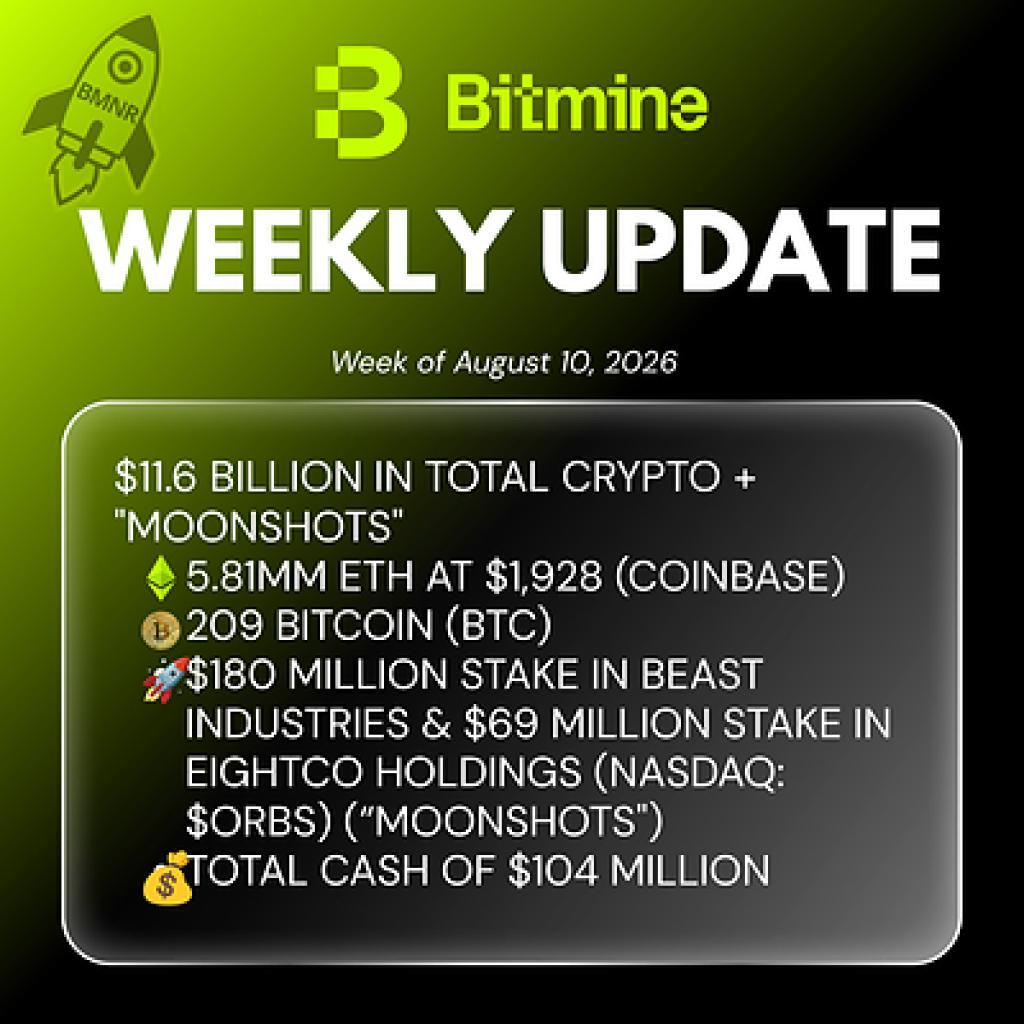
Bitmine Immersion Technologies (BMNR) Announces ETH Holdings Reach 5.81 Million Tokens, and Total Crypto and Total Cash Holdings of $11.6 Billion

Cashelix Launches CASX Token Presale to Fuel the Future of Blockchain P2P Transactions