Russia Approves Bitcoin, Ethereum and USDT Trading, Excludes XRP
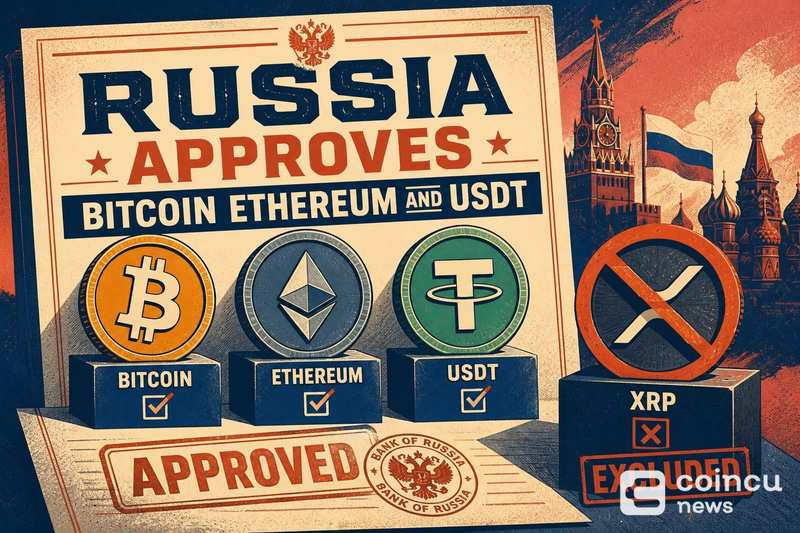
Russia has approved regulated trading for Bitcoin, Ethereum and USDT, naming the three assets as eligible under its framework while leaving XRP off the list. The move defines which tokens gain formal market access, not a blanket legalization of all crypto activity.
What Russia approved for Bitcoin, Ethereum and USDT trading
Bitcoin, Ethereum and Tether’s USDT are the assets named in the approval, as first reported by Decrypt. XRP is not included in this framework. For related coverage, see 21Shares Ethereum ETF Staking Proposal Now Under SEC Review.
The approval concerns regulated trading access for the named assets. It does not amount to a wholesale legalization of every crypto asset or activity in Russia, and the framework applies only to the tokens explicitly listed.
The selection was confirmed through official channels, including a Bank of Russia notice and a corresponding entry in the country’s official legal publication dated August 4, 2026.
Why these three assets were included while XRP was not
Bitcoin and Ethereum are the two most established large-cap crypto assets in global markets, which offers a straightforward read on why regulators would prioritize them for formal access.
USDT sits in a different category. As a dollar-pegged stablecoin widely used for trading and settlement, its inclusion reflects its role as a utility asset rather than a speculative one, according to reporting on the asset list.
The research underlying this story contains no verified official explanation for XRP’s exclusion. Any rationale tied to market status or asset type is inference, and there is no confirmation that XRP was rejected for a specific legal or political reason.
What XRP’s exclusion means for traders
Being left off the approved list is not the same as being banned or declared illegal. XRP is simply not included in this particular framework for regulated trading.
A regulated asset list shapes which tokens receive formal market access under the policy, so XRP holders and traders are likely to focus on the omission as the key open question. There is no verified evidence of any immediate XRP price reaction in the available research.
How the approval fits Russia’s crypto policy
The measure extends Russia’s regulated approach to crypto access, building on earlier steps such as the country’s decision to legalize crypto trading while keeping crypto payments banned.
It follows the framework under which Putin signed a law allowing regulated retail crypto trading, a policy that has already driven consumer behavior such as a sharp rise in hardware wallet sales ahead of the new rules. The naming of specific tokens is the operational next step in that policy.
FAQ: Russia’s approval of Bitcoin, Ethereum and USDT trading
Is XRP banned in Russia?
No. The available evidence shows only that XRP is not included in this approval for regulated trading. That is distinct from a ban or a ruling that the asset is illegal.
Does the approval apply to all crypto assets?
No. It applies to the named assets: Bitcoin, Ethereum and USDT. Tokens not on the list, including XRP, are not covered by this framework.
Why was USDT included?
USDT is a dollar-pegged stablecoin used widely for trading and settlement. Its inclusion reflects that utility, and its integration continues to expand across networks, including Tether’s move to integrate USDT into Bitcoin.
What should readers watch next?
The main open questions are whether Russia expands the approved list to additional tokens over time and what conditions apply to trading the three named assets under the framework.
Disclaimer: This article is for informational purposes only and does not constitute financial or investment advice. Cryptocurrency and digital asset markets carry significant risk. Always do your own research before making decisions.
No tags available.


Other Posts








- China, US Conclude Trade Talks with Focus on Cooperation
- Crypto Weekly: NYSE Backs OKX, Kraken Gets Fed Access, BTC Sells
- Court Upholds Fed’s Rejection of Custodia Bank’s Request
- Former CFO Convicted for $35M Fraudulent Crypto Investment
- DeriW Launches Edge Hour Trading Competition Platform for Derivatives Traders
- Michael Saylor Denies Bitcoin Sell-Off Amid Large BTC Transfer
- Buy Dogecoin on eToro: Step-by-Step Guide for Beginners (2024)
- Kazakhstan Explores Crypto Reserves Backed by National Funds
- JPMorgan Increases Holdings in BlackRock’s Bitcoin ETF
- Nordea Bank Introduces Bitcoin ETP Trading for Nordic Customers
- XRP Spot ETF Launches on Nasdaq Amid Market Fluctuations
- Peter Schiff Challenges Michael Saylor on MSTR’s Business Model
- Thailand Orders Worldcoin to Delete 1.2 Million Biometric Records
- UK Proposes New DeFi Tax Framework to Ease User Burden
- WLFI Under Fire: Analyst Warns Hyperliquid Could Be Next
- Ancient Ethereum Whale Moves $1.19 Billion After Decade
- BlackRock Receives Large Crypto Transfers from Coinbase
- SEC Scrutiny on ALT5 Sigma’s Leadership Disclosure Timing
- Yala Injects $5.5 Million Amid Recovery Efforts
- Radiant Capital Faces $50M Loss in Major Security Breach
- China, US Conclude Trade Talks with Focus on Cooperation
- Crypto Weekly: NYSE Backs OKX, Kraken Gets Fed Access, BTC Sells
- Court Upholds Fed’s Rejection of Custodia Bank’s Request
- Former CFO Convicted for $35M Fraudulent Crypto Investment
- DeriW Launches Edge Hour Trading Competition Platform for Derivatives Traders
- Michael Saylor Denies Bitcoin Sell-Off Amid Large BTC Transfer
- Buy Dogecoin on eToro: Step-by-Step Guide for Beginners (2024)
- Kazakhstan Explores Crypto Reserves Backed by National Funds
- JPMorgan Increases Holdings in BlackRock’s Bitcoin ETF
- Nordea Bank Introduces Bitcoin ETP Trading for Nordic Customers
- XRP Spot ETF Launches on Nasdaq Amid Market Fluctuations
- Peter Schiff Challenges Michael Saylor on MSTR’s Business Model
- Thailand Orders Worldcoin to Delete 1.2 Million Biometric Records
- UK Proposes New DeFi Tax Framework to Ease User Burden
- WLFI Under Fire: Analyst Warns Hyperliquid Could Be Next
- Ancient Ethereum Whale Moves $1.19 Billion After Decade
- BlackRock Receives Large Crypto Transfers from Coinbase
- SEC Scrutiny on ALT5 Sigma’s Leadership Disclosure Timing
- Yala Injects $5.5 Million Amid Recovery Efforts
- Radiant Capital Faces $50M Loss in Major Security Breach
- China, US Conclude Trade Talks with Focus on Cooperation
- Crypto Weekly: NYSE Backs OKX, Kraken Gets Fed Access, BTC Sells
- Court Upholds Fed’s Rejection of Custodia Bank’s Request
- Former CFO Convicted for $35M Fraudulent Crypto Investment
- DeriW Launches Edge Hour Trading Competition Platform for Derivatives Traders
- Michael Saylor Denies Bitcoin Sell-Off Amid Large BTC Transfer
- Buy Dogecoin on eToro: Step-by-Step Guide for Beginners (2024)
- Kazakhstan Explores Crypto Reserves Backed by National Funds
- JPMorgan Increases Holdings in BlackRock’s Bitcoin ETF
- Nordea Bank Introduces Bitcoin ETP Trading for Nordic Customers
- XRP Spot ETF Launches on Nasdaq Amid Market Fluctuations
- Peter Schiff Challenges Michael Saylor on MSTR’s Business Model
- Thailand Orders Worldcoin to Delete 1.2 Million Biometric Records
- UK Proposes New DeFi Tax Framework to Ease User Burden
- WLFI Under Fire: Analyst Warns Hyperliquid Could Be Next
- Ancient Ethereum Whale Moves $1.19 Billion After Decade
- BlackRock Receives Large Crypto Transfers from Coinbase
- SEC Scrutiny on ALT5 Sigma’s Leadership Disclosure Timing
- Yala Injects $5.5 Million Amid Recovery Efforts
- Radiant Capital Faces $50M Loss in Major Security Breach

Russia Approves Bitcoin, Ethereum and USDT Trading, Excludes XRP


Strategy Builds $4.75B Cash Cushion as Investors Seek More Than Bitcoin Exposure
ForumPay Expands Payment Infrastructure with New Card and Bank Transfer Acceptance Solution

Newest Assets, Improved User Promotions & Much Greater Crypto Experience_ Xxkk Trade Exchange Reinforces Its Trade Environment