Top LayerZero Bridge Apps in 2026: 5 Projects to Know
Updated July 9, 2026
Quick Answer
If you want the short version, the LayerZero bridge and omnichain transfer projects worth comparing in 2026 include Stargate, USDT0, Hyperliquid Bridge, AUSD0, and kBTC.
This category needs one clarification up front: not every useful LayerZero project is a classic “bridge” in the old sense.
Some projects are:
- direct bridge interfaces
- omnichain token transfer rails
- app-specific asset movement layers
- OFT-based expansion paths for cross-chain assets
So the best way to rewrite this topic in 2026 is not as a random token watchlist. It is as a map of user-facing LayerZero transfer apps and ecosystems.
Why This Topic Needs a New Angle
LayerZero is an interoperability and messaging layer, not just a single bridge brand.
That means many of the most relevant “bridge projects on LayerZero” are really apps or asset systems using LayerZero’s messaging and OFT model to move value across chains.
This article focuses on projects readers can actually understand in that context.
How We Chose These Projects
These five were chosen because they clearly connect to LayerZero-powered transfer logic through official documentation or LayerZero’s own announcement materials.
They were selected based on:
- visible LayerZero or OFT relevance
- user-facing transfer or omnichain utility
- practical ecosystem importance
- product clarity
This is a utility comparison, not a ranking of which token may perform best.
Quick Comparison
| Project | Best for | LayerZero role | Strongest point | Main trade-off |
|---|---|---|---|---|
| Stargate | users who want the most direct LayerZero bridge app | liquidity bridge and transfer frontend | clearest bridge identity in the ecosystem | still only one piece of the broader LayerZero stack |
| USDT0 | users following omnichain stablecoin expansion | OFT-based asset transfer model | easy example of how LayerZero expands asset reach | not a generic retail bridge interface |
| Hyperliquid Bridge | users moving into a specific trading ecosystem | app-specific bridge layer | practical example of LayerZero in a product-specific flow | mainly relevant if you use that ecosystem |
| AUSD0 | users tracking institutional-style stablecoin expansion | OFT-based omnichain dollar model | clear issuer-led example with official rollout details | not a universal bridge UI |
| kBTC | users watching Bitcoin liquidity expansion across chains | OFT-based wrapped Bitcoin distribution | shows how a major exchange uses LayerZero for cross-chain asset reach | asset expansion example, not a bridge homepage |
1. Stargate
Stargate is still the most obvious answer when people ask about a LayerZero bridge project.
LayerZero docs describe Stargate as both a set of liquidity infrastructure contracts and a unified bridge frontend for moving Stargate assets and LayerZero OFTs across supported chains. That makes it the cleanest bridge-native product in the LayerZero universe.
Why it made the list:
- strongest direct bridge identity
- easiest LayerZero transfer app for ordinary users to recognize
- closest thing to a default answer for “LayerZero bridge”
What looks strongest in 2026:
- user-facing bridge clarity
- deep connection to LayerZero’s transfer model
- practical relevance for moving supported assets across chains
What remains weaker:
- it does not represent every LayerZero use case
- some users may over-assume that LayerZero equals Stargate, which is too narrow
2. USDT0
USDT0 matters because it helps explain where LayerZero’s OFT model becomes concrete for users.
LayerZero’s own ecosystem and OFT documentation use assets like USDT0 as examples of omnichain token transfer logic. That makes USDT0 important in this article even though it is not a classic retail bridge front-end.
Why it made the list:
- clear OFT relevance
- easy way to explain omnichain asset expansion
- useful for stablecoin-focused cross-chain understanding
What looks strongest in 2026:
- product clarity around asset portability
- strong example of how LayerZero infrastructure supports multi-chain asset access
- useful bridge between infrastructure and everyday token use
What remains weaker:
- not a one-size-fits-all bridge app
- users looking for a generic “send any token anywhere” interface may need another tool
3. Hyperliquid Bridge
Hyperliquid Bridge is useful here because it shows what LayerZero-style interoperability looks like when attached to a specific end product rather than to a generic bridge brand.
LayerZero published a dedicated introduction for The Hyperliquid Bridge, describing it as a one-click path for moving supported assets from LayerZero-connected chains into the Hyperliquid ecosystem. That is a much tighter source fit for this topic than a generic ecosystem listing.
Why it made the list:
- clear product-specific transfer use case
- supported by a direct LayerZero announcement
- relevant to users who actually move assets into trading environments
What looks strongest in 2026:
- practical utility
- product-specific clarity
- good example of infrastructure disappearing into user-facing workflow
What remains weaker:
- mainly useful if you use the destination ecosystem
- not a general-purpose bridge homepage for every user
Source note: LayerZero, “Introducing The Hyperliquid Bridge”: https://layerzero.network/blog/introducing-the-hyperliquid-bridge
4. AUSD0
AUSD0 belongs in this comparison because it is one of the cleaner issuer-led examples of LayerZero’s OFT model being used to make a dollar asset portable across multiple chains from day one.
LayerZero’s Agora announcement explicitly says AUSD0 extends Agora’s digital dollar with the OFT standard so it can move across LayerZero-connected chains. That makes AUSD0 a better-sourced omnichain transfer example than a speculative ecosystem pick.
Why it made the list:
- strong official announcement support
- useful stablecoin example beyond USDT0
- good fit for readers tracking multichain dollar distribution
What looks strongest in 2026:
- institution-friendly framing
- clear OFT rollout story
- easy example of asset expansion across supported chains
What remains weaker:
- not a retail bridge frontend
- relevance depends on whether the reader cares about stablecoin infrastructure
Source note: LayerZero, “Agora Partners with LayerZero to Make AUSD Stablecoin Compatible with All Blockchains”: https://layerzero.network/blog/agora-and-layerzero-bring-ausd-to-5-blockchains
5. kBTC
kBTC matters because it shows how LayerZero is being used by a major exchange brand to push Bitcoin liquidity across chains using the OFT model.
LayerZero’s Kraken announcement says kBTC uses LayerZero’s OFT model to make wrapped Bitcoin compatible across blockchains. That makes it a credible example of how LayerZero transfer infrastructure is increasingly being used by larger asset issuers, not only crypto-native dApps.
Why it made the list:
- strong official sourcing
- clear Bitcoin-liquidity use case
- useful example of asset expansion beyond stablecoins
What looks strongest in 2026:
- familiar asset category for readers
- clear institutional-style adoption signal
- easy to understand as a cross-chain distribution story
What remains weaker:
- not a bridge UI by itself
- product relevance depends on where kBTC is actually supported and used
Source note: LayerZero, “Kraken Integrates LayerZero To Make kBTC Compatible Across Every Blockchain”: https://layerzero.network/blog/kraken-integrates-layerzero-tecnology-for-kbtc
Which Type of LayerZero Project Fits Different Readers?
If you only want a practical chooser:
- choose Stargate if you want the most direct LayerZero bridge interface
- look at USDT0 if you want to understand OFT-powered asset portability
- look at Hyperliquid Bridge if you care about app-specific transfer flows
- look at AUSD0 if you want a stablecoin-specific OFT rollout example
- study kBTC if you want a Bitcoin-based LayerZero transfer case
What This Category Still Gets Wrong
Many old LayerZero list pages mix together:
- tokens
- bridge interfaces
- OFT assets
- issuer-led transfer rails
- generic ecosystem speculation
That makes the page less useful.
A better LayerZero list explains what kind of project each item actually is.
FAQ
What is the main LayerZero bridge app?
For most users, Stargate is still the clearest answer because it functions as the most recognizable bridge-facing transfer application in the LayerZero ecosystem.
Is LayerZero itself a bridge?
Not exactly. LayerZero is better understood as an interoperability and messaging protocol layer that powers bridge-like and omnichain applications.
What is an OFT in the LayerZero ecosystem?
OFT stands for Omnichain Fungible Token. It is a LayerZero-related token model designed to help assets move across connected chains in a more unified way.
Are all LayerZero projects bridge projects?
No. Some are bridges, some are omnichain tokens, and some are application layers using LayerZero connectivity underneath.
Final Takeaway
The top LayerZero bridge apps in 2026 are not all bridge websites in the old sense.
Stargate is still the clearest bridge-native answer. USDT0 helps explain omnichain asset movement. Hyperliquid Bridge shows app-specific transfer logic. AUSD0 shows issuer-led stablecoin expansion. kBTC shows how LayerZero is being used to extend Bitcoin liquidity across chains.
That is the cleaner editorial angle for this topic now: explain the LayerZero transfer stack, not just assemble a random project watchlist.
References
- LayerZero Stargate docs: https://docs.layerzero.network/v2/concepts/applications/stargate-finance
- Stargate: https://stargate.finance/
- LayerZero OFT docs: https://docs.layerzero.network/v2/concepts/value-transfer-implementations
- LayerZero, “The ZRO Token”: https://layerzero.network/blog/the-zro-token
- LayerZero, “The Default Is Many Chains”: https://layerzero.network/blog/the-default-is-many-chains
- LayerZero, “Introducing The Hyperliquid Bridge”: https://layerzero.network/blog/introducing-the-hyperliquid-bridge
- LayerZero, “Agora Partners with LayerZero to Make AUSD Stablecoin Compatible with All Blockchains”: https://layerzero.network/blog/agora-and-layerzero-bring-ausd-to-5-blockchains
- LayerZero, “Kraken Integrates LayerZero To Make kBTC Compatible Across Every Blockchain”: https://layerzero.network/blog/kraken-integrates-layerzero-tecnology-for-kbtc
Internal Link Opportunities
- cross-chain bridges page: https://coincu.com/top-5-cross-chain-bridges-in-crypto/
- wallet explainer: https://coincu.com/best-crypto-wallet/
- custody explainer: https://coincu.com/what-is-crypto-custody/
Media Plan
Featured image:
- map of LayerZero infrastructure showing bridge app, OFT asset, and app-specific transfer layers
Suggested inline media:
- Stargate docs capture
- Hyperliquid Bridge article capture
- LayerZero article excerpt about AUSD0 or kBTC
Caption direction:
- emphasize which items are bridge apps versus omnichain asset-distribution layers
Disclosure
This article is for informational purposes only and does not constitute investment advice. Ecosystem connections, supported chains, and transfer flows can change, so readers should verify the latest official documentation before moving assets across chains.


Other Posts







- China, US Conclude Trade Talks with Focus on Cooperation
- Crypto Weekly: NYSE Backs OKX, Kraken Gets Fed Access, BTC Sells
- Court Upholds Fed’s Rejection of Custodia Bank’s Request
- Former CFO Convicted for $35M Fraudulent Crypto Investment
- DeriW Launches Edge Hour Trading Competition Platform for Derivatives Traders
- Michael Saylor Denies Bitcoin Sell-Off Amid Large BTC Transfer
- Buy Dogecoin on eToro: Step-by-Step Guide for Beginners (2024)
- Kazakhstan Explores Crypto Reserves Backed by National Funds
- JPMorgan Increases Holdings in BlackRock’s Bitcoin ETF
- Nordea Bank Introduces Bitcoin ETP Trading for Nordic Customers
- XRP Spot ETF Launches on Nasdaq Amid Market Fluctuations
- Peter Schiff Challenges Michael Saylor on MSTR’s Business Model
- Thailand Orders Worldcoin to Delete 1.2 Million Biometric Records
- UK Proposes New DeFi Tax Framework to Ease User Burden
- WLFI Under Fire: Analyst Warns Hyperliquid Could Be Next
- Ancient Ethereum Whale Moves $1.19 Billion After Decade
- BlackRock Receives Large Crypto Transfers from Coinbase
- SEC Scrutiny on ALT5 Sigma’s Leadership Disclosure Timing
- Yala Injects $5.5 Million Amid Recovery Efforts
- Radiant Capital Faces $50M Loss in Major Security Breach
- China, US Conclude Trade Talks with Focus on Cooperation
- Crypto Weekly: NYSE Backs OKX, Kraken Gets Fed Access, BTC Sells
- Court Upholds Fed’s Rejection of Custodia Bank’s Request
- Former CFO Convicted for $35M Fraudulent Crypto Investment
- DeriW Launches Edge Hour Trading Competition Platform for Derivatives Traders
- Michael Saylor Denies Bitcoin Sell-Off Amid Large BTC Transfer
- Buy Dogecoin on eToro: Step-by-Step Guide for Beginners (2024)
- Kazakhstan Explores Crypto Reserves Backed by National Funds
- JPMorgan Increases Holdings in BlackRock’s Bitcoin ETF
- Nordea Bank Introduces Bitcoin ETP Trading for Nordic Customers
- XRP Spot ETF Launches on Nasdaq Amid Market Fluctuations
- Peter Schiff Challenges Michael Saylor on MSTR’s Business Model
- Thailand Orders Worldcoin to Delete 1.2 Million Biometric Records
- UK Proposes New DeFi Tax Framework to Ease User Burden
- WLFI Under Fire: Analyst Warns Hyperliquid Could Be Next
- Ancient Ethereum Whale Moves $1.19 Billion After Decade
- BlackRock Receives Large Crypto Transfers from Coinbase
- SEC Scrutiny on ALT5 Sigma’s Leadership Disclosure Timing
- Yala Injects $5.5 Million Amid Recovery Efforts
- Radiant Capital Faces $50M Loss in Major Security Breach
- China, US Conclude Trade Talks with Focus on Cooperation
- Crypto Weekly: NYSE Backs OKX, Kraken Gets Fed Access, BTC Sells
- Court Upholds Fed’s Rejection of Custodia Bank’s Request
- Former CFO Convicted for $35M Fraudulent Crypto Investment
- DeriW Launches Edge Hour Trading Competition Platform for Derivatives Traders
- Michael Saylor Denies Bitcoin Sell-Off Amid Large BTC Transfer
- Buy Dogecoin on eToro: Step-by-Step Guide for Beginners (2024)
- Kazakhstan Explores Crypto Reserves Backed by National Funds
- JPMorgan Increases Holdings in BlackRock’s Bitcoin ETF
- Nordea Bank Introduces Bitcoin ETP Trading for Nordic Customers
- XRP Spot ETF Launches on Nasdaq Amid Market Fluctuations
- Peter Schiff Challenges Michael Saylor on MSTR’s Business Model
- Thailand Orders Worldcoin to Delete 1.2 Million Biometric Records
- UK Proposes New DeFi Tax Framework to Ease User Burden
- WLFI Under Fire: Analyst Warns Hyperliquid Could Be Next
- Ancient Ethereum Whale Moves $1.19 Billion After Decade
- BlackRock Receives Large Crypto Transfers from Coinbase
- SEC Scrutiny on ALT5 Sigma’s Leadership Disclosure Timing
- Yala Injects $5.5 Million Amid Recovery Efforts
- Radiant Capital Faces $50M Loss in Major Security Breach

Keel Shuts Down U.S. Bitcoin Mining Operations as AI Pivot Deepens


Crypto Lost $110M to Hacks in July as Bug Bounty Activity Rose
Syntetika Launches Tokenization Hub Bringing Regulated Investment Strategies Onchain
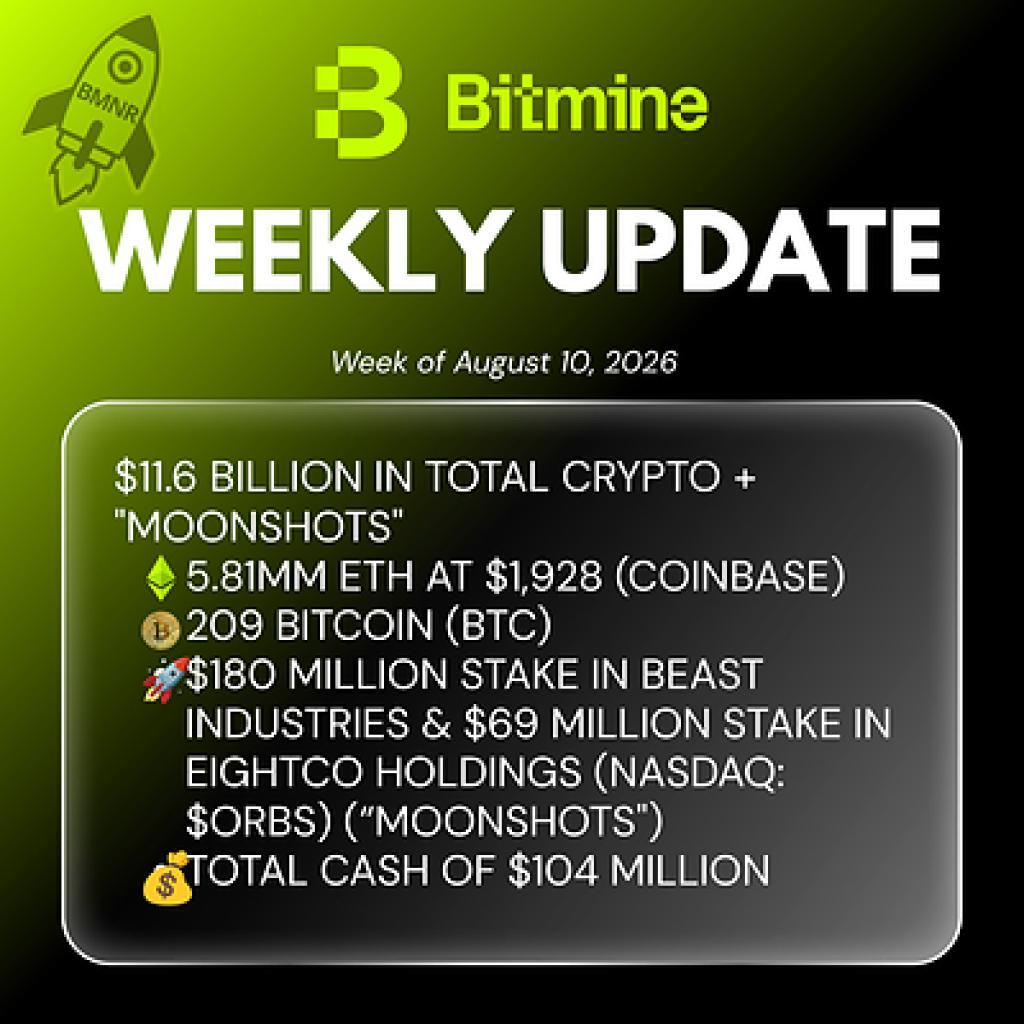
Bitmine Immersion Technologies (BMNR) Announces ETH Holdings Reach 5.81 Million Tokens, and Total Crypto and Total Cash Holdings of $11.6 Billion