Bitcoin short liquidations could reach $1.19 billion if BTC climbs above $80,414, according to liquidation map data, setting up a potential short squeeze that would force leveraged bearish positions to close en masse.
The estimate, reported by CoinStats, is derived from aggregated exchange liquidation data that maps where clusters of leveraged short positions sit across major derivatives platforms. When price reaches those levels, exchanges automatically close underwater positions, triggering forced buy orders.
Why $80,414 is the key trigger level for Bitcoin short liquidations
Short liquidations occur when traders who have bet against Bitcoin’s price are forced out of their positions. If BTC moves above a threshold where their margin can no longer sustain the loss, the exchange closes the trade automatically and buys back BTC on the open market to settle it.
Liquidation maps, such as those published by CoinGlass, aggregate open interest data across exchanges to identify price levels where large volumes of leveraged positions would be liquidated. The $80,414 level represents a zone where short-side exposure is particularly concentrated.
At that price, the cumulative short liquidation volume could total $1.19 billion. That figure reflects the combined notional value of positions that would be forcibly closed if BTC trades above that level on the exchanges tracked.
How a short squeeze could amplify Bitcoin price momentum
When short positions are liquidated, the exchange executes market buy orders to close them. Each forced buyback adds buying pressure, which can push the price higher and trigger additional liquidations at the next cluster above.
This chain reaction is known as a short squeeze. It can accelerate an upside move far beyond what organic spot demand alone would produce, particularly when leverage is crowded on one side of the trade.
Liquidation-driven rallies tend to be fast and volatile. Because the buying is mechanical rather than conviction-based, the price can overshoot and then reverse once the liquidation cascade exhausts itself. Traders who have watched Bitcoin’s growing role in financial markets recognize that derivatives-driven moves can be sharp but unstable.
What happens when crowded shorts unwind
A crowded short position means a disproportionate share of open interest is betting on lower prices. When the market moves against that consensus, the unwind is not gradual. Margin calls hit simultaneously, and the resulting buy pressure compounds.
The speed of the squeeze depends on how tightly clustered the liquidation levels are. If multiple large clusters sit within a narrow price band above $80,414, the cascade could be particularly aggressive.
What traders should watch before BTC tests $80,414
Open interest is the first signal. Rising open interest alongside a price move toward $80,414 would suggest that leveraged positions are building rather than unwinding, increasing the potential energy stored in the liquidation map.
Funding rates on perpetual futures contracts indicate whether derivatives sentiment is skewed bullish or bearish. Persistently negative funding rates would confirm that shorts are paying to maintain their positions, reinforcing the squeeze setup.
Spot volume matters for confirmation. A breakout above $80,414 driven primarily by derivatives activity, without corresponding spot buying, is more likely to reverse. Traders monitoring recent centralized exchange BTC flows can gauge whether spot-side conviction supports the move.
Signals that the squeeze setup is strengthening
A widening gap between short and long liquidation volumes at the $80,414 level would indicate the setup is becoming more asymmetric. If short-side exposure grows while long-side exposure near current prices remains modest, the squeeze potential increases.
Declining spot exchange reserves would also support the thesis. Less BTC available on exchanges to sell into a rally means thinner order books, which amplify the impact of liquidation-driven buy orders.
Leveraged positioning is shaping the current Bitcoin narrative
Derivatives markets increasingly drive short-term BTC price action. Spot demand sets the long-term trend, but leveraged positioning determines the magnitude and speed of individual moves.
The $1.19 billion liquidation estimate illustrates how concentrated leverage can turn a modest spot move into a headline event. A price change of a few percent near a liquidation cluster can trigger billions in forced transactions.
Liquidation risk cuts both ways. If BTC fails to break above $80,414 and reverses, long positions below current prices face the same mechanical unwind. Observers tracking bearish pattern risks across crypto assets know that leveraged positioning can accelerate downside moves just as effectively.
FAQ
What are Bitcoin short liquidations?
Short liquidations occur when traders betting on a BTC price decline are forced out of their positions by their exchange because the price moved too far against them. The exchange automatically buys BTC to close the position, which adds upward price pressure.
Why does $80,414 matter specifically?
Liquidation map data shows a large concentration of short positions with liquidation prices near $80,414. This makes it a trigger level where a significant volume of forced closures would begin if BTC trades above it.
Does a short squeeze guarantee continued upside?
No. Short squeezes produce mechanical buying that can overshoot fair value. Once the liquidation cascade ends, the price can reverse if there is no sustained spot demand to support the higher level.
What indicators can traders monitor?
Open interest trends, perpetual futures funding rates, spot trading volume, and exchange reserve data all provide signals about whether the conditions for a squeeze are strengthening or weakening.
Disclaimer: This article is for informational purposes only and does not constitute financial or investment advice. Cryptocurrency and digital asset markets carry significant risk. Always do your own research before making decisions.
No tags available.


Other Posts








- China, US Conclude Trade Talks with Focus on Cooperation
- Crypto Weekly: NYSE Backs OKX, Kraken Gets Fed Access, BTC Sells
- Court Upholds Fed’s Rejection of Custodia Bank’s Request
- Former CFO Convicted for $35M Fraudulent Crypto Investment
- DeriW Launches Edge Hour Trading Competition Platform for Derivatives Traders
- Michael Saylor Denies Bitcoin Sell-Off Amid Large BTC Transfer
- Buy Dogecoin on eToro: Step-by-Step Guide for Beginners (2024)
- Kazakhstan Explores Crypto Reserves Backed by National Funds
- JPMorgan Increases Holdings in BlackRock’s Bitcoin ETF
- Nordea Bank Introduces Bitcoin ETP Trading for Nordic Customers
- XRP Spot ETF Launches on Nasdaq Amid Market Fluctuations
- Peter Schiff Challenges Michael Saylor on MSTR’s Business Model
- Thailand Orders Worldcoin to Delete 1.2 Million Biometric Records
- UK Proposes New DeFi Tax Framework to Ease User Burden
- WLFI Under Fire: Analyst Warns Hyperliquid Could Be Next
- Ancient Ethereum Whale Moves $1.19 Billion After Decade
- BlackRock Receives Large Crypto Transfers from Coinbase
- SEC Scrutiny on ALT5 Sigma’s Leadership Disclosure Timing
- Yala Injects $5.5 Million Amid Recovery Efforts
- Radiant Capital Faces $50M Loss in Major Security Breach
- China, US Conclude Trade Talks with Focus on Cooperation
- Crypto Weekly: NYSE Backs OKX, Kraken Gets Fed Access, BTC Sells
- Court Upholds Fed’s Rejection of Custodia Bank’s Request
- Former CFO Convicted for $35M Fraudulent Crypto Investment
- DeriW Launches Edge Hour Trading Competition Platform for Derivatives Traders
- Michael Saylor Denies Bitcoin Sell-Off Amid Large BTC Transfer
- Buy Dogecoin on eToro: Step-by-Step Guide for Beginners (2024)
- Kazakhstan Explores Crypto Reserves Backed by National Funds
- JPMorgan Increases Holdings in BlackRock’s Bitcoin ETF
- Nordea Bank Introduces Bitcoin ETP Trading for Nordic Customers
- XRP Spot ETF Launches on Nasdaq Amid Market Fluctuations
- Peter Schiff Challenges Michael Saylor on MSTR’s Business Model
- Thailand Orders Worldcoin to Delete 1.2 Million Biometric Records
- UK Proposes New DeFi Tax Framework to Ease User Burden
- WLFI Under Fire: Analyst Warns Hyperliquid Could Be Next
- Ancient Ethereum Whale Moves $1.19 Billion After Decade
- BlackRock Receives Large Crypto Transfers from Coinbase
- SEC Scrutiny on ALT5 Sigma’s Leadership Disclosure Timing
- Yala Injects $5.5 Million Amid Recovery Efforts
- Radiant Capital Faces $50M Loss in Major Security Breach
- China, US Conclude Trade Talks with Focus on Cooperation
- Crypto Weekly: NYSE Backs OKX, Kraken Gets Fed Access, BTC Sells
- Court Upholds Fed’s Rejection of Custodia Bank’s Request
- Former CFO Convicted for $35M Fraudulent Crypto Investment
- DeriW Launches Edge Hour Trading Competition Platform for Derivatives Traders
- Michael Saylor Denies Bitcoin Sell-Off Amid Large BTC Transfer
- Buy Dogecoin on eToro: Step-by-Step Guide for Beginners (2024)
- Kazakhstan Explores Crypto Reserves Backed by National Funds
- JPMorgan Increases Holdings in BlackRock’s Bitcoin ETF
- Nordea Bank Introduces Bitcoin ETP Trading for Nordic Customers
- XRP Spot ETF Launches on Nasdaq Amid Market Fluctuations
- Peter Schiff Challenges Michael Saylor on MSTR’s Business Model
- Thailand Orders Worldcoin to Delete 1.2 Million Biometric Records
- UK Proposes New DeFi Tax Framework to Ease User Burden
- WLFI Under Fire: Analyst Warns Hyperliquid Could Be Next
- Ancient Ethereum Whale Moves $1.19 Billion After Decade
- BlackRock Receives Large Crypto Transfers from Coinbase
- SEC Scrutiny on ALT5 Sigma’s Leadership Disclosure Timing
- Yala Injects $5.5 Million Amid Recovery Efforts
- Radiant Capital Faces $50M Loss in Major Security Breach



Coinbase CEO Says Creator Coin Effort Failed as Base Focuses on Payments
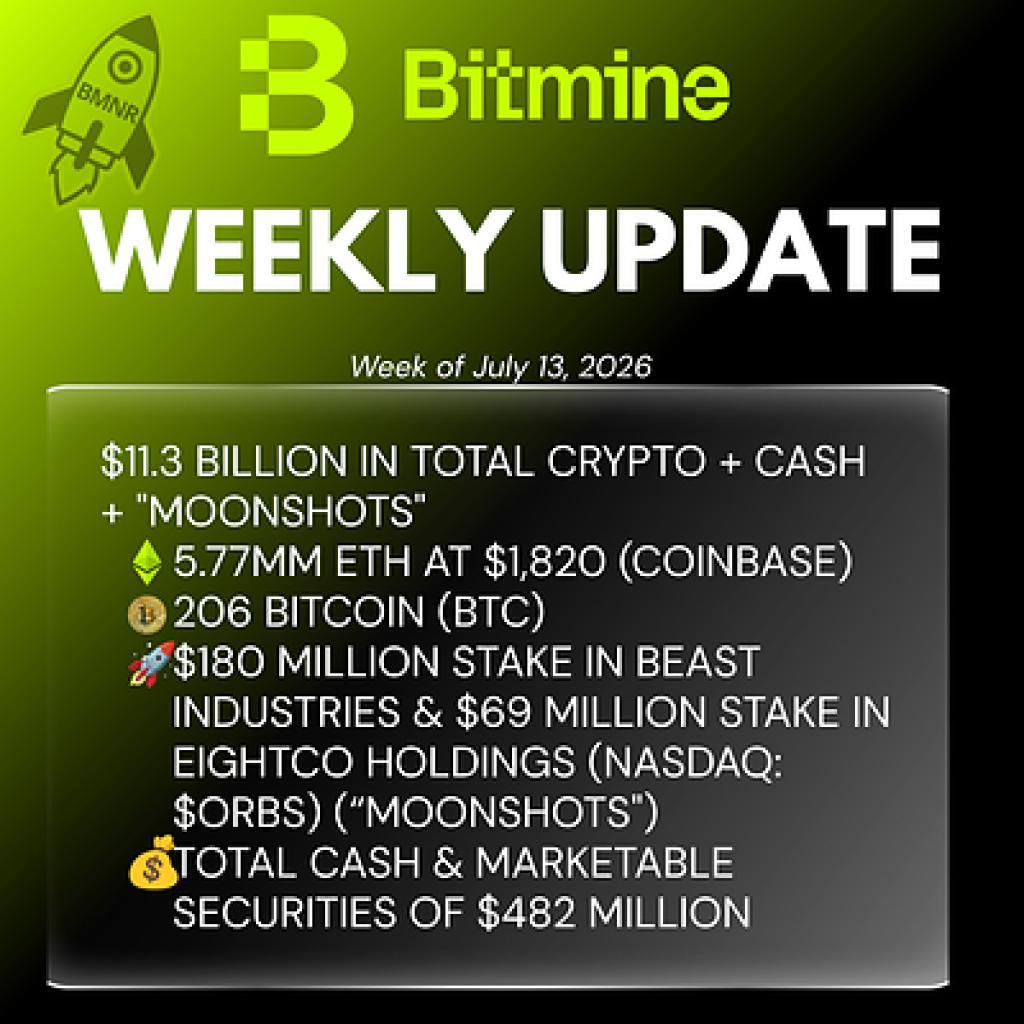
Bitmine Immersion Technologies (BMNR) Announces ETH Holdings Reach 5.77 Million Tokens, and Total Crypto and Total Cash Holdings of $11.3 Billion

Aurra Markets Strengthens MENA Presence Following Money Expo Abu Dhabi 2026