Bitcoin Momentum Indicator Drops to -59 as Demand Turns Negative
Bitcoin’s momentum indicator has fallen to -59, while its 30-day active buying demand metric has turned negative, signaling a notable shift in short-term market participation that traders are watching closely.
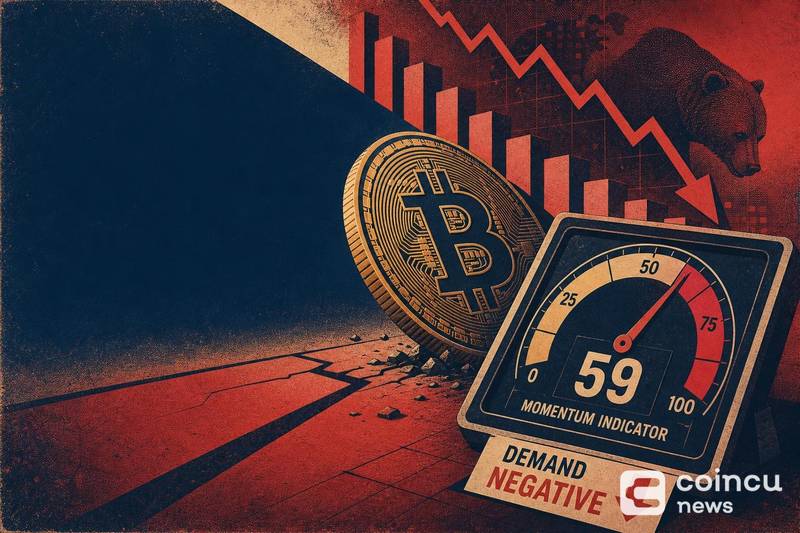
The decline in the momentum indicator reflects weakening buying pressure over the past month. CoinDesk reported that Bitcoin’s demand gauge sank to its worst level since December as the rally lost spot support.
A separate CoinDesk analysis from March had already flagged that Bitcoin’s momentum indicator was flashing a signal that should concern bulls, suggesting the current reading of -59 represents a continuation of deteriorating conditions rather than a sudden shift.
What a -59 momentum reading tells traders
How the metric works
Bitcoin momentum indicators measure the rate and direction of price change over a defined period. A reading of -59 means that selling activity has significantly outpaced buying activity across the measurement window.
The metric does not predict future price direction on its own. It captures the current state of participation, showing whether buyers or sellers are more active at present levels.
What -59 reflects
A reading this deep into negative territory indicates that spot market buyers have pulled back substantially. The -59 level suggests that for every unit of active buying, selling pressure has been meaningfully stronger over the trailing period.
Why traders monitor this signal
Momentum readings help traders assess whether a trend has conviction behind it. When the indicator sits well below zero, it signals that recent price action lacks the buying support needed to sustain upward movement.
Traders use this alongside other data points, including on-chain activity and derivatives positioning, to form a more complete picture. The futures taker cumulative volume delta on CryptoQuant offers one such complementary view of directional conviction in the derivatives market.
Why negative 30-day active buying demand matters
What active buying demand represents
Active buying demand tracks the net flow of market orders that execute at the ask price versus the bid price over a rolling window. When this metric turns negative, it means more market participants are hitting bids (selling) than lifting offers (buying).
The significance of a 30-day window
A 30-day measurement smooths out daily noise and captures a sustained behavioral shift. Short-duration dips in buying demand can reflect brief pullbacks. A full month of negative readings points to a more structural change in market participation.
This is particularly relevant given that earlier reporting noted Bitcoin’s demand gauge reaching its worst level since December, reinforcing that the current weakness is not a one-day anomaly.
Sentiment implications
Negative active buying demand often coincides with cautious positioning across both spot and derivatives markets. It can reflect reduced confidence among newer market entrants while longer-term holders remain relatively static.
Recent developments in the broader digital asset space, such as Gate and Alpaca’s strategic partnership on digital asset and traditional finance integration, show that institutional infrastructure continues to expand even during periods of softer retail demand.
How traders may interpret weakening Bitcoin demand
Immediate market behavior
When both momentum and active buying demand turn negative simultaneously, traders typically expect increased volatility. Reduced buying conviction can lead to sharper price reactions on negative catalysts, as fewer participants are positioned to absorb sell pressure.
Risk appetite tends to contract in these environments. Leveraged long positions face higher liquidation risk when spot demand is not supporting price floors.
Possible scenarios from here
Bearish momentum readings can resolve in two primary ways. The first is an extended move lower as selling pressure compounds and buyers continue to stand aside. The second is a momentum reset, where the indicator bottoms and begins to recover as prices reach levels that attract fresh demand.
Neither outcome is predetermined by the indicator alone. The path depends on whether new catalysts, including on-chain shifts in long-dormant holdings like the recent movement of 35.55 BTC from a 15-year dormant wallet, add to selling pressure or remain isolated events.
Risk management considerations
Traders responding to negative momentum readings often reduce position sizes or tighten stop-loss levels. The signal does not call for panic selling, but it does warrant closer attention to downside scenarios.
Portfolio rebalancing into stablecoins or other lower-volatility positions is a common response. Developments in Mastercard’s expansion of on-chain settlement for stablecoins have made such rotations increasingly practical within on-chain ecosystems.
What signals could confirm or challenge this bearish setup
Confirmation signals to watch
If the momentum indicator continues to fall below -59, or if active buying demand remains negative for another 15 to 30 days, the bearish interpretation gains strength. Increasing exchange inflows, where holders move Bitcoin onto exchanges for potential sale, would provide additional confirmation.
Derivatives data, including negative funding rates and declining open interest, would further support the thesis that market participants are reducing exposure.
Invalidation clues
A sharp reversal in the momentum indicator back toward zero, combined with a return to positive active buying demand, would suggest the current weakness was a temporary pullback rather than the start of a deeper correction.
Renewed spot buying from institutional allocators or significant ETF inflow activity could override the current bearish signals quickly. On-chain metrics showing coins moving off exchanges would also challenge the bearish reading.
Timing considerations
Momentum indicators are lagging by nature since they measure what has already happened. Traders should watch for leading indicators, such as order book depth, funding rate shifts, and real-time exchange flow data, to get earlier signals of a trend change.
The next one to two weeks of price action will be particularly informative. If Bitcoin holds current price levels despite the negative momentum reading, it would suggest underlying support that the indicator is not capturing.
FAQ
What does a -59 Bitcoin momentum reading mean?
A momentum reading of -59 indicates that selling activity has substantially outpaced buying activity over the measurement period. The further below zero the reading falls, the weaker the buying participation relative to selling pressure. It does not guarantee further price declines but signals reduced bullish conviction.
Is negative 30-day active buying demand bearish?
Negative active buying demand over a 30-day window is generally interpreted as a bearish signal because it shows a sustained period where sellers dominated market order flow. However, it is a descriptive metric, not a predictive one. Extended negative readings can precede both further declines and eventual reversals.
What should traders watch next?
Key signals include whether the momentum indicator stabilizes or continues falling, whether exchange inflows increase (suggesting more holders preparing to sell), and whether derivatives metrics like funding rates and open interest confirm the bearish setup. A return to positive active buying demand would be the clearest sign of recovery.
Disclaimer: This article is for informational purposes only and does not constitute financial or investment advice. Cryptocurrency and digital asset markets carry significant risk. Always do your own research before making decisions.
No tags available.


Other Posts








- Amplify 2024: Ohio’s Premier Blockchain Summit
- China, US Conclude Trade Talks with Focus on Cooperation
- Crypto Weekly: NYSE Backs OKX, Kraken Gets Fed Access, BTC Sells
- DeriW Launches Edge Hour Trading Competition Platform for Derivatives Traders
- Michael Saylor Denies Bitcoin Sell-Off Amid Large BTC Transfer
- Court Upholds Fed’s Rejection of Custodia Bank’s Request
- Former CFO Convicted for $35M Fraudulent Crypto Investment
- EU Opens Antitrust Probe Into Deutsche Boerse and Nasdaq Derivatives Dealings
- Kazakhstan Explores Crypto Reserves Backed by National Funds
- JPMorgan Increases Holdings in BlackRock’s Bitcoin ETF
- Nordea Bank Introduces Bitcoin ETP Trading for Nordic Customers
- XRP Spot ETF Launches on Nasdaq Amid Market Fluctuations
- JPMorgan Chase Launches 24/7 Digital Deposit Token for Clients
- Crypto Leaders Address Macro Volatility Amid Market Shifts
- Buy Dogecoin on eToro: Step-by-Step Guide for Beginners (2024)
- Peter Schiff Challenges Michael Saylor on MSTR’s Business Model
- Thailand Orders Worldcoin to Delete 1.2 Million Biometric Records
- UK Proposes New DeFi Tax Framework to Ease User Burden
- U.S. Treasury Proposes New Tax Relief Regulations
- Uniswap’s UNIfication Proposal Gains Massive Preliminary Support
- Amplify 2024: Ohio’s Premier Blockchain Summit
- China, US Conclude Trade Talks with Focus on Cooperation
- Crypto Weekly: NYSE Backs OKX, Kraken Gets Fed Access, BTC Sells
- DeriW Launches Edge Hour Trading Competition Platform for Derivatives Traders
- Michael Saylor Denies Bitcoin Sell-Off Amid Large BTC Transfer
- Court Upholds Fed’s Rejection of Custodia Bank’s Request
- Former CFO Convicted for $35M Fraudulent Crypto Investment
- EU Opens Antitrust Probe Into Deutsche Boerse and Nasdaq Derivatives Dealings
- Kazakhstan Explores Crypto Reserves Backed by National Funds
- JPMorgan Increases Holdings in BlackRock’s Bitcoin ETF
- Nordea Bank Introduces Bitcoin ETP Trading for Nordic Customers
- XRP Spot ETF Launches on Nasdaq Amid Market Fluctuations
- JPMorgan Chase Launches 24/7 Digital Deposit Token for Clients
- Crypto Leaders Address Macro Volatility Amid Market Shifts
- Buy Dogecoin on eToro: Step-by-Step Guide for Beginners (2024)
- Peter Schiff Challenges Michael Saylor on MSTR’s Business Model
- Thailand Orders Worldcoin to Delete 1.2 Million Biometric Records
- UK Proposes New DeFi Tax Framework to Ease User Burden
- U.S. Treasury Proposes New Tax Relief Regulations
- Uniswap’s UNIfication Proposal Gains Massive Preliminary Support
- Amplify 2024: Ohio’s Premier Blockchain Summit
- China, US Conclude Trade Talks with Focus on Cooperation
- Crypto Weekly: NYSE Backs OKX, Kraken Gets Fed Access, BTC Sells
- DeriW Launches Edge Hour Trading Competition Platform for Derivatives Traders
- Michael Saylor Denies Bitcoin Sell-Off Amid Large BTC Transfer
- Court Upholds Fed’s Rejection of Custodia Bank’s Request
- Former CFO Convicted for $35M Fraudulent Crypto Investment
- EU Opens Antitrust Probe Into Deutsche Boerse and Nasdaq Derivatives Dealings
- Kazakhstan Explores Crypto Reserves Backed by National Funds
- JPMorgan Increases Holdings in BlackRock’s Bitcoin ETF
- Nordea Bank Introduces Bitcoin ETP Trading for Nordic Customers
- XRP Spot ETF Launches on Nasdaq Amid Market Fluctuations
- JPMorgan Chase Launches 24/7 Digital Deposit Token for Clients
- Crypto Leaders Address Macro Volatility Amid Market Shifts
- Buy Dogecoin on eToro: Step-by-Step Guide for Beginners (2024)
- Peter Schiff Challenges Michael Saylor on MSTR’s Business Model
- Thailand Orders Worldcoin to Delete 1.2 Million Biometric Records
- UK Proposes New DeFi Tax Framework to Ease User Burden
- U.S. Treasury Proposes New Tax Relief Regulations
- Uniswap’s UNIfication Proposal Gains Massive Preliminary Support
Latest



Gate and Alpaca Announce Strategic Partnership on Digital Asset and Traditional Finance Integration
Press Release

Can Beginners Use AI Trading Bots Without Coding or Watching Charts? Why I Started Paying Attention to BulkQuant
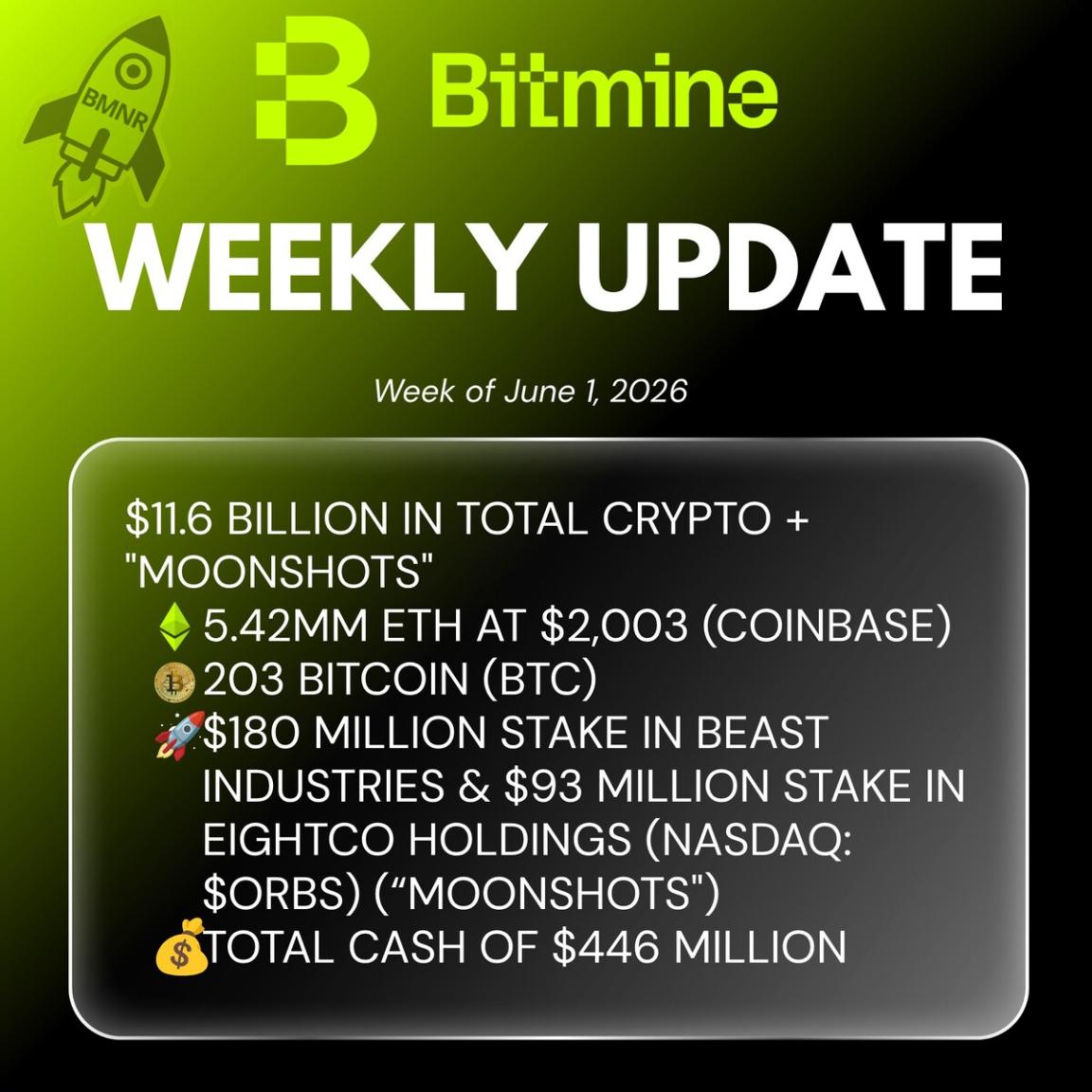
Bitmine Immersion Technologies (BMNR) Announces ETH Holdings Reach 5.42 Million Tokens, and Total Crypto and Total Cash Holdings of $11.6 Billion