A crypto whale borrowed $142 million in USDT from the Aave lending protocol and used the funds to accumulate 87,680 ETH within a 30-hour window, signaling aggressive leveraged conviction on Ethereum’s near-term price trajectory.
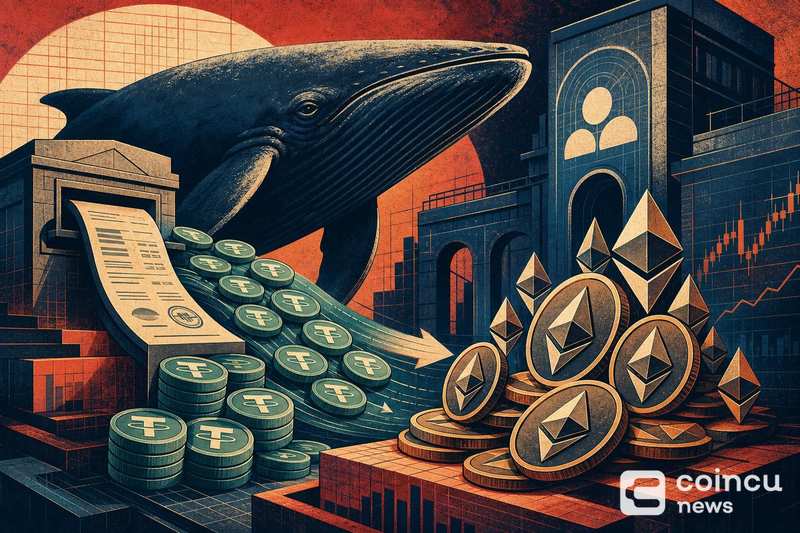
Whale Used Aave Borrowing Power to Accumulate 87,680 ETH
On-chain data shows the whale’s address executed a series of large ETH purchases funded entirely by borrowed USDT. The wallet in question completed the accumulation across multiple transactions over roughly 30 hours.
The total haul of 87,680 ETH, purchased with $142 million in borrowed stablecoins, represents one of the larger single-entity leveraged spot accumulations tracked on Aave in recent months. The activity was first flagged by on-chain monitoring services.
Using borrowed USDT rather than existing capital allowed the whale to maintain other positions while gaining concentrated ETH exposure. This approach preserves collateral optionality but introduces liquidation risk if ETH declines sharply against the borrowed amount.
ON-CHAIN DATA
- Wallet: 0xc70a…3810
- Amount borrowed: $142 million USDT via Aave
- ETH accumulated: 87,680 ETH
- Timeframe: ~30 hours
Why Borrowing USDT on Aave Matters for This ETH Bet
Aave allows users to deposit collateral assets and borrow against them at variable or stable rates. The whale likely deposited existing crypto holdings, then borrowed USDT to deploy immediately into ETH spot markets.
This approach differs from a standard spot purchase in one critical way: the buyer is now exposed to both ETH price risk and loan maintenance requirements. If the value of their collateral drops relative to the borrowed amount, the position faces partial or full liquidation.
The choice to borrow USDT specifically, rather than selling existing assets, suggests the whale wanted to maintain long exposure across their full portfolio while adding leveraged ETH. This is a strategy sometimes used by entities who expect near-term appreciation and want to avoid taxable disposals of other holdings.
What the 30-Hour Buying Spree Signals for Ethereum Sentiment
The compressed timeframe of the accumulation, roughly 30 hours from first borrow to final ETH purchase, points to urgency. A buyer with $142 million in borrowed capital does not typically rush execution unless they perceive a tactical entry window or expect a catalyst.
Position size alone suggests high conviction. At an implied average price of approximately $1,619 per ETH (calculated from $142 million divided by 87,680 ETH), the whale was comfortable taking a nine-figure leveraged bet on Ethereum at current levels.
Large leveraged accumulations by single entities are closely watched by market participants. Similar moves in the past, such as those involving large crypto-collateralized lending positions, have preceded periods of elevated volatility in either direction.
However, a single whale’s conviction is a sentiment signal, not a guarantee of price direction. The broader market context, including Ethereum’s position within the evolving Layer 2 ecosystem, determines whether such bets prove correct.
Risks Behind a Leveraged ETH Accumulation Strategy
The primary risk is liquidation. If ETH drops sufficiently, or if the collateral assets backing the USDT loan decline in value, Aave’s smart contracts will automatically liquidate portions of the position to repay lenders. The whale would lose ETH at unfavorable prices.
Volatility compounds this risk. ETH has historically experienced drawdowns of 20% or more within days during market stress events. A $142 million leveraged position would face severe pressure during such moves, potentially triggering cascading sells that amplify the decline.
For retail traders observing this activity, copy-trading whale behavior carries asymmetric risk. The whale likely has a diversified portfolio, access to additional capital for margin calls, and risk management infrastructure that individual traders lack. A position that is manageable at $142 million in a larger portfolio context could be catastrophic for a smaller account using similar leverage ratios.
The move also highlights how DeFi lending protocols like Aave enable capital efficiency that was previously available only through centralized prime brokerages. As stablecoin infrastructure matures, these leveraged strategies are becoming more accessible, but the underlying risks remain unchanged.
Key Questions About the Whale’s Aave-Funded ETH Purchase
What is Aave?
Aave is a decentralized lending and borrowing protocol on Ethereum and other chains. Users deposit crypto as collateral and can borrow other assets, including stablecoins like USDT, against that collateral without intermediaries.
Why did the whale borrow USDT instead of buying ETH directly?
Borrowing allows the whale to maintain existing positions while gaining new exposure. Selling other assets to buy ETH would reduce their portfolio elsewhere and potentially trigger taxable events. Borrowing preserves optionality at the cost of interest payments and liquidation risk.
Does this mean ETH is expected to rise?
The whale’s behavior signals personal conviction, not market certainty. Large leveraged buys can influence short-term sentiment, but they do not predict sustained price direction. Whales have been wrong before, and leveraged positions that fail often accelerate downward moves.
What risks come with leveraged whale trades?
Liquidation is the primary risk. If collateral value drops below required thresholds, Aave automatically sells assets to cover the loan. The whale also faces interest rate risk on the borrowed USDT and general market risk on the accumulated ETH position.
Disclaimer: This article is for informational purposes only and does not constitute financial or investment advice. Cryptocurrency and digital asset markets carry significant risk. Always do your own research before making decisions.
No tags available.


Other Posts








- China, US Conclude Trade Talks with Focus on Cooperation
- Crypto Weekly: NYSE Backs OKX, Kraken Gets Fed Access, BTC Sells
- Court Upholds Fed’s Rejection of Custodia Bank’s Request
- Former CFO Convicted for $35M Fraudulent Crypto Investment
- DeriW Launches Edge Hour Trading Competition Platform for Derivatives Traders
- Michael Saylor Denies Bitcoin Sell-Off Amid Large BTC Transfer
- Buy Dogecoin on eToro: Step-by-Step Guide for Beginners (2024)
- Kazakhstan Explores Crypto Reserves Backed by National Funds
- JPMorgan Increases Holdings in BlackRock’s Bitcoin ETF
- Nordea Bank Introduces Bitcoin ETP Trading for Nordic Customers
- XRP Spot ETF Launches on Nasdaq Amid Market Fluctuations
- Peter Schiff Challenges Michael Saylor on MSTR’s Business Model
- Thailand Orders Worldcoin to Delete 1.2 Million Biometric Records
- UK Proposes New DeFi Tax Framework to Ease User Burden
- WLFI Under Fire: Analyst Warns Hyperliquid Could Be Next
- Ancient Ethereum Whale Moves $1.19 Billion After Decade
- BlackRock Receives Large Crypto Transfers from Coinbase
- SEC Scrutiny on ALT5 Sigma’s Leadership Disclosure Timing
- Yala Injects $5.5 Million Amid Recovery Efforts
- Radiant Capital Faces $50M Loss in Major Security Breach
- China, US Conclude Trade Talks with Focus on Cooperation
- Crypto Weekly: NYSE Backs OKX, Kraken Gets Fed Access, BTC Sells
- Court Upholds Fed’s Rejection of Custodia Bank’s Request
- Former CFO Convicted for $35M Fraudulent Crypto Investment
- DeriW Launches Edge Hour Trading Competition Platform for Derivatives Traders
- Michael Saylor Denies Bitcoin Sell-Off Amid Large BTC Transfer
- Buy Dogecoin on eToro: Step-by-Step Guide for Beginners (2024)
- Kazakhstan Explores Crypto Reserves Backed by National Funds
- JPMorgan Increases Holdings in BlackRock’s Bitcoin ETF
- Nordea Bank Introduces Bitcoin ETP Trading for Nordic Customers
- XRP Spot ETF Launches on Nasdaq Amid Market Fluctuations
- Peter Schiff Challenges Michael Saylor on MSTR’s Business Model
- Thailand Orders Worldcoin to Delete 1.2 Million Biometric Records
- UK Proposes New DeFi Tax Framework to Ease User Burden
- WLFI Under Fire: Analyst Warns Hyperliquid Could Be Next
- Ancient Ethereum Whale Moves $1.19 Billion After Decade
- BlackRock Receives Large Crypto Transfers from Coinbase
- SEC Scrutiny on ALT5 Sigma’s Leadership Disclosure Timing
- Yala Injects $5.5 Million Amid Recovery Efforts
- Radiant Capital Faces $50M Loss in Major Security Breach
- China, US Conclude Trade Talks with Focus on Cooperation
- Crypto Weekly: NYSE Backs OKX, Kraken Gets Fed Access, BTC Sells
- Court Upholds Fed’s Rejection of Custodia Bank’s Request
- Former CFO Convicted for $35M Fraudulent Crypto Investment
- DeriW Launches Edge Hour Trading Competition Platform for Derivatives Traders
- Michael Saylor Denies Bitcoin Sell-Off Amid Large BTC Transfer
- Buy Dogecoin on eToro: Step-by-Step Guide for Beginners (2024)
- Kazakhstan Explores Crypto Reserves Backed by National Funds
- JPMorgan Increases Holdings in BlackRock’s Bitcoin ETF
- Nordea Bank Introduces Bitcoin ETP Trading for Nordic Customers
- XRP Spot ETF Launches on Nasdaq Amid Market Fluctuations
- Peter Schiff Challenges Michael Saylor on MSTR’s Business Model
- Thailand Orders Worldcoin to Delete 1.2 Million Biometric Records
- UK Proposes New DeFi Tax Framework to Ease User Burden
- WLFI Under Fire: Analyst Warns Hyperliquid Could Be Next
- Ancient Ethereum Whale Moves $1.19 Billion After Decade
- BlackRock Receives Large Crypto Transfers from Coinbase
- SEC Scrutiny on ALT5 Sigma’s Leadership Disclosure Timing
- Yala Injects $5.5 Million Amid Recovery Efforts
- Radiant Capital Faces $50M Loss in Major Security Breach



RISEx Launches ‘Ignite’ Season 1 Points Program, Following $3B in Volume During the Early Access Phase

Zoomex X Space Recap With Fernando Llorente and the World Cup Final Panel