Tether Appoints Independent Directors to Twenty One Capital Board, Restores Audit Committee
Tether has appointed independent directors to the Twenty One Capital board, restoring a full audit committee structure in a governance move that strengthens oversight at the Bitcoin-focused company.
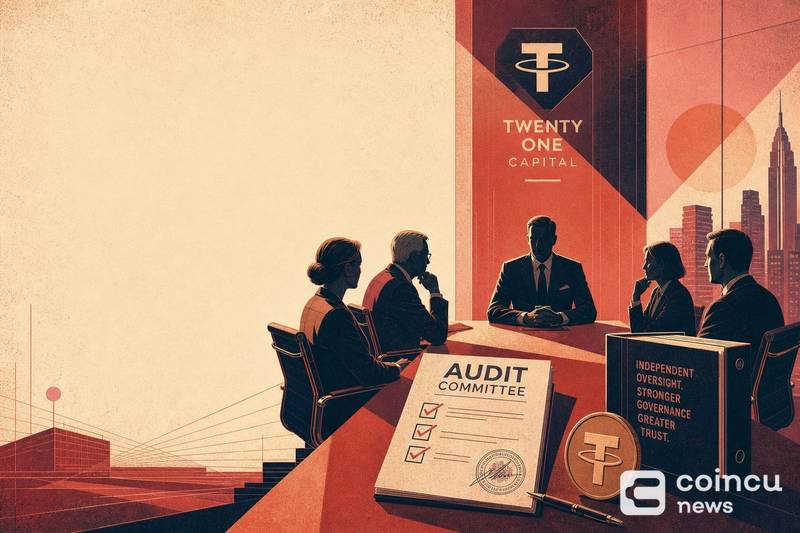
The board changes were disclosed in an amended 8-K filing with the U.S. Securities and Exchange Commission. The filing details material changes to the company’s board composition, including the addition of independent directors who will serve on the reconstituted audit committee.
The move comes as Tether International has been deepening its commitment to Twenty One Capital, including through its acquisition of SoftBank’s stake in the company. That transaction signaled Tether’s growing strategic interest in the firm’s Bitcoin treasury operations.
What Independent Directors Bring to the Board
Independent directors are board members with no material relationship to the company or its controlling shareholders. Their role is to represent the interests of all shareholders, not just majority stakeholders, and to provide unbiased oversight of management decisions.
In publicly traded companies, independent directors are particularly important for audit committees, compensation committees, and governance functions. U.S. securities regulations and exchange listing standards typically require a minimum number of independent directors on the audit committee.
For Twenty One Capital, which trades under the ticker XXI, the appointments fill what had been a gap in its board structure. The company had previously operated without a complete audit committee, a situation that can raise governance concerns among institutional investors and regulators.
Why a Full Audit Committee Structure Matters
An audit committee is a subset of the board of directors responsible for overseeing financial reporting, internal controls, and the relationship with external auditors. A fully constituted audit committee is a baseline governance requirement for companies listed on major U.S. exchanges.
Without a full audit committee, a company may face heightened scrutiny from regulators and limited confidence from institutional investors. Restoring the committee signals that Twenty One Capital is formalizing its governance processes as it scales its operations.
The restored structure does not, on its own, guarantee improved financial outcomes or regulatory compliance. It does, however, establish the oversight framework necessary for transparent reporting and accountability to shareholders.
Governance Signals at Twenty One Capital
The appointment of independent directors, combined with the audit committee restoration, suggests Twenty One Capital is moving toward institutional-grade governance. This is consistent with Tether’s broader strategy of positioning the company as a serious, regulated vehicle for Bitcoin accumulation.
Readers should note that governance improvements are structural changes, not performance guarantees. The presence of independent directors creates the conditions for stronger oversight, but the quality of that oversight depends on the directors’ engagement and the company’s responsiveness to their input.
The governance update is notable in the context of the broader crypto industry’s push toward compliance and institutional credibility. Companies operating at the intersection of traditional finance and digital assets, such as those pursuing Bitcoin accumulation strategies, face increasing pressure to meet conventional corporate governance standards.
This kind of structural governance formalization also affects how crypto-adjacent equities are perceived alongside broader market narratives, including how institutional investors evaluate crypto exposure in their portfolios.
What to Watch Next
Investors and observers should monitor Twenty One Capital’s upcoming SEC filings for details on the identities and backgrounds of the newly appointed independent directors. Committee assignments, compensation structures, and any related governance policies will likely appear in subsequent proxy filings or 8-K amendments.
The company’s next quarterly filing should reflect the audit committee’s oversight in its financial disclosures. Any changes to the company’s auditor relationship or internal control assessments would also be worth tracking as the firm navigates a regulatory environment where even infrastructure-level developments like Layer 2 scaling upgrades are subject to increasing governance expectations.
Formal statements from Twenty One Capital’s management or from Tether regarding the strategic direction of the board could provide additional clarity on the company’s governance roadmap.
FAQ
What is Twenty One Capital?
Twenty One Capital (ticker: XXI) is a publicly traded company focused on Bitcoin treasury operations. Tether is a major stakeholder, having acquired additional shares through its purchase of SoftBank’s position in the company.
What does an independent director do?
An independent director serves on a company’s board without material ties to the company or its controlling shareholders. Their primary function is to provide unbiased oversight, protect minority shareholder interests, and serve on key committees such as the audit committee.
Why is a full audit committee important?
A full audit committee ensures that a company’s financial reporting, internal controls, and external audit relationships are overseen by qualified, independent board members. U.S. exchange listing standards generally require companies to maintain a fully constituted audit committee.
What changed in this announcement?
Tether appointed independent directors to the Twenty One Capital board, which restored the company’s full audit committee structure. The changes were disclosed in an amended 8-K filing with the SEC, reflecting material updates to the company’s corporate governance.
Disclaimer: This article is for informational purposes only and does not constitute financial or investment advice. Cryptocurrency and digital asset markets carry significant risk. Always do your own research before making decisions.
No tags available.


Other Posts






- China, US Conclude Trade Talks with Focus on Cooperation
- Crypto Weekly: NYSE Backs OKX, Kraken Gets Fed Access, BTC Sells
- Court Upholds Fed’s Rejection of Custodia Bank’s Request
- Former CFO Convicted for $35M Fraudulent Crypto Investment
- DeriW Launches Edge Hour Trading Competition Platform for Derivatives Traders
- Michael Saylor Denies Bitcoin Sell-Off Amid Large BTC Transfer
- Buy Dogecoin on eToro: Step-by-Step Guide for Beginners (2024)
- Kazakhstan Explores Crypto Reserves Backed by National Funds
- JPMorgan Increases Holdings in BlackRock’s Bitcoin ETF
- Nordea Bank Introduces Bitcoin ETP Trading for Nordic Customers
- XRP Spot ETF Launches on Nasdaq Amid Market Fluctuations
- Peter Schiff Challenges Michael Saylor on MSTR’s Business Model
- Thailand Orders Worldcoin to Delete 1.2 Million Biometric Records
- UK Proposes New DeFi Tax Framework to Ease User Burden
- WLFI Under Fire: Analyst Warns Hyperliquid Could Be Next
- Ancient Ethereum Whale Moves $1.19 Billion After Decade
- BlackRock Receives Large Crypto Transfers from Coinbase
- SEC Scrutiny on ALT5 Sigma’s Leadership Disclosure Timing
- Yala Injects $5.5 Million Amid Recovery Efforts
- Radiant Capital Faces $50M Loss in Major Security Breach
- China, US Conclude Trade Talks with Focus on Cooperation
- Crypto Weekly: NYSE Backs OKX, Kraken Gets Fed Access, BTC Sells
- Court Upholds Fed’s Rejection of Custodia Bank’s Request
- Former CFO Convicted for $35M Fraudulent Crypto Investment
- DeriW Launches Edge Hour Trading Competition Platform for Derivatives Traders
- Michael Saylor Denies Bitcoin Sell-Off Amid Large BTC Transfer
- Buy Dogecoin on eToro: Step-by-Step Guide for Beginners (2024)
- Kazakhstan Explores Crypto Reserves Backed by National Funds
- JPMorgan Increases Holdings in BlackRock’s Bitcoin ETF
- Nordea Bank Introduces Bitcoin ETP Trading for Nordic Customers
- XRP Spot ETF Launches on Nasdaq Amid Market Fluctuations
- Peter Schiff Challenges Michael Saylor on MSTR’s Business Model
- Thailand Orders Worldcoin to Delete 1.2 Million Biometric Records
- UK Proposes New DeFi Tax Framework to Ease User Burden
- WLFI Under Fire: Analyst Warns Hyperliquid Could Be Next
- Ancient Ethereum Whale Moves $1.19 Billion After Decade
- BlackRock Receives Large Crypto Transfers from Coinbase
- SEC Scrutiny on ALT5 Sigma’s Leadership Disclosure Timing
- Yala Injects $5.5 Million Amid Recovery Efforts
- Radiant Capital Faces $50M Loss in Major Security Breach
- China, US Conclude Trade Talks with Focus on Cooperation
- Crypto Weekly: NYSE Backs OKX, Kraken Gets Fed Access, BTC Sells
- Court Upholds Fed’s Rejection of Custodia Bank’s Request
- Former CFO Convicted for $35M Fraudulent Crypto Investment
- DeriW Launches Edge Hour Trading Competition Platform for Derivatives Traders
- Michael Saylor Denies Bitcoin Sell-Off Amid Large BTC Transfer
- Buy Dogecoin on eToro: Step-by-Step Guide for Beginners (2024)
- Kazakhstan Explores Crypto Reserves Backed by National Funds
- JPMorgan Increases Holdings in BlackRock’s Bitcoin ETF
- Nordea Bank Introduces Bitcoin ETP Trading for Nordic Customers
- XRP Spot ETF Launches on Nasdaq Amid Market Fluctuations
- Peter Schiff Challenges Michael Saylor on MSTR’s Business Model
- Thailand Orders Worldcoin to Delete 1.2 Million Biometric Records
- UK Proposes New DeFi Tax Framework to Ease User Burden
- WLFI Under Fire: Analyst Warns Hyperliquid Could Be Next
- Ancient Ethereum Whale Moves $1.19 Billion After Decade
- BlackRock Receives Large Crypto Transfers from Coinbase
- SEC Scrutiny on ALT5 Sigma’s Leadership Disclosure Timing
- Yala Injects $5.5 Million Amid Recovery Efforts
- Radiant Capital Faces $50M Loss in Major Security Breach

Strategy Builds $4.75B Cash Cushion as Investors Seek More Than Bitcoin Exposure

Vitalik Buterin’s Ethereum Roadmap Prioritizes Privacy and Quantum Resistance

Trump Media Bitcoin Holdings Shrink as Crypto Losses Hit $361M
CT3 Begins Preparing Its Ecosystem for the Launch of the CT3GB Economy
Syntetika Launches Tokenization Hub Bringing Regulated Investment Strategies Onchain