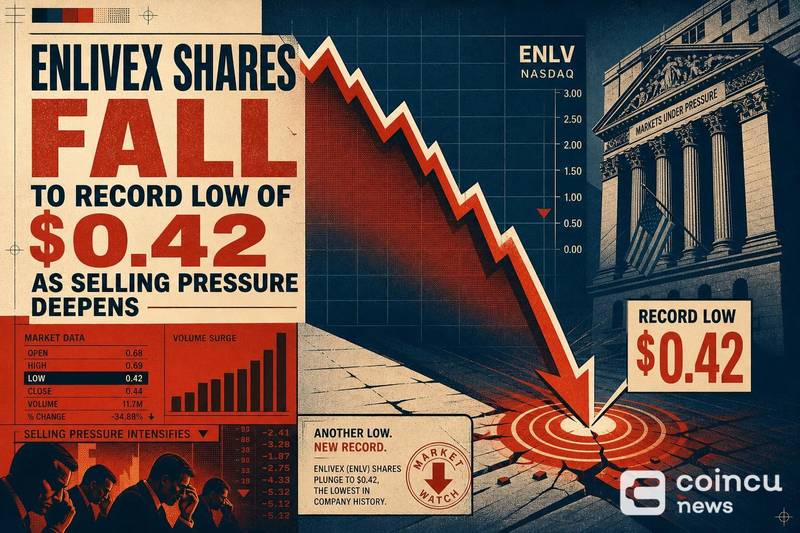
Enlivex Shares Fall to Record Low of $0.42 as Selling Pressure Deepens
Enlivex shares fell to a record low of $0.42, deepening a prolonged selloff that has erased the bulk of the company’s market value. The decline comes just days before the company is set to execute a 1-for-15 reverse stock split on July 9, 2026.
Reverse stock split set for July 9
Enlivex announced a 1-for-15 reverse stock split effective July 9, 2026. The move will consolidate every 15 existing shares into a single share, a mechanism commonly used by companies whose stock price has fallen below exchange listing requirements. For related coverage, see New Hampshire lawmakers to hold hearing on $100 million Bitcoin bond proposal.
The announcement coincided with further selling pressure that pushed shares to the $0.42 level, marking a new all-time low for the stock. Reverse splits at this scale often signal that a company is working to maintain compliance with minimum bid price rules on exchanges like Nasdaq.
What a record low signals for investor confidence
A record low means the stock has never traded at a cheaper price in its public history. For investors holding positions, this represents maximum unrealized loss relative to any prior entry point.
This level of price weakness typically reflects sustained selling pressure without meaningful buying interest to establish a floor. It does not, on its own, confirm the specific cause of the decline, whether that is fundamental deterioration, broader market conditions, or liquidity dynamics around the pending reverse split.
Enlivex has been active in capital markets in recent months. The company previously secured $21 million in debt financing to advance its drug programs, and separately announced plans for a $212 million PIPE tied to a prediction market token treasury. These capital-raising activities, while funding operations, can dilute existing shareholders and weigh on stock price.
Key signals traders will monitor after the split
Once the 1-for-15 reverse split takes effect, the nominal share price will increase proportionally while total shares outstanding decrease. Traders will watch whether the post-split price holds above exchange minimum thresholds or resumes its downward trajectory.
Short-term volatility around reverse splits is common, as the adjusted float and price level attract different types of market participants. Follow-through selling after the split would suggest the structural problems driving the decline remain unresolved.
Company communications in the days following the split will also matter. Any updates on clinical programs, cash runway, or the status of previously announced financing could shift sentiment. Without such catalysts, the stock may struggle to attract buyers at adjusted price levels.
Broader context for small-cap volatility
Sharp declines to record lows in small-cap biotech and therapeutics names are not uncommon in the current environment. Stocks trading below $1 face heightened risk of delisting and reduced institutional participation, as many funds have minimum price thresholds for portfolio inclusion.
The growing intersection of traditional equities and digital assets adds another dimension. On-chain tokenized stock trading volume hit a record $3.86 billion in June, suggesting that price action in names like Enlivex may increasingly be observed by participants in both traditional and tokenized markets. Meanwhile, SEC regulatory focus on tokenized securities continues to shape the compliance landscape for companies operating at this intersection.
For Enlivex, the immediate question is whether the reverse split achieves its apparent goal of maintaining listing compliance, and whether any operational catalysts emerge to support the adjusted share price in the weeks ahead.
Disclaimer: This article is for informational purposes only and does not constitute financial or investment advice. Cryptocurrency and digital asset markets carry significant risk. Always do your own research before making decisions.
No tags available.


Other Posts








- China, US Conclude Trade Talks with Focus on Cooperation
- Court Upholds Fed’s Rejection of Custodia Bank’s Request
- Crypto Weekly: NYSE Backs OKX, Kraken Gets Fed Access, BTC Sells
- Former CFO Convicted for $35M Fraudulent Crypto Investment
- DeriW Launches Edge Hour Trading Competition Platform for Derivatives Traders
- Michael Saylor Denies Bitcoin Sell-Off Amid Large BTC Transfer
- Buy Dogecoin on eToro: Step-by-Step Guide for Beginners (2024)
- Kazakhstan Explores Crypto Reserves Backed by National Funds
- JPMorgan Increases Holdings in BlackRock’s Bitcoin ETF
- Nordea Bank Introduces Bitcoin ETP Trading for Nordic Customers
- XRP Spot ETF Launches on Nasdaq Amid Market Fluctuations
- Peter Schiff Challenges Michael Saylor on MSTR’s Business Model
- Thailand Orders Worldcoin to Delete 1.2 Million Biometric Records
- UK Proposes New DeFi Tax Framework to Ease User Burden
- WLFI Under Fire: Analyst Warns Hyperliquid Could Be Next
- Ancient Ethereum Whale Moves $1.19 Billion After Decade
- BlackRock Receives Large Crypto Transfers from Coinbase
- SEC Scrutiny on ALT5 Sigma’s Leadership Disclosure Timing
- Yala Injects $5.5 Million Amid Recovery Efforts
- Radiant Capital Faces $50M Loss in Major Security Breach
- China, US Conclude Trade Talks with Focus on Cooperation
- Court Upholds Fed’s Rejection of Custodia Bank’s Request
- Crypto Weekly: NYSE Backs OKX, Kraken Gets Fed Access, BTC Sells
- Former CFO Convicted for $35M Fraudulent Crypto Investment
- DeriW Launches Edge Hour Trading Competition Platform for Derivatives Traders
- Michael Saylor Denies Bitcoin Sell-Off Amid Large BTC Transfer
- Buy Dogecoin on eToro: Step-by-Step Guide for Beginners (2024)
- Kazakhstan Explores Crypto Reserves Backed by National Funds
- JPMorgan Increases Holdings in BlackRock’s Bitcoin ETF
- Nordea Bank Introduces Bitcoin ETP Trading for Nordic Customers
- XRP Spot ETF Launches on Nasdaq Amid Market Fluctuations
- Peter Schiff Challenges Michael Saylor on MSTR’s Business Model
- Thailand Orders Worldcoin to Delete 1.2 Million Biometric Records
- UK Proposes New DeFi Tax Framework to Ease User Burden
- WLFI Under Fire: Analyst Warns Hyperliquid Could Be Next
- Ancient Ethereum Whale Moves $1.19 Billion After Decade
- BlackRock Receives Large Crypto Transfers from Coinbase
- SEC Scrutiny on ALT5 Sigma’s Leadership Disclosure Timing
- Yala Injects $5.5 Million Amid Recovery Efforts
- Radiant Capital Faces $50M Loss in Major Security Breach
- China, US Conclude Trade Talks with Focus on Cooperation
- Court Upholds Fed’s Rejection of Custodia Bank’s Request
- Crypto Weekly: NYSE Backs OKX, Kraken Gets Fed Access, BTC Sells
- Former CFO Convicted for $35M Fraudulent Crypto Investment
- DeriW Launches Edge Hour Trading Competition Platform for Derivatives Traders
- Michael Saylor Denies Bitcoin Sell-Off Amid Large BTC Transfer
- Buy Dogecoin on eToro: Step-by-Step Guide for Beginners (2024)
- Kazakhstan Explores Crypto Reserves Backed by National Funds
- JPMorgan Increases Holdings in BlackRock’s Bitcoin ETF
- Nordea Bank Introduces Bitcoin ETP Trading for Nordic Customers
- XRP Spot ETF Launches on Nasdaq Amid Market Fluctuations
- Peter Schiff Challenges Michael Saylor on MSTR’s Business Model
- Thailand Orders Worldcoin to Delete 1.2 Million Biometric Records
- UK Proposes New DeFi Tax Framework to Ease User Burden
- WLFI Under Fire: Analyst Warns Hyperliquid Could Be Next
- Ancient Ethereum Whale Moves $1.19 Billion After Decade
- BlackRock Receives Large Crypto Transfers from Coinbase
- SEC Scrutiny on ALT5 Sigma’s Leadership Disclosure Timing
- Yala Injects $5.5 Million Amid Recovery Efforts
- Radiant Capital Faces $50M Loss in Major Security Breach

Bitcoin miner HIVE signs five-year $350 million AI cloud contract


Paul Tudor Jones’ Firm Rebuys BlackRock Bitcoin ETF After Year of Selling
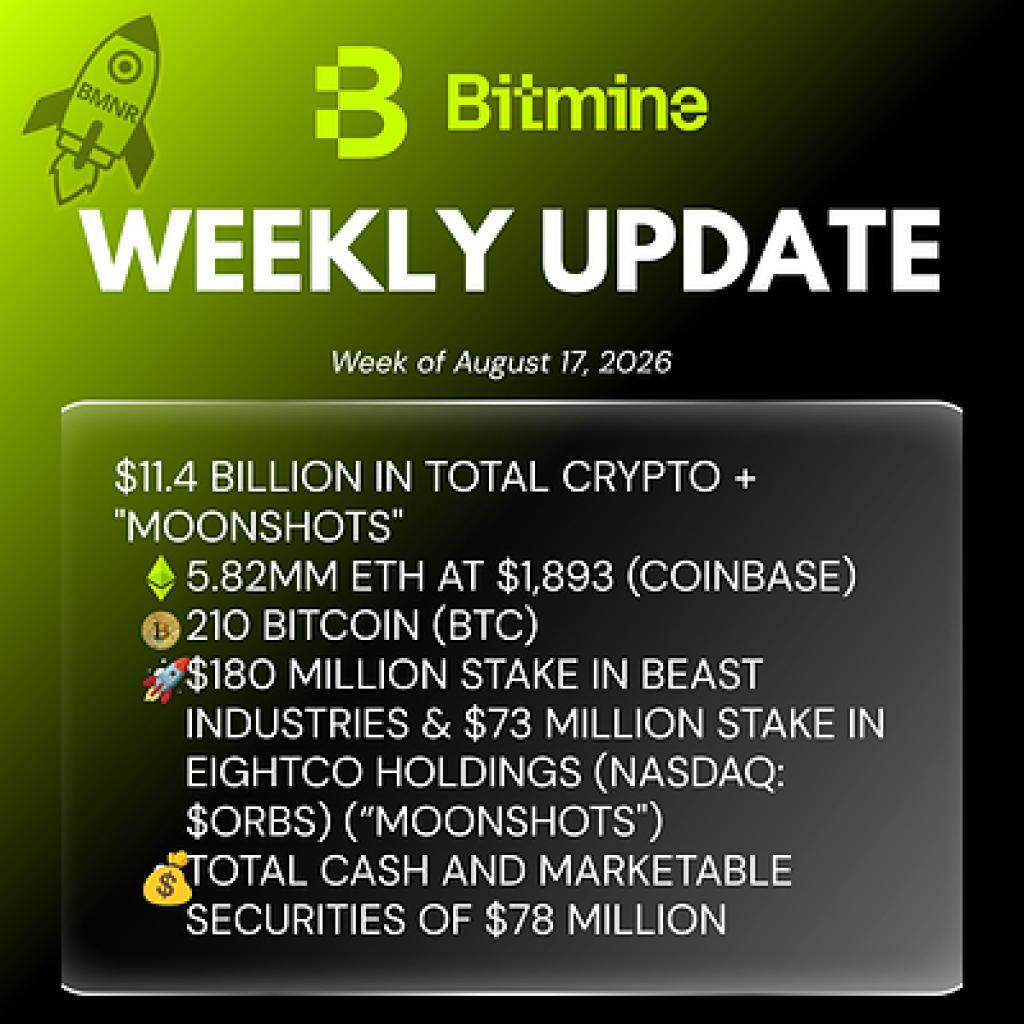
Bitmine Immersion Technologies (BMNR) Announces ETH Holdings Reach 5.82 Million Tokens, and Total Crypto and Total Cash Holdings of $11.4 Billion

BiggerZ: Building a Fairness-First Crypto Casino, Sportsbook and Prediction Markets Platform