Open USD Consortium Accused of Listing Samsung and Stablecoin Partners Without Consent
The Open USD Consortium is facing accusations of listing Samsung and other companies as stablecoin partners without obtaining their consent, raising questions about the credibility of the project’s claimed institutional backing.
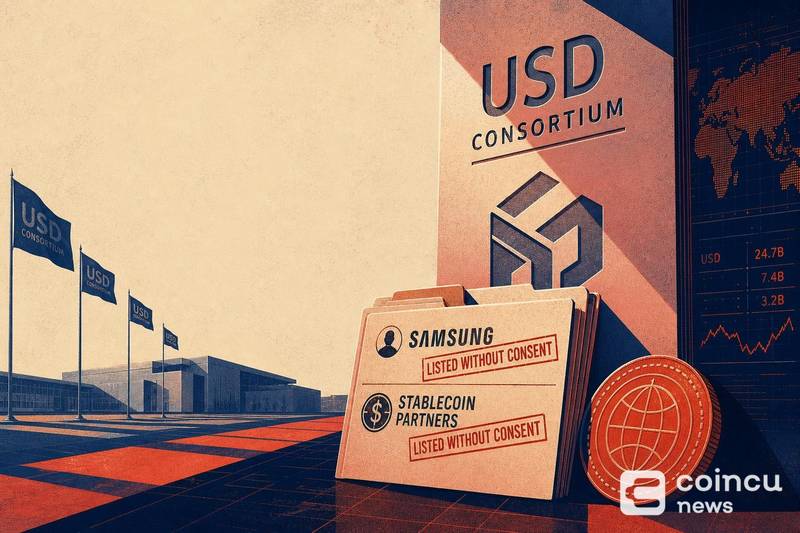
The allegation centers on the consortium’s public presentation of its partner roster. According to reporting from the Chosun Ilbo, the Open USD project listed Samsung and other entities as partners on its materials, despite those companies not having agreed to such an association. For related coverage, see Fintech Revolution Summit Malaysia 2026 Opens Sponsorship, Speaking, and Exhibition Opportunities.
The Open USD project, which describes itself as an open standard for stablecoins, introduced its vision through its official blog. The consortium positioned itself as building broad institutional support for a new stablecoin framework. For related coverage, see KR1 Transfers 3.7 Million LDO to Kraken: What It Could Mean.
Which companies were reportedly listed without permission
Samsung is the most prominent name cited in the accusation. The headline of the reporting also references “other stablecoin partners,” suggesting multiple entities were listed. For related coverage, see 40.54M USDT Transferred Out of Binance, Monitoring Data Shows.
At this time, the full list of companies allegedly included without consent has not been independently confirmed. Whether these listings appeared on the consortium’s website, pitch materials, or both remains an open question.
Being publicly named as a partner of a crypto project carries significant weight. Institutional names like Samsung signal legitimacy to potential users, investors, and other partners considering involvement. An unauthorized listing could mislead stakeholders about the project’s actual level of institutional support.
Why unauthorized partner claims undermine stablecoin trust
Stablecoin projects depend heavily on trust signals. Unlike volatile cryptocurrencies, stablecoins must convince users that the token is reliably backed and governed by credible parties. Partner listings serve as a core trust mechanism in this context.
When a consortium claims partnerships that were not consented to, it calls into question the accuracy of all other public representations. This is particularly damaging in the stablecoin sector, where the entire value proposition rests on transparency and institutional credibility. The incident is reminiscent of Spotify asking prediction markets Kalshi and Polymarket to remove its logos amid a separate dispute over unauthorized brand usage.
As Yahoo Finance reported, the stablecoin hype surrounding Open USD has faced backlash. The consent dispute adds another layer of scrutiny to a project already under pressure.
The broader stablecoin market continues to see new entrants, with projects like Bio Protocol recently launching OpenLabs with a USDC revenue model, illustrating the competitive landscape. Meanwhile, significant stablecoin movements on major exchanges continue to draw attention to the asset class.
What to watch for next
Several key developments will determine the impact of this accusation. The most important is whether Samsung or any other named company issues a public statement confirming or denying any partnership arrangement with the Open USD Consortium.
Equally significant is whether the consortium itself responds with documentation supporting its partner claims, or whether it removes the disputed listings from its materials. Neither outcome has been reported as of this writing.
Readers should also watch for any regulatory interest. Misrepresenting institutional partnerships in financial product marketing could attract attention from securities regulators, though no regulatory action has been announced or suggested at this stage.
FAQ
What is the Open USD Consortium?
The Open USD Consortium is a group that has positioned itself as building an open standard for stablecoins, as described on its official website.
Why is Samsung mentioned?
Samsung is the most prominent company allegedly listed as a partner by the consortium without its consent.
What does “without consent” mean in this context?
It means the accused consortium allegedly displayed company names or logos as partners or supporters without those companies having formally agreed to such an association.
Has any party issued an official response?
As of the time of this report, no public response from the Open USD Consortium, Samsung, or other named partners has been confirmed.
Why does this matter for stablecoin observers?
Unauthorized partner listings can mislead users and investors about the institutional backing behind a stablecoin project, undermining the trust that is essential to the asset class.
Disclaimer: This article is for informational purposes only and does not constitute financial or investment advice. Cryptocurrency and digital asset markets carry significant risk. Always do your own research before making decisions.
No tags available.


Other Posts








- China, US Conclude Trade Talks with Focus on Cooperation
- Crypto Weekly: NYSE Backs OKX, Kraken Gets Fed Access, BTC Sells
- Court Upholds Fed’s Rejection of Custodia Bank’s Request
- Former CFO Convicted for $35M Fraudulent Crypto Investment
- DeriW Launches Edge Hour Trading Competition Platform for Derivatives Traders
- Michael Saylor Denies Bitcoin Sell-Off Amid Large BTC Transfer
- Buy Dogecoin on eToro: Step-by-Step Guide for Beginners (2024)
- Kazakhstan Explores Crypto Reserves Backed by National Funds
- JPMorgan Increases Holdings in BlackRock’s Bitcoin ETF
- Nordea Bank Introduces Bitcoin ETP Trading for Nordic Customers
- XRP Spot ETF Launches on Nasdaq Amid Market Fluctuations
- Peter Schiff Challenges Michael Saylor on MSTR’s Business Model
- Thailand Orders Worldcoin to Delete 1.2 Million Biometric Records
- UK Proposes New DeFi Tax Framework to Ease User Burden
- WLFI Under Fire: Analyst Warns Hyperliquid Could Be Next
- Ancient Ethereum Whale Moves $1.19 Billion After Decade
- BlackRock Receives Large Crypto Transfers from Coinbase
- SEC Scrutiny on ALT5 Sigma’s Leadership Disclosure Timing
- Yala Injects $5.5 Million Amid Recovery Efforts
- Radiant Capital Faces $50M Loss in Major Security Breach
- China, US Conclude Trade Talks with Focus on Cooperation
- Crypto Weekly: NYSE Backs OKX, Kraken Gets Fed Access, BTC Sells
- Court Upholds Fed’s Rejection of Custodia Bank’s Request
- Former CFO Convicted for $35M Fraudulent Crypto Investment
- DeriW Launches Edge Hour Trading Competition Platform for Derivatives Traders
- Michael Saylor Denies Bitcoin Sell-Off Amid Large BTC Transfer
- Buy Dogecoin on eToro: Step-by-Step Guide for Beginners (2024)
- Kazakhstan Explores Crypto Reserves Backed by National Funds
- JPMorgan Increases Holdings in BlackRock’s Bitcoin ETF
- Nordea Bank Introduces Bitcoin ETP Trading for Nordic Customers
- XRP Spot ETF Launches on Nasdaq Amid Market Fluctuations
- Peter Schiff Challenges Michael Saylor on MSTR’s Business Model
- Thailand Orders Worldcoin to Delete 1.2 Million Biometric Records
- UK Proposes New DeFi Tax Framework to Ease User Burden
- WLFI Under Fire: Analyst Warns Hyperliquid Could Be Next
- Ancient Ethereum Whale Moves $1.19 Billion After Decade
- BlackRock Receives Large Crypto Transfers from Coinbase
- SEC Scrutiny on ALT5 Sigma’s Leadership Disclosure Timing
- Yala Injects $5.5 Million Amid Recovery Efforts
- Radiant Capital Faces $50M Loss in Major Security Breach
- China, US Conclude Trade Talks with Focus on Cooperation
- Crypto Weekly: NYSE Backs OKX, Kraken Gets Fed Access, BTC Sells
- Court Upholds Fed’s Rejection of Custodia Bank’s Request
- Former CFO Convicted for $35M Fraudulent Crypto Investment
- DeriW Launches Edge Hour Trading Competition Platform for Derivatives Traders
- Michael Saylor Denies Bitcoin Sell-Off Amid Large BTC Transfer
- Buy Dogecoin on eToro: Step-by-Step Guide for Beginners (2024)
- Kazakhstan Explores Crypto Reserves Backed by National Funds
- JPMorgan Increases Holdings in BlackRock’s Bitcoin ETF
- Nordea Bank Introduces Bitcoin ETP Trading for Nordic Customers
- XRP Spot ETF Launches on Nasdaq Amid Market Fluctuations
- Peter Schiff Challenges Michael Saylor on MSTR’s Business Model
- Thailand Orders Worldcoin to Delete 1.2 Million Biometric Records
- UK Proposes New DeFi Tax Framework to Ease User Burden
- WLFI Under Fire: Analyst Warns Hyperliquid Could Be Next
- Ancient Ethereum Whale Moves $1.19 Billion After Decade
- BlackRock Receives Large Crypto Transfers from Coinbase
- SEC Scrutiny on ALT5 Sigma’s Leadership Disclosure Timing
- Yala Injects $5.5 Million Amid Recovery Efforts
- Radiant Capital Faces $50M Loss in Major Security Breach

CFTC Urges Prediction Markets to Revise Faulty Incentive Filings

After Coldcard Hack, $15 Billion in Bitcoin Was Moved: What It Means

Zerohash Rebuffed in U.S. Trust Bank Bid as Crypto Charter Scrutiny Deepens
ForumPay Expands Payment Infrastructure with New Card and Bank Transfer Acceptance Solution

Newest Assets, Improved User Promotions & Much Greater Crypto Experience_ Xxkk Trade Exchange Reinforces Its Trade Environment