Bank of Thailand Reviews High-Value USDT Transactions Amid AML Push
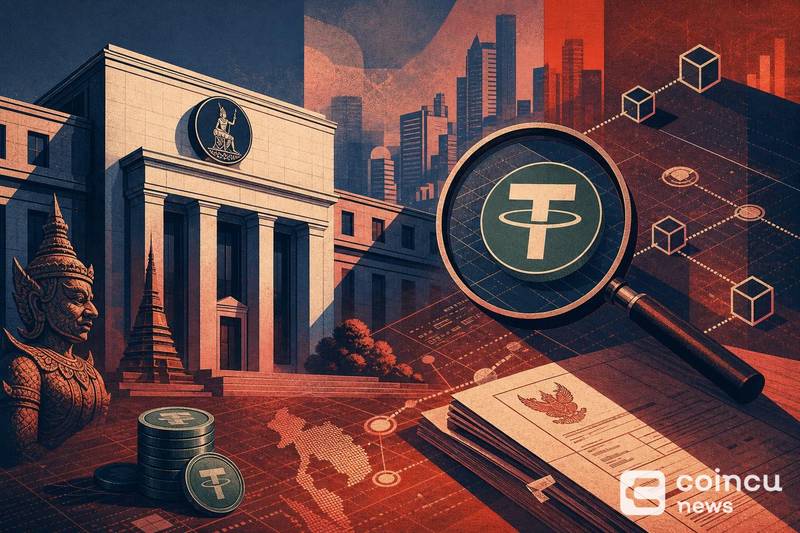
The Bank of Thailand is reportedly reviewing high-value USDT transactions as part of an effort to strengthen anti-money laundering oversight, according to recent reporting from Thai financial media. The move signals growing regulatory attention toward stablecoin-denominated transfers in Southeast Asia.
What the reported review involves
Thai authorities are examining large transactions denominated in USDT, the dollar-pegged stablecoin issued by Tether, with a stated focus on combating money laundering. The review was reported by Nation Thailand in its banking and finance coverage. For related coverage, see Bitcoin Spot ETFs End 8-Week Outflow Streak With $197M Inflows.
The scope of the review, including specific transaction thresholds, enforcement mechanisms, and timelines, has not been fully detailed in available reporting. It is not yet clear whether the review targets exchanges operating in Thailand, individual wallet holders, or both. For related coverage, see Robinhood Chain Goes Live With $141M in Bridged ETH.
The reported initiative aligns with a broader pattern of countries tightening oversight of cryptocurrency transfers. Russia recently moved to monitor crypto transactions above 60,000 rubles, reflecting a global trend where financial regulators are extending AML frameworks to digital assets.
Thailand’s AML push and financial oversight context
The stated objective of the Bank of Thailand’s review is anti-money laundering compliance. Large-value crypto transfers have drawn increasing scrutiny from financial authorities worldwide because stablecoins can facilitate rapid cross-border value movement outside traditional banking channels.
Thailand’s central bank has regulatory authority over the country’s financial system, and its interest in high-value USDT flows fits within a conventional AML framework. However, specific Thai regulatory thresholds or rules that would apply to this review have not been confirmed in current reporting.
The development comes as the UK’s FCA and central bank have also advanced crypto rules while adjusting stablecoin restrictions, suggesting that multiple jurisdictions are simultaneously recalibrating their approaches to stablecoin regulation.
Why USDT is at the center of this review
USDT is Tether’s dollar-pegged stablecoin and the most widely used stablecoin globally by trading volume. Its dominance in crypto markets, particularly in Asia-Pacific trading pairs and over-the-counter transactions, makes it a natural focal point for regulators concerned about illicit finance.
Stablecoins like USDT are commonly used for value transfer because they maintain a roughly 1:1 peg with the U.S. dollar, reducing the volatility risk associated with other cryptocurrencies. This same stability makes them attractive for large-value transfers, which in turn increases compliance attention from banking authorities.
USDT’s role in fee-generating activity across decentralized finance has also grown. Uniswap’s recent 24-hour fees of $5.03 million trailed only Tether and Circle, underscoring how deeply embedded USDT is in crypto market infrastructure.
What is confirmed and what remains unclear
The current reporting package on this story is partially verified. The core claim, that the Bank of Thailand is reviewing high-value USDT transactions for AML purposes, comes from multiple financial news outlets covering the story.
Several important details remain unconfirmed. These include the specific transaction size thresholds that trigger review, whether any enforcement actions or penalties have been announced, the timeline for the review’s completion, and whether the Bank of Thailand has issued a formal public statement.
No direct quotes from Bank of Thailand officials have been confirmed in the available reporting. Readers and market participants should treat the scope and operational details of this review as developing information until official regulatory communications are published.
Key questions about Thailand’s USDT transaction review
Is this a confirmed new restriction or a reported review?
Based on available reporting, this is a regulatory review, not a confirmed ban, freeze, or new restriction on USDT transactions. No penalty regime or transaction prohibition has been announced.
Does this affect Thai crypto exchanges or individual users?
The specific entities subject to the review have not been detailed. It is unclear whether the review targets licensed exchanges, peer-to-peer traders, or broader financial intermediaries handling USDT.
What should market participants watch for next?
Official statements from the Bank of Thailand would clarify the review’s scope. Readers should monitor for announcements regarding transaction reporting thresholds, compliance guidance for exchanges operating in Thailand, and any coordination with Thailand’s Securities and Exchange Commission or Anti-Money Laundering Office.
Disclaimer: This article is for informational purposes only and does not constitute financial or investment advice. Cryptocurrency and digital asset markets carry significant risk. Always do your own research before making decisions.
No tags available.


Other Posts








- China, US Conclude Trade Talks with Focus on Cooperation
- Crypto Weekly: NYSE Backs OKX, Kraken Gets Fed Access, BTC Sells
- Court Upholds Fed’s Rejection of Custodia Bank’s Request
- Former CFO Convicted for $35M Fraudulent Crypto Investment
- DeriW Launches Edge Hour Trading Competition Platform for Derivatives Traders
- Michael Saylor Denies Bitcoin Sell-Off Amid Large BTC Transfer
- Buy Dogecoin on eToro: Step-by-Step Guide for Beginners (2024)
- Kazakhstan Explores Crypto Reserves Backed by National Funds
- JPMorgan Increases Holdings in BlackRock’s Bitcoin ETF
- Nordea Bank Introduces Bitcoin ETP Trading for Nordic Customers
- XRP Spot ETF Launches on Nasdaq Amid Market Fluctuations
- Peter Schiff Challenges Michael Saylor on MSTR’s Business Model
- Thailand Orders Worldcoin to Delete 1.2 Million Biometric Records
- UK Proposes New DeFi Tax Framework to Ease User Burden
- WLFI Under Fire: Analyst Warns Hyperliquid Could Be Next
- Ancient Ethereum Whale Moves $1.19 Billion After Decade
- BlackRock Receives Large Crypto Transfers from Coinbase
- SEC Scrutiny on ALT5 Sigma’s Leadership Disclosure Timing
- Yala Injects $5.5 Million Amid Recovery Efforts
- Radiant Capital Faces $50M Loss in Major Security Breach
- China, US Conclude Trade Talks with Focus on Cooperation
- Crypto Weekly: NYSE Backs OKX, Kraken Gets Fed Access, BTC Sells
- Court Upholds Fed’s Rejection of Custodia Bank’s Request
- Former CFO Convicted for $35M Fraudulent Crypto Investment
- DeriW Launches Edge Hour Trading Competition Platform for Derivatives Traders
- Michael Saylor Denies Bitcoin Sell-Off Amid Large BTC Transfer
- Buy Dogecoin on eToro: Step-by-Step Guide for Beginners (2024)
- Kazakhstan Explores Crypto Reserves Backed by National Funds
- JPMorgan Increases Holdings in BlackRock’s Bitcoin ETF
- Nordea Bank Introduces Bitcoin ETP Trading for Nordic Customers
- XRP Spot ETF Launches on Nasdaq Amid Market Fluctuations
- Peter Schiff Challenges Michael Saylor on MSTR’s Business Model
- Thailand Orders Worldcoin to Delete 1.2 Million Biometric Records
- UK Proposes New DeFi Tax Framework to Ease User Burden
- WLFI Under Fire: Analyst Warns Hyperliquid Could Be Next
- Ancient Ethereum Whale Moves $1.19 Billion After Decade
- BlackRock Receives Large Crypto Transfers from Coinbase
- SEC Scrutiny on ALT5 Sigma’s Leadership Disclosure Timing
- Yala Injects $5.5 Million Amid Recovery Efforts
- Radiant Capital Faces $50M Loss in Major Security Breach
- China, US Conclude Trade Talks with Focus on Cooperation
- Crypto Weekly: NYSE Backs OKX, Kraken Gets Fed Access, BTC Sells
- Court Upholds Fed’s Rejection of Custodia Bank’s Request
- Former CFO Convicted for $35M Fraudulent Crypto Investment
- DeriW Launches Edge Hour Trading Competition Platform for Derivatives Traders
- Michael Saylor Denies Bitcoin Sell-Off Amid Large BTC Transfer
- Buy Dogecoin on eToro: Step-by-Step Guide for Beginners (2024)
- Kazakhstan Explores Crypto Reserves Backed by National Funds
- JPMorgan Increases Holdings in BlackRock’s Bitcoin ETF
- Nordea Bank Introduces Bitcoin ETP Trading for Nordic Customers
- XRP Spot ETF Launches on Nasdaq Amid Market Fluctuations
- Peter Schiff Challenges Michael Saylor on MSTR’s Business Model
- Thailand Orders Worldcoin to Delete 1.2 Million Biometric Records
- UK Proposes New DeFi Tax Framework to Ease User Burden
- WLFI Under Fire: Analyst Warns Hyperliquid Could Be Next
- Ancient Ethereum Whale Moves $1.19 Billion After Decade
- BlackRock Receives Large Crypto Transfers from Coinbase
- SEC Scrutiny on ALT5 Sigma’s Leadership Disclosure Timing
- Yala Injects $5.5 Million Amid Recovery Efforts
- Radiant Capital Faces $50M Loss in Major Security Breach

Bank of Thailand Reviews High-Value USDT Transactions Amid AML Push

Bitcoin Spot ETFs End 8-Week Outflow Streak With $197M Inflows


AFX Surpasses $1.1 Billion in Total Trading Volume, Highlighting Capital Efficiency in On-Chain Derivatives