Circle is planning a privacy feature called Arc Privacy as an optional layer for on-chain finance, building on its Arc blockchain initiative aimed at stablecoin-focused transactions. The feature positions selective confidentiality as a design choice rather than a default, marking a notable addition to Circle’s expanding blockchain infrastructure.
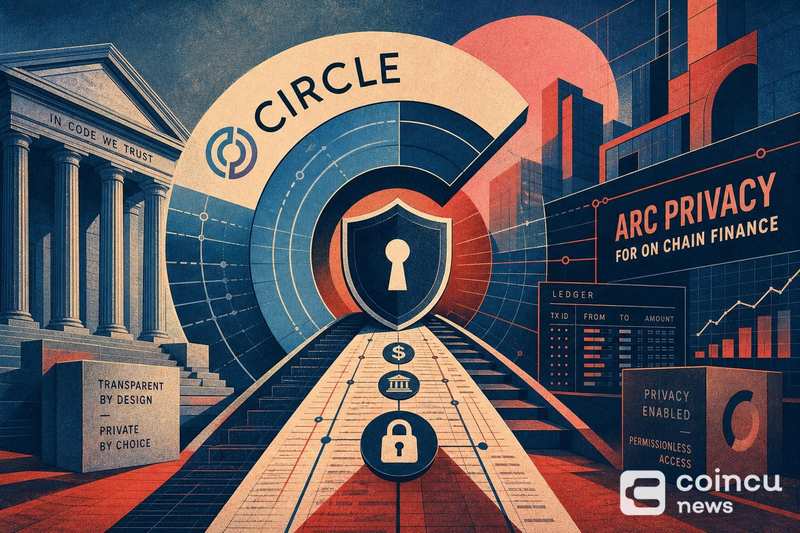
The announcement comes as Circle continues developing Arc, its purpose-built Layer 1 blockchain designed for stablecoin finance. Arc itself is an EVM-compatible chain that Circle has positioned as infrastructure for compliant, regulated digital dollar activity.
Arc Privacy, as described in a blog post on the Arc website, frames the privacy component as controlled and optional. Users and institutions would be able to choose when to shield transaction details rather than operating under blanket confidentiality.
What Arc Privacy Proposes
The core distinction in Circle’s approach is optionality. Rather than enforcing privacy across all transactions, Arc Privacy would allow participants to selectively enable confidentiality for specific on-chain activity.
This is a planned initiative, not a confirmed live product. Circle has launched an Arc public testnet, but the privacy layer remains in the planning and development stage. No confirmed launch date, detailed technical architecture, or supported network specifics have been publicly verified.
The optional framing matters because it attempts to address a tension that has defined crypto privacy debates for years: how to offer confidentiality without creating a tool that regulators view as inherently adversarial to compliance requirements.
Why Optional Privacy Changes the Framing for Institutions
On-chain finance operates on transparent ledgers by default. Every transfer, swap, and contract interaction is publicly visible. For retail users, this transparency is a feature. For institutions managing large treasury operations or payroll, it can be a liability.
An optional privacy model lets participants preserve the auditability that regulators expect while shielding sensitive commercial details from competitors and the public. This is a different proposition than privacy-by-default chains, which have faced increasing regulatory scrutiny and exchange delistings.
The approach also intersects with broader efforts to bring privacy infrastructure to major blockchain ecosystems. Projects across multiple chains are exploring how selective confidentiality can coexist with compliance, and Circle’s entry through Arc adds a stablecoin-issuer perspective to that conversation.
Key Questions That Remain Unanswered
Several critical details about Arc Privacy have not been publicly confirmed. These gaps are part of the current story, not oversights.
Timeline: Circle has not announced when Arc Privacy will move beyond the planning stage or when it might be available on mainnet. The word “plans” in the announcement signals future execution rather than imminent availability.
Access and controls: It is unclear who will be able to activate privacy features, whether there will be tiered access for institutions versus retail users, or what verification requirements might apply.
Compliance design: How Arc Privacy will handle regulatory requirements around transaction monitoring, sanctions screening, and law enforcement access has not been detailed. For a company like Circle, which operates under regulated frameworks, this will be a defining design decision.
Supported environments: Whether Arc Privacy will be limited to the Arc chain or could extend to USDC activity on other networks remains unspecified.
Where This Fits in the Broader Privacy Conversation
Circle’s move comes at a time when the crypto industry is actively debating how privacy tools should be designed. Regulatory actions against privacy protocols have pushed developers toward models that offer confidentiality with built-in compliance hooks.
The optional model sidesteps the binary framing that has dominated these debates. Instead of asking whether privacy should exist on-chain, it asks when and for whom. This is a pragmatic shift, particularly from a company whose core business, USDC issuance, depends on maintaining regulatory relationships.
For institutions considering structured crypto products or on-chain treasury management, the availability of selective privacy could lower a meaningful adoption barrier. But that potential depends entirely on implementation details that Circle has not yet provided.
As regulatory frameworks around crypto continue to evolve globally, how Circle designs the compliance layer of Arc Privacy will likely determine whether the feature gains traction with the institutional audience it appears to target.
FAQ
What is Arc Privacy?
Arc Privacy is a planned optional privacy feature for Circle’s Arc blockchain. It would allow users to selectively shield transaction details on-chain rather than operating with full transparency or full privacy by default.
Is Arc Privacy live yet?
No. As of the latest available information, Arc Privacy is in the planning stage. Circle has launched a public testnet for the Arc blockchain itself, but the privacy layer has not been released.
Why is the privacy model optional?
An optional model allows users to choose confidentiality when needed while maintaining the transparency that regulators and counterparties may require. This design attempts to balance institutional privacy needs with compliance obligations.
What does this mean for on-chain finance?
If implemented as described, Arc Privacy could offer institutions a way to conduct stablecoin transactions without exposing sensitive commercial details on a public ledger, potentially reducing a barrier to institutional adoption of on-chain finance tools.
Disclaimer: This article is for informational purposes only and does not constitute financial or investment advice. Cryptocurrency and digital asset markets carry significant risk. Always do your own research before making decisions.
No tags available.


Other Posts








- China, US Conclude Trade Talks with Focus on Cooperation
- Court Upholds Fed’s Rejection of Custodia Bank’s Request
- Crypto Weekly: NYSE Backs OKX, Kraken Gets Fed Access, BTC Sells
- Former CFO Convicted for $35M Fraudulent Crypto Investment
- DeriW Launches Edge Hour Trading Competition Platform for Derivatives Traders
- Michael Saylor Denies Bitcoin Sell-Off Amid Large BTC Transfer
- Buy Dogecoin on eToro: Step-by-Step Guide for Beginners (2024)
- Kazakhstan Explores Crypto Reserves Backed by National Funds
- JPMorgan Increases Holdings in BlackRock’s Bitcoin ETF
- Nordea Bank Introduces Bitcoin ETP Trading for Nordic Customers
- XRP Spot ETF Launches on Nasdaq Amid Market Fluctuations
- Peter Schiff Challenges Michael Saylor on MSTR’s Business Model
- Thailand Orders Worldcoin to Delete 1.2 Million Biometric Records
- UK Proposes New DeFi Tax Framework to Ease User Burden
- WLFI Under Fire: Analyst Warns Hyperliquid Could Be Next
- Ancient Ethereum Whale Moves $1.19 Billion After Decade
- BlackRock Receives Large Crypto Transfers from Coinbase
- SEC Scrutiny on ALT5 Sigma’s Leadership Disclosure Timing
- Yala Injects $5.5 Million Amid Recovery Efforts
- Radiant Capital Faces $50M Loss in Major Security Breach
- China, US Conclude Trade Talks with Focus on Cooperation
- Court Upholds Fed’s Rejection of Custodia Bank’s Request
- Crypto Weekly: NYSE Backs OKX, Kraken Gets Fed Access, BTC Sells
- Former CFO Convicted for $35M Fraudulent Crypto Investment
- DeriW Launches Edge Hour Trading Competition Platform for Derivatives Traders
- Michael Saylor Denies Bitcoin Sell-Off Amid Large BTC Transfer
- Buy Dogecoin on eToro: Step-by-Step Guide for Beginners (2024)
- Kazakhstan Explores Crypto Reserves Backed by National Funds
- JPMorgan Increases Holdings in BlackRock’s Bitcoin ETF
- Nordea Bank Introduces Bitcoin ETP Trading for Nordic Customers
- XRP Spot ETF Launches on Nasdaq Amid Market Fluctuations
- Peter Schiff Challenges Michael Saylor on MSTR’s Business Model
- Thailand Orders Worldcoin to Delete 1.2 Million Biometric Records
- UK Proposes New DeFi Tax Framework to Ease User Burden
- WLFI Under Fire: Analyst Warns Hyperliquid Could Be Next
- Ancient Ethereum Whale Moves $1.19 Billion After Decade
- BlackRock Receives Large Crypto Transfers from Coinbase
- SEC Scrutiny on ALT5 Sigma’s Leadership Disclosure Timing
- Yala Injects $5.5 Million Amid Recovery Efforts
- Radiant Capital Faces $50M Loss in Major Security Breach
- China, US Conclude Trade Talks with Focus on Cooperation
- Court Upholds Fed’s Rejection of Custodia Bank’s Request
- Crypto Weekly: NYSE Backs OKX, Kraken Gets Fed Access, BTC Sells
- Former CFO Convicted for $35M Fraudulent Crypto Investment
- DeriW Launches Edge Hour Trading Competition Platform for Derivatives Traders
- Michael Saylor Denies Bitcoin Sell-Off Amid Large BTC Transfer
- Buy Dogecoin on eToro: Step-by-Step Guide for Beginners (2024)
- Kazakhstan Explores Crypto Reserves Backed by National Funds
- JPMorgan Increases Holdings in BlackRock’s Bitcoin ETF
- Nordea Bank Introduces Bitcoin ETP Trading for Nordic Customers
- XRP Spot ETF Launches on Nasdaq Amid Market Fluctuations
- Peter Schiff Challenges Michael Saylor on MSTR’s Business Model
- Thailand Orders Worldcoin to Delete 1.2 Million Biometric Records
- UK Proposes New DeFi Tax Framework to Ease User Burden
- WLFI Under Fire: Analyst Warns Hyperliquid Could Be Next
- Ancient Ethereum Whale Moves $1.19 Billion After Decade
- BlackRock Receives Large Crypto Transfers from Coinbase
- SEC Scrutiny on ALT5 Sigma’s Leadership Disclosure Timing
- Yala Injects $5.5 Million Amid Recovery Efforts
- Radiant Capital Faces $50M Loss in Major Security Breach


Sources: Trump Expected to Attend White House Meeting With Crypto CEOs

Bitcoin Mining Rigs Shut Down in Capital of Major Mining Power
Bitmine Immersion Technologies Announces Record and Payment Dates for Cash Dividends on 9.50% Series A Perpetual Preferred Stock

Crypto Player Takes Home $1.749M After a Million PSG Bet on 1win