An address linked to the LayerZero (ZRO) team or an early investor has transferred 3.51 million unlocked ZRO tokens to Binance, drawing attention from on-chain watchers tracking insider wallet activity.
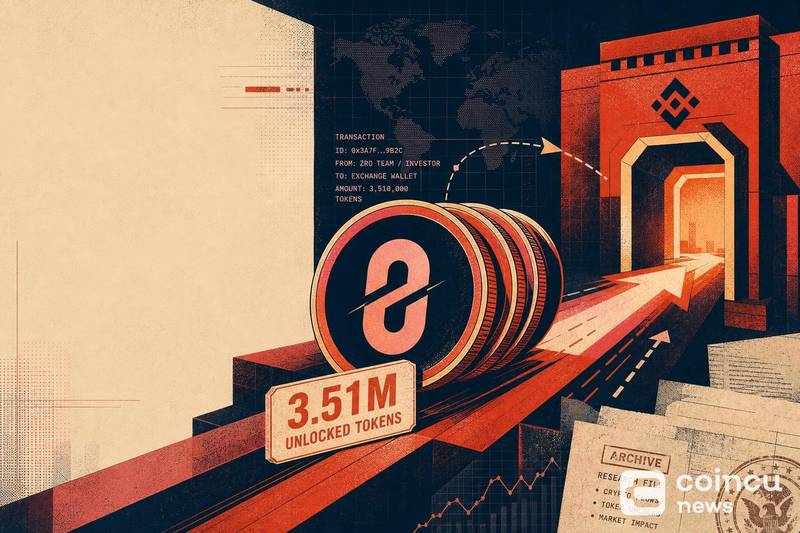
The transfer involved 3.51 million ZRO tokens sent to a Binance deposit address. The tokens were identified as unlocked, meaning they had already cleared any vesting restrictions before being moved.
The sending wallet’s ownership has not been definitively confirmed. On-chain labels describe it as either a team-controlled address or one belonging to an early investor, but no official statement from LayerZero Labs has clarified the distinction.
Deposit Does Not Confirm a Sale
A token transfer to a centralized exchange like Binance is not the same as a market sell order. Tokens deposited to an exchange can sit idle, be used as collateral, or be transferred again without ever hitting the order book.
Traders monitor large exchange inflows because they increase the liquid supply available for sale. When unlocked tokens from team or investor wallets appear on an exchange, market participants often interpret the move as a precursor to selling pressure, even when no sale has been executed.
In this case, no public data confirms whether the 3.51 million tokens were sold after arriving on Binance. The deposit is the only confirmed on-chain event.
Why Unlocked Token Movements Draw Scrutiny
Unlocked tokens represent supply that is no longer subject to vesting schedules or lock-up periods. When that supply moves from a holding wallet to an exchange, it signals that the holder has chosen to make the tokens liquid, which is a prerequisite for any potential sale.
Altcoin markets are particularly sensitive to these movements. Large unlocks and subsequent exchange deposits have historically preceded periods of increased volatility for smaller-cap tokens, as traders front-run anticipated sell pressure. This dynamic has played out across the broader crypto market, where events like risk-off episodes in Bitcoin can amplify the impact of token-specific supply events.
Token movement alone does not confirm intent. Holders may deposit to an exchange for a range of reasons, including rebalancing across wallets, providing liquidity, or preparing for over-the-counter trades that do not affect spot markets directly.
Signals to Watch After the Transfer
On-chain analysts will likely track several follow-up data points. The Binance wallet’s ZRO balance changes would reveal whether the tokens were sold, held, or withdrawn. Any additional outflows from the same sending address would indicate whether this was an isolated transfer or the beginning of a larger distribution.
Spot market reaction is another signal. If ZRO’s trading volume on Binance spikes relative to its baseline without a corresponding broader market catalyst, that would suggest the deposit influenced trading activity. Regulatory developments, such as new transaction tax frameworks, can also shape how large holders time their exchange deposits.
A public statement from LayerZero Labs or confirmed wallet attribution would provide the clearest context. Until then, the transfer remains an on-chain data point with multiple plausible explanations.
FAQ
Were the ZRO tokens sold after the Binance deposit?
No confirmed data shows the tokens were sold. A deposit to an exchange makes tokens available for trading but does not constitute a sale.
Is the sending wallet confirmed as team-owned or investor-owned?
The wallet attribution remains uncertain. On-chain labels suggest it belongs to either the ZRO team or an early investor, but neither has been officially confirmed.
Why do unlocked token transfers matter?
Unlocked tokens can be freely sold, unlike vesting-locked supply. When large amounts move to exchanges, traders watch for potential selling pressure that could affect the token’s price. Market participants tracking broader breakout patterns often factor in token unlock schedules as part of their risk assessment.
Disclaimer: This article is for informational purposes only and does not constitute financial or investment advice. Cryptocurrency and digital asset markets carry significant risk. Always do your own research before making decisions.
No tags available.


Other Posts








- China, US Conclude Trade Talks with Focus on Cooperation
- Crypto Weekly: NYSE Backs OKX, Kraken Gets Fed Access, BTC Sells
- DeriW Launches Edge Hour Trading Competition Platform for Derivatives Traders
- Court Upholds Fed’s Rejection of Custodia Bank’s Request
- Former CFO Convicted for $35M Fraudulent Crypto Investment
- Michael Saylor Denies Bitcoin Sell-Off Amid Large BTC Transfer
- Kazakhstan Explores Crypto Reserves Backed by National Funds
- Buy Dogecoin on eToro: Step-by-Step Guide for Beginners (2024)
- JPMorgan Increases Holdings in BlackRock’s Bitcoin ETF
- Nordea Bank Introduces Bitcoin ETP Trading for Nordic Customers
- XRP Spot ETF Launches on Nasdaq Amid Market Fluctuations
- Crypto Leaders Address Macro Volatility Amid Market Shifts
- Peter Schiff Challenges Michael Saylor on MSTR’s Business Model
- Thailand Orders Worldcoin to Delete 1.2 Million Biometric Records
- UK Proposes New DeFi Tax Framework to Ease User Burden
- WLFI Under Fire: Analyst Warns Hyperliquid Could Be Next
- Ancient Ethereum Whale Moves $1.19 Billion After Decade
- BlackRock Receives Large Crypto Transfers from Coinbase
- SEC Scrutiny on ALT5 Sigma’s Leadership Disclosure Timing
- MoonPay Gains Trust License for Crypto Operations in New York
- China, US Conclude Trade Talks with Focus on Cooperation
- Crypto Weekly: NYSE Backs OKX, Kraken Gets Fed Access, BTC Sells
- DeriW Launches Edge Hour Trading Competition Platform for Derivatives Traders
- Court Upholds Fed’s Rejection of Custodia Bank’s Request
- Former CFO Convicted for $35M Fraudulent Crypto Investment
- Michael Saylor Denies Bitcoin Sell-Off Amid Large BTC Transfer
- Kazakhstan Explores Crypto Reserves Backed by National Funds
- Buy Dogecoin on eToro: Step-by-Step Guide for Beginners (2024)
- JPMorgan Increases Holdings in BlackRock’s Bitcoin ETF
- Nordea Bank Introduces Bitcoin ETP Trading for Nordic Customers
- XRP Spot ETF Launches on Nasdaq Amid Market Fluctuations
- Crypto Leaders Address Macro Volatility Amid Market Shifts
- Peter Schiff Challenges Michael Saylor on MSTR’s Business Model
- Thailand Orders Worldcoin to Delete 1.2 Million Biometric Records
- UK Proposes New DeFi Tax Framework to Ease User Burden
- WLFI Under Fire: Analyst Warns Hyperliquid Could Be Next
- Ancient Ethereum Whale Moves $1.19 Billion After Decade
- BlackRock Receives Large Crypto Transfers from Coinbase
- SEC Scrutiny on ALT5 Sigma’s Leadership Disclosure Timing
- MoonPay Gains Trust License for Crypto Operations in New York
- China, US Conclude Trade Talks with Focus on Cooperation
- Crypto Weekly: NYSE Backs OKX, Kraken Gets Fed Access, BTC Sells
- DeriW Launches Edge Hour Trading Competition Platform for Derivatives Traders
- Court Upholds Fed’s Rejection of Custodia Bank’s Request
- Former CFO Convicted for $35M Fraudulent Crypto Investment
- Michael Saylor Denies Bitcoin Sell-Off Amid Large BTC Transfer
- Kazakhstan Explores Crypto Reserves Backed by National Funds
- Buy Dogecoin on eToro: Step-by-Step Guide for Beginners (2024)
- JPMorgan Increases Holdings in BlackRock’s Bitcoin ETF
- Nordea Bank Introduces Bitcoin ETP Trading for Nordic Customers
- XRP Spot ETF Launches on Nasdaq Amid Market Fluctuations
- Crypto Leaders Address Macro Volatility Amid Market Shifts
- Peter Schiff Challenges Michael Saylor on MSTR’s Business Model
- Thailand Orders Worldcoin to Delete 1.2 Million Biometric Records
- UK Proposes New DeFi Tax Framework to Ease User Burden
- WLFI Under Fire: Analyst Warns Hyperliquid Could Be Next
- Ancient Ethereum Whale Moves $1.19 Billion After Decade
- BlackRock Receives Large Crypto Transfers from Coinbase
- SEC Scrutiny on ALT5 Sigma’s Leadership Disclosure Timing
- MoonPay Gains Trust License for Crypto Operations in New York



Illinois 0.2% Crypto Transaction Tax Signed Into Law: What the Bill Says

First Block, Onpharma Company, and Crito Capital Announce First Solana Sto for U.S. Medical Device Business

Arman Tsarukyan Turns $1 Million Into $5.7 Million on Jack.com After One of the Biggest UFC Upsets of the Year